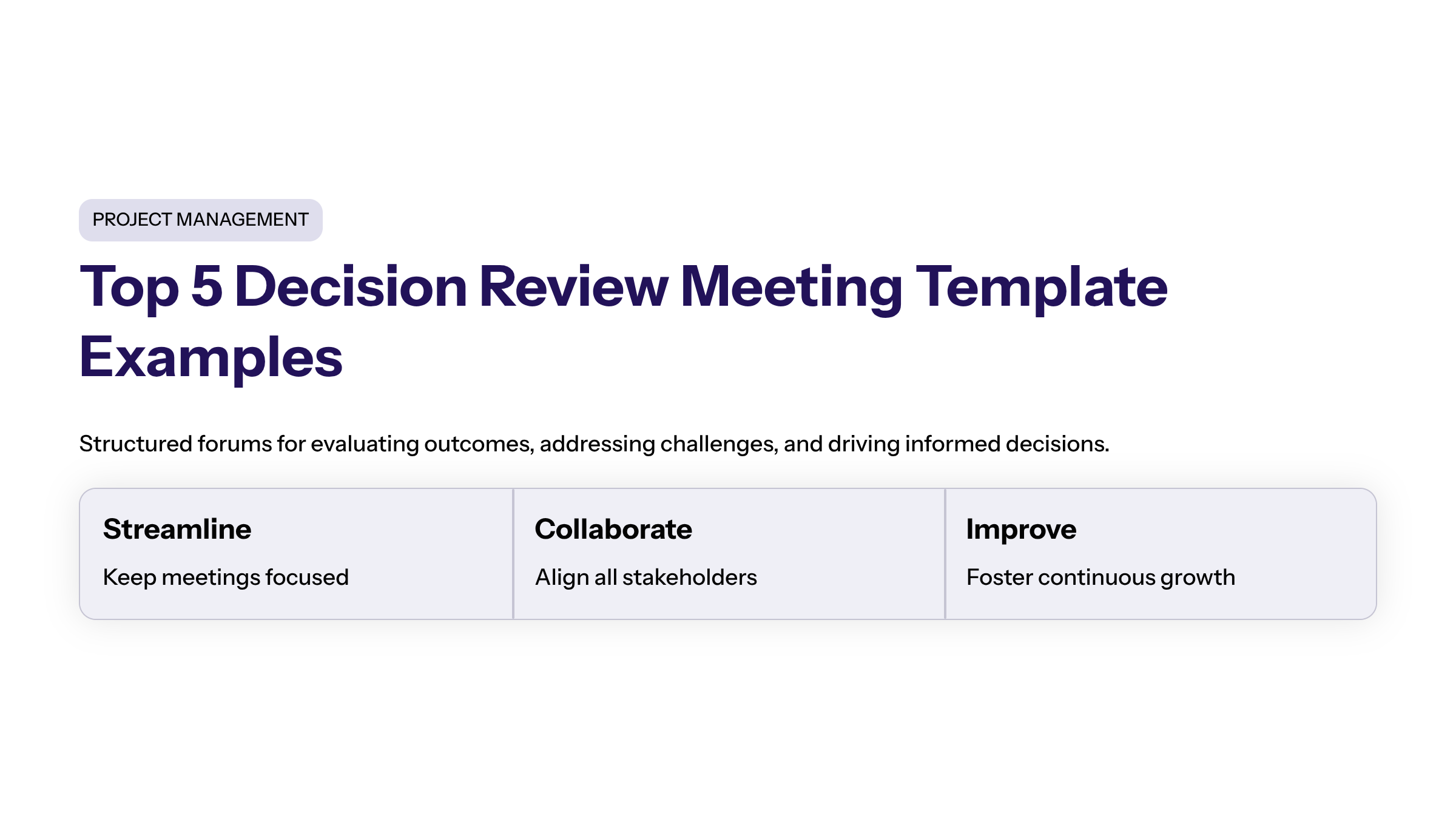
Top 5 Decision Review Meeting Template Examples for Effective Outcomes
Decision review meetings are pivotal in ensuring project success by providing a structured forum for evaluating project outcomes, addressing challenges faced, and making informed decisions about future projects. A decision review meeting template helps streamline the meeting process and ensures that discussions remain focused and aligned with the project's goals. This article delves into the significance of using a decision review meeting template to streamline these meetings, enhance collaboration among team members, and foster continuous improvement.
Executive Summary
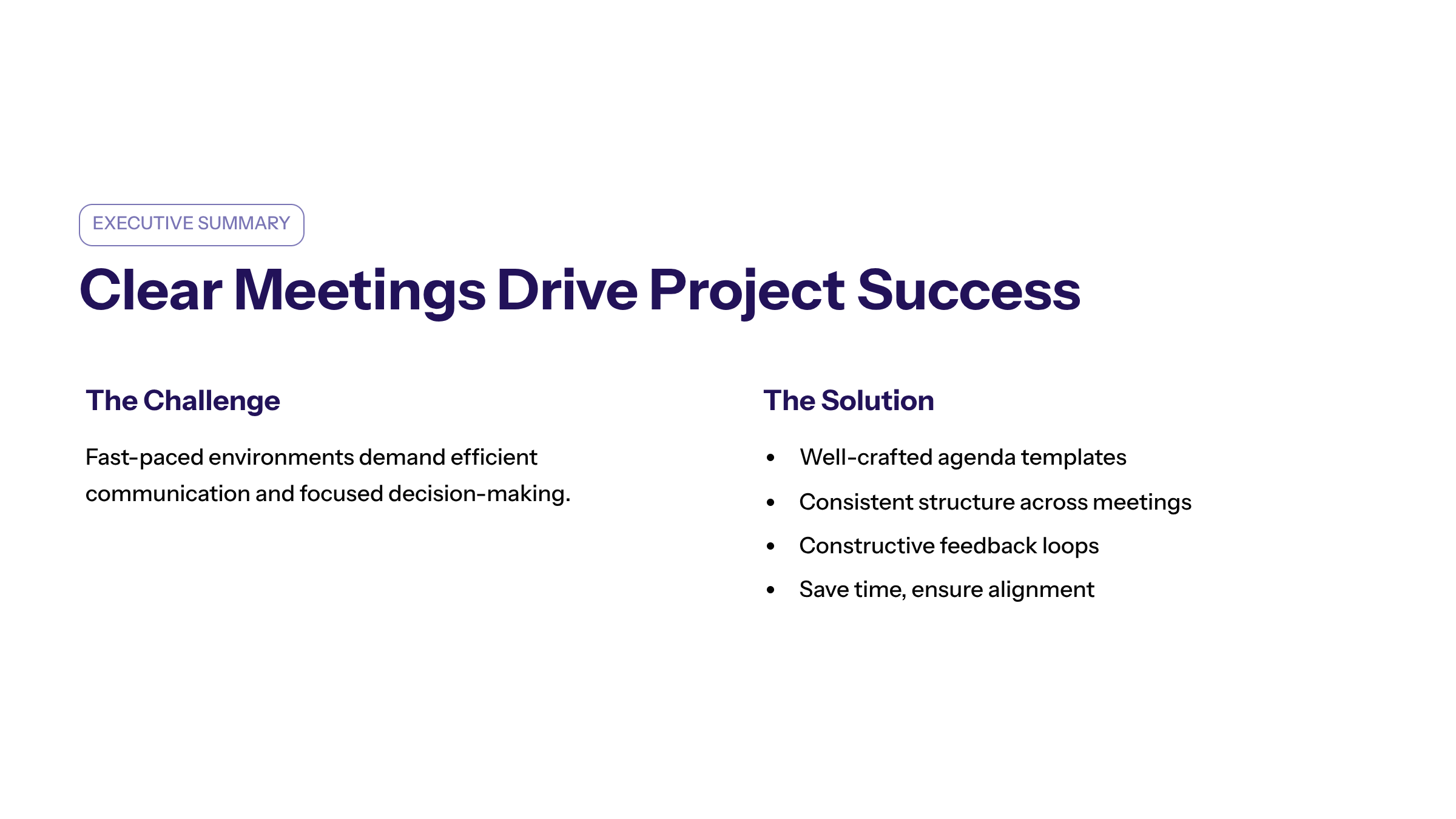
In today's fast-paced project environments, clear communication and efficient meetings are essential to keep projects on track and aligned with organizational goals. Decision review meetings, supported by well-crafted meeting agenda templates, enable project managers and stakeholders to focus on key discussion points, track progress, and make critical decisions that drive project outcomes. Utilizing free meeting agenda templates tailored to specific project needs helps save time, ensures consistency, and promotes constructive feedback.
Key Takeaways
Decision review meeting templates provide a clear structure that supports efficient meetings, fosters collaboration, and ensures all important decisions are documented.
Customizable meeting templates help project managers prepare clear expectations, assign responsibilities, and track action items and next steps effectively.
Continuous improvement is achieved by integrating lessons learned from project reviews into future meeting templates, enhancing project outcomes and stakeholder engagement.

Introduction to Decision Review Meetings
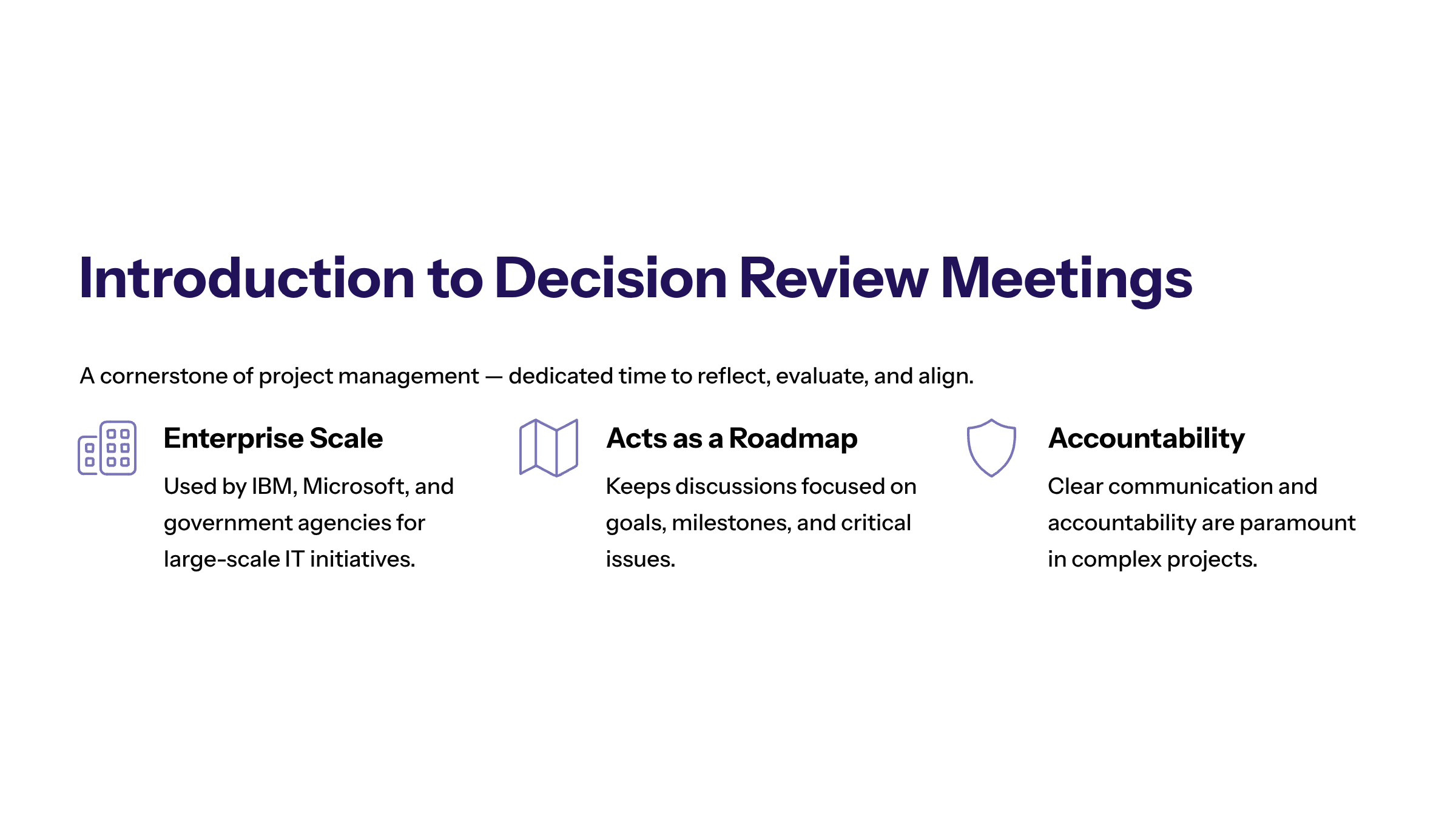
Decision review meetings serve as a cornerstone in project management, offering a dedicated time frame for project teams and stakeholders to reflect on the current status of projects, evaluate challenges faced, and align on key decisions. These meetings are especially relevant in complex projects managed by organizations such as IBM, Microsoft, or government agencies implementing large-scale IT initiatives, where clear communication and accountability are paramount.
A decision review meeting template acts as a roadmap, ensuring that discussions remain focused on the project's goals, key milestones, and critical issues. It also streamlines the note taking process, making it easier to track action items and follow ups, thus promoting clear communication and accountability among team members.
Benefits of Using a Meeting Agenda Template
Using a meeting agenda template in decision review meetings offers numerous advantages that contribute to project success:
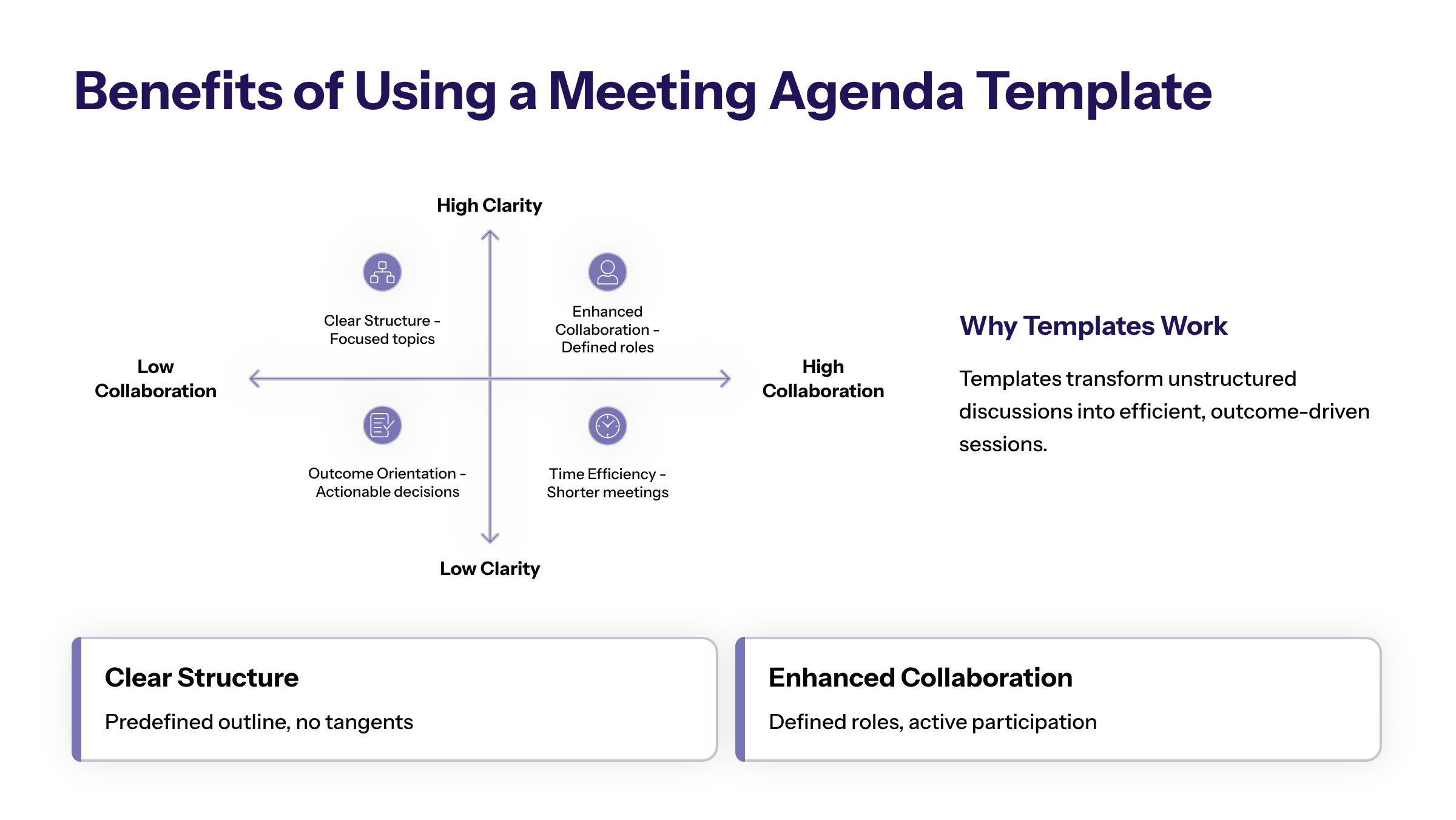
Clear Structure and Focus: Templates provide a predefined outline that highlights key topics and discussion points, helping to avoid tangents and ensure meetings are efficient.
Enhanced Collaboration: By clearly defining responsibilities and time frames, templates encourage active participation from all stakeholders, fostering a culture of constructive feedback.
Improved Documentation: Templates include sections for note taking and tracking action items, which supports transparency and follow-through on decisions made.
Time Management: Structured agendas help project managers allocate appropriate time to each agenda item, ensuring that all critical topics receive adequate attention.
Key Elements of a Meeting Template
An effective decision review meeting template typically includes the following components:
Element | Description |
|---|---|
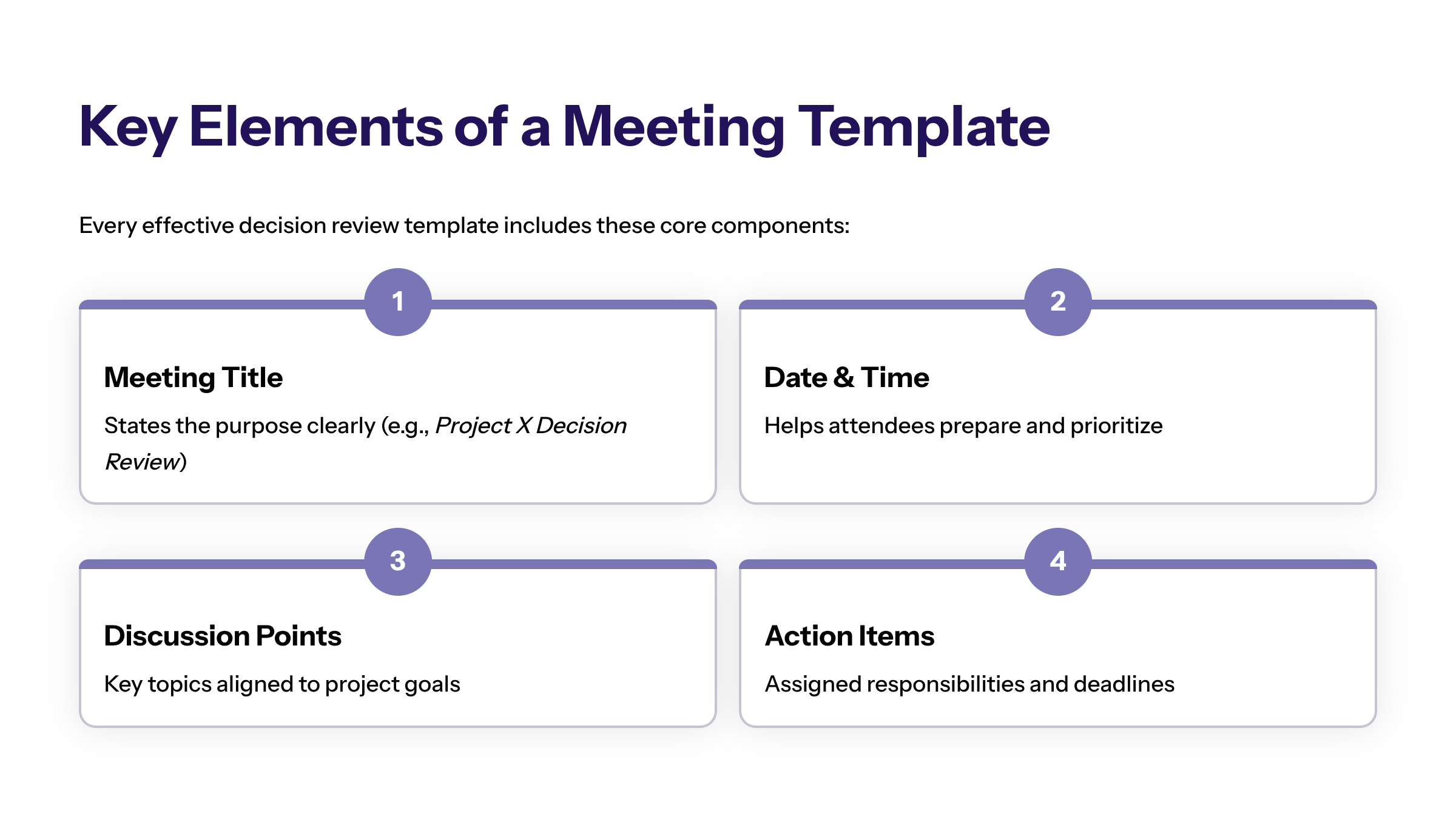
Meeting Title | Clearly states the purpose of the meeting (e.g., Project X Decision Review Meeting). |
Meeting Date and Time | Specifies when the meeting will take place, helping attendees prepare and prioritize. |
Agenda Items | Lists the key topics and discussion points to be covered during the meeting, providing a structured plan for the session. |
Responsible Parties | Identifies the person responsible for presenting or leading each agenda item. |
Note Taking Section | Provides space to capture key points, challenges faced, and decisions made during discussions. Customizable reports can be used to provide more detail and support informed decision making. |
Action Items | Tracks and includes tasks, with each task assigned to a single owner and a specific deadline to ensure accountability and follow up. |
Key Milestones | Highlights project milestones and deadlines to monitor progress and alignment with goals. |
A comprehensive plan for the decision review meeting template should include sections for data presentation, discussion, and specific decisions made with rationale. It is important to document not just what was decided, but why, including the factors that influenced the decision. For strategic decisions, the template should also include a section to discuss 'worst-case' scenarios if the decision leads to unexpected outcomes.
Creating an Effective Meeting
To maximize the value of decision review meetings, project managers should consider the following best practices:
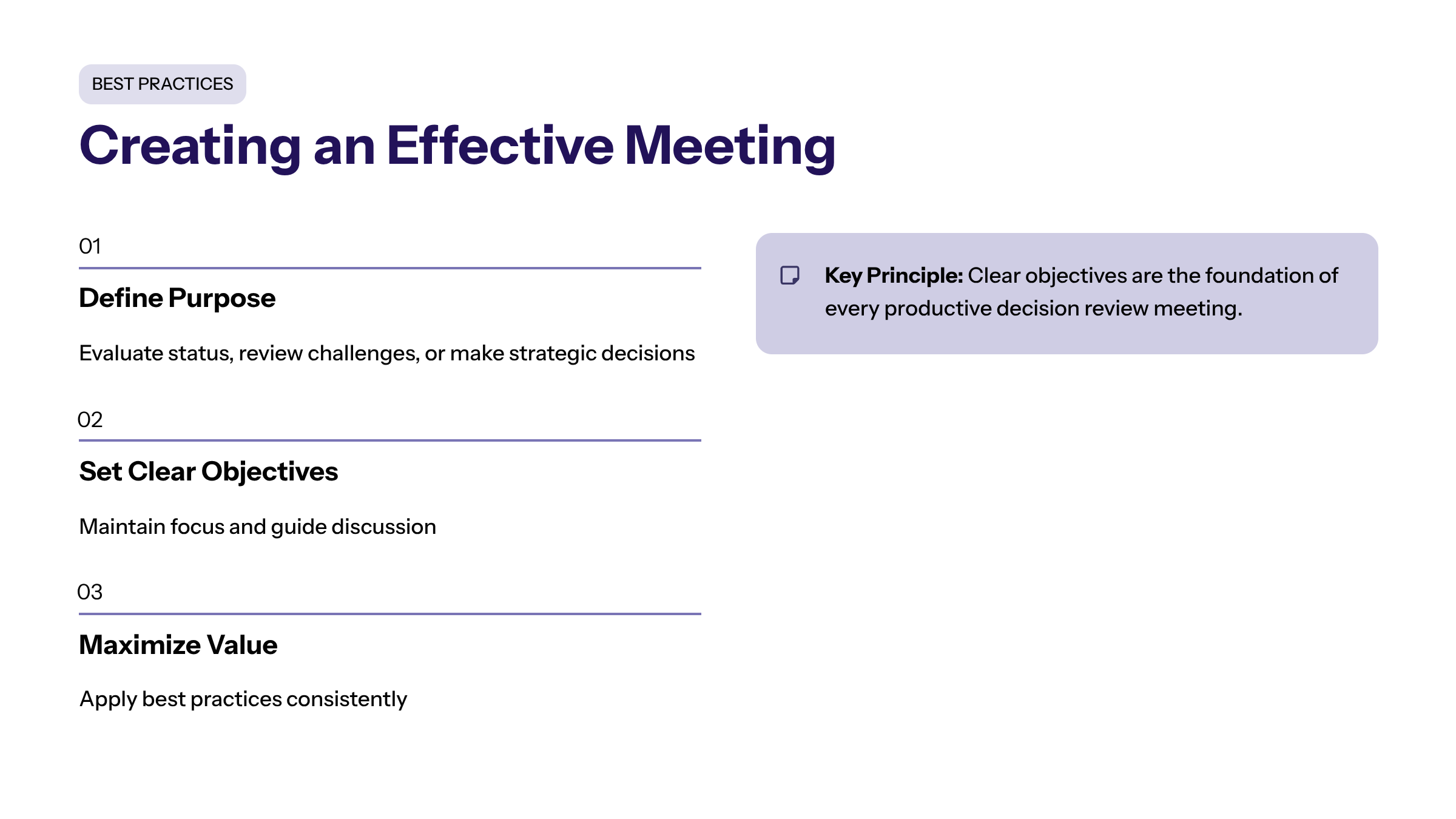
Define Purpose and Objectives
Start by articulating the meeting’s purpose, whether it is to evaluate project status, review challenges, or make strategic decisions. Clear objectives help maintain focus and guide the discussion.
Identify and Prepare Stakeholders
Invite relevant team members and stakeholders who can provide valuable insights or are responsible for implementing decisions. Distribute the meeting agenda template in advance to allow for preparation.
Establish Clear Expectations
Set expectations regarding meeting duration, participation, and desired outcomes. Clarify the roles of attendees and encourage active engagement.
Facilitate Constructive Feedback
Encourage open dialogue that balances positive reinforcement with areas for improvement. Constructive feedback helps identify obstacles and opportunities for continuous improvement.
Decision Making with Meeting Templates
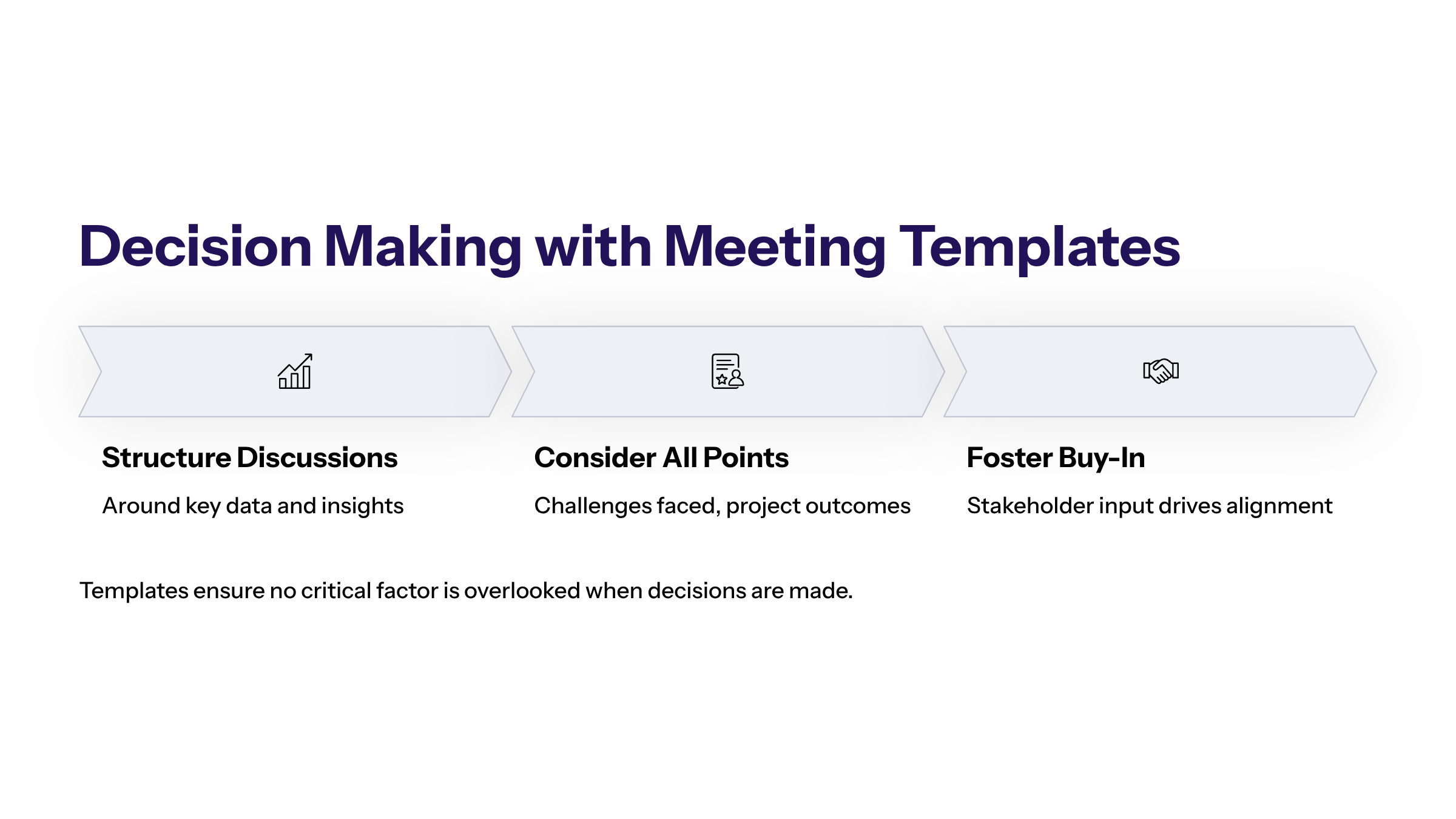
Meeting templates play a crucial role in facilitating decision making by structuring discussions around key data and insights. They help ensure that:
All relevant points, including challenges faced and project outcomes, are considered.
Stakeholders have an opportunity to provide input, fostering buy-in and alignment.
Decisions are based on a thorough review of the project’s current status, supported by clear reports and documentation.
For example, organizations like Deloitte and Accenture emphasize the use of structured decision review meetings to improve project governance and risk management.
Customizing Templates for Your Needs
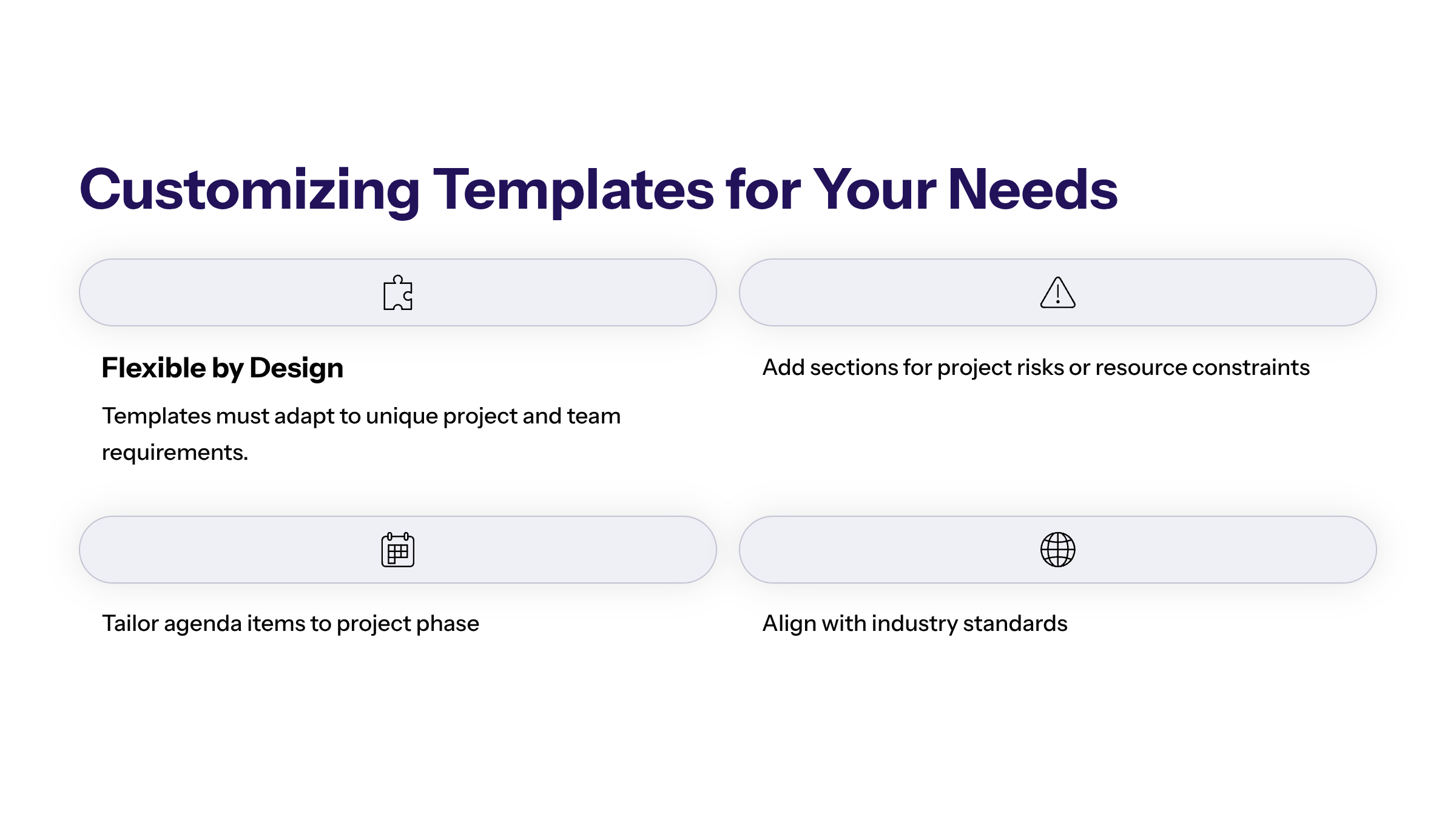
Meeting templates should be flexible to accommodate the unique requirements of different projects and teams. Customization options include:
Adding sections for specific project risks or resource constraints.
Tailoring agenda items to reflect the project phase or industry standards.
Integrating technology tools such as Microsoft Teams or Asana to automate note taking and action item tracking.
Customizing templates ensures relevance and enhances their effectiveness in driving project success.
Action Items and Next Steps
Following the meeting, project managers should:
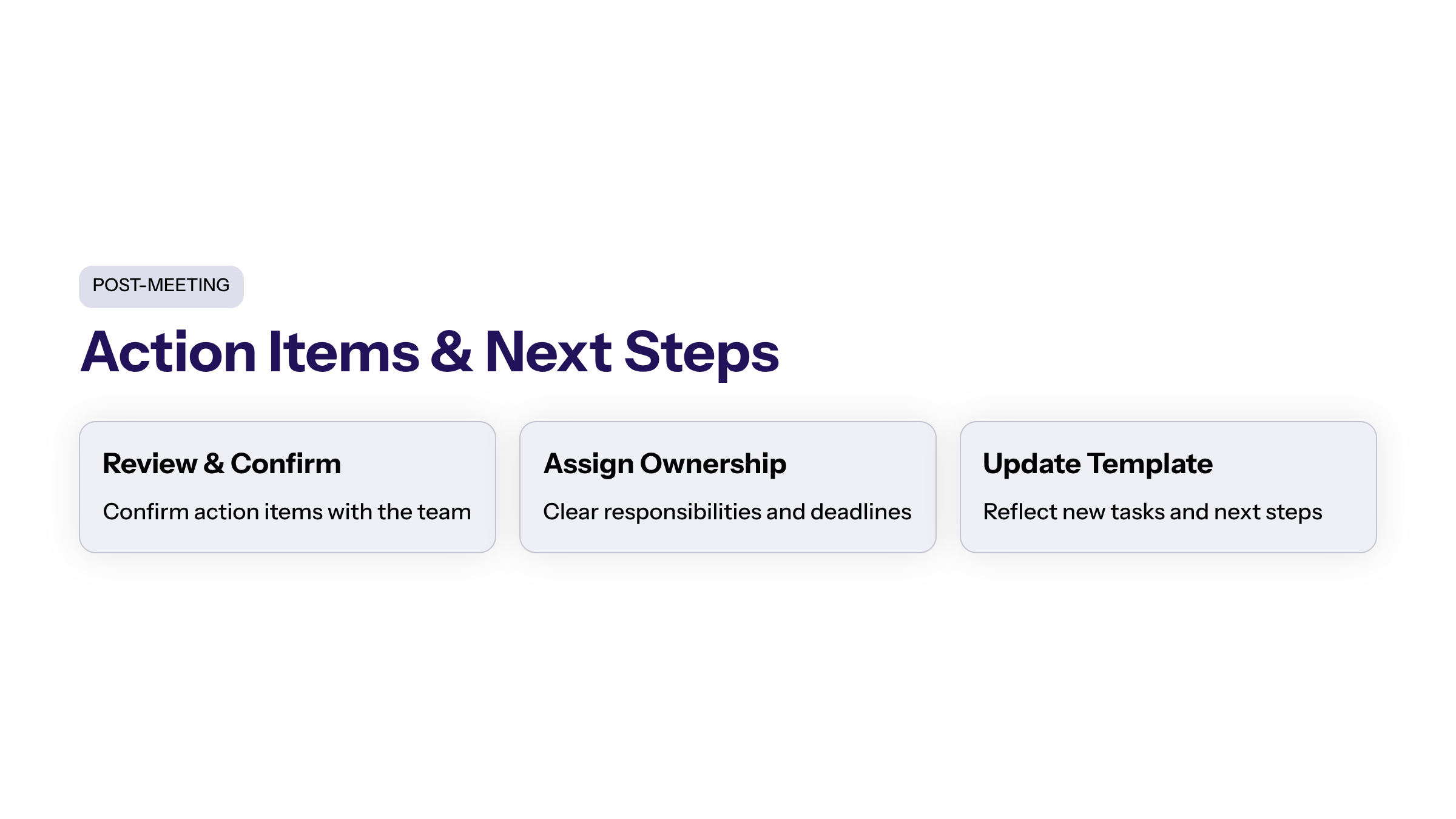
Review and confirm action items with the team, assigning clear responsibilities and deadlines.
Update the meeting template to reflect new tasks and next steps.
Utilize project management software like Jira or Trello to monitor progress and send reminders.
This process supports accountability and keeps the project moving forward efficiently.
Lessons Learned and Improvement
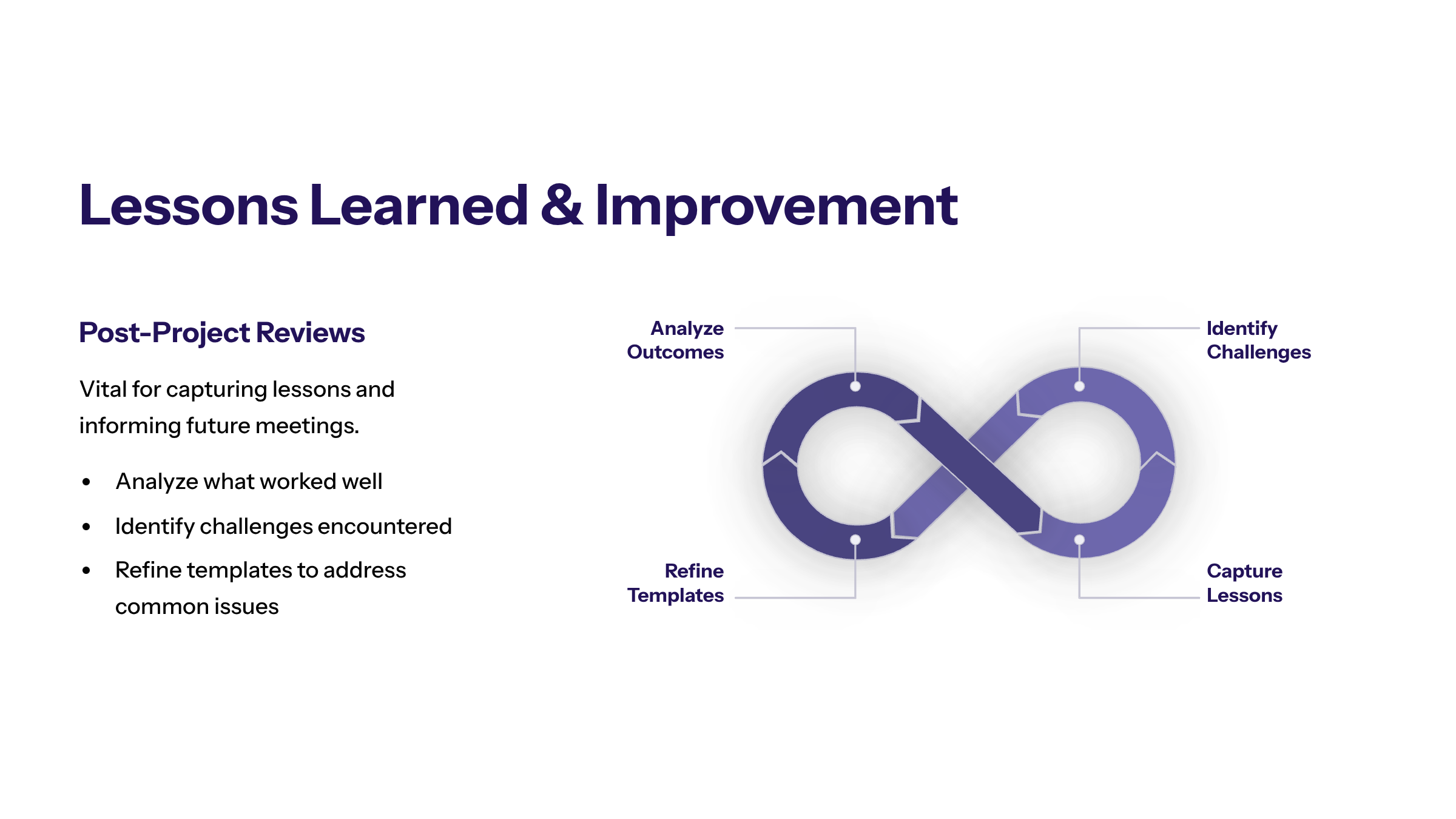
Post-project reviews are vital for capturing lessons learned and informing future decision review meetings. By analyzing what worked well and what challenges were encountered, project managers can:
Refine meeting templates to better address common issues.
Enhance training and resource allocation.
Foster a culture of continuous improvement within the project team and organization.
Effective Use of Meeting Templates
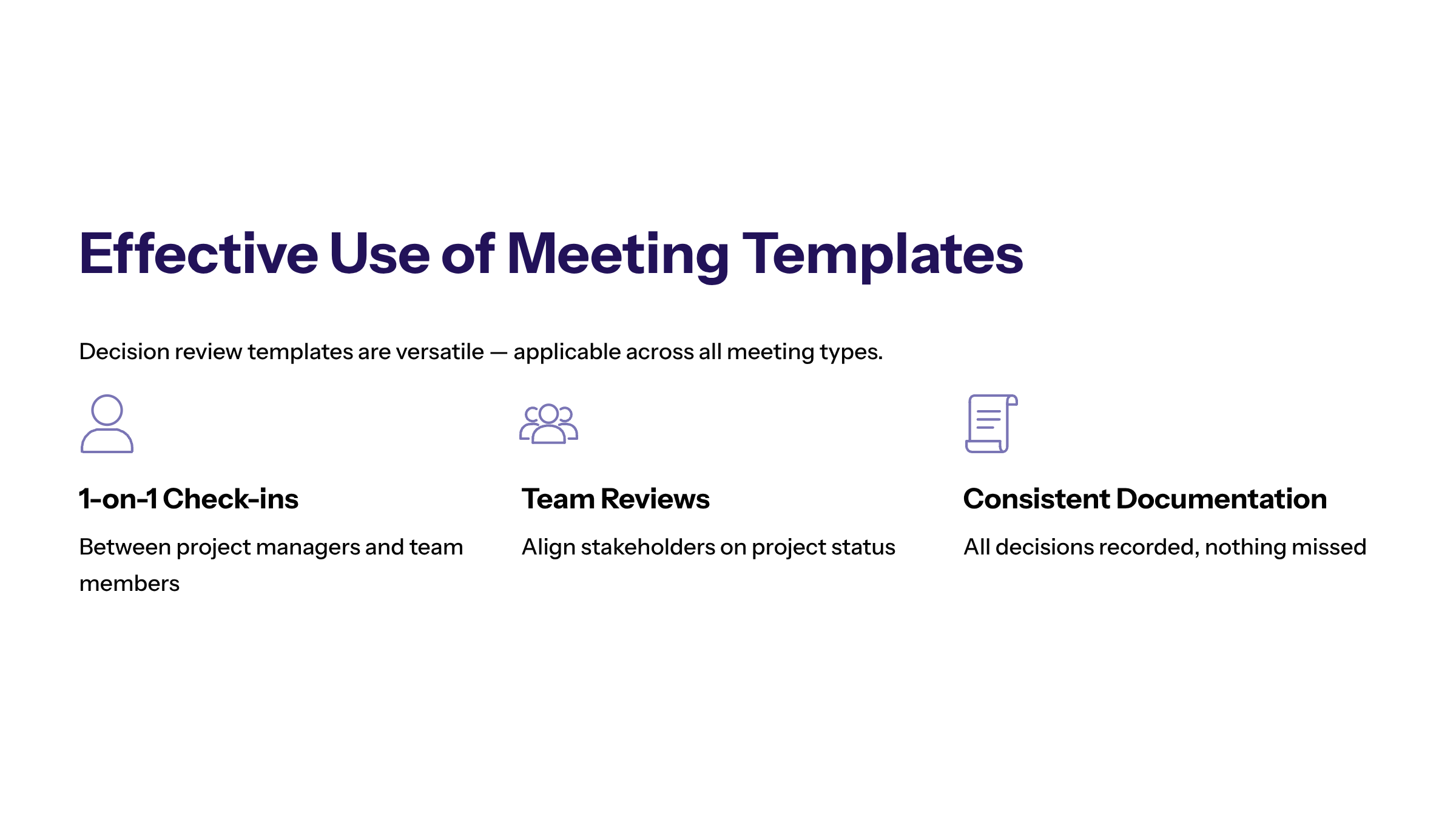
Decision review meeting templates are versatile and can be applied across various meeting types, including:
Project review meetings.
Steering committee meetings.
One on one check-ins between project managers and team members.
Using templates consistently helps maintain clear communication, ensures all important decisions are documented, and promotes efficient meetings that align with organizational objectives.
By integrating these practices and leveraging well-designed decision review meeting templates, project managers can enhance collaboration, make informed decisions, and drive project success in an increasingly complex and dynamic business environment.
Conclusion
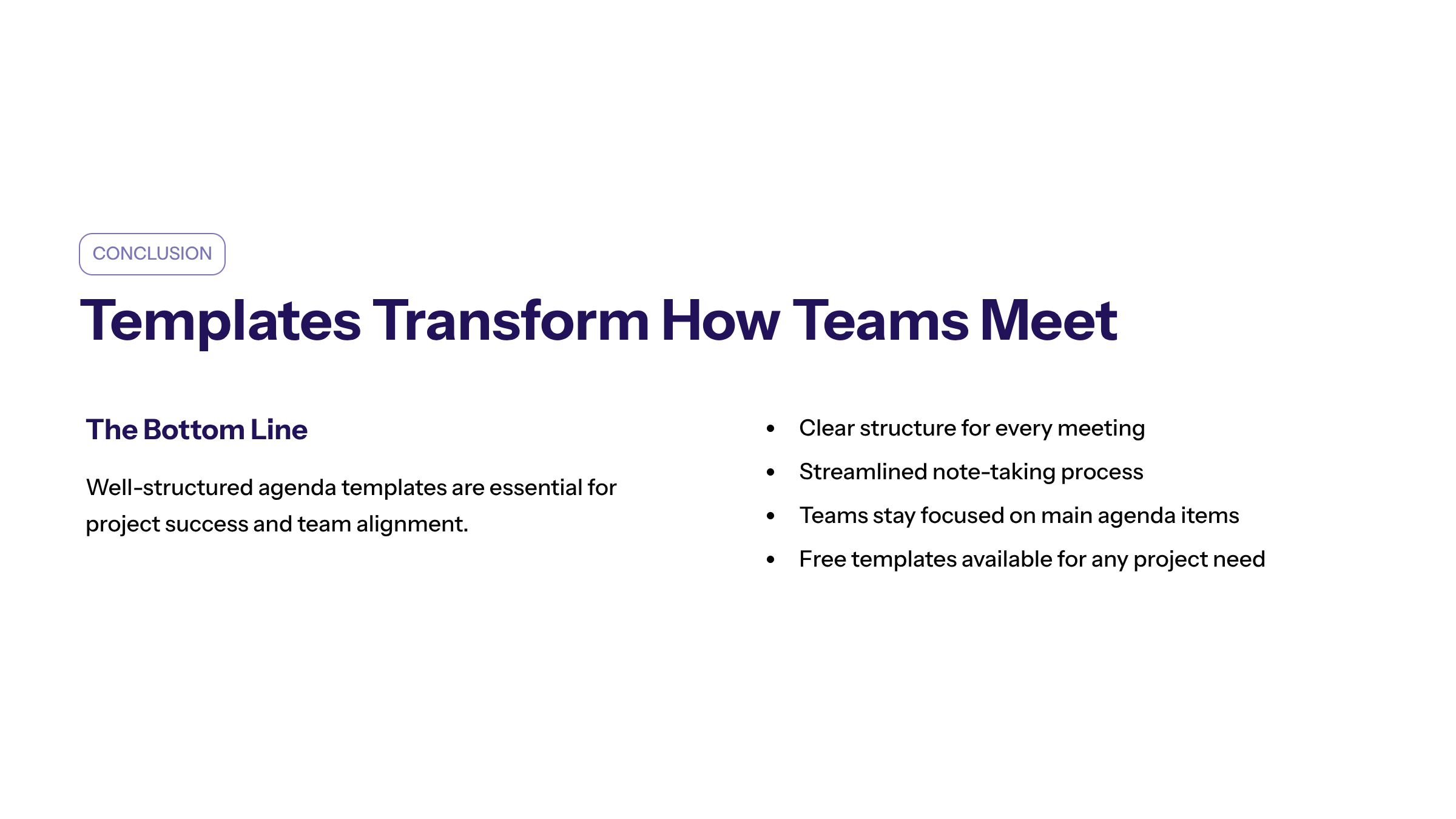
In conclusion, effective project review and decision meetings are essential for achieving project success and maintaining alignment within the project team. Leveraging a well-structured meeting agenda template—such as a free meeting agenda template—can transform the way project meetings are conducted. These templates provide a clear structure, streamline the note taking process, and help teams stay focused on the main agenda items. By fostering clear communication and setting clear expectations, project managers can ensure that all team members are on the same page and working collaboratively toward the project’s goals.
A project review meeting template not only guides discussions but also helps identify opportunities for improvement and supports informed decision making. Incorporating constructive feedback and a culture of continuous improvement into each review meeting ensures that lessons learned are captured and applied to future projects. Ultimately, using a meeting template saves time, enhances collaboration, and drives better project outcomes. By prioritizing a focused agenda, open feedback, and ongoing review, project teams can consistently deliver successful results and adapt to new challenges with confidence.
Final Thoughts on Decision Review Meetings
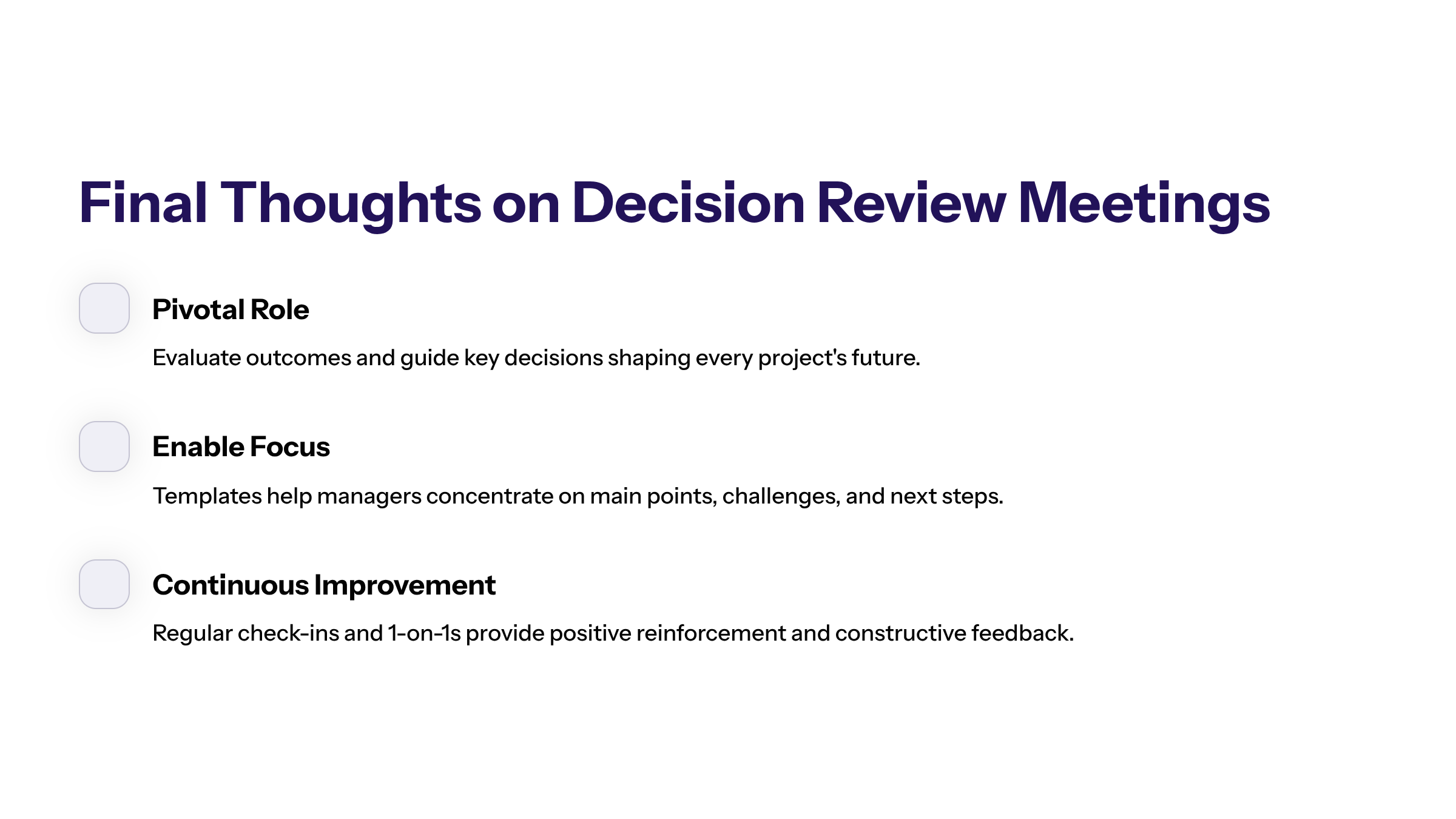
Decision review meetings play a pivotal role in evaluating project outcomes and guiding key decisions that shape the future of any project. Utilizing a decision review meeting template enables project managers and team members to concentrate on the main points, address challenges faced, and clearly outline next steps. Regular check-ins, including one-on-one meetings, offer valuable opportunities for positive reinforcement, constructive feedback, and continuous improvement, ensuring that every team member feels supported and engaged.
Clear communication and well-defined expectations are fundamental to the success of any review meeting. By leveraging resources such as a steering committee, project status reports, and detailed meeting minutes, project managers can provide the structure and information needed for effective decision making. These tools help teams discuss relevant challenges, review progress, and identify areas for improvement, all while keeping the project on track.
Ultimately, the goal of every decision review meeting is to drive project success. By embracing a structured approach, utilizing the right meeting template, and fostering a culture of feedback and growth, project teams can confidently navigate challenges, make informed decisions, and achieve outstanding project outcomes. Continuous improvement, supported by regular review and open discussion, ensures that each project builds on the lessons of the last, setting the stage for ongoing achievement and excellence.