Top Bottleneck Analysis Template for Efficient Process Improvement
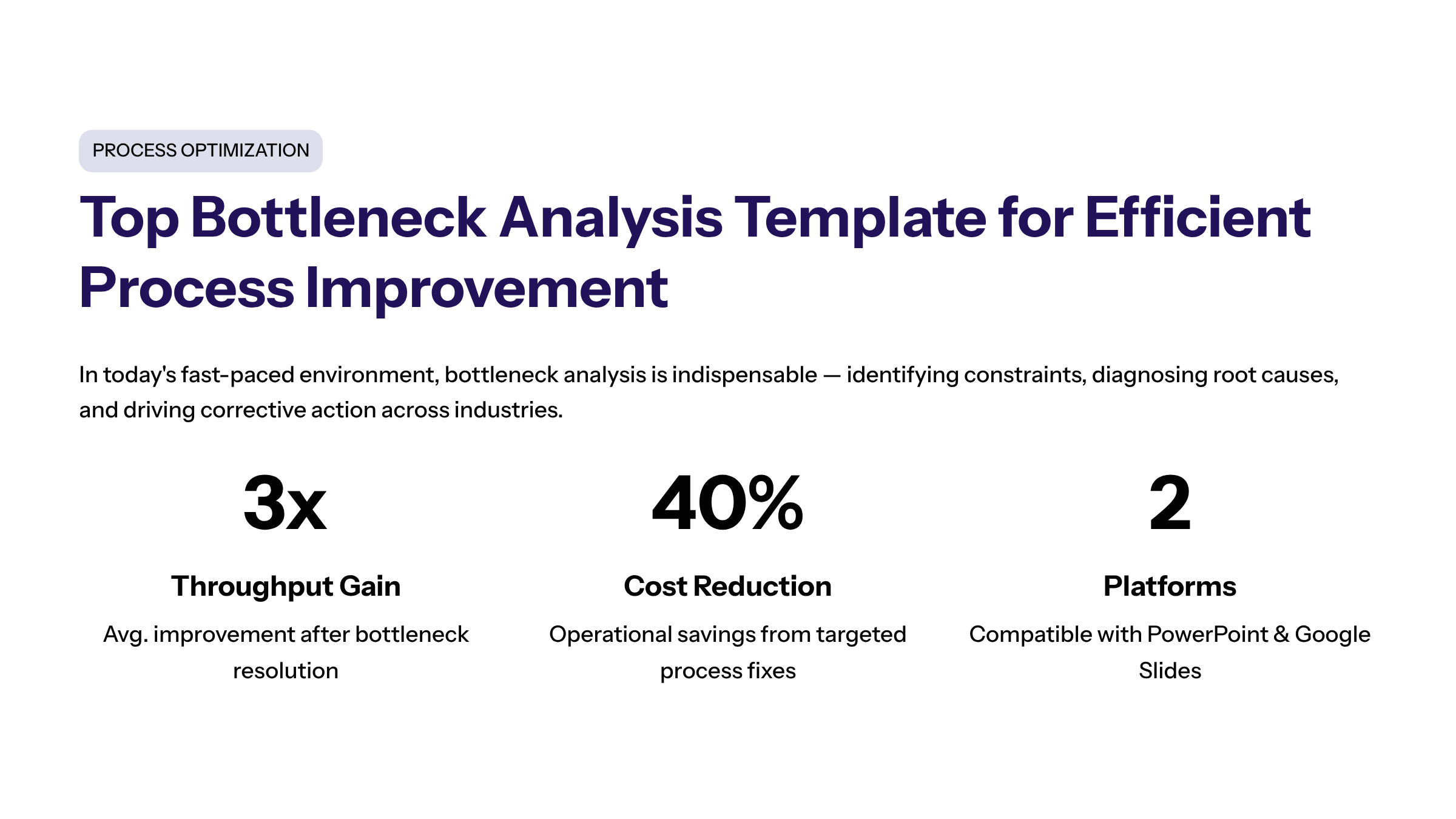
In today’s fast-paced business environment, bottleneck analysis has become an indispensable tool for organizations aiming to optimize their processes, enhance productivity, and maintain competitive advantage. This article provides an in-depth exploration of bottleneck analysis templates, presentations, and worksheets, emphasizing their critical role in identifying constraints, diagnosing root causes, and implementing corrective actions across various industries.
These analysis templates are compatible with both PowerPoint and Google Slides, allowing for easy customization and download to facilitate project success and professional presentations. By leveraging these tools, project managers and operations teams can streamline workflows, reduce delays, and drive measurable improvements in throughput and efficiency.
Customizable templates can enhance presentations by making them visually appealing and organized.
Key Takeaways:
-
Bottleneck analysis is a strategic approach that helps identify process constraints and inefficiencies, enabling teams to prioritize corrective actions and improve overall productivity.
-
Utilizing bottleneck analysis ppt templates and worksheets enhances clarity and communication, facilitating effective presentations and data-driven decision-making in project management. A bottleneck analysis template for 2026 should emphasize data-driven visualization and cross-functional transparency.
-
Integrating bottleneck analysis into project management methodologies such as Agile and Scrum empowers organizations to proactively manage workflow constraints, optimize resource allocation, and achieve superior project outcomes.

Introduction to Bottleneck Analysis
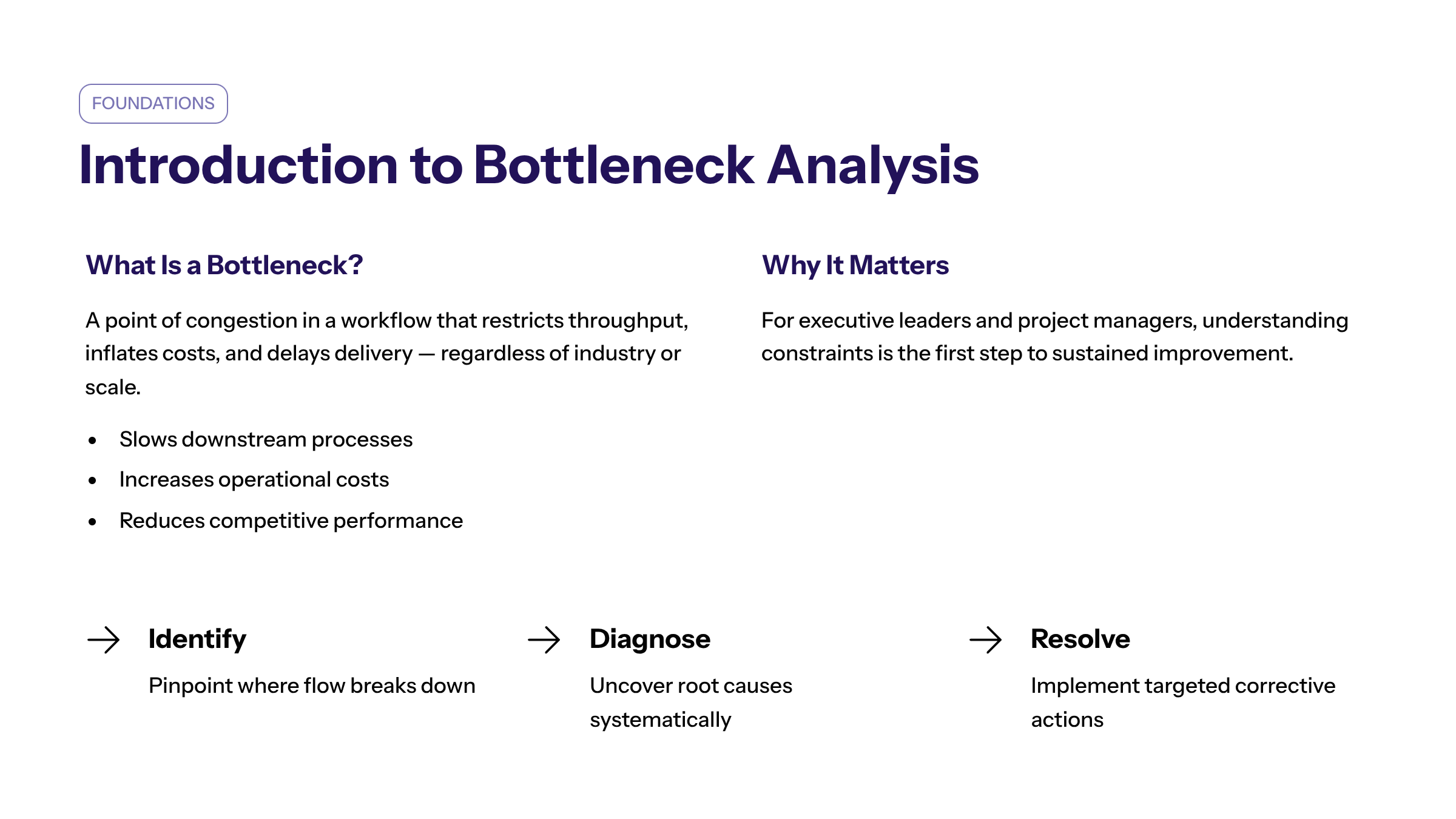
Bottleneck analysis is a methodical technique used to pinpoint constraints and inefficiencies within business processes, manufacturing lines, or service workflows. These bottlenecks, or points of congestion, impede the smooth flow of work, resulting in delays, reduced throughput, and increased operational costs. For executive leaders and project managers, understanding and addressing these bottlenecks is essential for driving process improvements and sustaining competitive performance.
In 2026, bottleneck analyses are typically conducted using a six-step process integrated into project management or process mining software, streamlining the identification and resolution of workflow issues.
At its core, bottleneck analysis involves a detailed examination of workflow stages to identify where delays or capacity limitations occur. A bottleneck analysis template involves key steps such as identifying and mapping the process, measuring capacity and flow, identifying bottlenecks, analyzing root causes, developing solutions, and monitoring continuously.
Visual flowcharts are used to map the current workflow and identify the sequence of activities and resources at each stage. This analysis enables organizations to understand root causes—whether related to equipment limitations, resource allocation, or process design—and to implement targeted corrective actions.
Common causes of bottlenecks include resource constraints, process issues, and input quality problems, which are key factors contributing to these issues. The ultimate goal is to optimize the flow of work, reduce congestion, and increase overall productivity.
As an example, a manufacturing delay caused by a single machine operating below capacity can create a bottleneck that slows the entire production line, or a customer support team experiencing slow response times due to understaffing may face similar issues.
In industries ranging from manufacturing to healthcare, logistics to software development, bottleneck analysis serves as a foundational tool for operational excellence. It supports continuous improvement initiatives, lean management practices, and digital transformation efforts by providing actionable insights into process inefficiencies.
Creating a Bottleneck Analysis Presentation
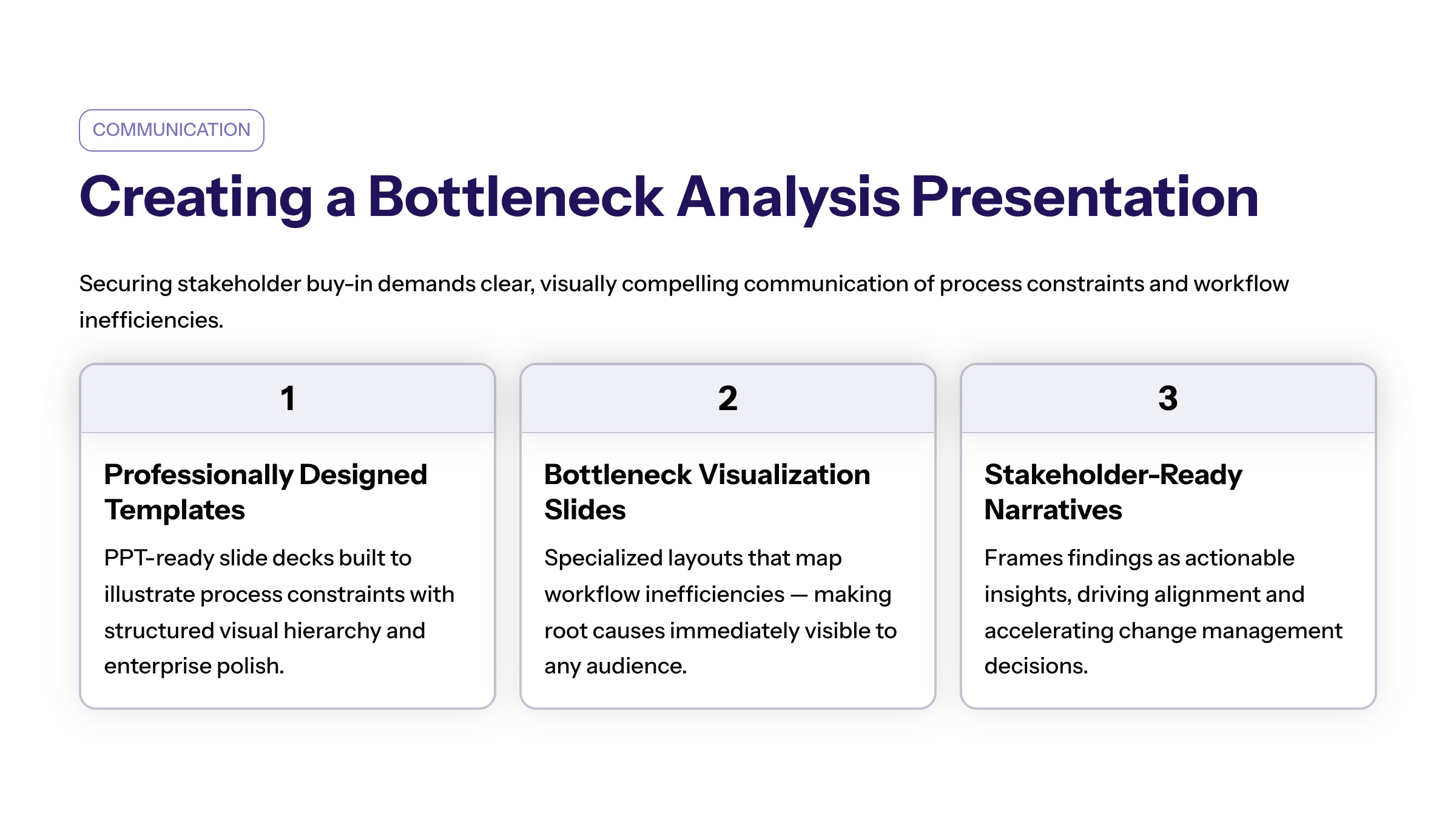
Effective communication of bottleneck analysis findings is critical for securing stakeholder buy-in and driving change. Bottleneck analysis ppt templates are professionally designed tools used to showcase process constraints and workflow inefficiencies through visually engaging slides, making it easier to identify and communicate issues.
Bottleneck slides serve as specialized presentation templates that illustrate bottlenecks within processes, supporting effective communication of workflow inefficiencies.
Editable powerpoint templates and ppt templates for bottleneck analysis are available, offering features such as ready-to-use infographics, icons, and backgrounds that enhance visual appeal and audience engagement. The format of these templates is crucial for clarity and professionalism, ensuring information is organized and easy to follow.
Infographics are used to organize and present complex information in a clear and attractive manner, while including details in each slide enhances understanding and audience retention. Professional services are also available for customizing and editing bottleneck analysis presentation templates to meet specific needs.
These templates typically include a combination of slides, shapes, fonts, and infographics designed to highlight bottleneck points, workflow maps, and corrective action plans.
Visual elements such as analysis charts are used to present cause-and-effect relationships, and gradient backgrounds can make slides easier to read. Using these tools, bottlenecks can be identified and resolved, with changes implemented to eliminate bottlenecks and improve efficiency.
The ability of a process to handle workload efficiently is also emphasized. Worksheets are provided as structured, downloadable tools for process analysis, helping teams map processes, collect data, and facilitate targeted problem-solving. The worksheet transforms complex processes into manageable steps, ensuring that bottlenecks are identified and resolved with actionable solutions.
Leveraging PowerPoint and Google Slides for Clarity and Impact
PowerPoint and Google Slides are widely used platforms that provide robust tools for creating professional presentations. These bottleneck analysis templates are compatible with both PowerPoint and Google Slides, allowing for easy customization and broad usability across teams.
Leveraging these platforms, teams can incorporate visual elements such as flow charts, analysis charts, and funnel graphics that illustrate how inputs converge and are restricted by bottlenecks. The use of color-coded slides and clear fonts enhances readability and audience engagement.
A well-structured presentation should begin with an introduction to bottleneck analysis, outlining its importance and methodology. Subsequent slides can detail the specific bottlenecks identified, supported by data visualization tools such as charts and graphs. Finally, recommendations for prioritized corrective actions should be presented, complete with implementation timelines, resource requirements, and expected impact.
Best Practices for Presentation Design
-
Use concise, jargon-free language suitable for executive audiences.
-
Incorporate visuals that simplify complex data, such as funnel diagrams and root cause analysis charts, and choose the right format to enhance clarity and professionalism. Customizable templates can further enhance presentations by making them visually appealing and organized.
-
Ensure compatibility across devices and platforms to facilitate easy access and collaboration.
-
Include notes and supplementary materials with details to convey specific information clearly and concisely for deeper insights or follow-up discussions.
According to a study by the Project Management Institute (PMI), clear communication of analysis findings significantly increases the likelihood of successful project outcomes, underscoring the value of well-designed presentations.
Tools and Resources for Bottleneck Analysis
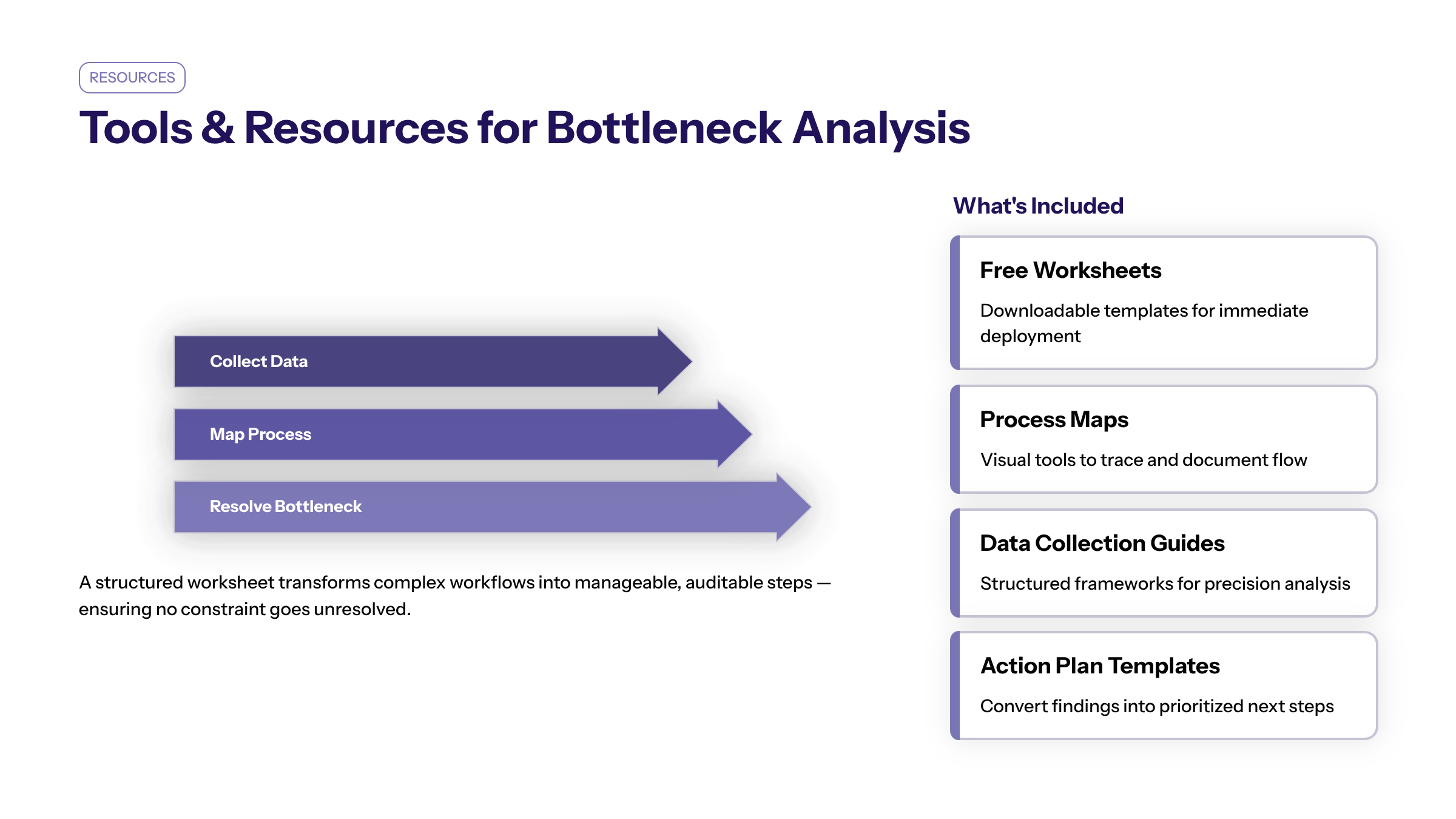
A variety of tools and resources are available to support bottleneck analysis, including free downloadable worksheets and templates designed to streamline your process improvement efforts. These resources enable teams to systematically collect data, map processes, and identify areas of congestion with precision.
A well-structured worksheet transforms complex processes into manageable steps, ensuring that bottlenecks are identified and resolved with actionable solutions. In addition to worksheets, software solutions can further enhance the efficiency and accuracy of your bottleneck analysis.
Process Bottleneck Analysis Worksheets
Worksheets, often created in Excel or Google Sheets, provide a structured framework for documenting workflow steps, measuring task durations, and tracking inefficiencies. They allow for detailed data entry and facilitate quantitative analysis of throughput and delays.
|
Feature |
Description |
Benefits |
|---|---|---|
|
Process Mapping |
Visual representation of workflow stages |
Identifies bottleneck locations |
|
Timing Data |
Records task durations and wait times |
Quantifies delays and capacity limits |
|
Root Cause Fields |
Captures reasons for bottlenecks |
Enables targeted corrective actions |
|
Prioritization Tools |
Helps rank bottlenecks by impact |
Focuses resources effectively |
These worksheets are ideal for professionals such as operations managers, supply chain analysts, and quality assurance teams who require granular insights into process performance.
Software and Online Resources
Beyond worksheets, several software platforms offer advanced bottleneck analysis capabilities, integrating data visualization, real-time monitoring, and predictive analytics. Tools like Microsoft Power BI and Tableau can be linked with operational data to create dynamic dashboards that highlight bottleneck trends and support decision-making.
Additionally, online tutorials, webinars, and case studies provide valuable knowledge for teams seeking to deepen their expertise. Many consulting firms and industry organizations publish free downloadable templates and resources for bottleneck analysis that can be adapted to specific organizational contexts. Professional services are also available from consulting firms to customize and edit bottleneck analysis templates for tailored presentations and project needs.
Gartner’s 2023 report on process optimization highlights the growing role of AI-driven analytics in identifying and resolving bottlenecks, emphasizing the need for digital tools that offer actionable insights.
Implementing Bottleneck Analysis in Project Management
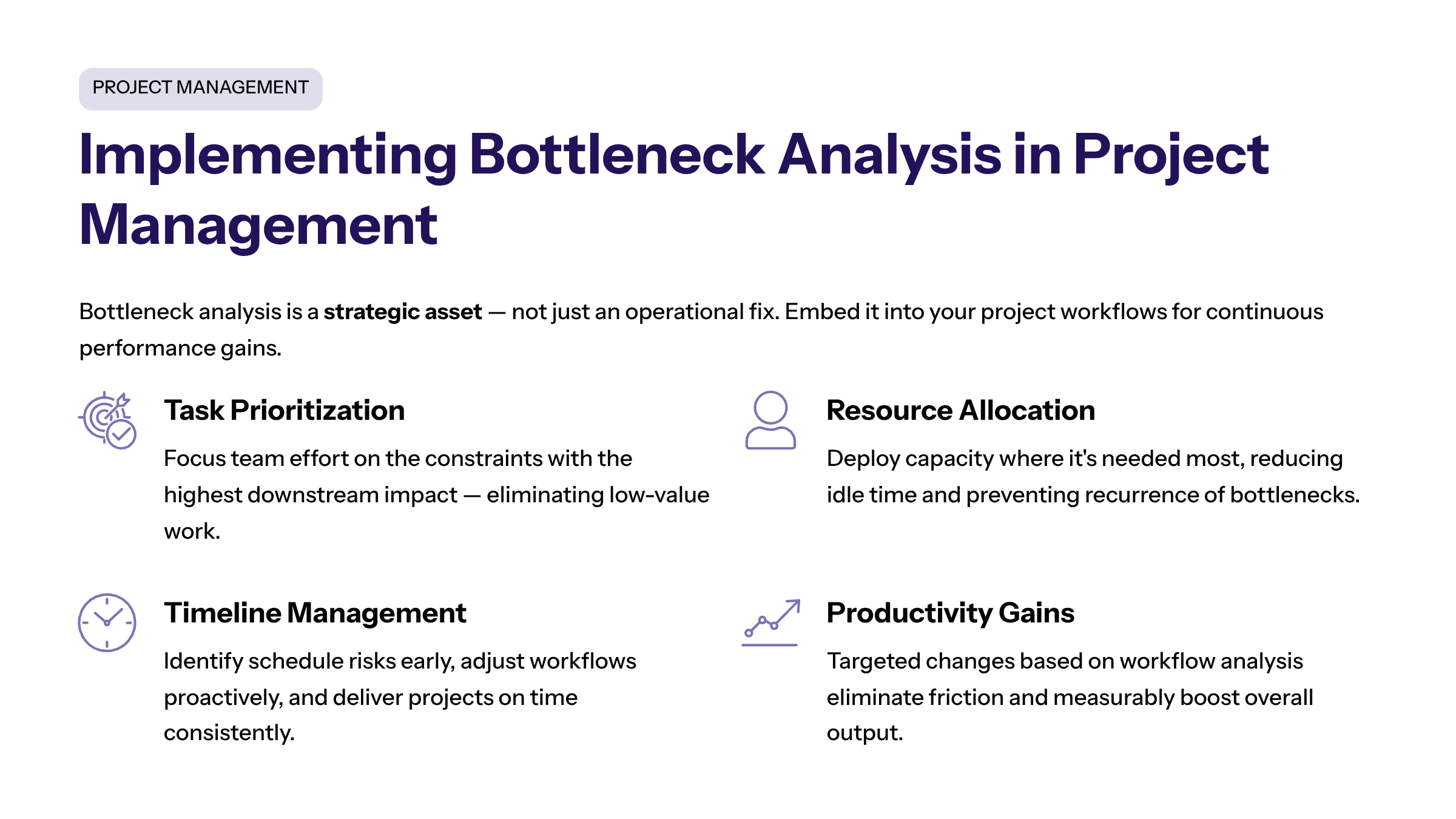
Bottleneck analysis is not only a tool for operational efficiency but also a strategic asset in project management. By integrating bottleneck identification and resolution within project workflows, teams can enhance task prioritization, resource allocation, and timeline management. Implementing targeted changes based on workflow analysis helps eliminate bottlenecks, improve efficiency, and boost overall productivity.
Once a bottleneck is identified and resolved, it is essential to conduct post-implementation monitoring to track whether the bottleneck has cleared or shifted to another area after changes are made. Continuous iteration is important, as resolving one constraint often causes the next bottleneck to emerge elsewhere in the process.
Additionally, impact assessment should be performed to quantify the bottleneck's effect on overall performance, including cost and delivery time.
Application within Agile and Scrum Frameworks
In Agile and Scrum methodologies, where iterative progress and flexibility are paramount, bottleneck analysis helps teams identify impediments that slow down sprints or backlog processing. Regular bottleneck assessments enable Scrum Masters and Product Owners to adjust workflows, redistribute workloads, and remove blockers promptly.
Benefits for Project Outcomes
-
Reduces delays and cycle times, accelerating project delivery.
-
Improves resource utilization, minimizing waste and overburden, and increasing the system's ability to handle workload efficiently.
-
Enhances team collaboration by clarifying constraints and responsibilities.
-
Increases customer satisfaction through timely and quality deliverables.
Strategic Integration and Continuous Improvement
Embedding bottleneck analysis into project management processes supports a culture of continuous improvement. By routinely analyzing workflow constraints and implementing changes to address identified issues, organizations can sustain high performance and adapt to changing business demands. Regularly implementing such changes ensures that process improvements are ongoing, helping to eliminate bottlenecks, improve efficiency, and enhance overall productivity.
As noted by McKinsey Digital, companies that systematically apply bottleneck analysis within their project management practices report up to 30% improvements in delivery speed and operational efficiency.
Conclusion
This comprehensive analysis underscores the critical importance of bottleneck analysis templates, presentations, and worksheets as essential tools for executives and project managers striving for operational excellence.
By adopting these methodologies and leveraging modern digital tools, organizations can unlock significant productivity gains, streamline workflows, and achieve strategic objectives with greater certainty.