Transformation Risk Register Template and Guide
In today’s rapidly evolving business landscape, effective risk management is not just a best practice—it’s a strategic imperative.
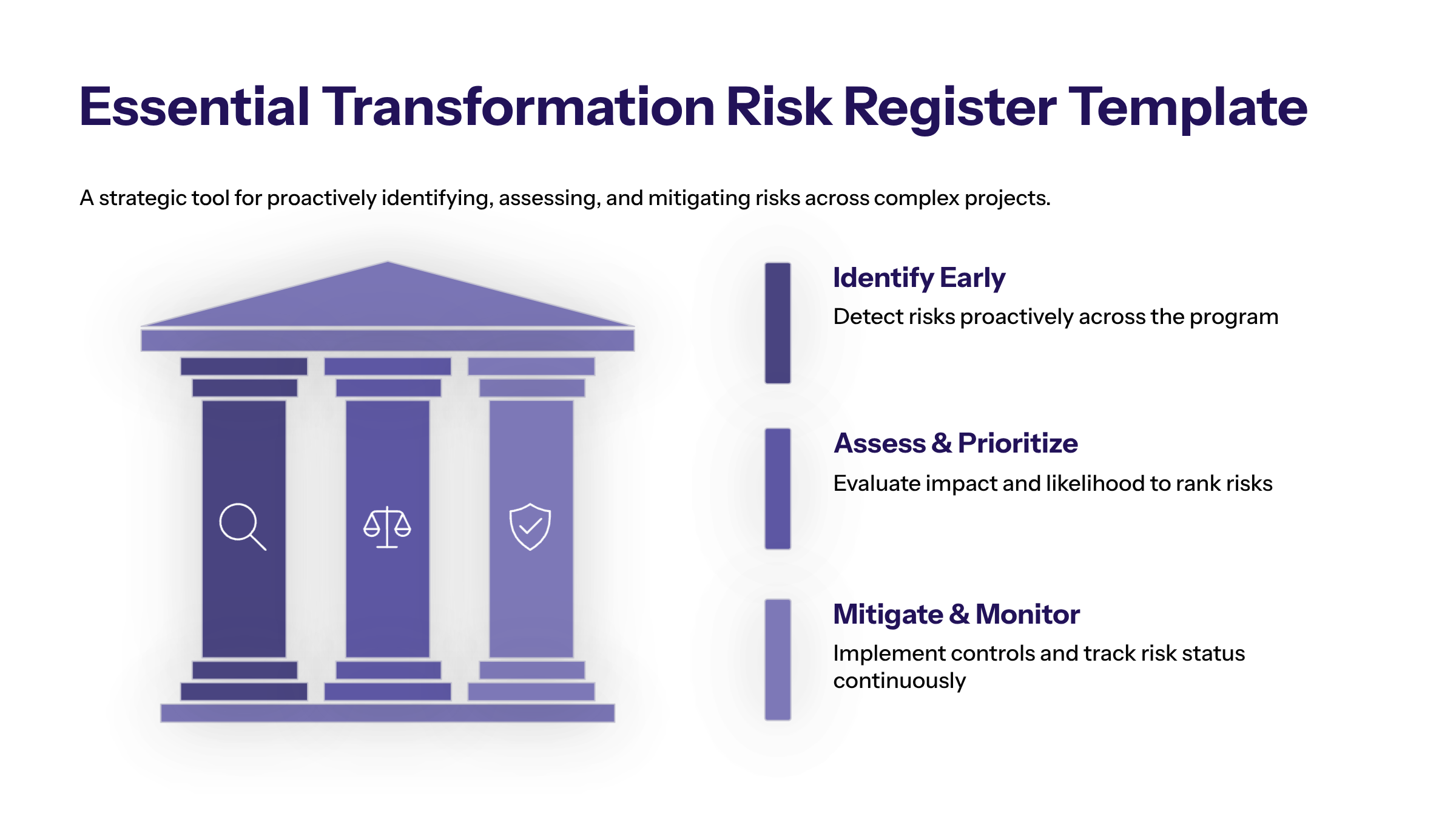
This article provides an in-depth exploration of the transformation risk register template, a critical tool for project managers and risk management professionals aiming to proactively identify, assess, and mitigate risks that could impact the success of complex projects.
By integrating this structured document into project management workflows, organizations can enhance visibility into potential and emerging threats, align mitigation strategies with strategic objectives, and foster continuous improvement across their project portfolios.
Key Takeaways
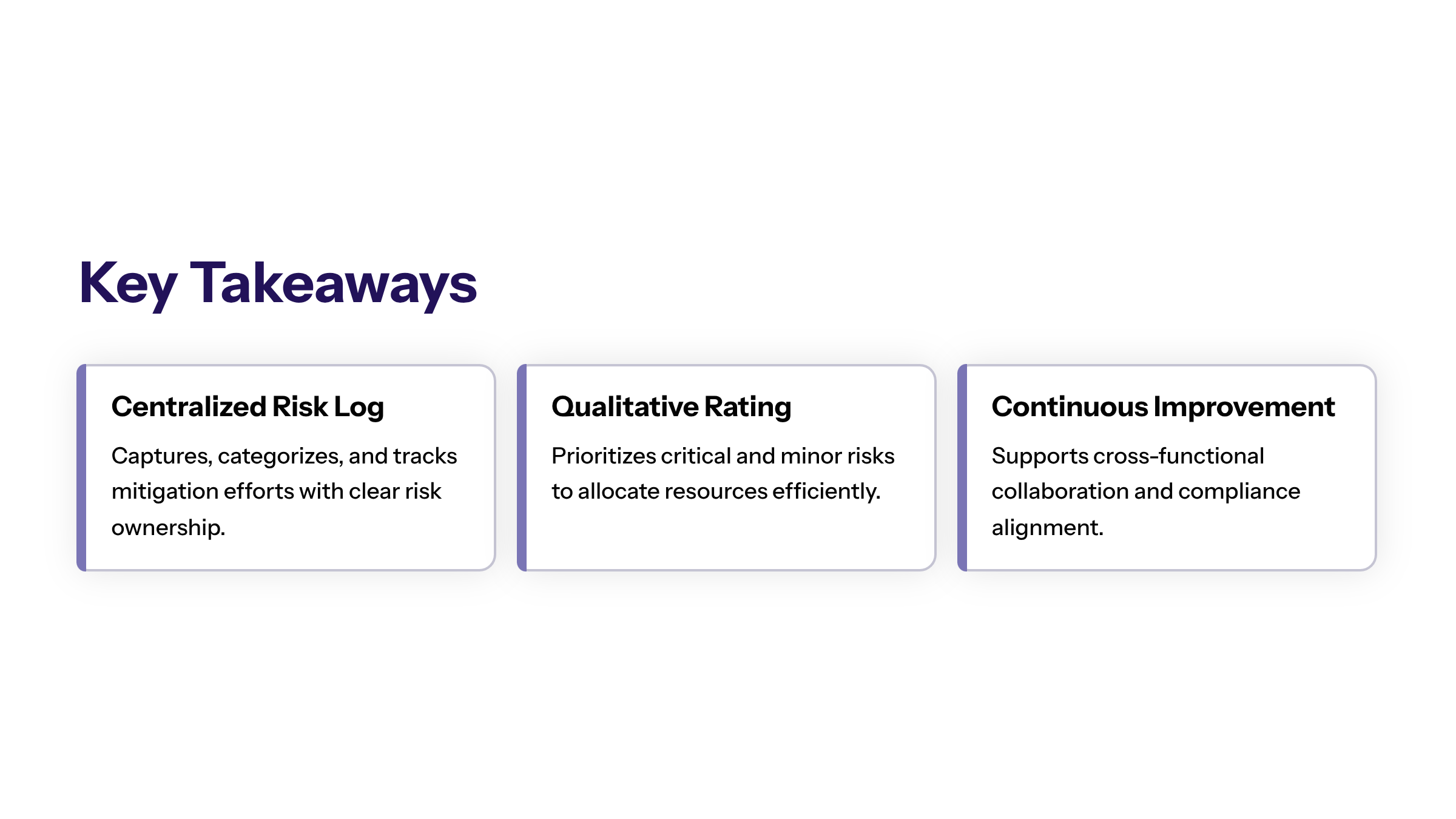
A transformation risk register template serves as a centralized risk log that captures possible risks, categorizes them, and tracks mitigation efforts, enabling effective risk ownership and proactive risk response.
Incorporating qualitative analysis and risk rating into the risk assessment process helps prioritize critical risks and minor risks alike, ensuring resources are allocated efficiently to address both inherent risks and emerging threats.
Embedding a well-maintained risk register within project management practices supports continuous improvement, cross-functional collaboration among key stakeholders, and alignment with industry trends and compliance requirements.

Introduction to Risk Management
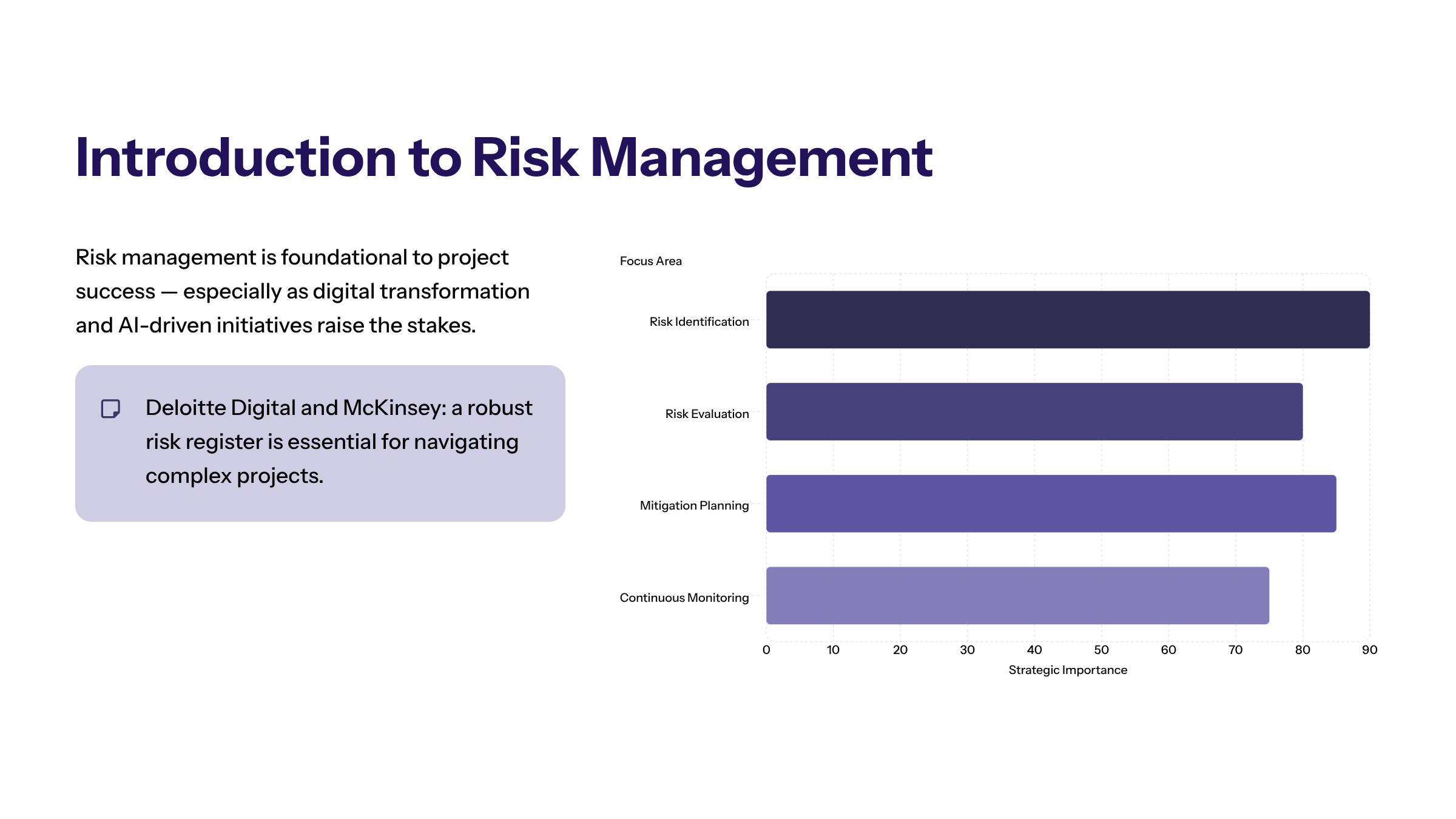
Risk management is a foundational element of project management that involves the systematic identification, evaluation, and mitigation of potential risks to safeguard project success. In an era where digital transformation and AI-driven initiatives are reshaping industries, the stakes for managing risks effectively have never been higher. Organizations such as Deloitte Digital and McKinsey emphasize that a strategic risk management plan anchored by a robust risk register is essential to navigating integration challenges and complex projects.
A transformation risk register template is a structured document designed to centralize risk data, providing project managers and risk management professionals with a comprehensive tool to track possible risks, their risk impact, and mitigation strategies. This living document evolves throughout the project lifecycle, reflecting new risks and residual risk adjustments, thus supporting continuous improvement and strategic decision-making.
The Role of a Risk Register in Project Management
A risk register lies at the heart of effective risk management. It consolidates risk identification, risk description, risk category, risk rating, and risk response into a single, accessible platform. This centralized risk register enables project teams to maintain clarity on risk ownership, monitor risk status, and ensure accountability. For instance, in complex digital transformation projects involving AI/ML integration, the risk register facilitates collaboration among IT teams, compliance officers, and executive leadership, ensuring that critical threats are addressed promptly.
In regulated environments, maintaining a risk register is not only a best practice but a core requirement that demonstrates active monitoring of risks to stakeholders, auditors, and regulators. The risk register is not just a compliance requirement; it is a practical tool that supports proactive planning and strengthens operational resilience.
Creating a Risk Register
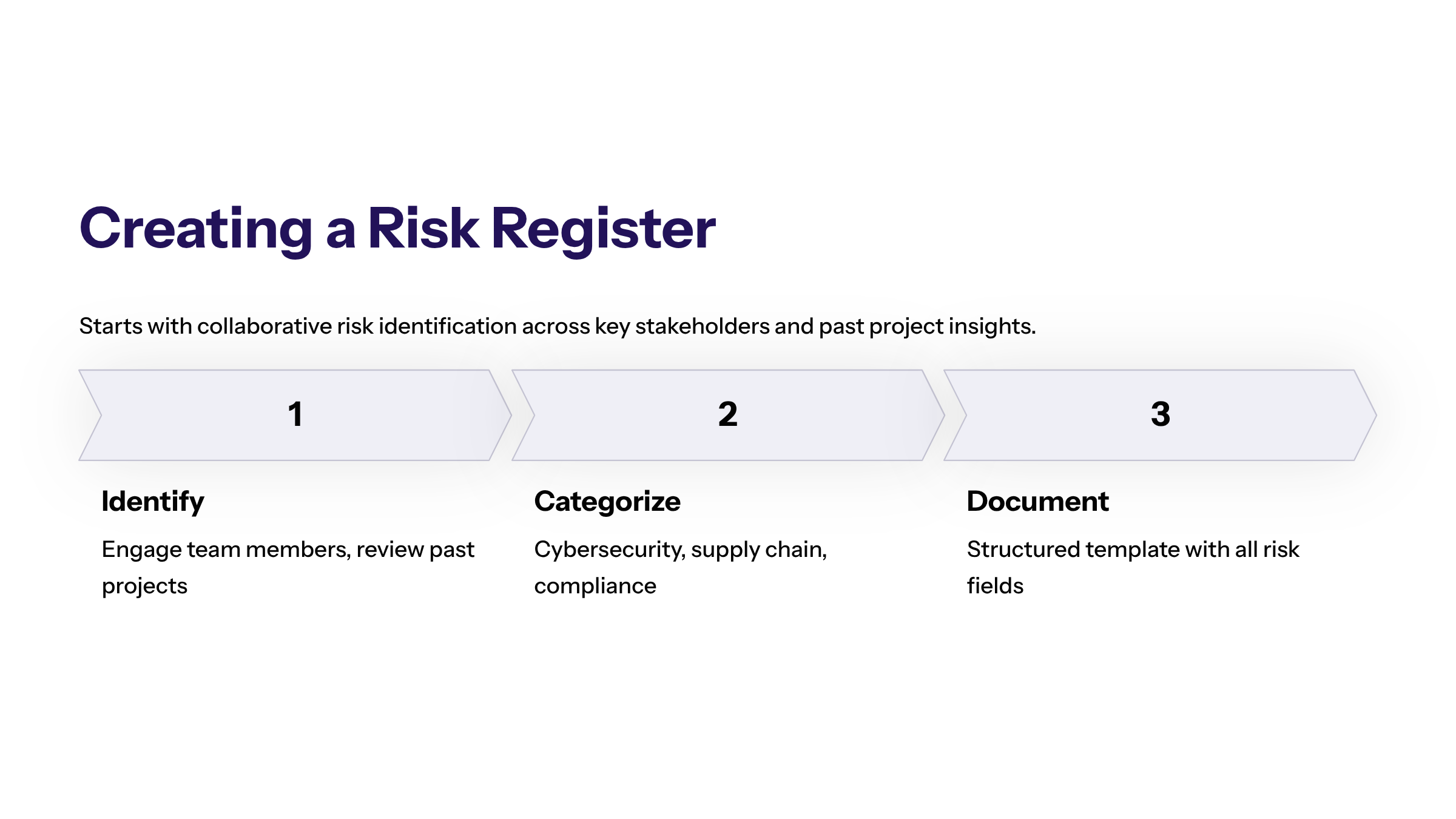
Developing a project risk register template begins with comprehensive risk identification—a collaborative process involving key team members and stakeholders. By leveraging insights from past projects and industry trends, project managers can anticipate both common risk scenarios and unique challenges specific to their domain, such as cybersecurity vulnerabilities in fintech platforms or supply chain disruptions in manufacturing.
Components of an Effective Risk Register Template
A typical transformation risk register template includes columns for Risk ID, Description, Category, Impact, Probability, Priority, Mitigation Strategy, Action Owner, Status, and Review Date. Key elements include a unique identifier for tracking, identification date, risk description, risk category, and risk trigger. These components ensure that every risk is uniquely identified and described in a manner that anyone can understand.
Component | Description |
|---|---|
Risk Identification | Unique ID and brief description of the risk, capturing possible risks and their context. |
Risk Category | Classification into common risk categories such as operational, financial, compliance, or reputational. |
Risk Likelihood | Qualitative or quantitative assessment of the probability of risk occurring. |
Risk Impact | Evaluation of the potential consequences or severity of the risk. |
Risk Rating | Combined score reflecting risk likelihood and impact to prioritize risks. |
Risk Owner | Assigned individual responsible for monitoring and managing the risk. |
Mitigation Strategies | Preventive measures and contingency plans to address the risk if it materializes. |
Risk Status | Current state of the risk (e.g., open, in progress, mitigated, closed). |
Review Date | Scheduled date for the next review or update of the risk entry. |
Risk register templates can be customized to fit specific project needs, allowing organizations to tailor columns and fields based on project complexity and industry requirements. Modern software tools enhance this customization and management process.
For example:
- Smartsheet offers high customization with conditional formatting and formulas, while nTask provides a user-friendly interface for building and visually tracking risks.
- Asana integrates seamlessly with risk registers, enabling task management and tracking of mitigation strategies.
- ProofHub consolidates risk discussions and task management within the risk register, streamlining workflows.
- ClickUp offers comprehensive project management functionalities, including custom views tailored for risk registers.
Risk Identification and Description
Effective risk identification requires a strategic approach that encompasses both inherent risks and emerging threats.
For example, construction projects may face system failures and weather-related delays, while AI-first software development projects must consider data privacy and compliance risks under HIPAA and GDPR.
Clear, concise risk descriptions ensure all stakeholders understand the nature and implications of each risk, facilitating informed risk response planning.
“A well-structured risk register is not merely a list of problems; it is a strategic tool that transforms uncertainty into actionable insight.” — Project Management Institute
Every risk needs a unique ID and a description that anyone can understand. Identifying risks is the foundation of your entire risk register, and this clarity enables effective prioritization and mitigation.
Risk Assessment and Analysis
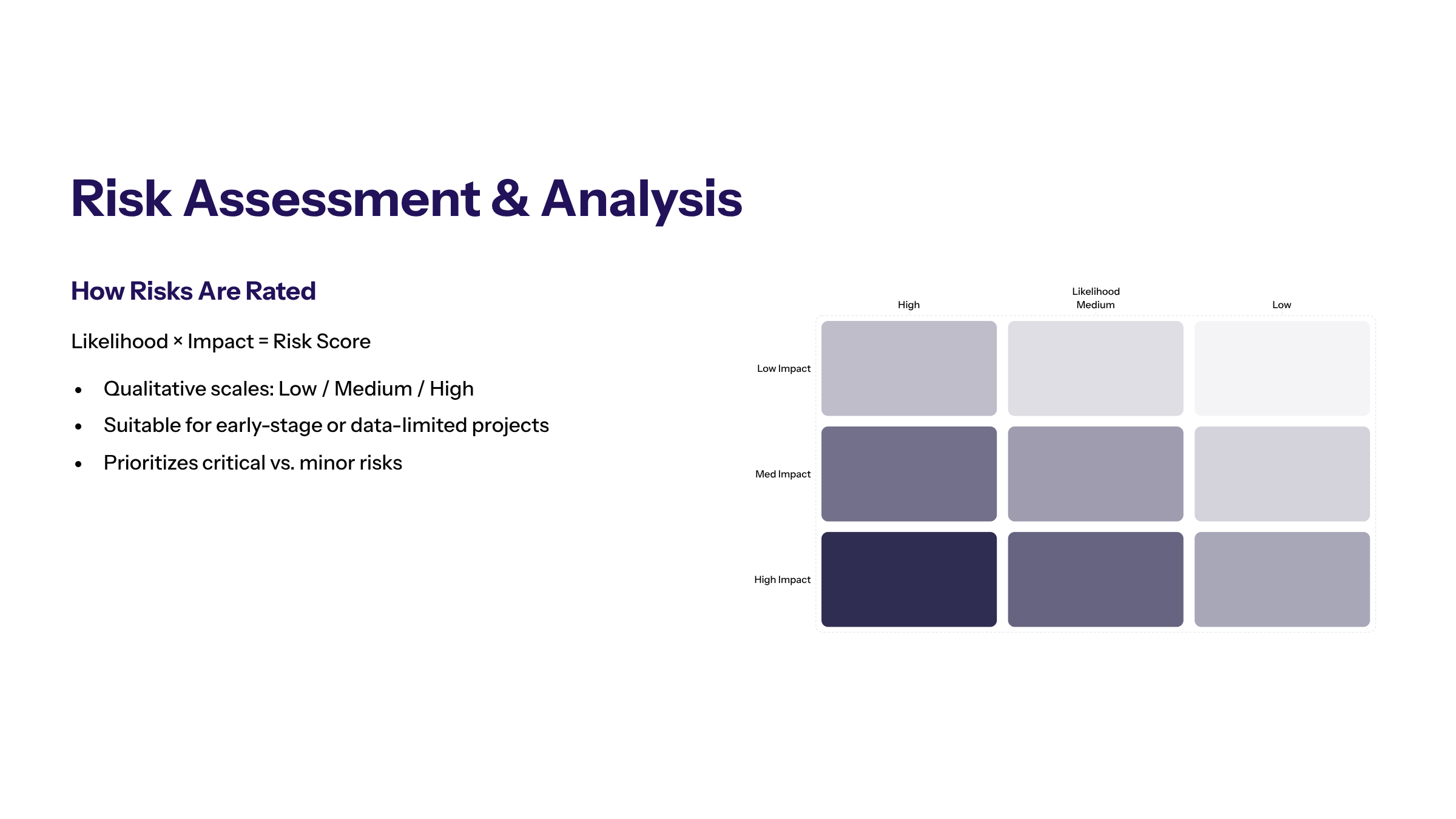
Risk assessment is a critical phase in managing project risks, involving the evaluation of risk likelihood and risk impact to determine an overall risk score or risk rating. This process helps prioritize critical risks that could significantly derail project objectives and minor risks that require monitoring but pose less immediate threat.
Qualitative vs. Quantitative Analysis
Qualitative analysis uses descriptive scales (e.g., low, medium, high) to assess risks, making it suitable for projects with limited data or early-stage planning.
Quantitative analysis, on the other hand, employs numerical values and statistical methods to estimate risk probability and financial impact, offering precision for complex projects such as enterprise-scale digital transformations.
Prioritizing Risks Using Risk Rating
By combining risk likelihood and impact, project teams can assign a risk rating or risk score that guides resource allocation. High-risk ratings signal critical threats that demand immediate mitigation, while lower ratings identify minor risks suitable for routine monitoring.
This prioritization aligns with strategic objectives, ensuring that mitigation efforts focus on risks with the greatest potential to affect project success.
Managing Risks
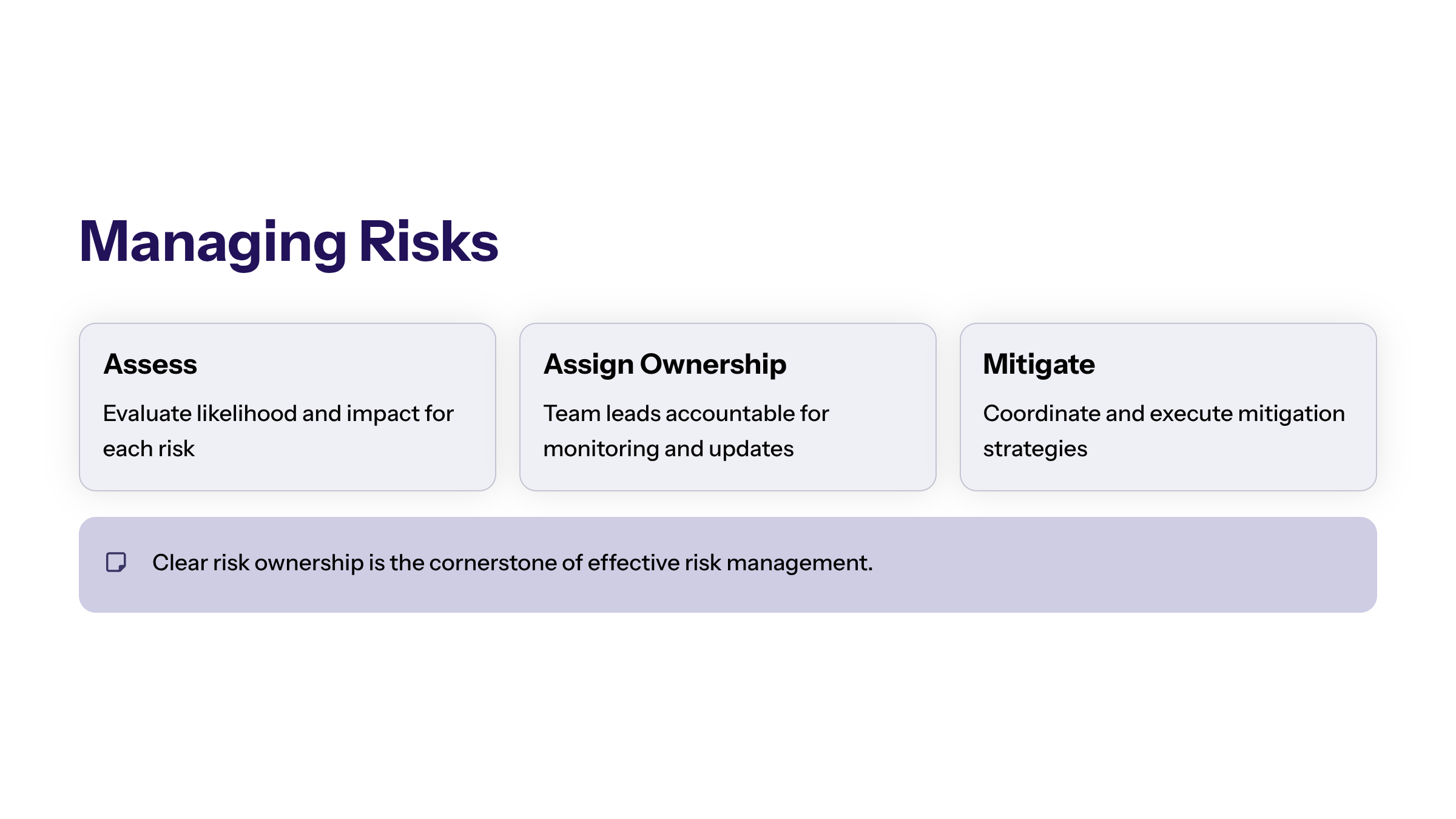
Once risks are assessed, managing them involves implementing mitigation strategies and assigning risk ownership. Risk owners, often team leads or risk management professionals, are accountable for monitoring risks, updating the risk register entry, and coordinating mitigation efforts.
Risk Ownership and Accountability
Clear risk ownership is essential for effective risk management. Assigning responsibility ensures that risks do not remain unmanaged and that mitigation plans are executed efficiently.
For example, in a healthcare software modernization project, compliance risks might be owned by the legal team, while technical risks fall under the IT department’s purview.
Mitigation Strategies and Contingency Planning
Mitigation involves both preventive measures to reduce the likelihood of risk occurring and contingency plans to minimize impact if the risk materializes.
The mitigation plan outlines specific actions or controls designed to reduce the likelihood or impact of identified risks. Effective risk mitigation balances these approaches, supported by continuous monitoring and updates to the risk register.
Proactive Risk Management
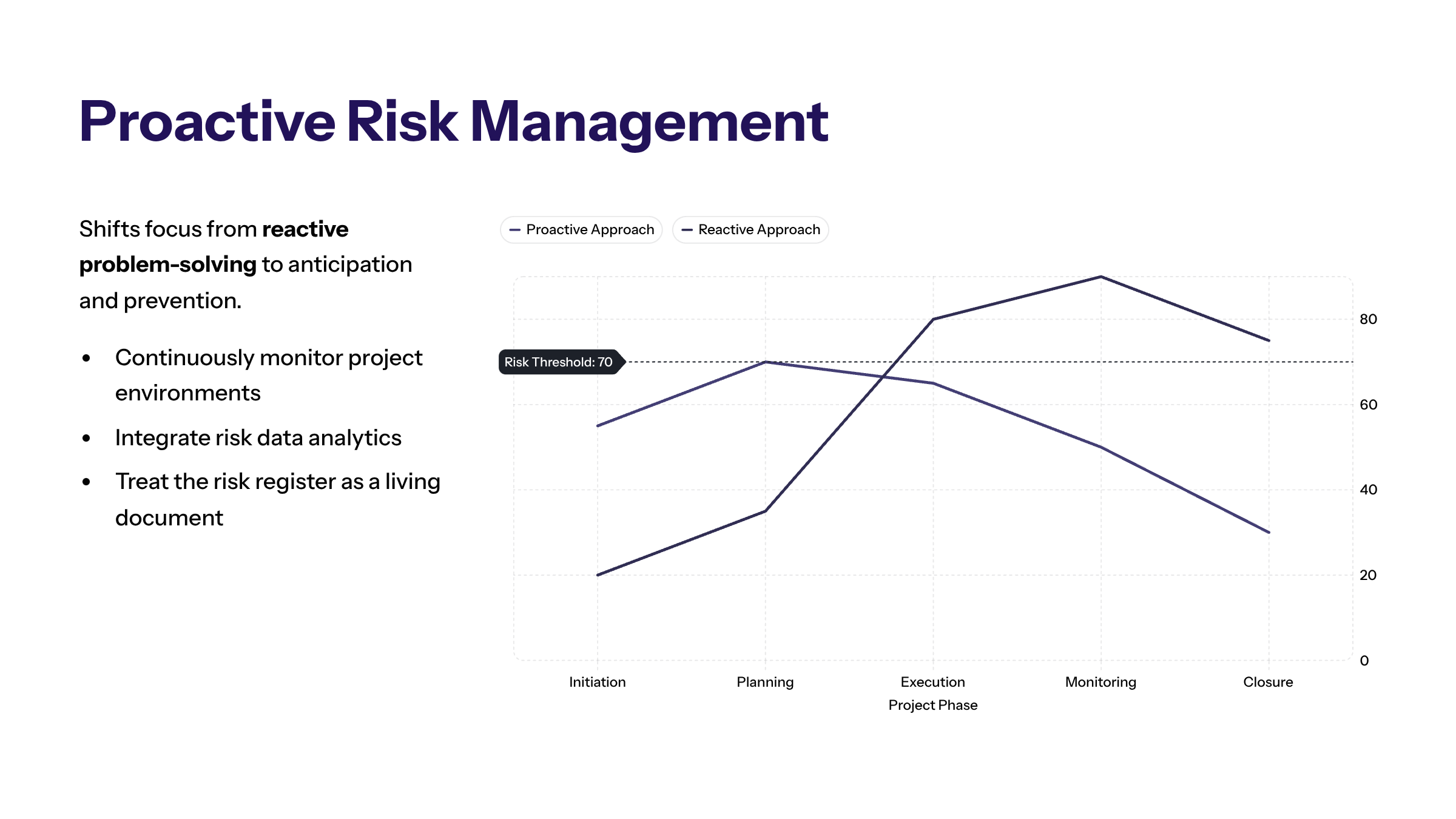
Proactive risk management shifts the focus from reactive problem-solving to anticipation and prevention. By continuously monitoring project environments and integrating risk data analytics, organizations can detect emerging risks early and adapt mitigation plans accordingly.
Continuous Monitoring and Updating
A well-maintained risk register is a living document that evolves with the project. Regular reviews involving key stakeholders ensure that new risks are captured, risk statuses are updated, and mitigation strategies remain effective. Tools like monday work management and Asana provide automated dashboards and alerts to facilitate this process.
Regularly updating the register ensures that your risk management process adapts as the business grows or changes, maintaining relevance and effectiveness throughout the project lifecycle.
Integration with Project Management Processes
Embedding risk management into project workflows enhances responsiveness. For instance, linking risk register entries with project timelines and deliverables enables teams to align mitigation efforts with critical milestones, reducing the likelihood of schedule delays and budget overruns.
In 2026, modern transformation risk registers often utilize real-time dashboards to link risks to the organization's broader business goals, making risk management more transparent and actionable.
Project Risks
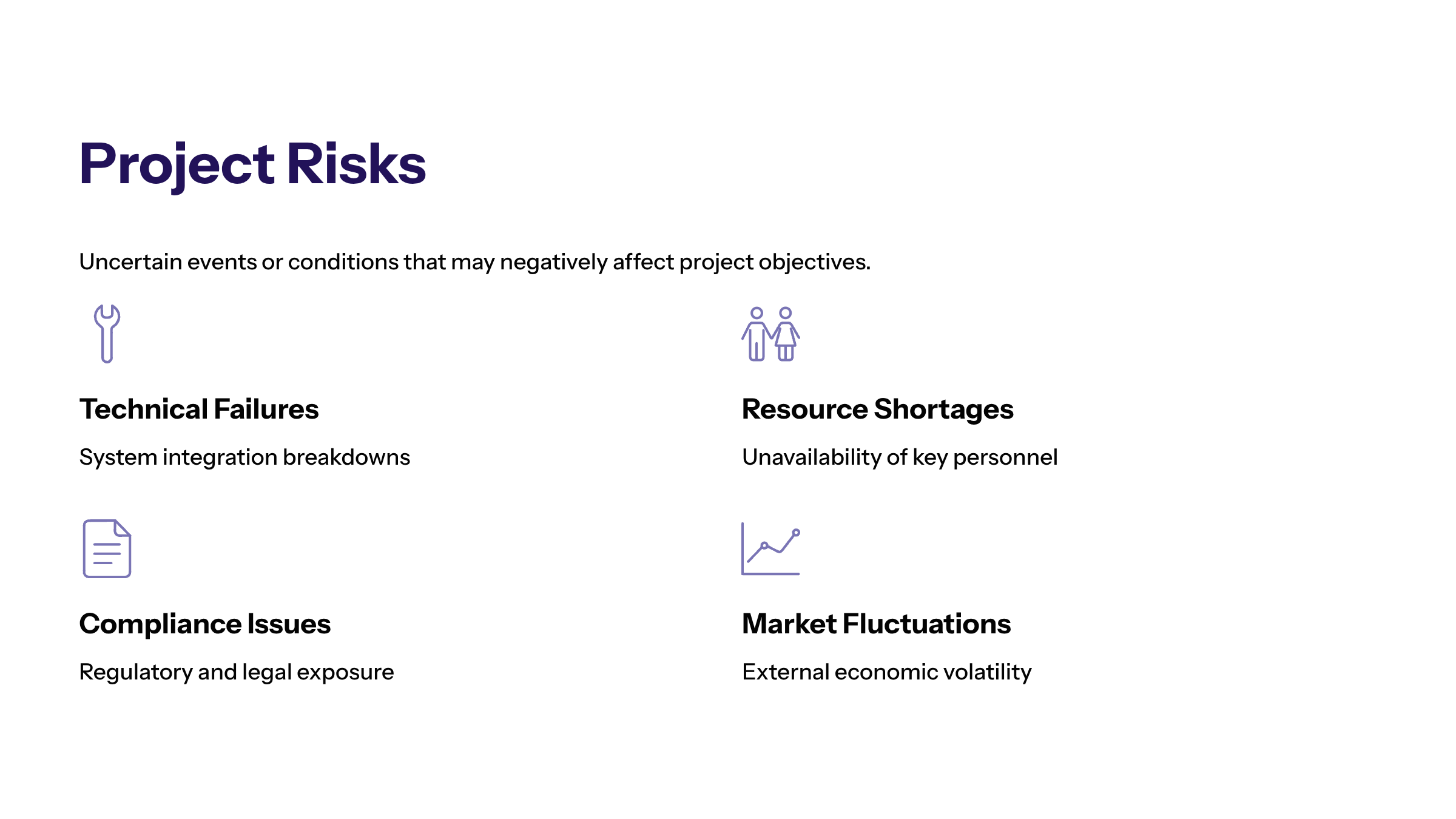
Project risks encompass any uncertain events or conditions that may negatively affect a project’s objectives.
These risks can range from technical failures and resource shortages to regulatory compliance issues and market fluctuations. Identifying and analyzing these risks early through a structured risk analysis process allows organizations to mitigate potential risks effectively and minimize their impact on project success.
Unmanaged risks can lead to delays, cost overruns, and compromised quality, underscoring the importance of proactive risk management.
Project Risk Register Template
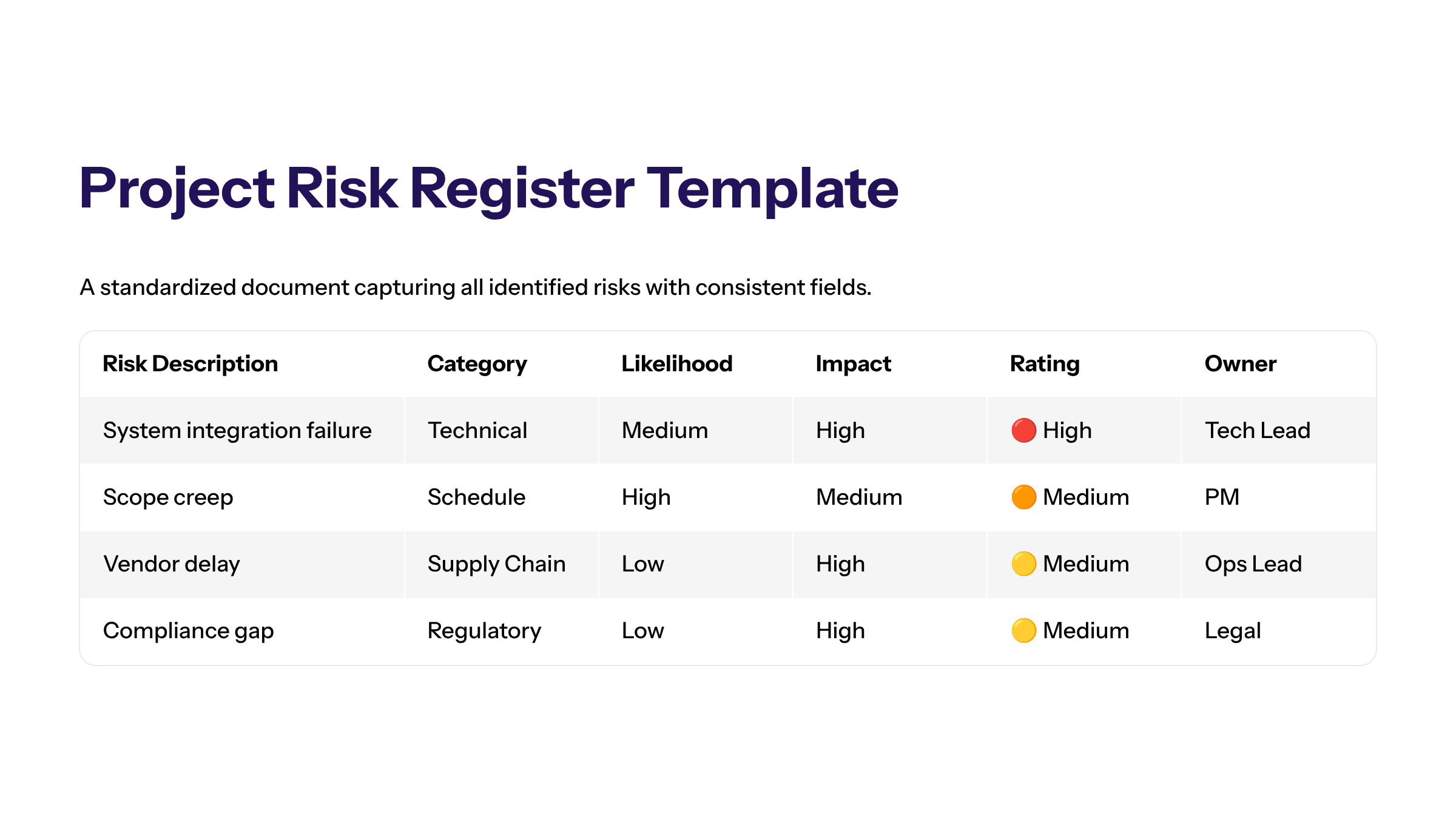
A project risk register template is a standardized document designed to capture and organize all identified risks within a project.
This template typically includes fields for risk description, risk category, likelihood, impact, risk rating, mitigation strategies, risk owner, status, and review date.
By using a consistent template, project teams can allocate resources effectively, track risks systematically, and ensure accountability. The template serves as a living document that evolves as new risks emerge and existing risks change throughout the project lifecycle.
Project Risk Register
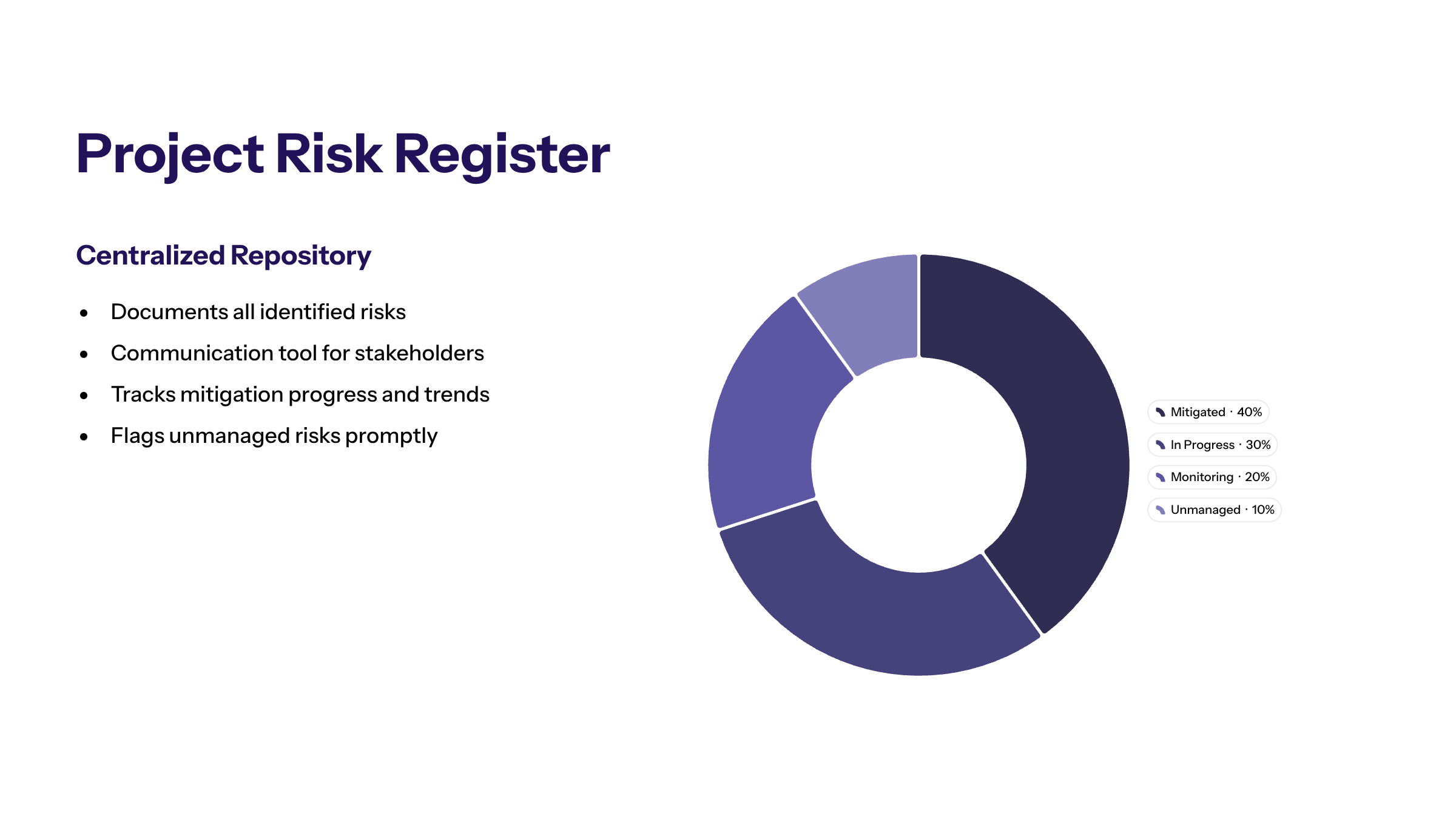
The project risk register is the centralized repository where all identified risks are documented and managed. It acts as a communication tool among project stakeholders, providing transparency into risk status and mitigation progress.
Maintaining an up-to-date project risk register helps teams monitor risk trends, identify unmanaged risks promptly, and adjust mitigation plans as necessary to maintain project alignment with strategic objectives.
Common Risk Scenarios
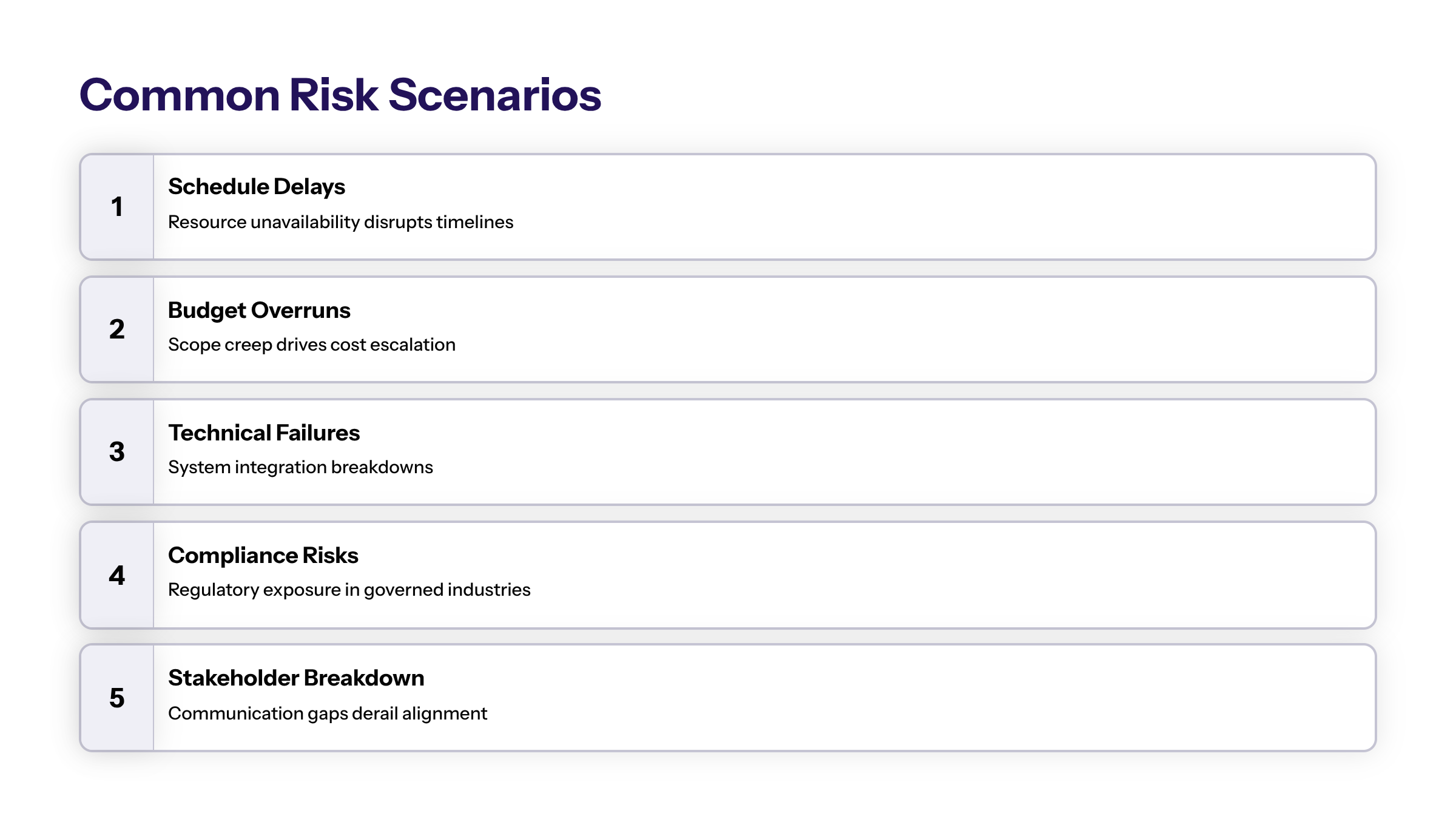
Understanding common risk scenarios helps project teams anticipate and prepare for typical challenges. These scenarios might include schedule delays due to resource unavailability, budget overruns from scope creep, technical failures in system integration, compliance risks in regulated industries, and stakeholder communication breakdowns.
Incorporating these scenarios into the risk register allows for targeted risk analysis and the development of effective mitigation strategies tailored to the project context.
Past Projects
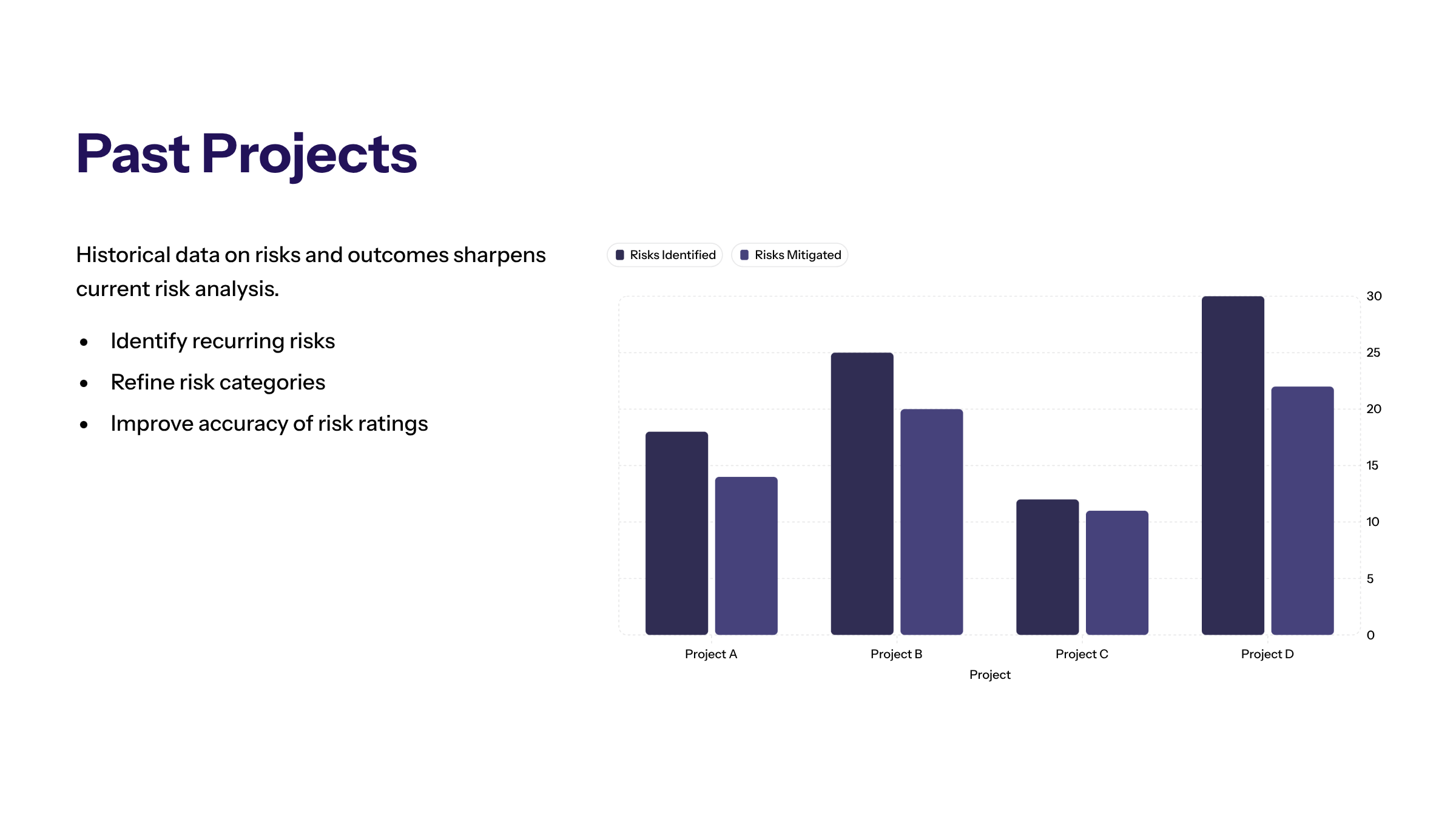
Leveraging insights from past projects is crucial for improving risk management practices. Historical data on identified risks, mitigation effectiveness, and project outcomes provide valuable lessons that inform current risk analysis.
By reviewing past projects, teams can identify recurring risks, refine risk categories, and enhance the accuracy of risk ratings. This continuous improvement approach strengthens the risk register’s relevance and effectiveness over time.
Multiple Projects
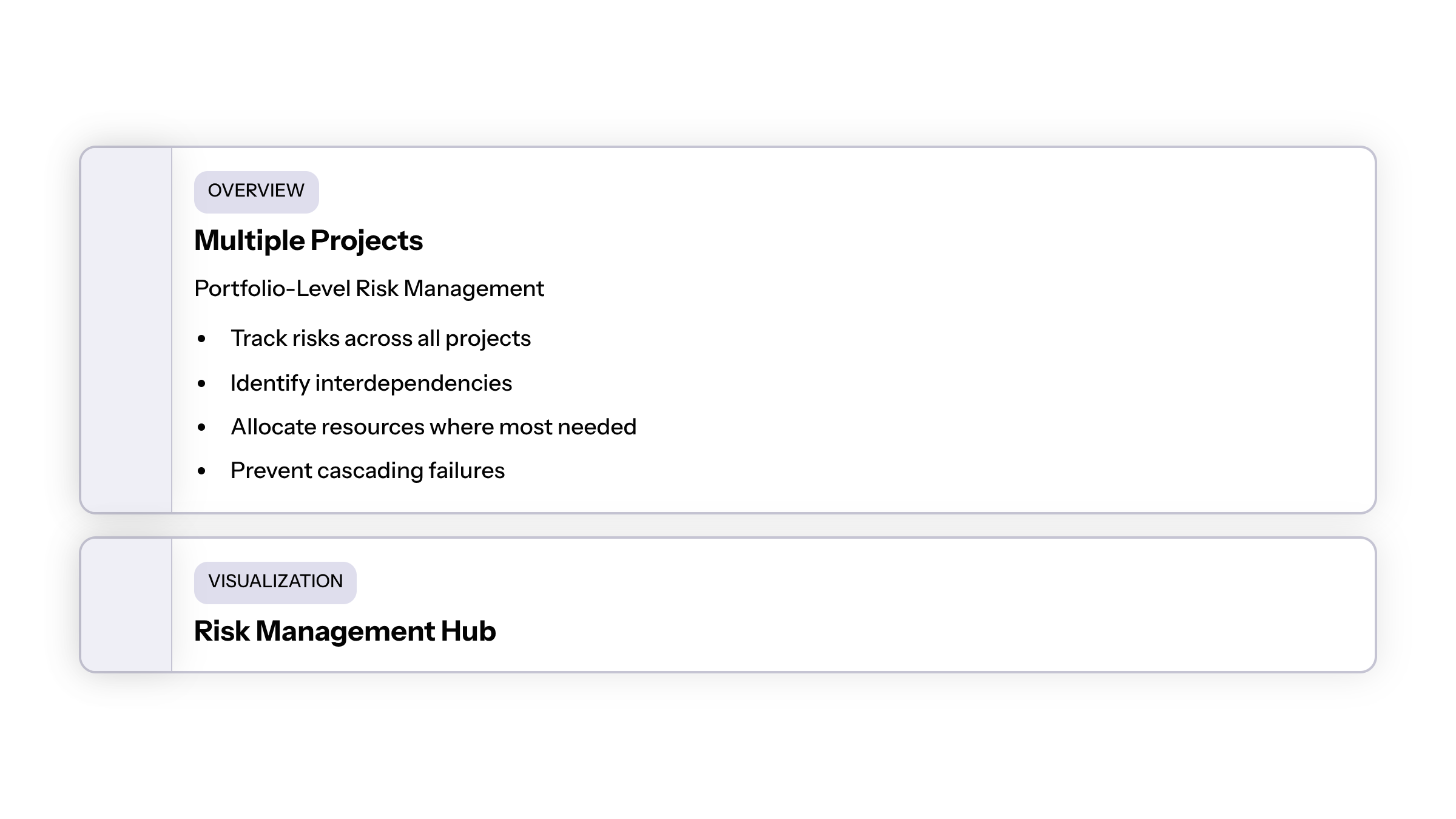
Managing risks across multiple projects requires a coordinated approach to ensure consistency and efficiency. A centralized risk register or portfolio-level risk management system enables organizations to track risks across projects, identify interdependencies, and allocate resources where they are most needed.
This holistic view supports strategic decision-making and helps prevent unmanaged risks from cascading across projects, thereby safeguarding overall program success.
Integration Challenges
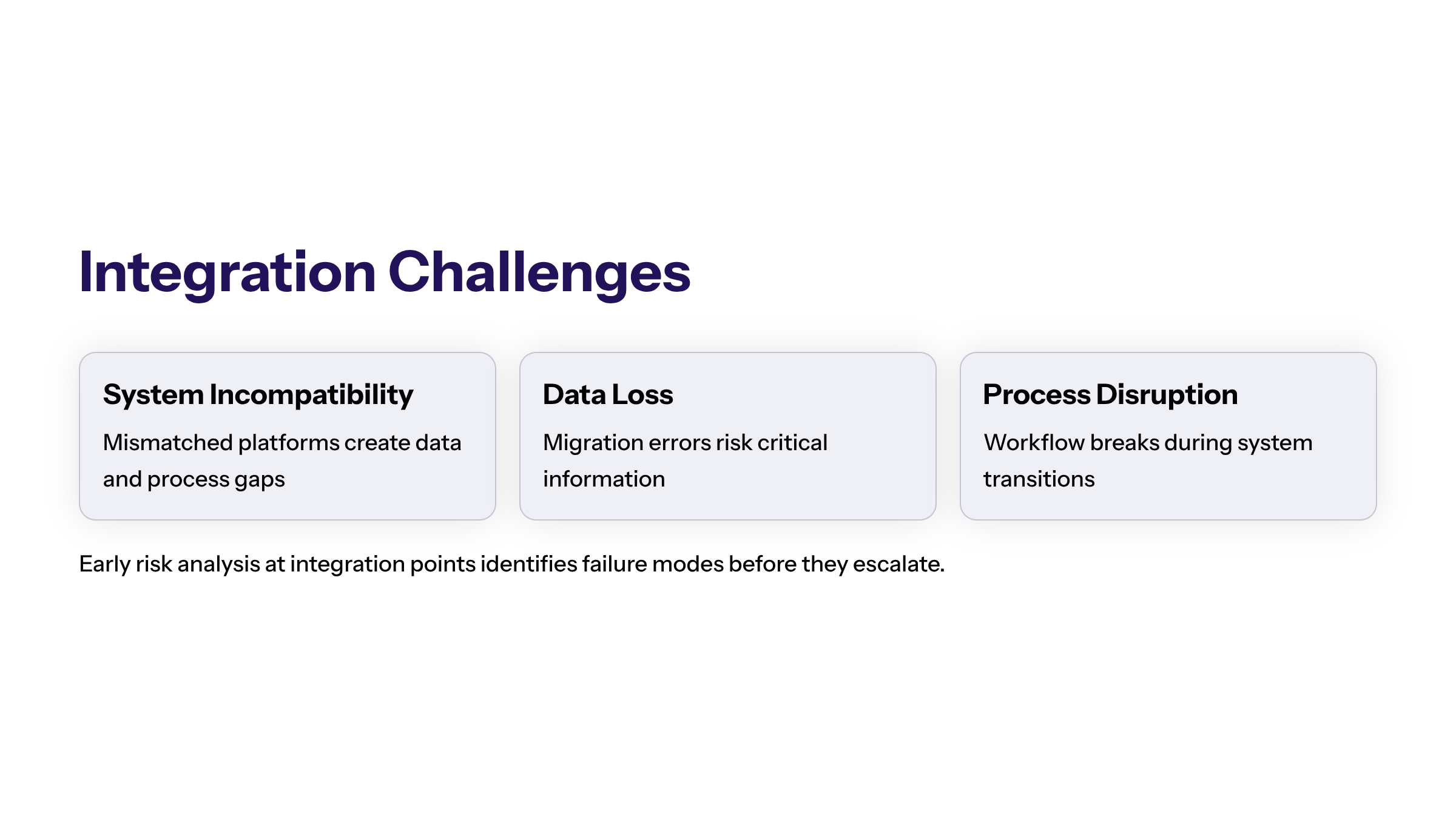
Integration challenges frequently arise in complex projects involving multiple systems, teams, or technologies.
These challenges can introduce risks such as system incompatibility, data loss, or process disruption.
Effective risk analysis focused on integration points helps identify potential failure modes early. Incorporating these risks into the transformation risk register template ensures that mitigation strategies address both technical and organizational aspects, facilitating smoother project delivery.
Qualitative Analysis
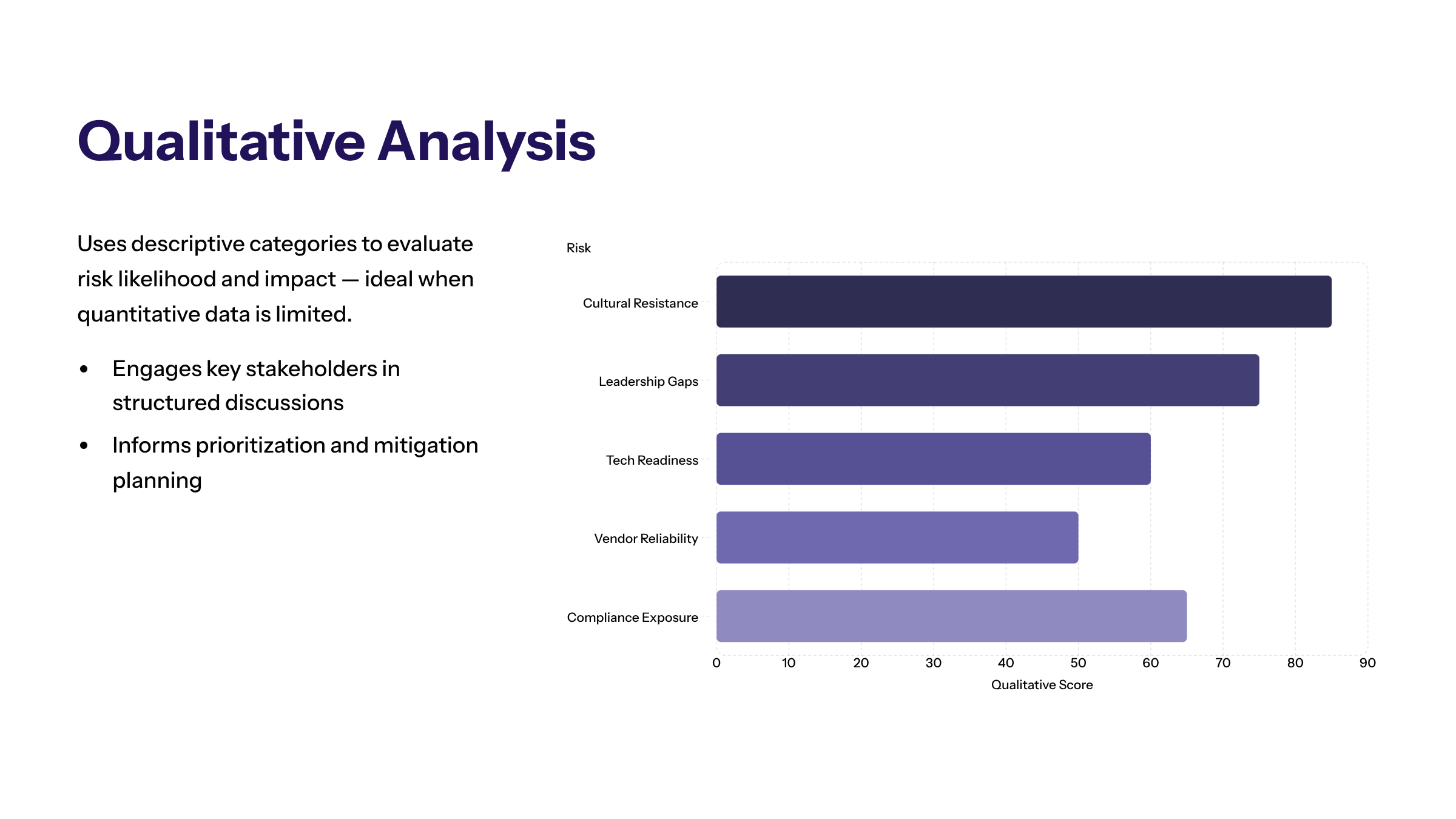
Qualitative analysis is a risk assessment method that uses descriptive categories to evaluate the likelihood and impact of identified risks.
This approach is particularly useful when quantitative data is limited or unavailable. By engaging key team members and stakeholders in qualitative discussions, project managers gain a nuanced understanding of risks, which informs prioritization and mitigation planning.
Combining qualitative analysis with quantitative methods enhances the robustness of the overall risk assessment process.
Transformation Risk Register Focus
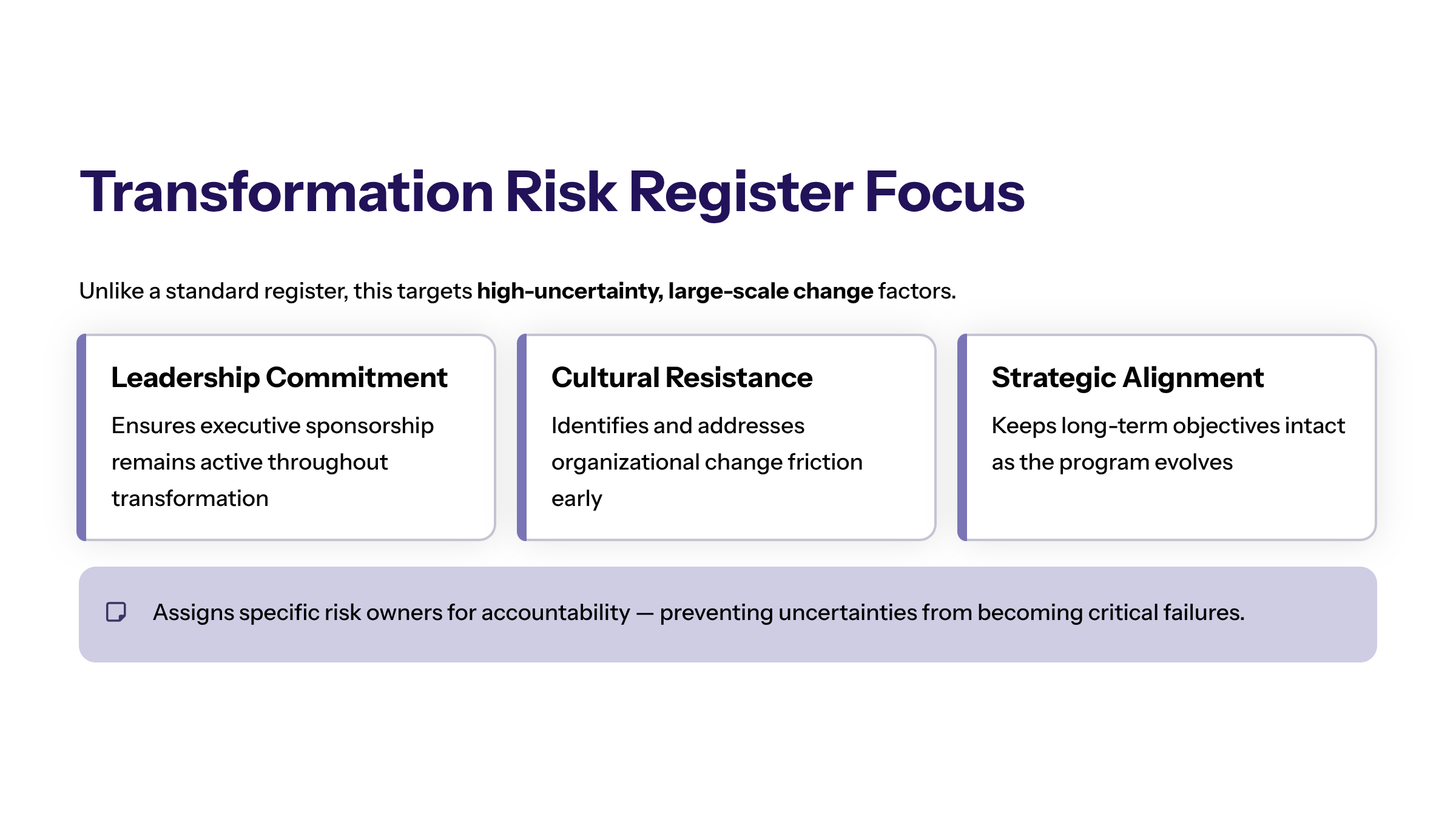
Unlike a standard project risk register, a transformation risk register focuses on high-uncertainty areas such as leadership commitment, cultural resistance, and long-term strategic alignment. This focus addresses the unique challenges of large-scale organizational changes, ensuring that risks associated with these complex factors are identified, assessed, and managed proactively.
A transformation risk register is a centralized repository to capture uncertainties before they become critical failures, assigning specific individuals as risk owners for accountability.
This living document serves as a critical tool for guiding strategic decisions and ensuring accountability throughout the transformation journey.