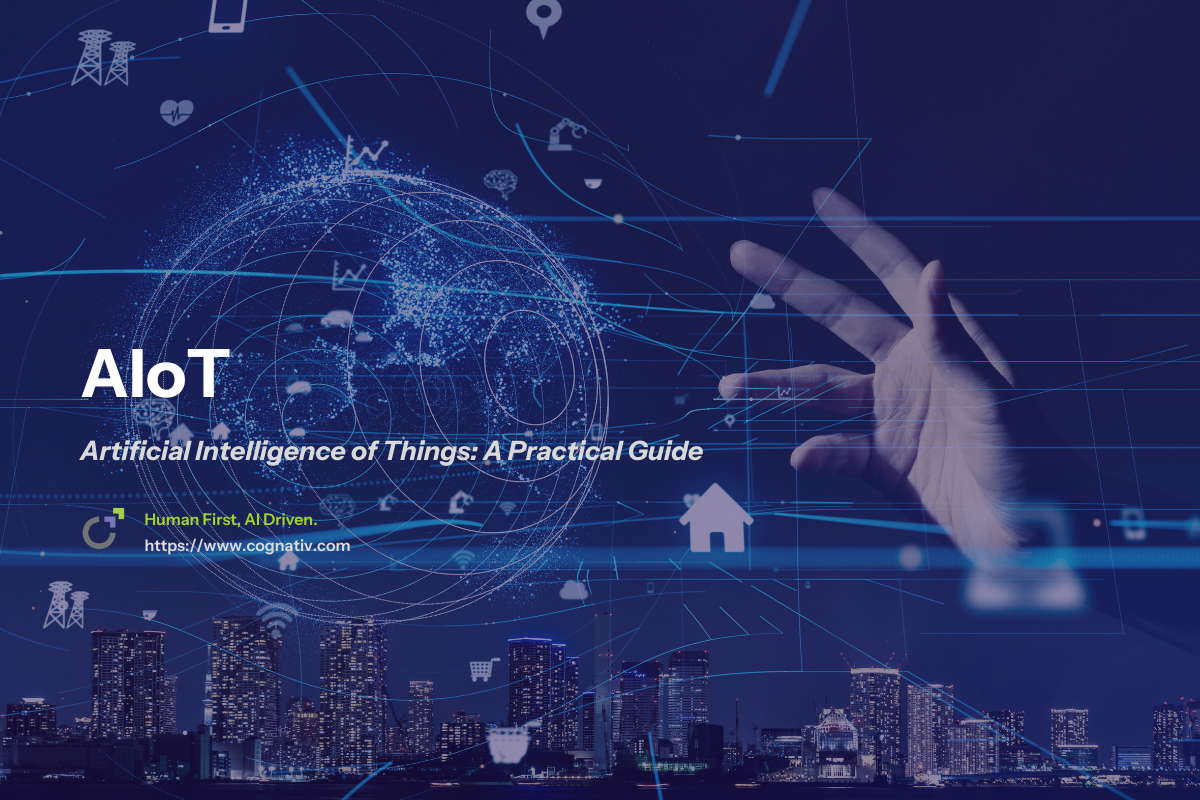
Artificial Intelligence of Things: A Practical Guide
The Artificial Intelligence of Things (AIoT) represents the convergence of artificial intelligence and Internet of Things (IoT) devices, creating intelligent, interconnected systems where the ai system acts as the analytical brain—analyzing data and making autonomous decisions across each device. An artificial intelligence system combines AI with IoT devices to enable real-time data analysis, decision-making, and automation in diverse applications.
This integration is transforming industries by enabling smarter operations, enhanced human machine interactions, and improved operational efficiency. Key stakeholders include enterprises across sectors such as manufacturing, healthcare, retail, and transportation, as well as technology providers specializing in AI, IoT, and edge computing.
Key Takeaways
-
AIoT combines AI capabilities with IoT devices to enable real-time data analysis, decision-making, and autonomous actions.
-
Core components include machine learning, neural networks, edge computing, and sensor systems.
-
AIoT applications span smart office buildings, autonomous vehicles, smart retail, traffic management, and industrial internet.
-
The integration enhances operational efficiency but introduces challenges in security, privacy, and system complexity.
-
Enterprises must strategically approach AIoT adoption considering compliance, cost, risk, and scalability.

The Rise of AIoT and IoT Devices in Digital Transformation
The Artificial Intelligence of Things is emerging as a pivotal force in digital transformation, marrying the data-gathering prowess of the iot device with the analytical and decision-making power of AI systems. As iot devices create vast amounts of sensor data, AI techniques such as machine learning and deep learning analyze this information to extract actionable insights.
Edge computing plays a crucial role by processing data close to the source, reducing latency and enabling real-time responsiveness, which is essential for applications like autonomous vehicles and smart buildings. Efficient data processing at the network edge allows AIoT applications to achieve low-latency, scalable, and real-time performance by moving computation from the cloud to the device level.
Leading technology companies, including Microsoft Azure IoT, AWS IoT, and Google Cloud IoT, are investing heavily in AIoT platforms that facilitate the deployment of AI models on connected devices and edge infrastructure. This trend aligns with broader shifts toward AI-first architecture and private AI systems that prioritize data security and compliance with regulations like GDPR and HIPAA.
Intelligence of Things
The Intelligence of Things (IoT) marks a significant evolution in how devices interact with the world around them. By embedding artificial intelligence into IoT devices, organizations can create smart systems that not only gather data from sensors and other devices but also analyze data in real time to make informed decisions. This intelligence of things approach transforms traditional devices into proactive agents capable of acting autonomously, reducing the need for human intervention and streamlining operations across industries.
With AI-powered IoT devices, businesses can unlock new levels of operational efficiency and data analytics. For example, in smart retail environments, AIoT systems can process data generated by customer interactions and inventory sensors to optimize product placement and personalize marketing efforts. In traffic management, intelligent devices analyze data from multiple sources to adjust signals and improve traffic flow, enhancing both safety and efficiency.
The intelligence of things also plays a crucial role in improving human machine interactions. Smart systems can interpret user behavior, environmental conditions, and data from other devices to deliver seamless, context-aware experiences. Whether it’s automating climate control in office buildings or enabling predictive maintenance in industrial settings, AIoT systems are redefining how devices process data and respond to the world, driving innovation and value across the enterprise landscape.
AIoT Systems and Devices
AIoT systems and devices represent the next generation of connected technology, combining advanced machine learning capabilities, neural networks, and other AI techniques to process sensor data and deliver actionable insights. These systems are designed to gather data from multiple sensors, analyze it in real time, and make intelligent decisions that enhance efficiency and performance in a wide range of applications.
In smart office buildings, AIoT devices such as smart cameras and environmental sensors work together to control access, monitor occupancy, and optimize lighting and climate based on real-time data analytics. Edge devices play a pivotal role by processing data locally, reducing latency, and enabling immediate responses to changing conditions. This approach not only improves operational efficiency but also supports compliance and security requirements in sensitive environments.
Autonomous vehicles and delivery robots are prime examples of AIoT applications that rely on computer vision, machine learning, and data analytics to navigate complex environments, detect objects, and make split-second decisions. In smart retail, AIoT systems use multiple sensors and cameras to monitor customer behavior, manage inventory, and personalize the shopping experience. Traffic management systems leverage AIoT to analyze traffic flow and adjust signals dynamically, reducing congestion and improving safety.
The key components of AIoT systems include robust hardware devices, scalable software platforms, and reliable communication networks that enable seamless data transfer and integration with other devices. These elements work together to support a wide range of use cases, from quality control and predictive maintenance in manufacturing to precision agriculture and smart appliances that adapt to user preferences.
As AIoT devices become more prevalent, organizations must address challenges related to data privacy, security, and ethical considerations. Ensuring transparency, accountability, and fairness in AIoT system design is essential to building trust and mitigating risks such as bias, surveillance, and job displacement.
Looking ahead, the continued evolution of AIoT—driven by advancements in edge computing, 5G connectivity, and emerging technologies—will unlock even more innovative applications and business models. Enterprises that embrace AIoT systems and devices will be well-positioned to lead in operational efficiency, customer experience, and digital transformation, provided they prioritize responsible development and deployment practices.
Implications for Enterprise Adoption
AIoT fundamentally changes how enterprises approach automation, data analytics, and system integration. By embedding artificial intelligence within IoT devices, organizations can achieve improved human machine interactions and operational efficiency. For example, smart office buildings equipped with smart environmental sensors and AI systems can dynamically adjust lighting and temperature based on occupancy, reducing energy consumption and enhancing occupant comfort.
In manufacturing, AIoT enables predictive maintenance through continuous monitoring of equipment via multiple sensors, preventing downtime and lowering maintenance costs. Autonomous delivery robots and vehicles leverage AIoT to navigate complex environments by analyzing sensor data in real time, improving safety and logistics efficiency.
However, integrating AIoT requires addressing challenges related to the interoperability of hardware devices, managing the complexity of multiple sensors and connected devices, and ensuring that IoT devices securely transfer data across networks. Enterprises must invest in robust AIoT platforms capable of handling diverse iot systems and facilitating seamless communication between edge devices and cloud services.
Opportunities in AIoT Deployment for Operational Efficiency
The potential of AIoT extends across various industry verticals, offering opportunities to enhance customer experience, optimize supply chains, and enable new business models. Smart retail environments use AIoT to analyze customer behavior via facial recognition and smart cameras, informing marketing strategies and inventory management.
Push notification features in smart home devices further enhance user engagement by alerting users to updates or actions, such as food readiness or device status. Traffic flow optimization in smart cities utilizes AIoT systems to monitor congestion and adjust traffic lights dynamically, reducing commute times and emissions. Additionally, AIoT systems can detect illegal parking, helping city management platforms improve urban traffic management and safety.
In healthcare, wearable devices integrated with AIoT systems provide continuous monitoring of vital signs, enabling early illness detection and personalized health insights. Mobile phones are increasingly used as edge devices for on-device AI applications in AIoT systems, supporting tasks like human activity recognition and image processing.
Precision agriculture benefits from AIoT by using sensor systems to monitor soil conditions and environmental factors, improving crop yields and resource efficiency. For example, a smart oven equipped with AIoT can optimize cooking processes by learning user preferences and automatically adjusting baking or roasting settings.
Moreover, AIoT’s ability to process visual information through machine vision and object detection enhances quality control in manufacturing and safety monitoring in industrial settings. The integration of radio frequency technologies and long range communication protocols supports scalable, low-latency AIoT deployments across wide geographic areas.
Challenges to Address
Despite its promise, AIoT introduces significant challenges. Security and privacy concerns arise from the vast amount of sensitive data generated and transferred by iot devices. Enterprises must implement comprehensive security frameworks and comply with regulations to protect data integrity and user privacy. Unlike traditional methods, which often struggle with scalability, efficiency, and privacy limitations, AIoT-enabled approaches offer more robust, adaptive, and privacy-preserving solutions.
The complexity of managing heterogeneous hardware devices and ensuring reliable communication between multiple video cameras, edge devices, and cloud platforms demands sophisticated orchestration and monitoring tools. Environmental factors, such as network variability and physical obstructions, can impact the performance of AIoT systems, necessitating resilient designs and adaptive algorithms.
Cost considerations include the investment in AIoT infrastructure, ongoing maintenance, and the integration of new features and capabilities. Enterprises must evaluate the total cost of ownership and potential return on investment carefully.
AIoT as a Strategic Imperative
AIoT is poised to become a foundational element in enterprise digital transformation strategies. As IoT systems converge with advanced AI techniques, organizations will unlock unprecedented levels of automation, insight, and responsiveness. The evolution of AIoT will be driven by advances in edge computing, machine learning capabilities, and secure AI-first architectures.
Enterprises that proactively adopt AIoT can gain competitive advantages by improving operational efficiency, enhancing customer experiences, and enabling innovative services. However, success requires careful planning around compliance, risk management, and scalable deployment.
Strategic partnerships with AIoT platform providers and investments in workforce skills related to computer science, data analytics, and AI technologies will be critical. Additionally, integrating AIoT with existing enterprise systems and workflows will demand agile approaches and continuous innovation.
Conclusion
The Artificial Intelligence of Things represents a transformative convergence of technologies that empower enterprises to analyze data, automate processes, and interact intelligently with their environments. Through AIoT, connected devices evolve into smart systems capable of enhancing operational efficiency, improving human machine interactions, and driving innovation across industries.
While challenges related to security, privacy, and system complexity remain, the strategic adoption of AIoT offers significant opportunities for enterprises to modernize infrastructure, reduce costs, and achieve compliance in an increasingly digital world.
Stay ahead of AI and tech strategy. Subscribe to What Goes On: Cognativ’s Weekly Tech Digest for deeper insights and executive analysis.