Value Stream Mapping Steps for Effective Process Improvement

Introduction to Lean Value Stream Mapping
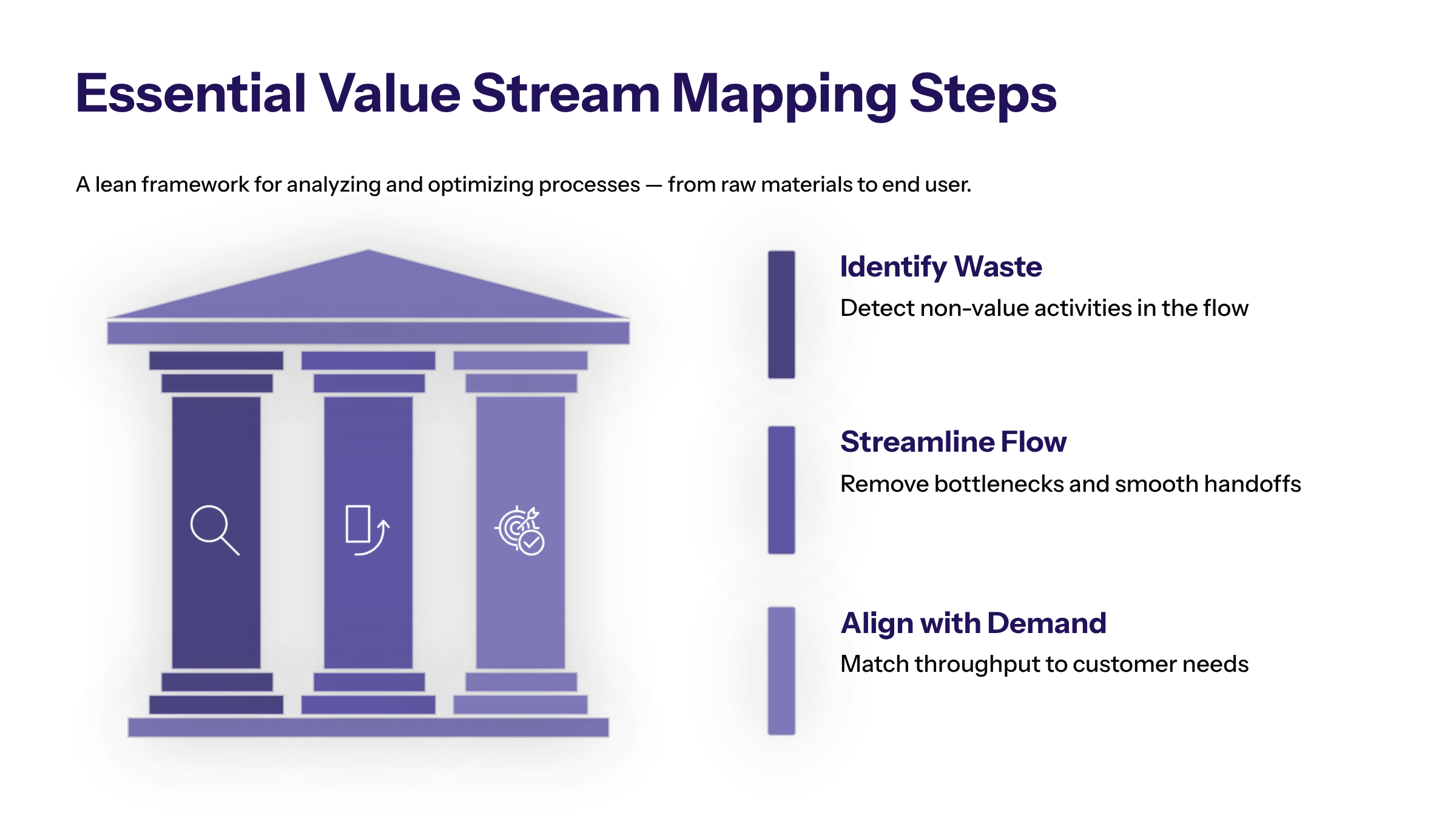
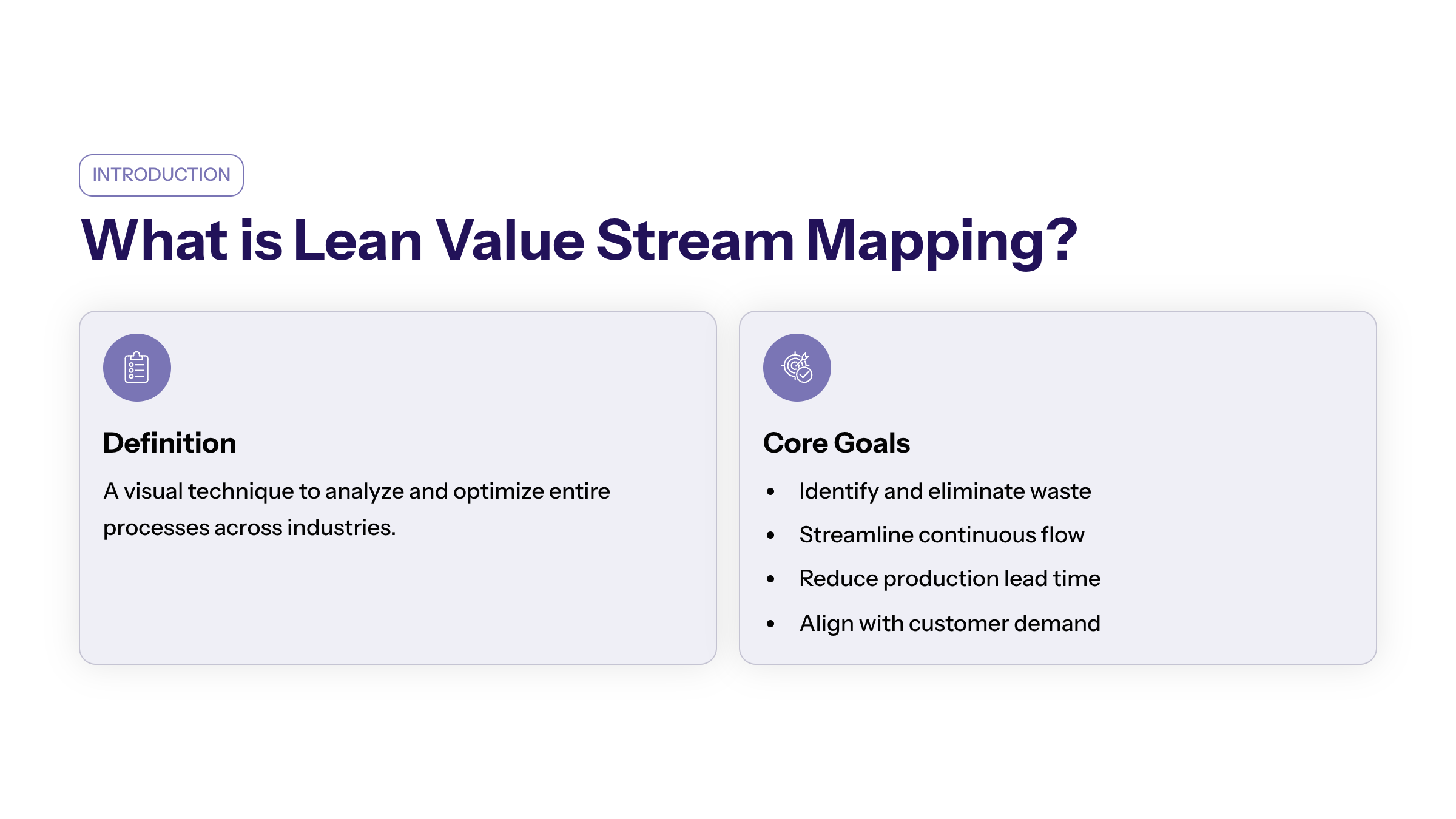
Lean value stream mapping (VSM) is a fundamental tool and powerful visual technique used across various industries to analyze and optimize the entire process, from raw materials to the end user. It enables organizations to create a value stream by identifying waste, streamlining continuous flow, and improving overall efficiency within the manufacturing process and other sectors. By applying lean manufacturing principles, businesses can reduce production lead time, eliminate waste, and better align processes with customer demand.
This article outlines the key value stream mapping steps involved in conducting a comprehensive value stream analysis, helping organizations improve flow, increase customer satisfaction, and foster a culture of continuous improvement.
Understanding the Current State Map
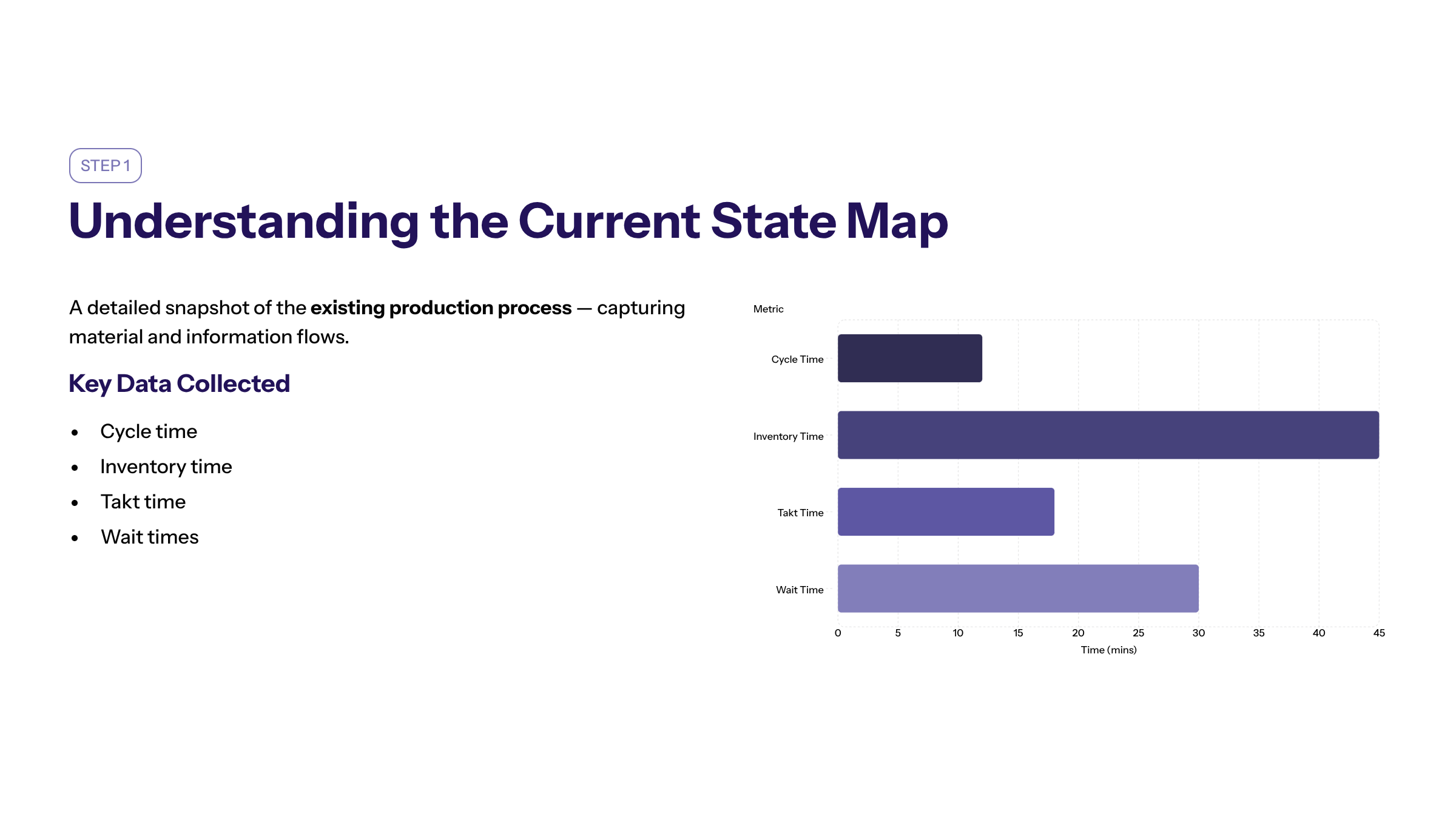
The first critical step in lean value stream mapping is to develop a current state map. This map provides a detailed snapshot of the existing production process, including material and information flows. It involves gathering data on cycle time, inventory time, takt time, and wait times at each process box, which are visually represented in data boxes on the map.
Cross-functional teams and key stakeholders collaborate to ensure everyone is on the same page, capturing the complexities of individual process steps and identifying bottlenecks. This shared understanding helps highlight non-value-added steps and areas where large batches or excessive inventory time slow down production.
For example, in a manufacturing process, the current state map may reveal that the longest wait times occur between two specific process steps, indicating a high probability of waste. By conducting a thorough stream analysis, organizations can pinpoint inefficiencies and gain insights necessary to design an improved future state map.
Production Process Optimization
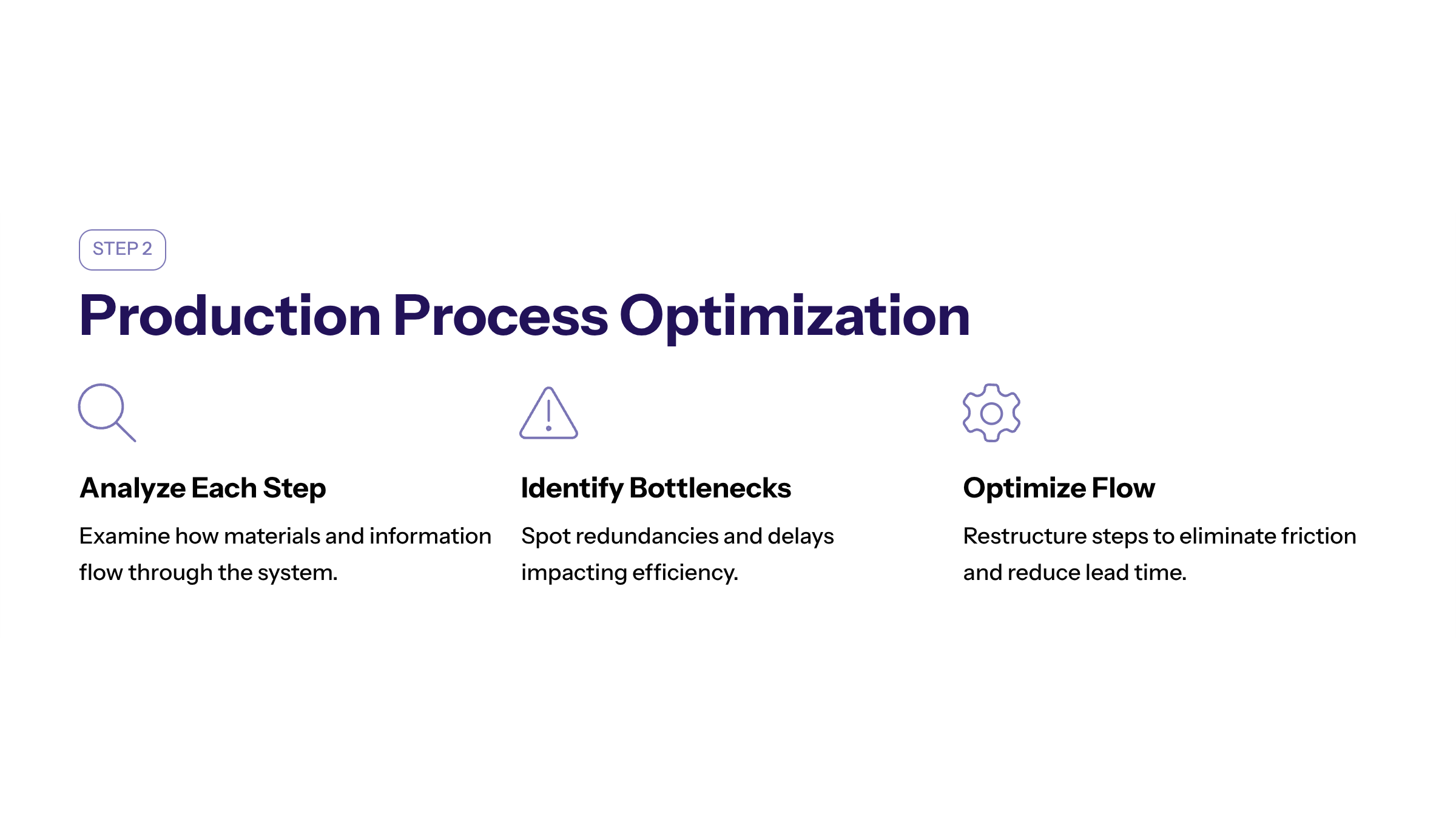
A key focus of value stream mapping is to analyze and optimize the production process itself. This involves examining each step to understand how materials and information flow through the system. By closely studying the production process, organizations can identify bottlenecks, redundancies, and delays that impact overall efficiency.
Optimizing the production process ensures that value is added at every stage, reducing wasted time and resources. This step is crucial for creating a streamlined workflow that supports faster delivery and better customer satisfaction.
Process Mapping and Stream Analysis
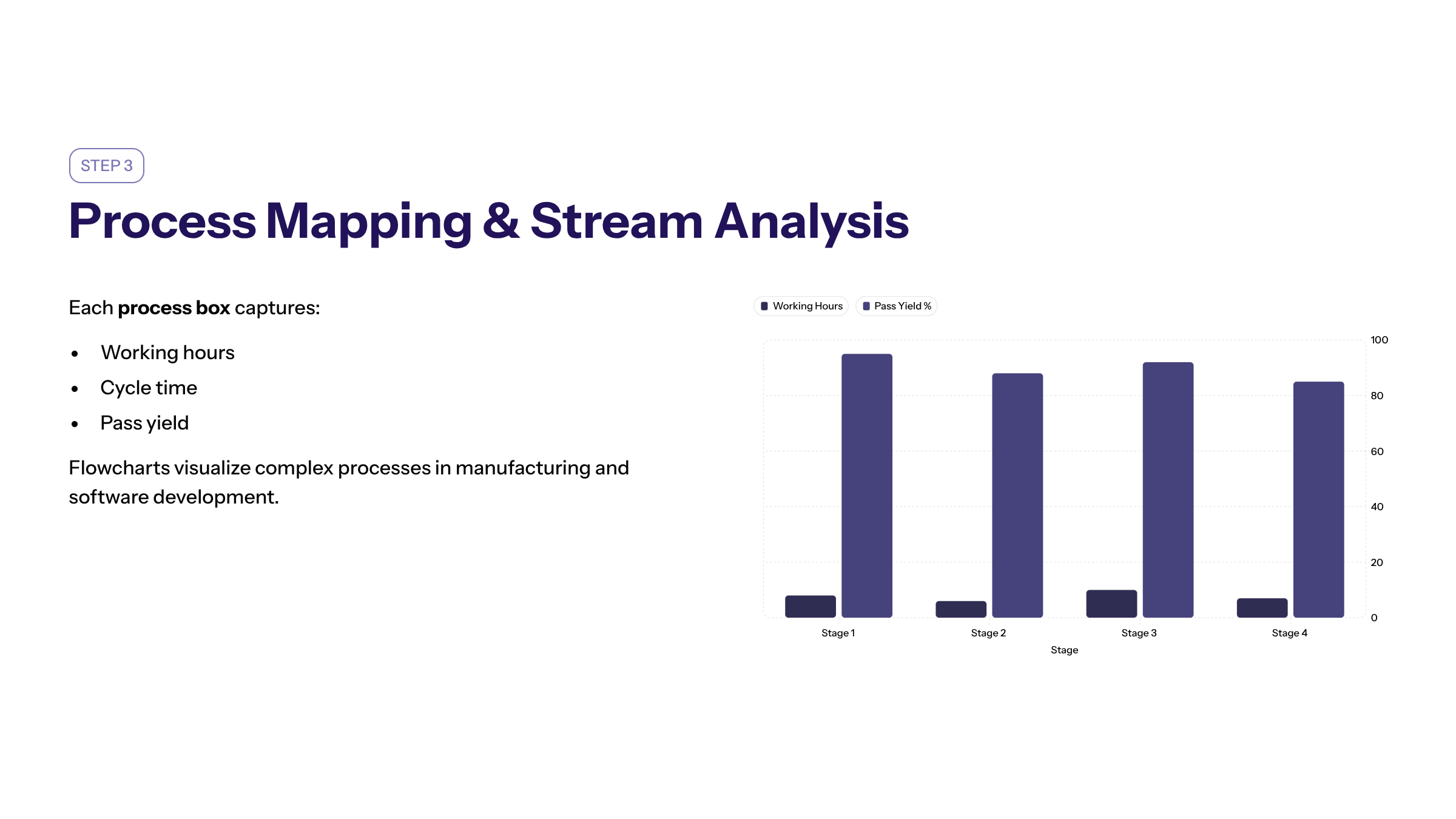
Process mapping breaks down the production process into discrete process boxes, illustrating the steps involved and the flow of materials and information between them. These process flowcharts provide a clear visualization of complex processes, including those found in software development and manufacturing.
Each process box includes data on working hours, cycle time, and pass yield, allowing teams to collect data and identify areas where improvements can be made. For example, data boxes may show that certain process steps have a higher probability of causing delays or defects.
Stream analysis evaluates how well the process meets customer demand and takt time requirements, ensuring production aligns with real-world needs. The stream represents the flow of materials and information through the entire process, highlighting where waste occurs.
By mapping and analyzing individual process steps, organizations can develop targeted improvement efforts that optimize the entire value stream and achieve the largest reduction in waste and lead time.
Process mapping typically emphasizes individual processes and their efficiency rather than the overall flow of value. It is generally more detailed and focuses on the specific steps within a process, including inputs and outputs. Both value stream mapping and process mapping are used to identify inefficiencies and areas for improvement within workflows.
Creating Continuous Flow
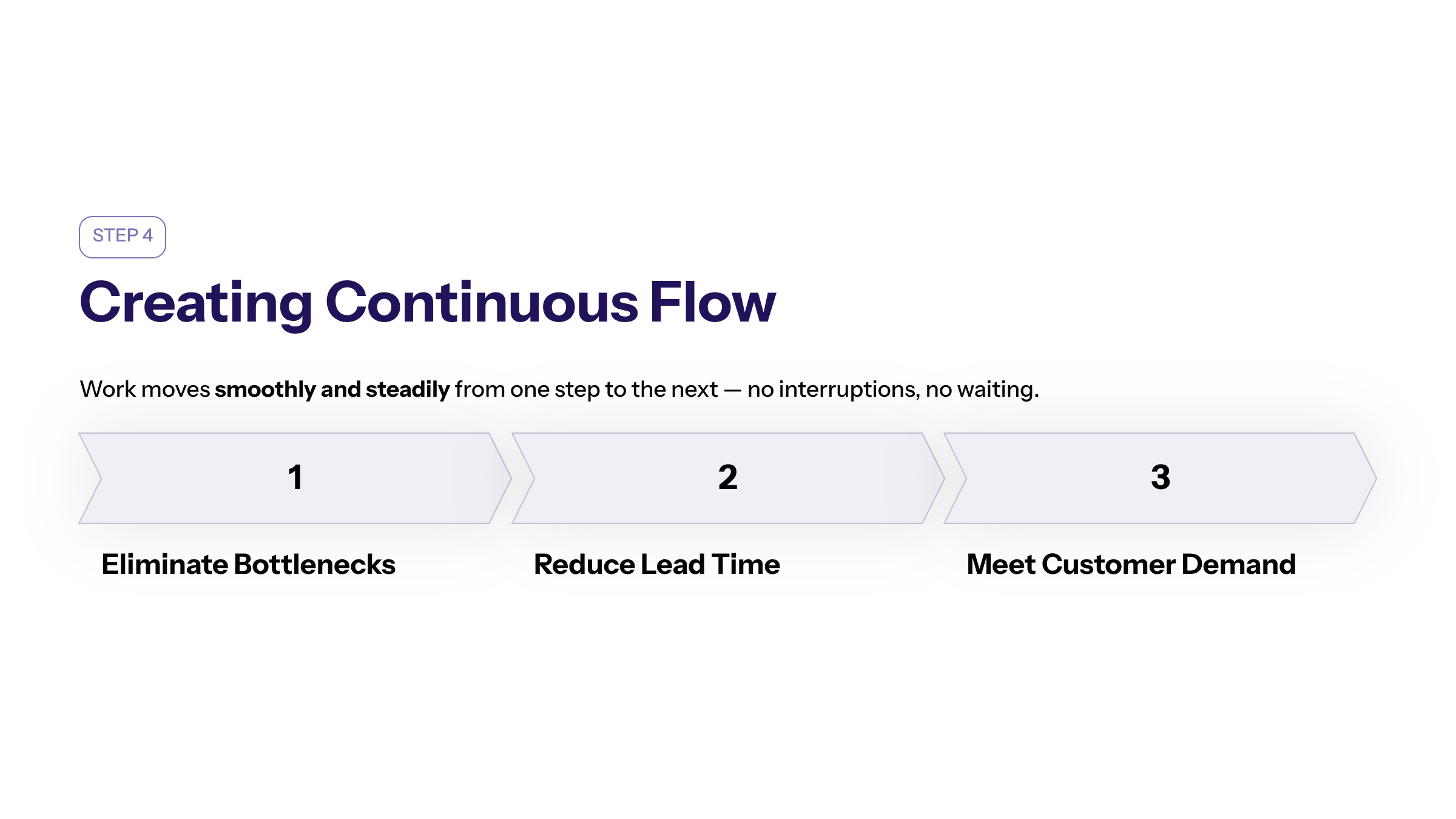
One of the primary goals in value stream mapping is to establish continuous flow within the production process. Continuous flow means that work moves smoothly and steadily from one process step to the next without unnecessary interruptions or waiting periods.
Creating continuous flow helps eliminate bottlenecks and reduces lead time, enabling faster response to customer demand. Techniques such as reducing batch sizes, balancing workloads, and improving communication between teams contribute to achieving a seamless flow.
Implementing continuous flow not only improves efficiency but also enhances product quality and customer satisfaction by minimizing delays and defects.
Designing the Future State Map
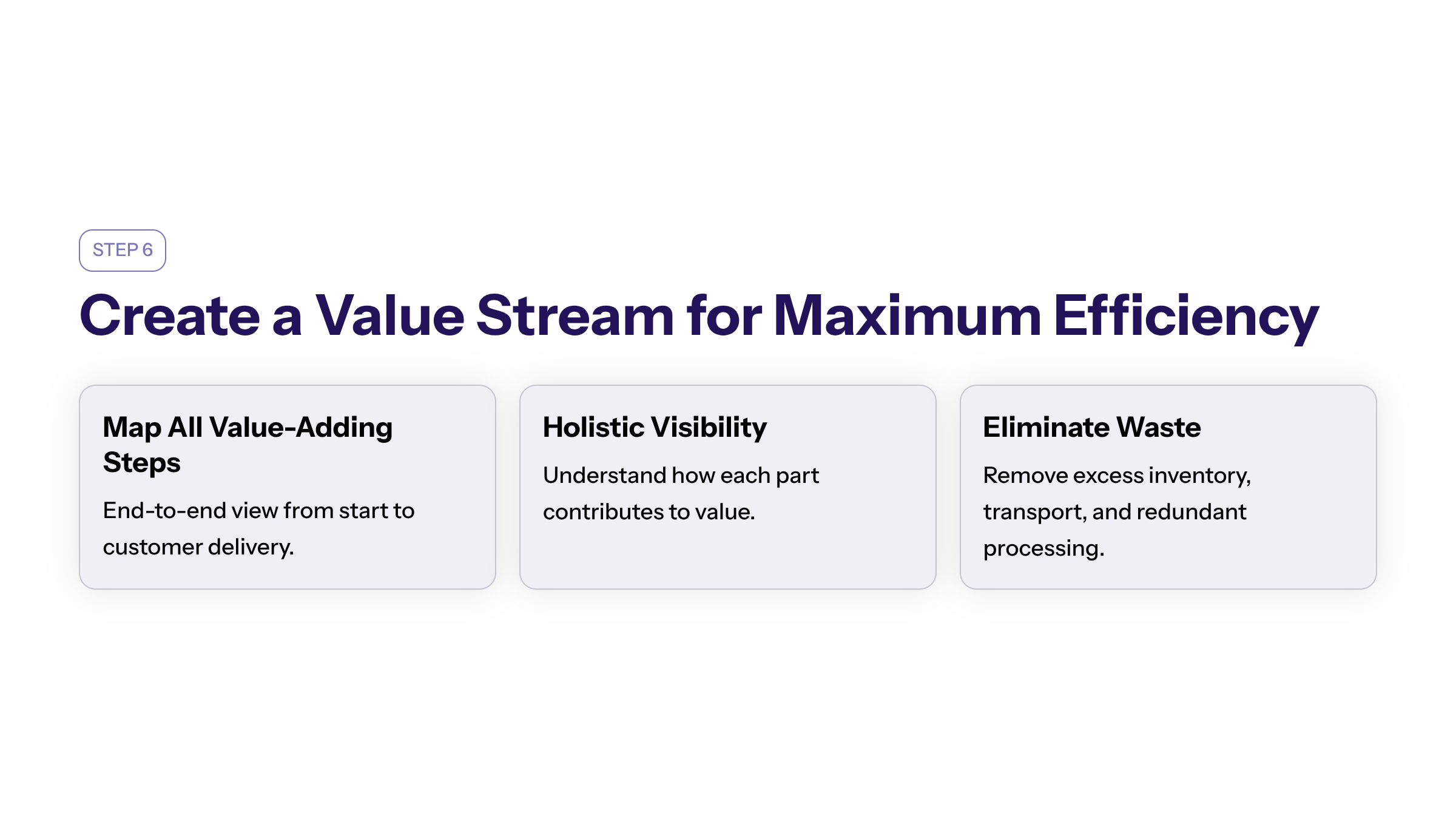
The future state map represents the ideal production process, designed to eliminate waste and maximize value for the end customer. It incorporates lean manufacturing principles to create a lean value stream that supports continuous delivery and efficient flow.
This map serves as a roadmap for improvement, aligning key areas and stakeholders around a shared vision. It focuses on reducing production lead time, minimizing inventory time, and balancing workload to meet customer demand without overproduction or large batches.
For example, the future state map may propose implementing smaller batch sizes and improved communication flows between process steps to enhance continuous flow. By designing a future state that supports continuous flow and timely information exchange, organizations can enhance customer satisfaction and operational efficiency.
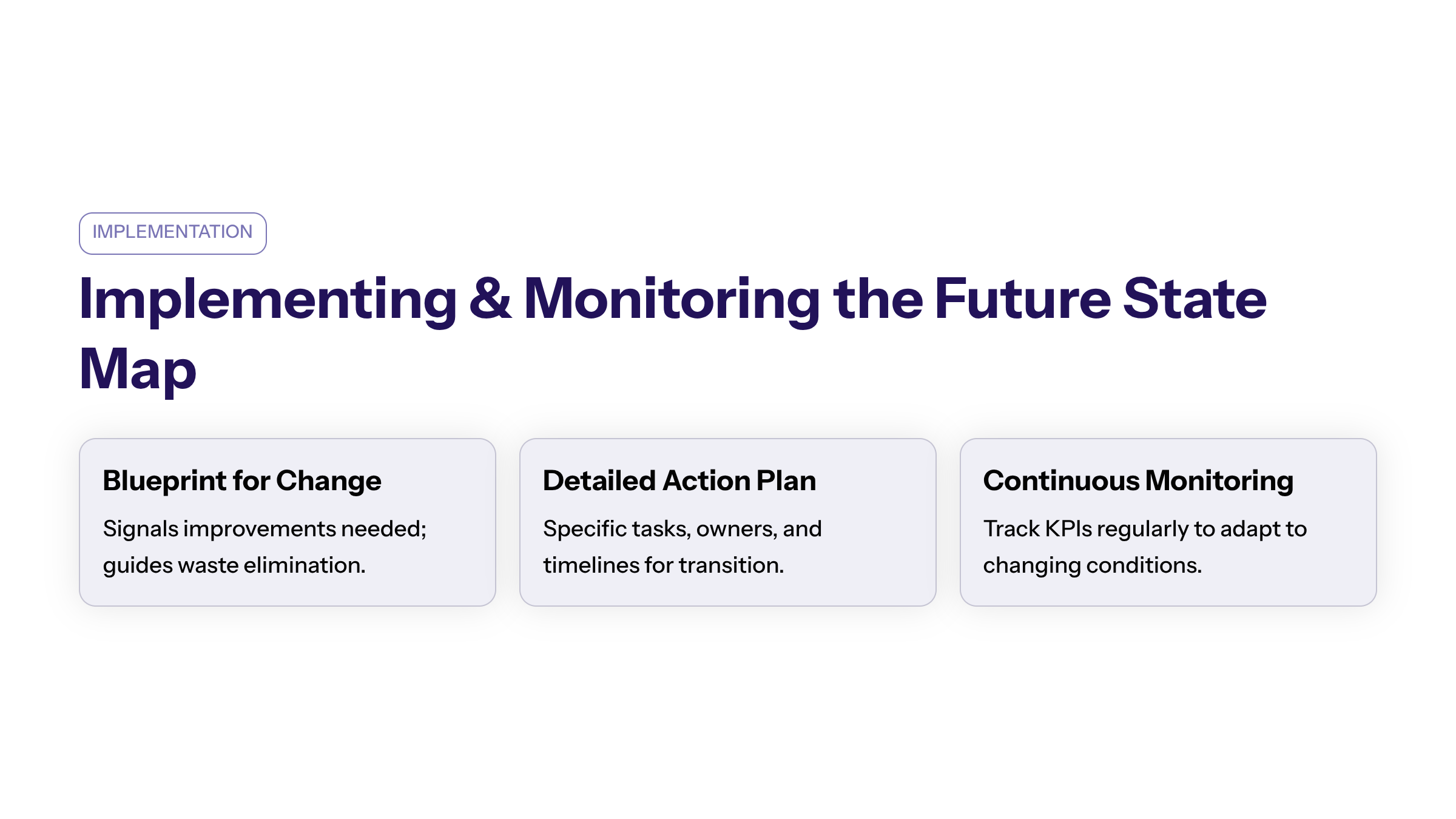
Create a future state map to signal improvements needed in the process.
Create a Value Stream for Maximum Efficiency
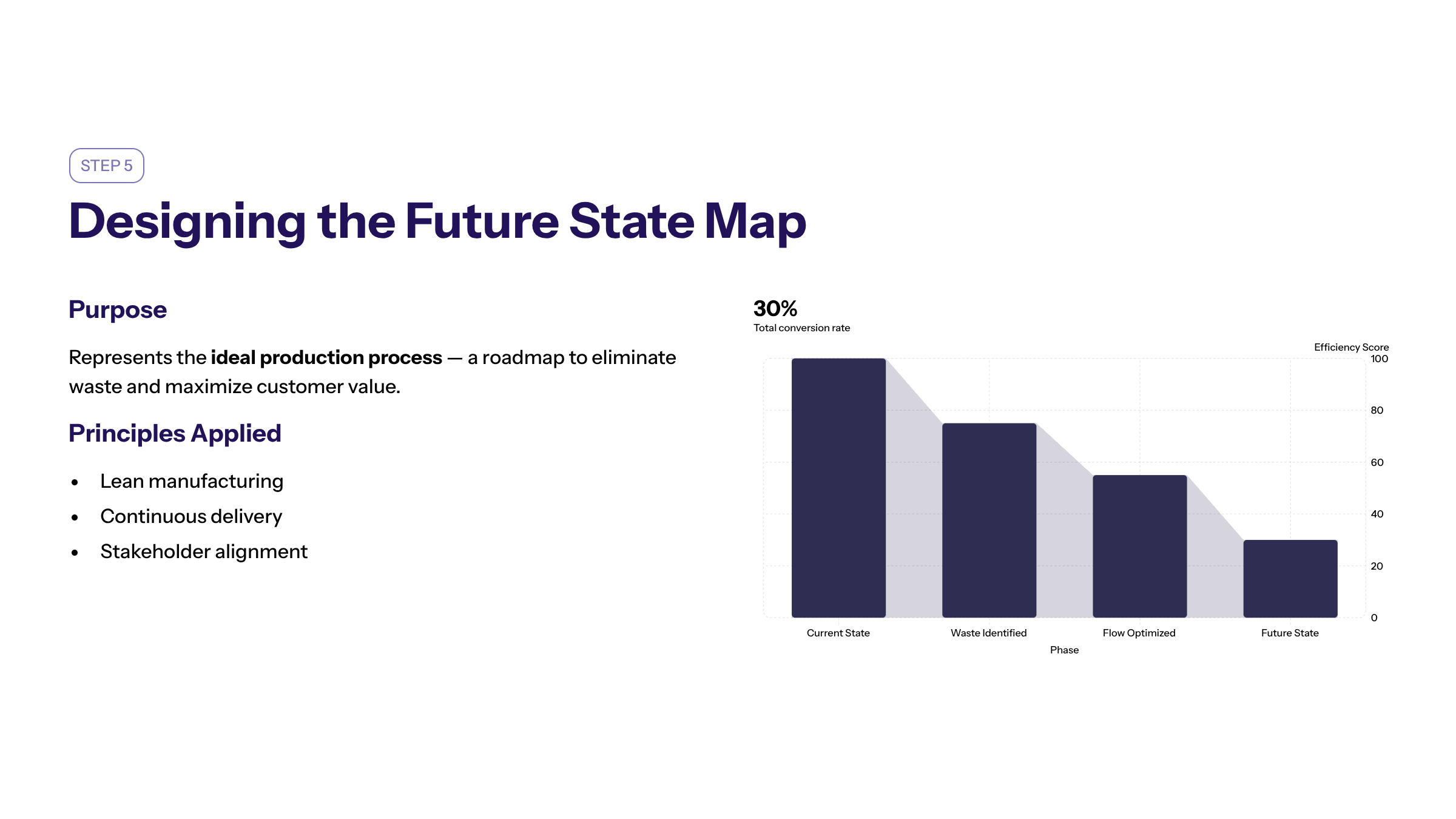
Creating a value stream involves mapping all the steps that add value to the product or service from start to finish. This holistic view allows organizations to see the entire process and understand how each part contributes to delivering value to the customer.
By creating a value stream, businesses can identify and eliminate wasteful activities that do not add value, such as excess inventory, unnecessary transportation, or redundant processing. This comprehensive approach ensures that every step is aligned with customer needs and business goals.
Developing a clear value stream also facilitates better coordination among cross-functional teams, improving communication and collaboration throughout the production process.
Stream Map Development and Implementation
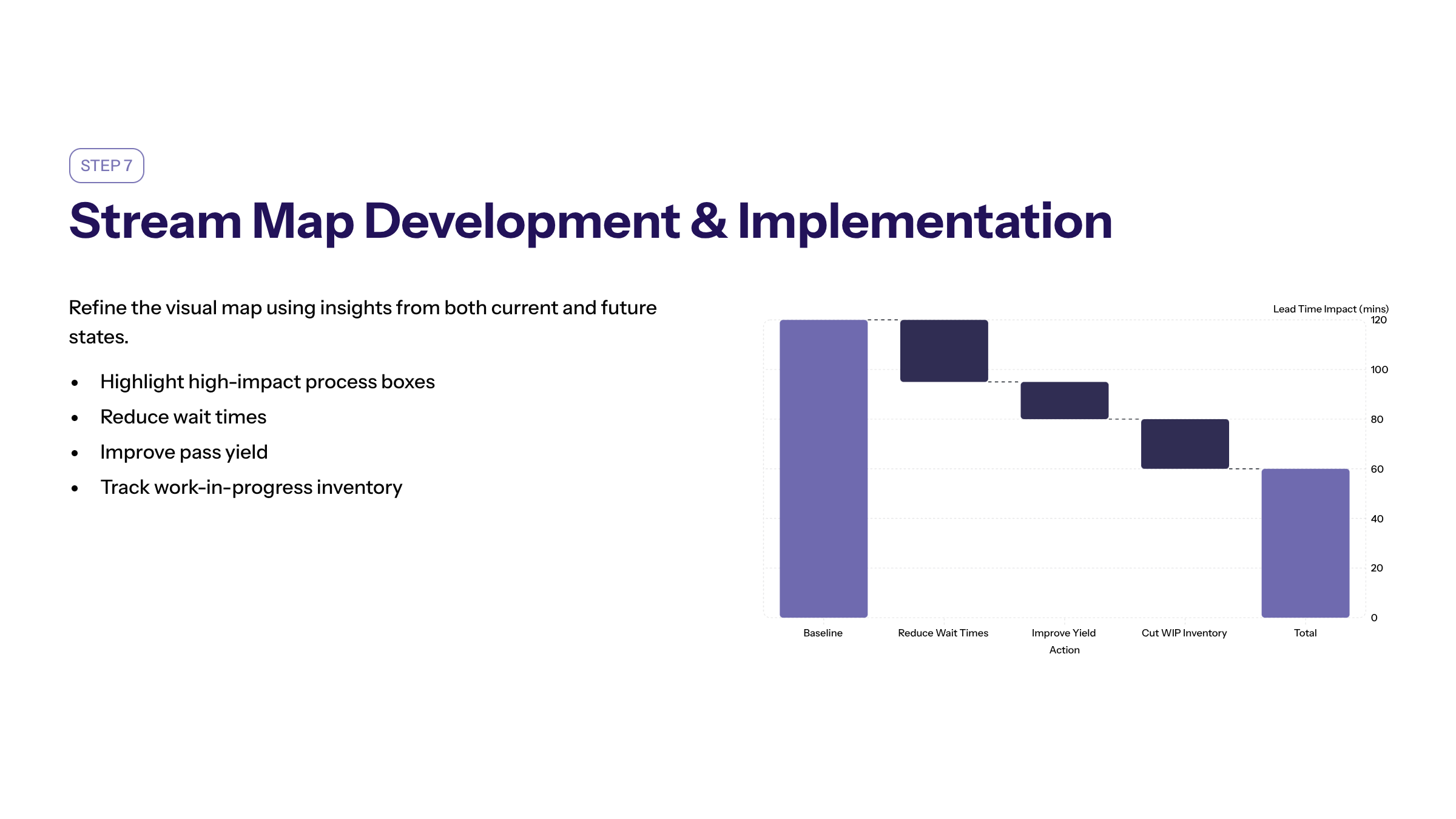
Developing the stream map involves refining the visual representation of the value stream, incorporating insights from both the current and future state maps. It highlights process boxes where improvements can have the largest impact, such as reducing wait times or improving pass yield.
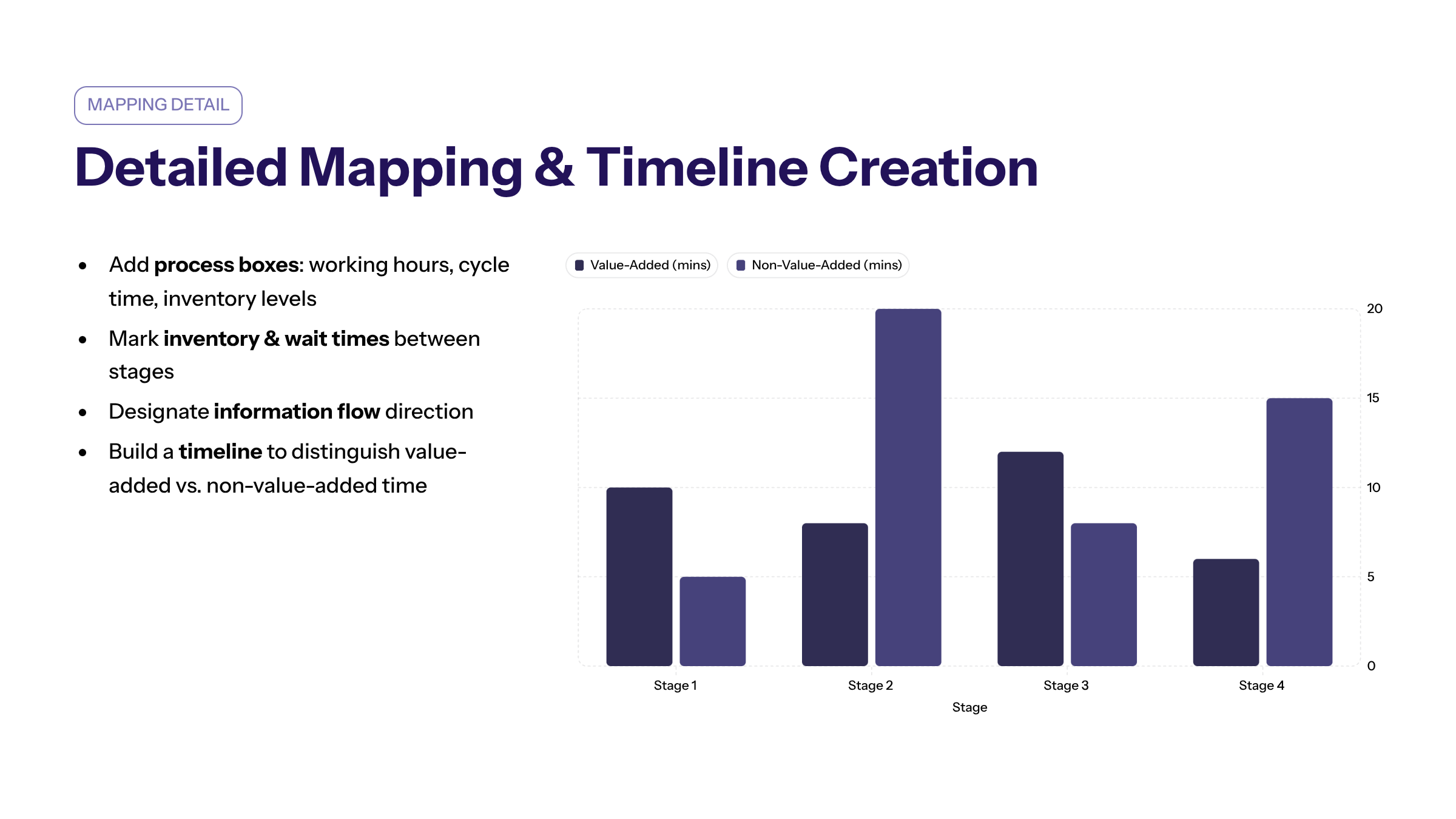
Adding inventory and wait times between each stage marks the number of parts in work in progress, helping to identify bottlenecks and delays.
Implementing lean principles during this phase is essential to create continuous flow and eliminate waste. This includes adjusting takt time, optimizing batch sizes, and improving communication flows between key stakeholders.
By continuously monitoring and updating the stream map, organizations can track progress, allocate available resources effectively, and sustain continuous improvement efforts. For example, data boxes can be used to track key performance indicators (KPIs) and identify areas with the highest probability of causing delays.
Create a timeline at the bottom of your value stream map to detect waste in the process, distinguishing value-added and non-value-added times.
Leveraging Lean Principles for Continuous Delivery
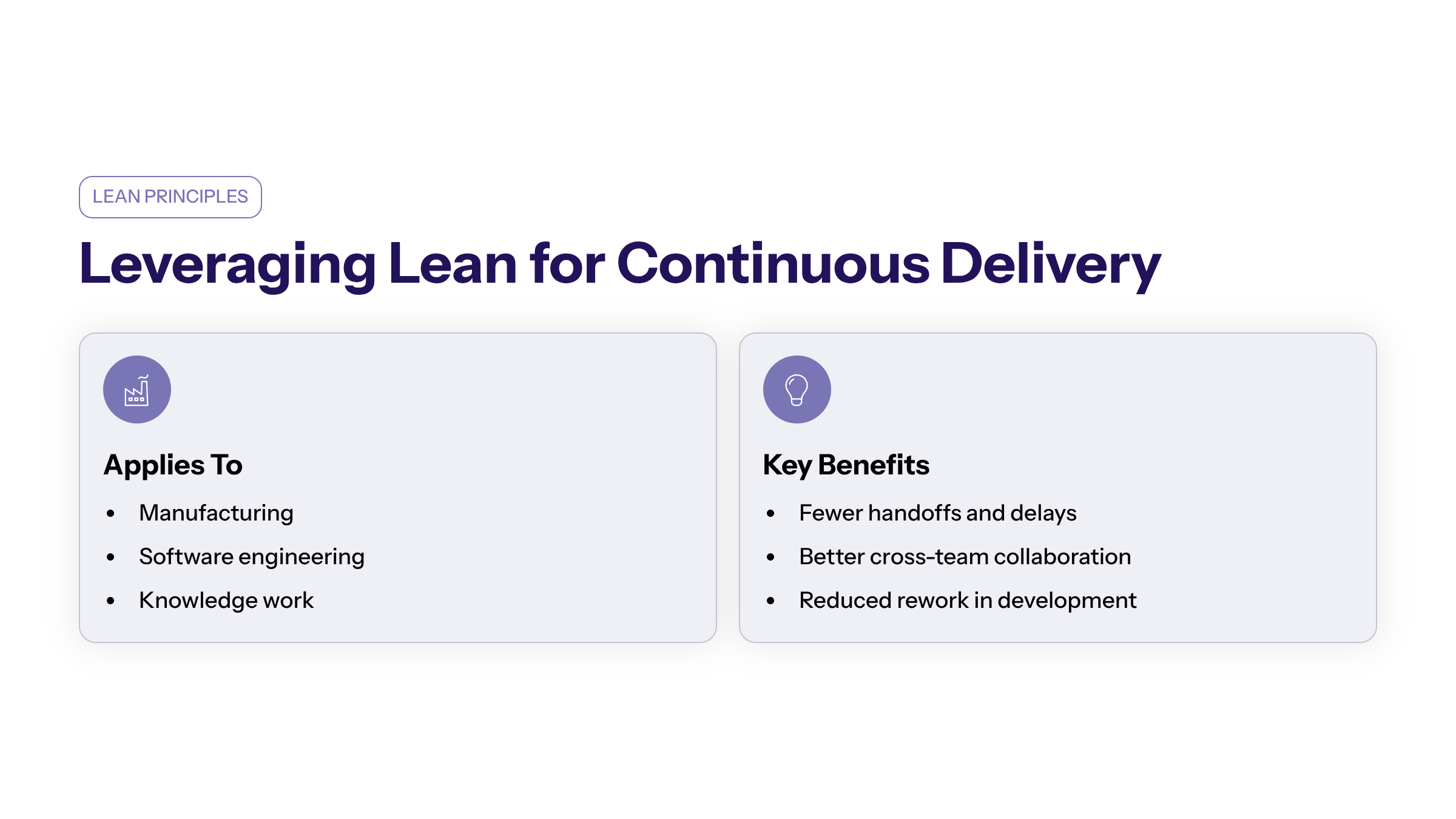
Lean value stream mapping supports continuous delivery by providing a clear framework to identify waste and streamline the production process. In software engineering and knowledge work, this approach helps reduce handoffs, minimize delays, and improve collaboration across teams.
Value stream mapping can help reduce the number of steps and the need for rework in software development.
Applying lean manufacturing concepts to software development ensures that the steps involved—from idea generation to deployment—are efficient and aligned with customer needs. This reduces rework, increases pass yield, and accelerates delivery cycles.
For example, a software development team might use value stream mapping to visualize process steps and identify bottlenecks in the deployment pipeline. By integrating value stream analysis into continuous delivery pipelines, organizations can enhance responsiveness and maintain high-quality outputs.
Understanding and Optimizing Information Flows
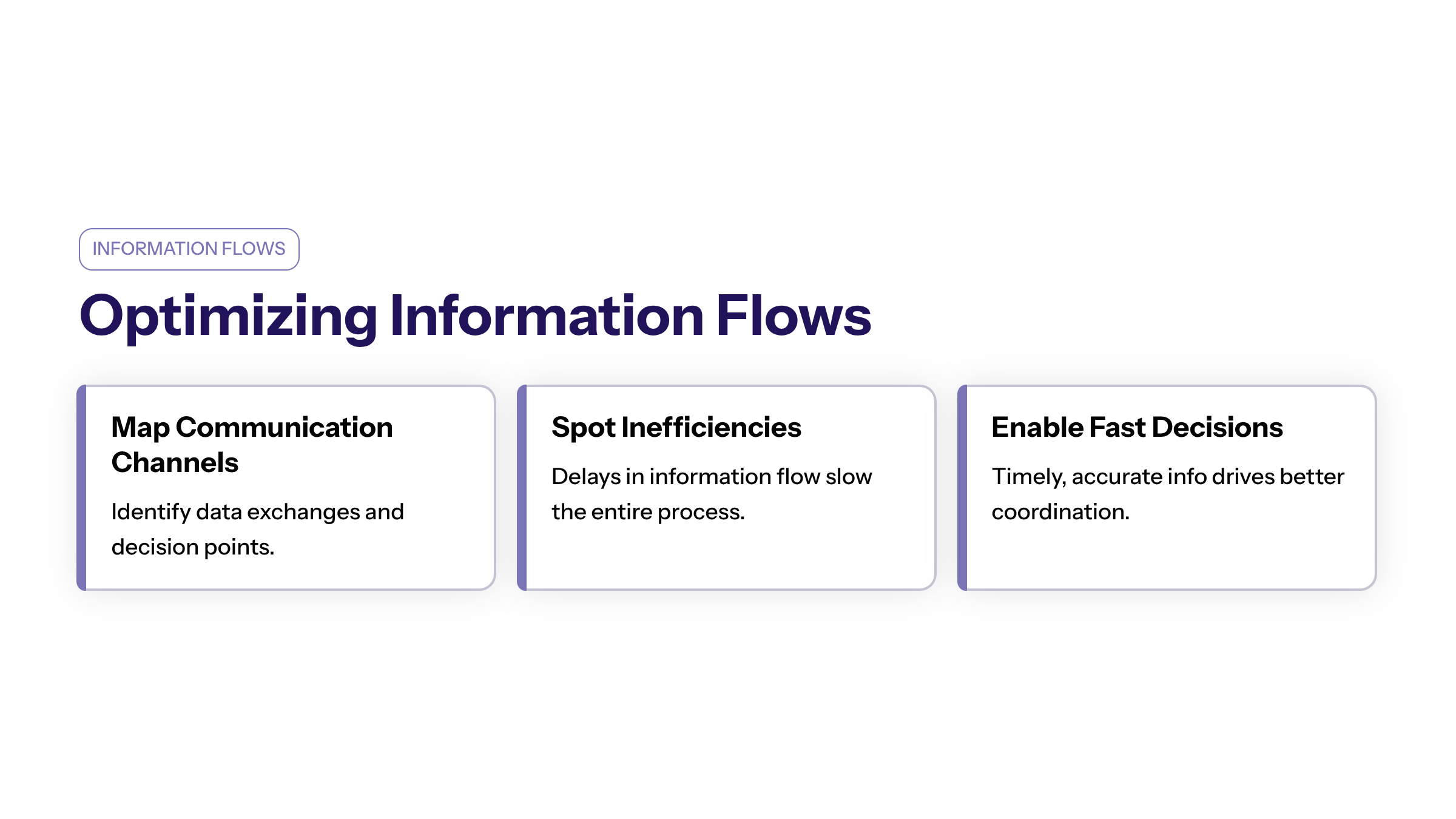
Effective value stream mapping also requires analyzing information flows that support the production process. Mapping communication channels, data exchanges, and decision points helps identify delays and inefficiencies in information flow.
Optimizing these flows ensures that key stakeholders receive timely and accurate information, enabling faster decision-making and better coordination. This is particularly important in complex environments where multiple teams and departments interact.
By aligning information flow with material flow, organizations can create a synchronized system that supports continuous flow and reduces wasted time. For example, using process flowcharts to visualize information flow alongside material flow can reveal disconnects that cause delays.
Addressing Common Challenges in Value Stream Mapping
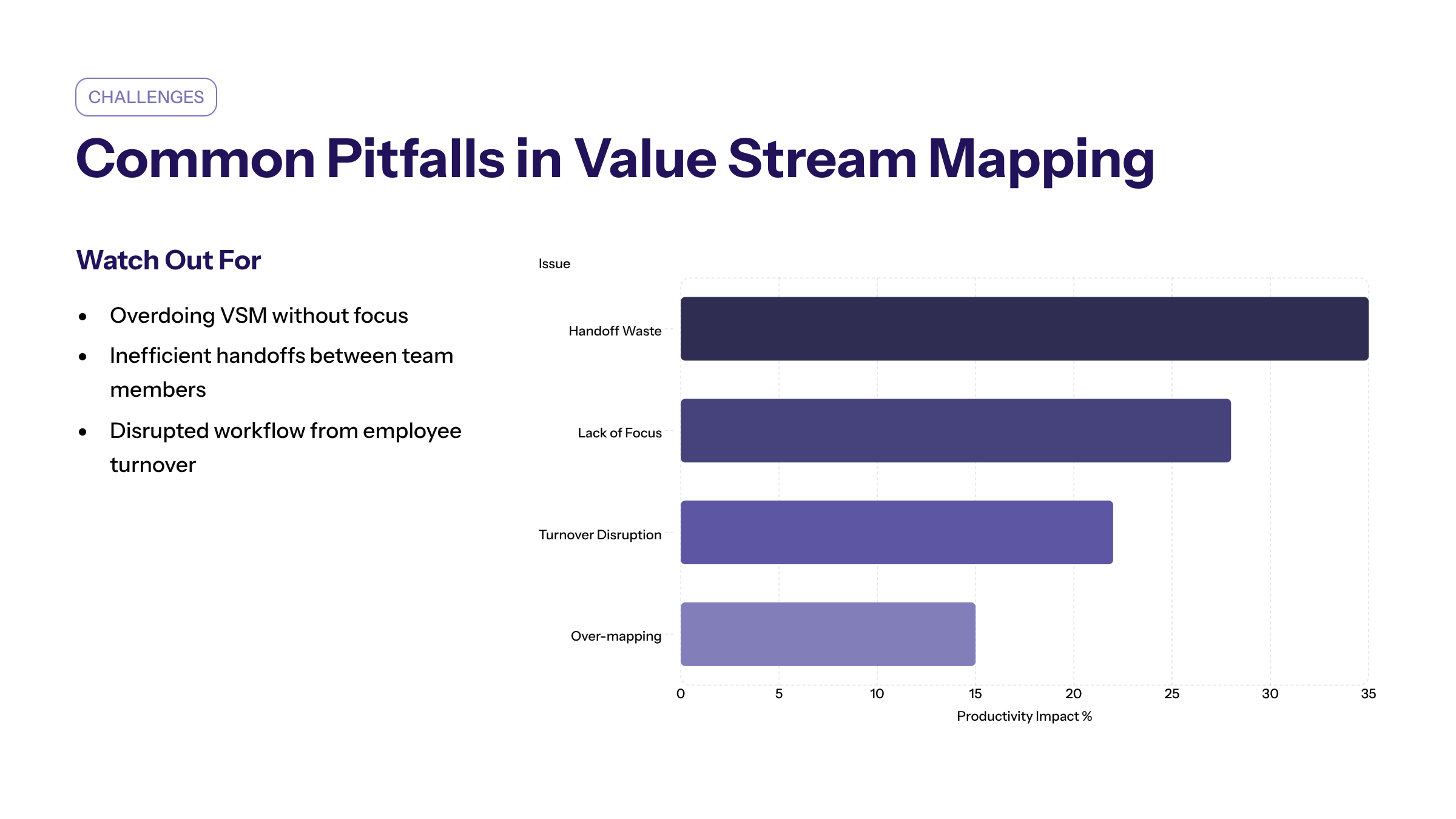
While value stream mapping is a powerful tool, it can be wasteful in itself if not done carefully. Overdoing value stream mapping or lacking focus can lead to problems such as inefficient handoffs between team members, which often occur when project ownership changes or there is employee turnover. These handoff wastes disrupt workflow and reduce productivity.
Delays may also arise due to tightly coupled dependencies on a project, causing bottlenecks and extended lead times. Additionally, task switching waste happens when individuals frequently switch tasks, disrupting their mental flow and efficiency.
To effectively address these challenges, it is crucial to empower the right team, typically a cross-functional group of key stakeholders who understand the process and customer needs. Forming such a team ensures shared understanding and commitment to continuous improvement.
Planning and Scoping Your Value Stream Map
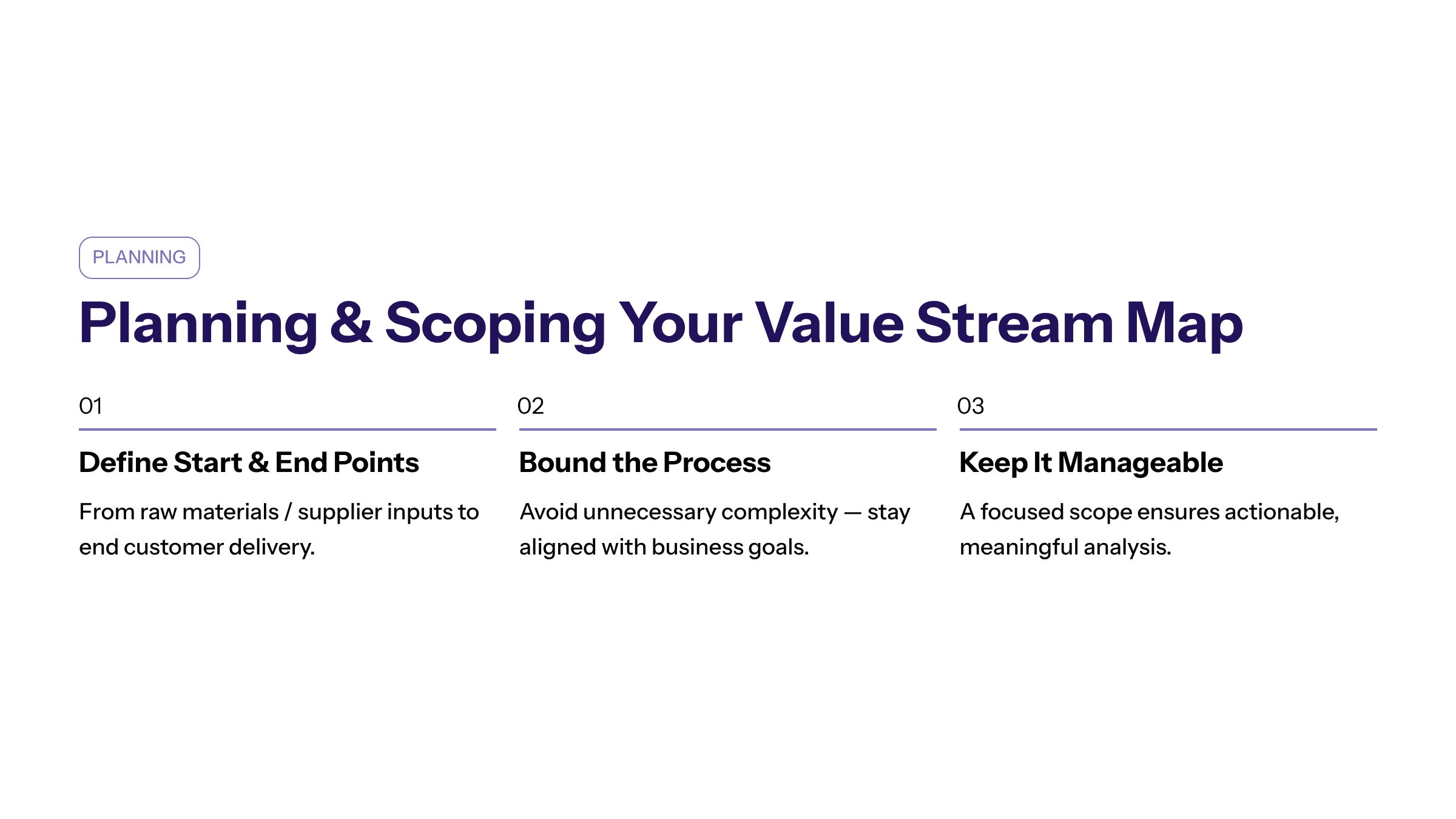
Determining the scope of your value stream map is essential for a focused and manageable analysis. Start by creating clear start and end points, often from raw materials or supplier inputs to the delivery to the end customer. Bounding the process avoids unnecessary complexity and keeps the effort aligned with business goals.
Form a cross-functional team to create the lean value stream map, fostering collaboration and enhancing communication across departments.
Holding a kaizen event—a focused workshop—helps develop current and future plans, allowing the team to walk the flow, collect accurate process data, and create a current state map based on firsthand observations.
Detailed Mapping and Timeline Creation
Mapping the steps of your process involves adding process boxes that show all the steps involved, with data boxes capturing information such as working hours, cycle time, and inventory levels. Adding inventory and wait times between each stage helps mark the number of parts in work in progress, revealing where delays and bottlenecks occur.
Designating the direction of information flows clarifies how communication supports the production process, while creating a timeline at the bottom of your value stream map helps detect waste by distinguishing value-added and non-value-added times. This visual tool facilitates understanding and communication within teams.
Implementing and Monitoring the Future State Map
Creating a future state map signals improvements needed in the process and serves as a blueprint for eliminating waste and enhancing flow. Implementing the future map requires a detailed plan with specific tasks, owners, and timelines to transition from the current state to the future state.
Continuous monitoring and adjustment are vital, with regular tracking of KPIs to ensure the value stream meets customer needs and adapts to changing conditions. This ongoing optimization fosters a culture of continuous improvement and helps sustain gains.
Value Stream Mapping in Various Industries
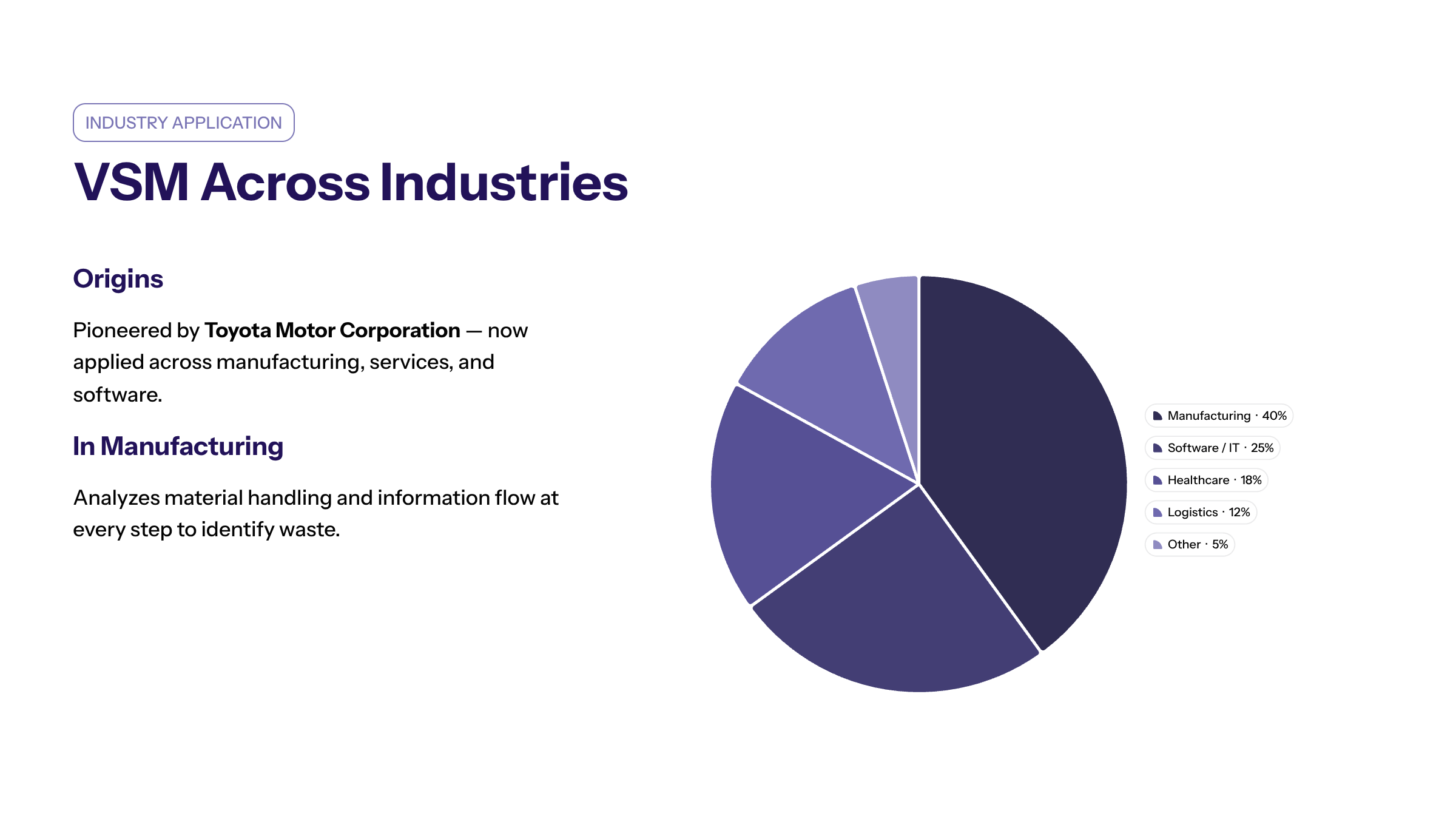
Value stream mapping originated from the practices of the Toyota Motor Corporation and is widely used in lean manufacturing to visualize and improve the flow of materials and information. It can be applied to both product and customer delivery flows across various industries.
In manufacturing, VSM helps identify waste by analyzing each step of material handling and information flow. In service industries, it facilitates effective and timely services for external customers. In healthcare, VSM ensures patients receive high-quality care efficiently.
Moreover, value stream mapping helps improve team culture by making teams more engaged and productive, fostering collaboration and shared understanding of process challenges.
Process Cycle Efficiency and Waste Elimination
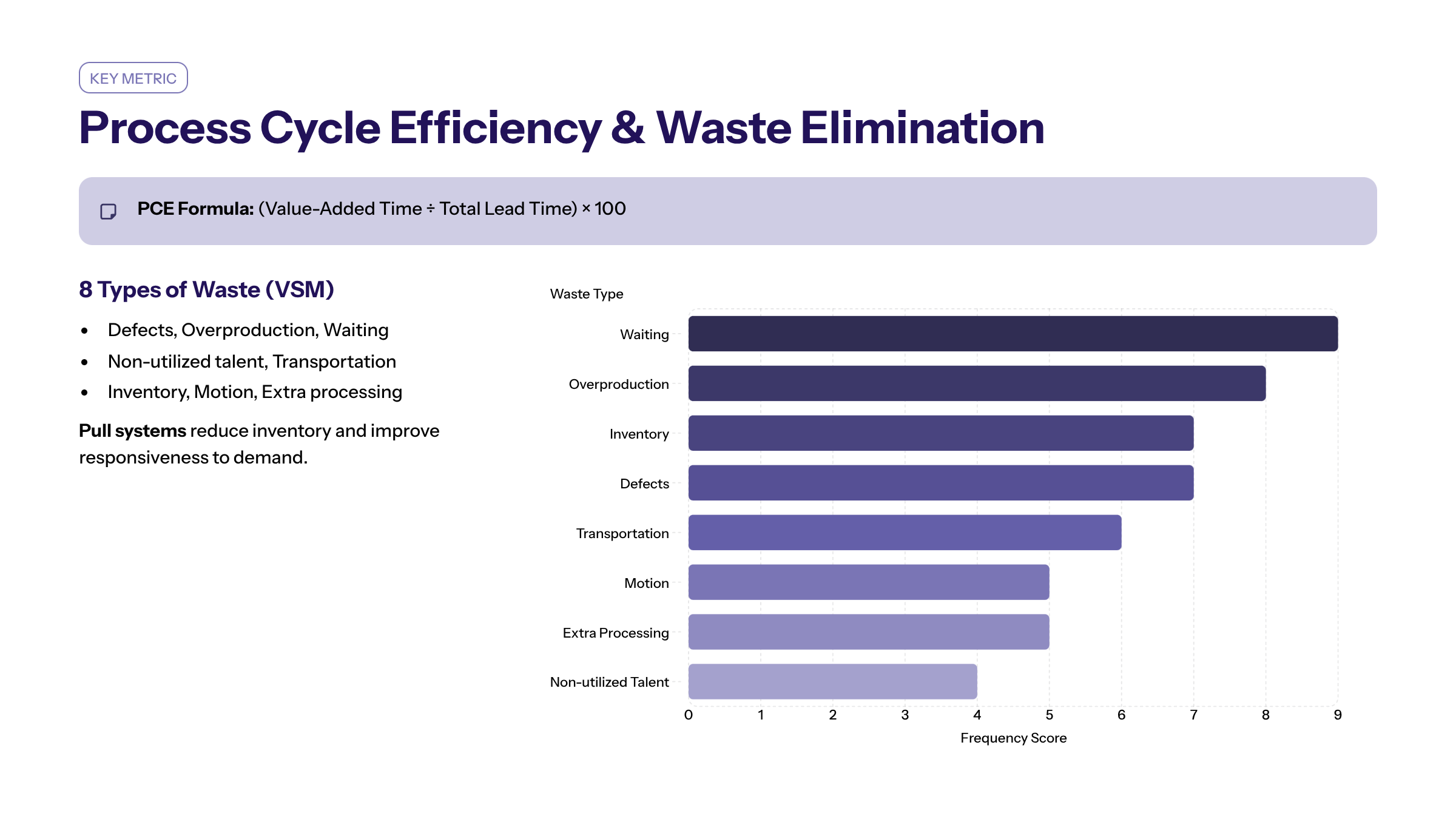
Process Cycle Efficiency (PCE) is defined as (Value-Added Time / Total Lead Time) * 100 and serves as a key metric in evaluating the effectiveness of the value stream.
Waste elimination in VSM targets eight types of waste: defects, overproduction, waiting, non-utilized talent, transportation, inventory, motion, and extra processing.
The application of pull systems in VSM helps reduce inventory levels and enhances responsiveness to customer demand.
Conclusion
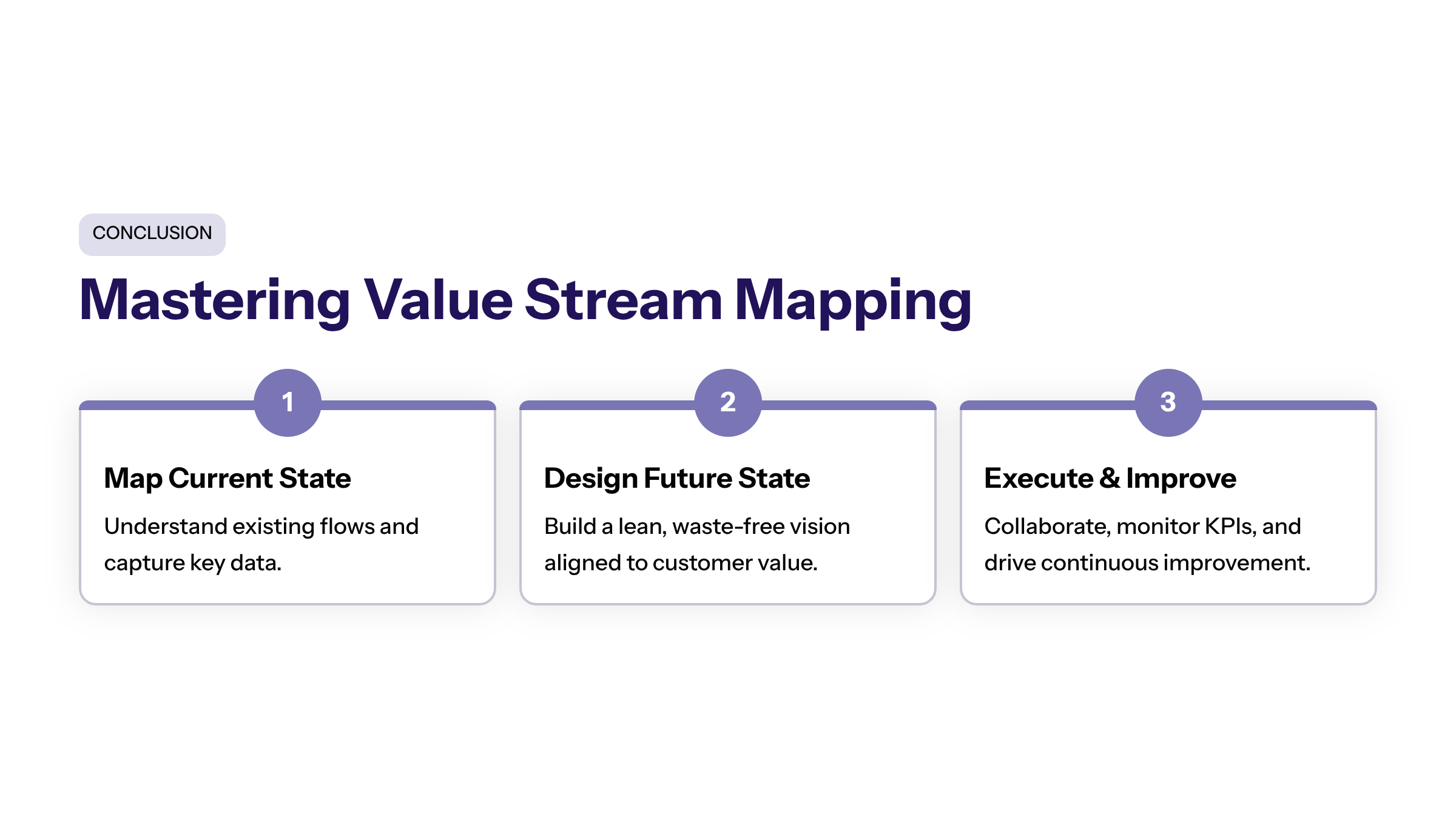
Mastering the value stream mapping steps—from defining the process and mapping the current state to designing a lean future state and creating an action plan—is essential for organizations seeking effective process improvement. Value stream mapping provides a visual representation that helps teams understand the flow of value, identify waste, and focus improvement efforts effectively.
By fostering collaboration among key stakeholders and focusing on continuous improvement, businesses can create efficient, responsive value streams that drive growth, customer satisfaction, and operational excellence. Regularly updating value stream maps and monitoring data ensures organizations remain aligned with customer needs and achieve the largest reduction in production lead time.