Vendor Evaluation Scorecard Best Practices
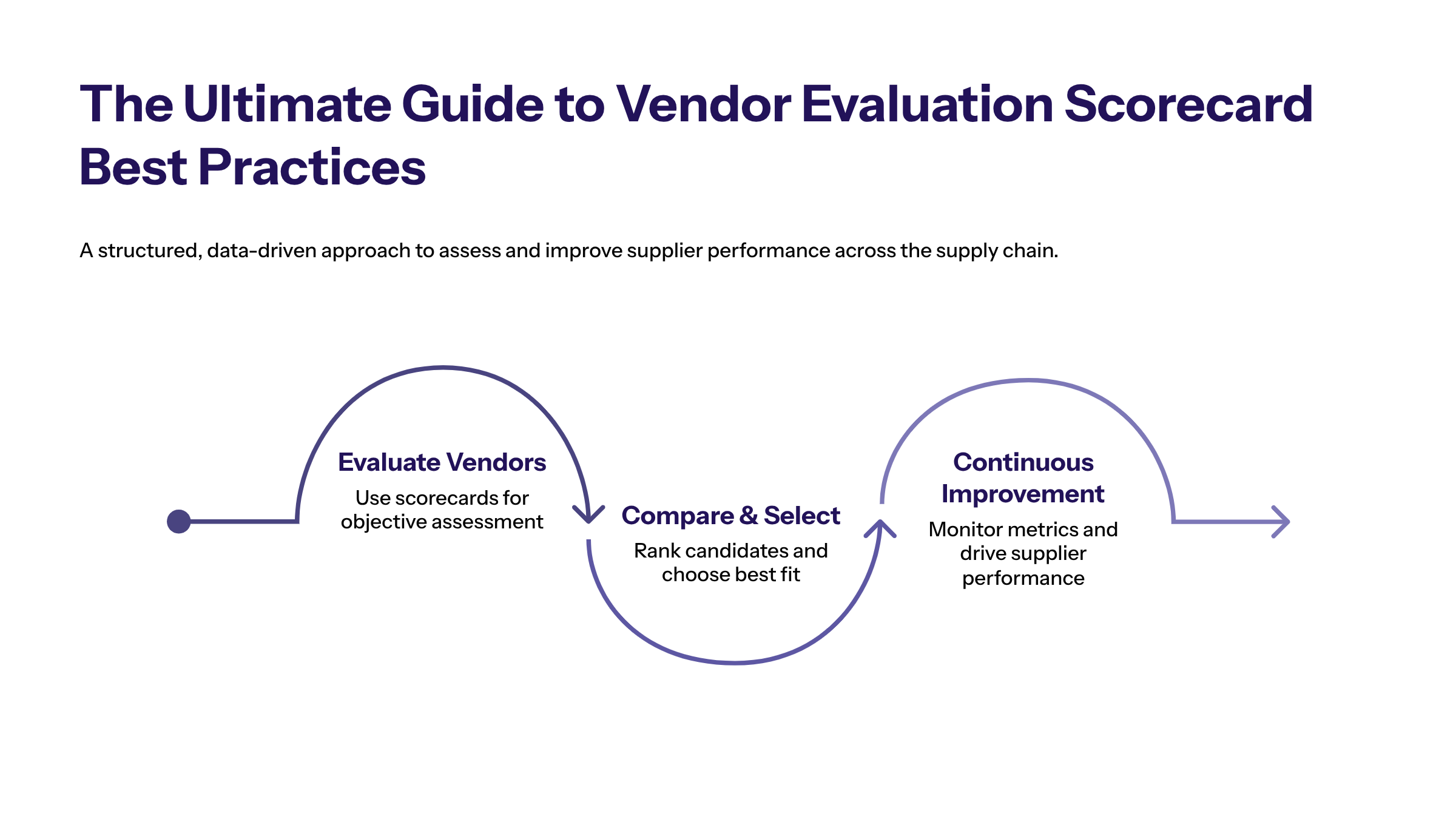
Vendor evaluation scorecards have become indispensable tools in modern procurement and supply chain management, offering organizations a structured, data-driven approach to assess and improve supplier performance. Vendor evaluation is a structured process that occurs primarily during the selection phase of a vendor relationship. It helps organizations compare vendors and identify the best fit based on criteria such as price and features.
The key difference between vendor evaluation and vendor scorecards lies in their purpose and timing: vendor evaluations are typically one-time assessments, while vendor scorecards facilitate ongoing performance monitoring.
This comprehensive guide explores the strategic importance of vendor scorecards, their key metrics, and best practices for creating and integrating them within vendor management systems.
By leveraging vendor performance data effectively, businesses can enhance supplier relationships, mitigate risks, and align procurement activities with overarching business priorities.
Key Takeaways
Vendor scorecards provide objective, continuous insights into supplier performance, facilitating better decision-making and stronger supplier accountability.
Aligning vendor scorecard metrics with business goals and supply chain health ensures that procurement strategies support organizational objectives and risk mitigation.
Integrating vendor scorecards into vendor management systems and fostering stakeholder collaboration drives continuous improvement and resilience against supply chain disruptions by enabling organizations to systematically evaluate vendors.
Introduction to Vendor Scorecards
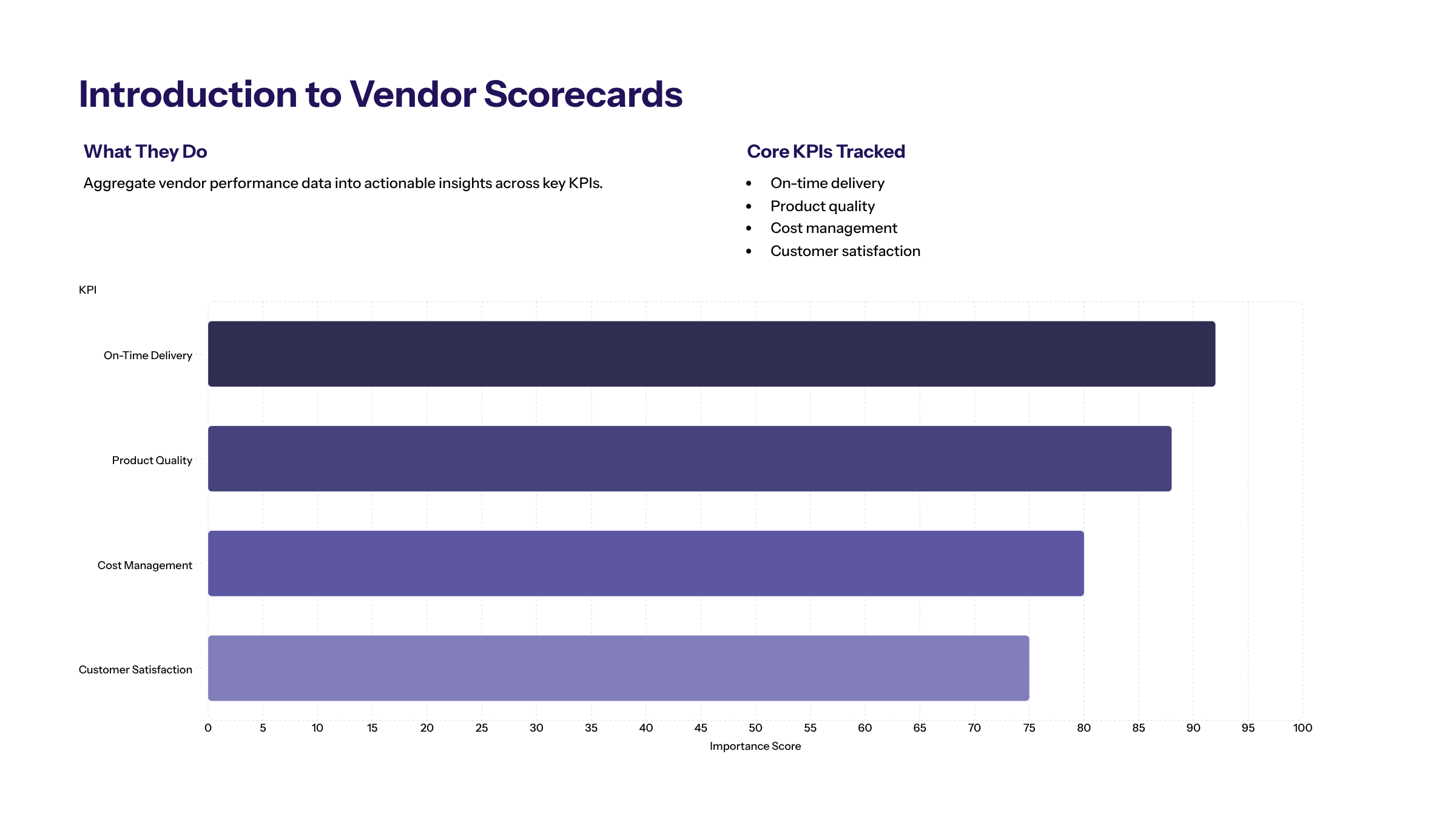
Vendor scorecards serve as vital tools that enable organizations to evaluate supplier performance against defined key performance indicators (KPIs) such as on-time delivery, product quality, cost management, and customer satisfaction.
These scorecards aggregate vendor performance data into actionable insights, empowering procurement teams to monitor vendor performance systematically and make informed decisions that enhance supply chain efficiency.
Measuring vendor performance using key performance metrics and supplier performance data is essential for tracking progress, identifying areas for improvement, and ensuring that suppliers meet organizational standards.
In an era marked by increasing supply chain disruptions and rising regulatory demands, vendor scorecards offer a mechanism for risk mitigation and continuous improvement.
They support supplier accountability and promote transparency, helping businesses maintain robust supplier relationships that contribute to sustained competitive advantage. Regular reviews of vendor performance data allow businesses to examine trends over time and make necessary adjustments to improve vendor relationships.
Vendor Scorecards in Context
Leading organizations like IBM and Cisco Systems have integrated vendor scorecards within their supplier management frameworks to optimize procurement outcomes and drive innovation.
A vendor assessment scorecard serves as a comprehensive tool for evaluating suppliers based on multiple KPIs, often tailored to specific industries and designed for continuous improvement.
Technologies such as SAP Ariba and Coupa provide vendor management system platforms that automate scorecard data collection and visualization, enabling real-time monitoring of supplier performance.
By embedding vendor scorecards into procurement workflows, companies can transition from reactive vendor assessments to proactive performance management.
Organizations can track vendor performance and monitor supplier trends over time, using these insights to inform procurement decisions and optimize vendor relationships, aligning supplier capabilities with evolving business priorities and market conditions.

Benefits of Vendor Scorecards
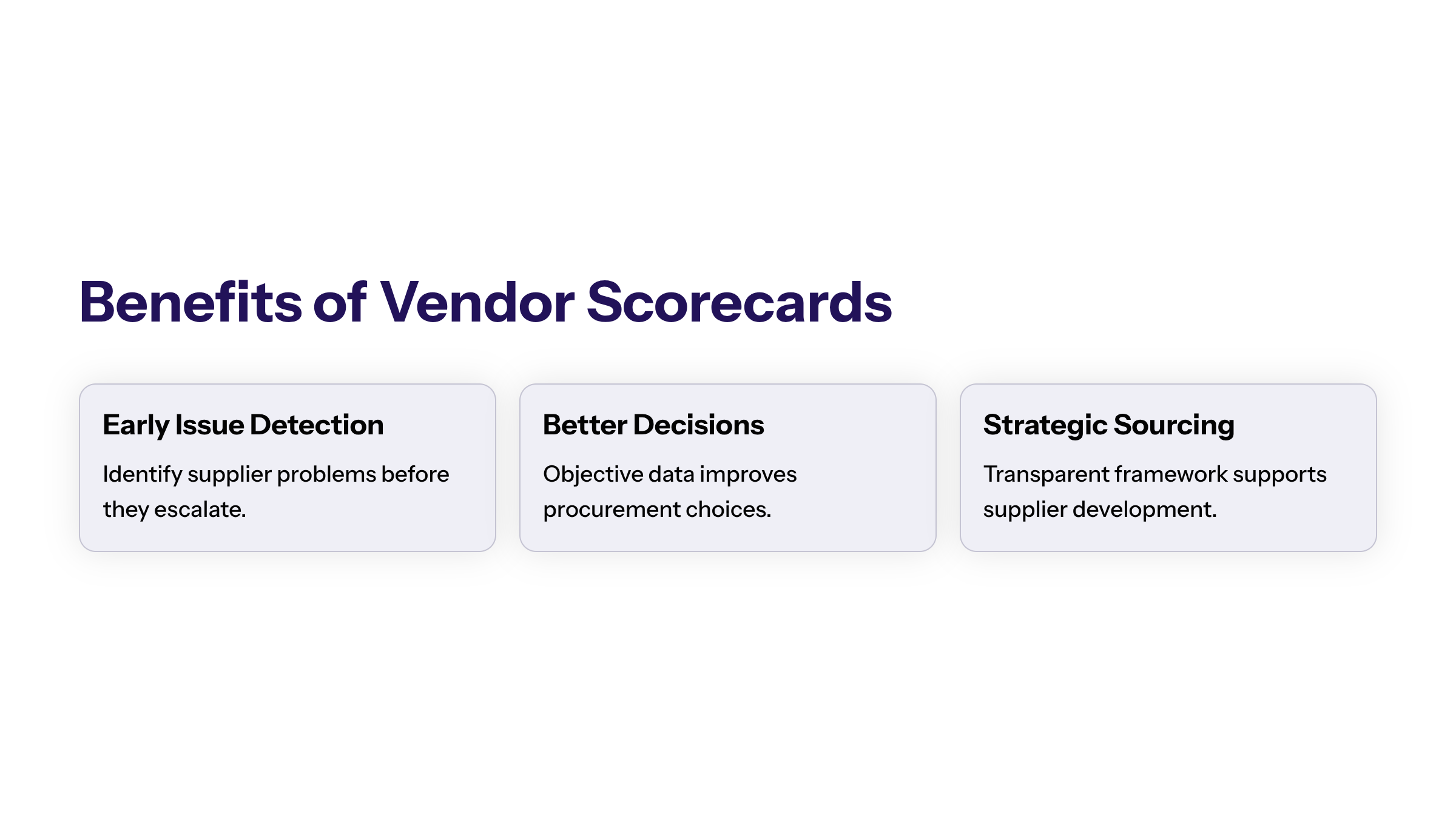
Vendor scorecards deliver multifaceted benefits that extend beyond simple performance measurement. Vendor scorecards important because they enable companies to evaluate and monitor vendor performance effectively, identify issues early, and improve procurement decision-making.
They provide a transparent, objective framework that supports strategic sourcing and supplier development initiatives. Vendor scorecards also provide transparency into vendor performance, allowing all stakeholders to gain visibility into vendor rankings.
Enhancing Supplier Accountability and Collaboration
Scorecards create a shared language between buyers and suppliers, clarifying expectations and performance standards. This transparency fosters collaborative relationships where suppliers are motivated to innovate and improve, contributing to mutual business success.
Regular feedback through vendor evaluation scorecards helps drive continuous improvement in vendor relationships by encouraging ongoing performance enhancements and stronger partnerships.
Cost Optimization and Risk Mitigation
By tracking key metrics such as cost reduction and compliance adherence, vendor scorecards help identify inefficiencies and quality issues early, reducing total cost of ownership (TCO) and mitigating supply chain risks.
For example, companies like General Electric utilize scorecards to monitor compliance with industry standards such as ISO 9001, ensuring quality and reducing liability.
Driving Continuous Improvement
Regularly updated scorecard data enables procurement teams to measure performance, identify trends, and implement corrective actions swiftly. This continuous feedback loop promotes supplier performance enhancement, aligning with business objectives such as improved customer satisfaction and supply chain resilience.
Vendor scorecards help organizations focus on the most relevant vendor scorecard metrics and initiatives that drive success in their field.
Creating a Vendor Scorecard
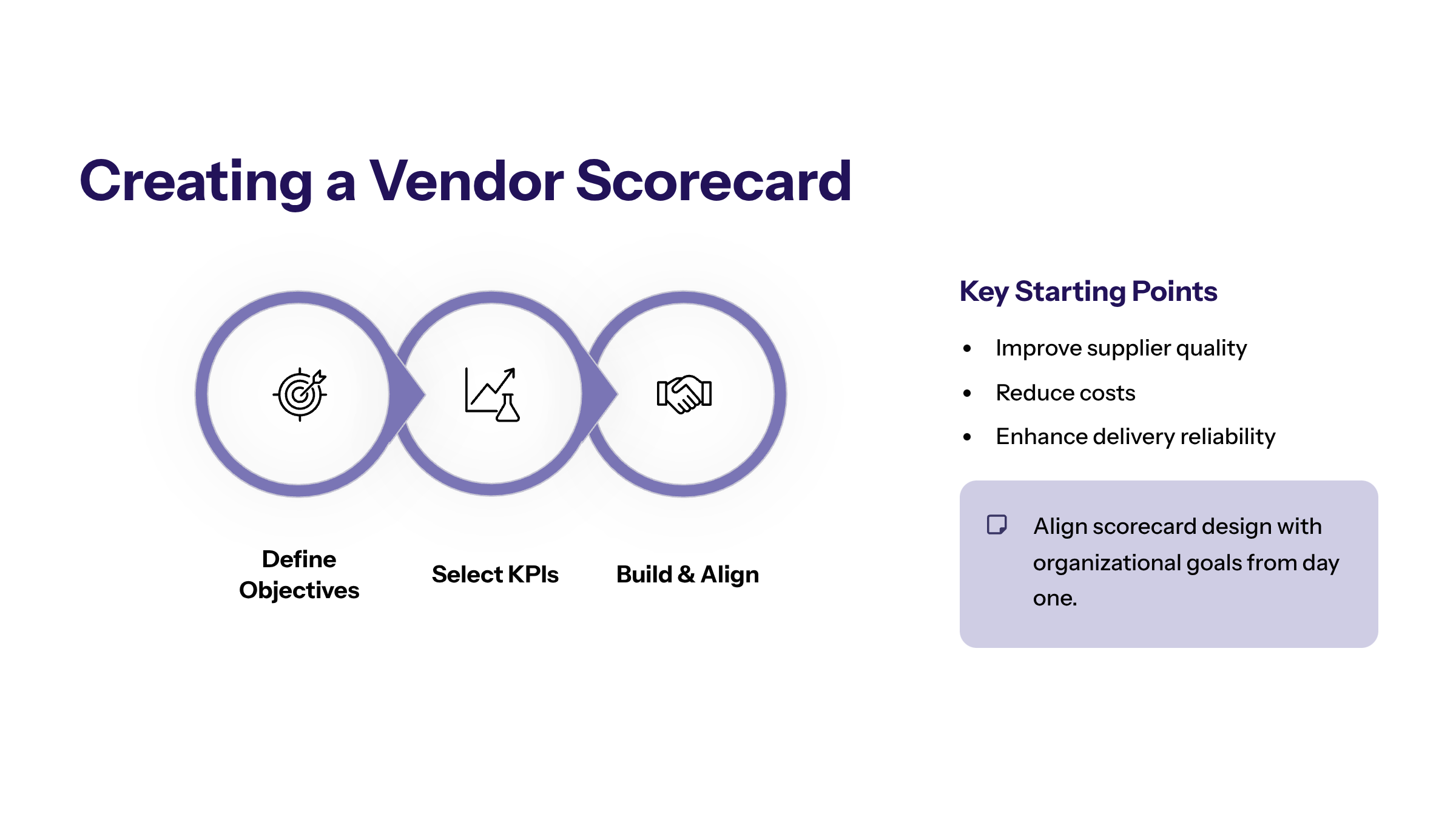
Effective vendor scorecard development requires a structured approach that aligns with organizational goals and incorporates stakeholder input.
Defining Objectives and Selecting KPIs
Begin by articulating clear business objectives—whether improving supplier quality, reducing costs, or enhancing delivery reliability.
Identify KPIs that are measurable, relevant, and aligned with these objectives. Select performance metrics that will help measure supplier performance effectively, ensuring that you can track progress toward your goals.
Common KPIs include on-time delivery rate, defect rates, cost variance, and responsiveness. Using standardized KPIs and performance metrics allows organizations to evaluate and compare multiple vendors consistently, supporting data-driven decision-making.
KPI Category | Description | Example Metric |
|---|---|---|
Delivery Performance | Measures timeliness and accuracy of deliveries | On-Time Delivery Rate (OTD) |
Quality | Assesses product/service conformance | Defect Rate, Return Rate |
Cost Management | Evaluates pricing and cost-saving initiatives | Cost Reduction Percentage |
Service & Responsiveness | Tracks communication and problem resolution | Response Time, Issue Resolution Rate |
Engaging Stakeholders Across Departments
Involve procurement, quality control, finance, and operations teams to ensure the scorecard reflects diverse perspectives and business priorities. Collaborative development enhances buy-in and ensures comprehensive vendor assessments.
Weighting and Scoring
Assign weights to KPIs based on their impact on business goals. For instance, a technology firm may prioritize quality and innovation higher than cost, whereas a retail company might emphasize delivery reliability. Use scoring scales (e.g., 1 to 5) to quantify vendor performance against each KPI.
Leveraging Vendor Scorecard Templates and Tools
Utilize vendor scorecard templates available in Excel or integrated within vendor management systems for streamlined data collection and analysis. Collecting and verifying vendor data is essential to ensure the accuracy and reliability of scorecard results. Automation reduces errors and accelerates reporting cycles.
Below is a scorecard example to illustrate how organizations can structure and use vendor scorecards in practice.
Expert Insight
“Vendor scorecards transform vendor management from a checklist exercise into a strategic partnership tool. When suppliers understand how their performance is measured and aligned with business objectives, they become proactive collaborators.”
— Suman Sarkar, Partner at 3S Consulting
Vendor Scorecard Metrics
Selecting appropriate metrics is critical to ensuring the vendor scorecard reflects true supplier performance and drives desired outcomes.
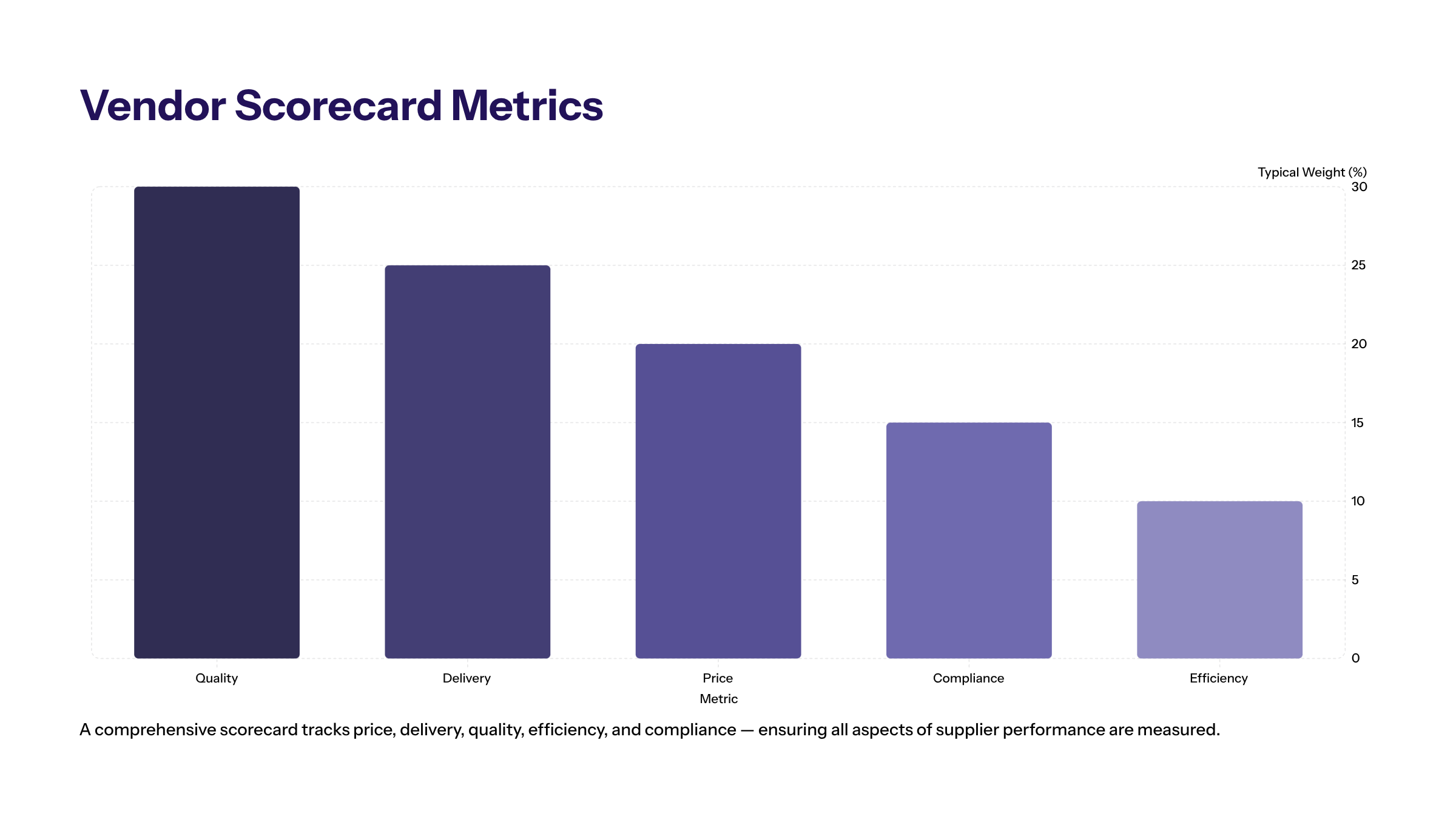
A vendor performance scorecard is a comprehensive tool used to track key metrics such as price, delivery, quality, efficiency, and compliance, helping organizations systematically monitor and improve supplier reliability.
This type of performance scorecard ensures that all relevant aspects of supplier performance are measured and managed effectively.
Key Metrics to Track Supplier Performance
A vendor evaluation scorecard should focus on key performance metrics and performance metrics that provide actionable insights for procurement teams. These metrics enable organizations to monitor, measure, and improve supplier relationships and procurement processes over time.
On-Time Delivery (OTD): Essential for supply chain stability; tracks the percentage of deliveries made on schedule.
Quality Metrics: Includes defect rates, compliance with product specifications, and return rates to assess product/service quality.
Cost Management: Monitors supplier pricing trends, cost reduction initiatives, and total cost of ownership.
Service and Responsiveness: Measures communication effectiveness, issue resolution times, and customer satisfaction scores.
Compliance Metrics: Ensures adherence to regulatory standards such as ISO 27001 and SOC 2, and tracks compliance with service level agreements (SLAs), delivery deadlines, and quality benchmarks. Vendor scorecards help organizations monitor whether suppliers meet the contractual benchmarks set by SLAs, providing quantifiable metrics for ongoing performance evaluation.
Innovation and Value-Add: Evaluates supplier contributions to process improvements and product development.
Integrating Metrics into a Balanced Scorecard
A balanced scorecard approach combines financial and non-financial metrics to provide a holistic view of vendor performance. For example:
Metric Category | Weight (%) | Rationale |
|---|---|---|
Delivery Performance | 40 | Critical for operational continuity |
Quality | 30 | Directly impacts customer satisfaction |
Cost Management | 20 | Influences profitability |
Innovation & Compliance | 10 | Supports long-term strategic goals |
Monitoring and Updating Metrics
Regularly review and adjust KPIs to reflect changing business priorities and supplier capabilities. Use current vendor performance data and supplier scorecards as tools for ongoing monitoring to maintain scorecard relevance.
For a practical illustration, see the vendor scorecard example below, which demonstrates how metrics can be updated and reviewed in practice.
Business Goals Alignment
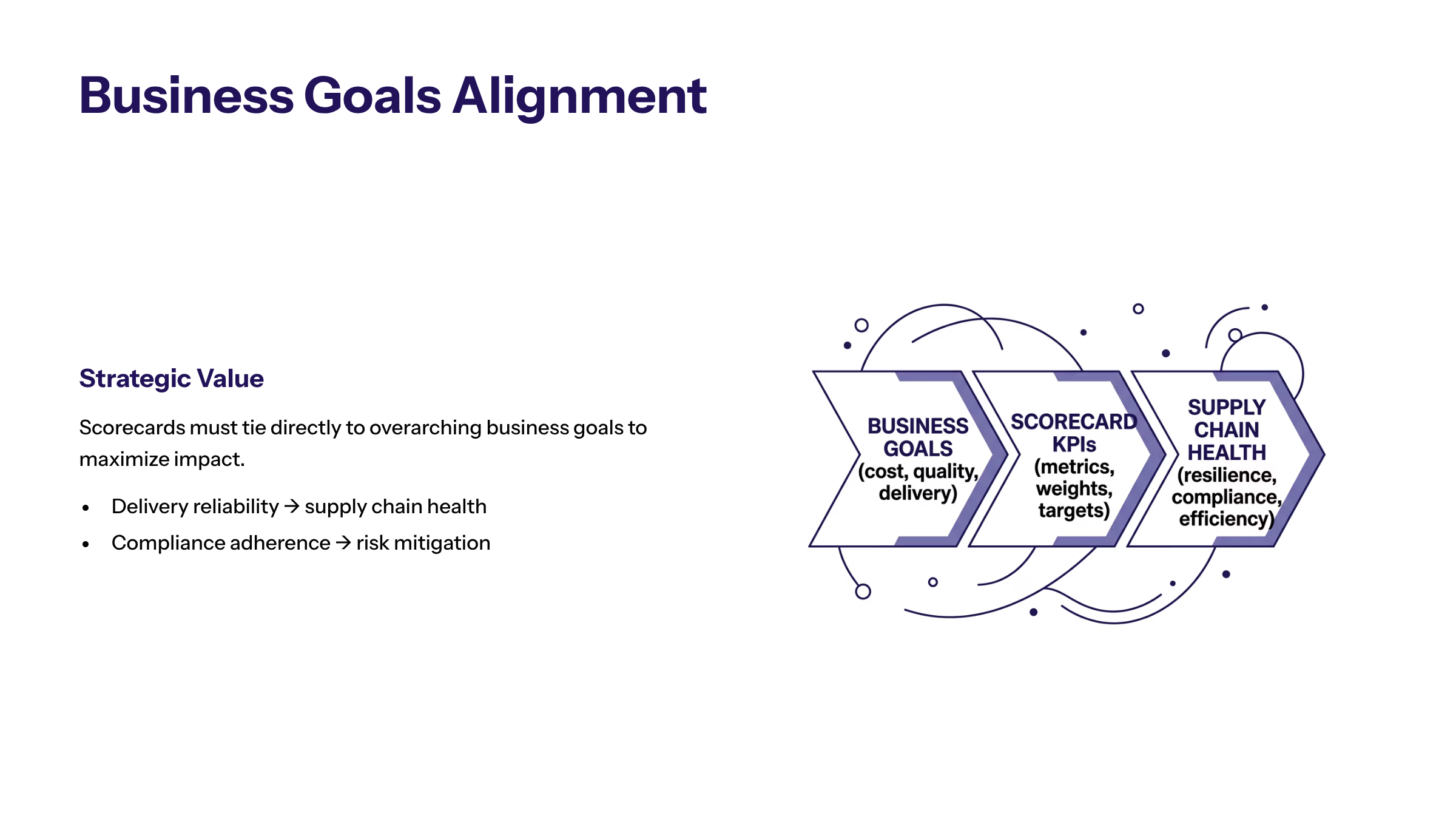
Vendor scorecards must be closely aligned with the overarching business goals to maximize their strategic value.
Supporting Supply Chain Health and Risk Mitigation
By tracking supplier performance indicators tied to supply chain health, such as delivery reliability and compliance adherence, organizations can proactively identify vulnerabilities and mitigate risks associated with supply chain disruptions.
Driving Supplier Accountability and Continuous Improvement
Aligning scorecard metrics with business priorities ensures suppliers are held accountable for performance areas that matter most. This alignment encourages suppliers to focus on process improvements and innovation that support business growth.
Enhancing Procurement Strategy and Supplier Relationships
Scorecards provide procurement teams with data-driven insights to negotiate better terms, select top-performing suppliers, and foster collaborative supplier relationships that enhance overall supply chain resilience.
Industry Example
Amazon Business leverages vendor scorecards integrated with their procurement analytics to align supplier performance with sustainability goals and diversity initiatives, showcasing how scorecards can support broader corporate social responsibility objectives.
Integrate Vendor Scorecards into Vendor Management Systems
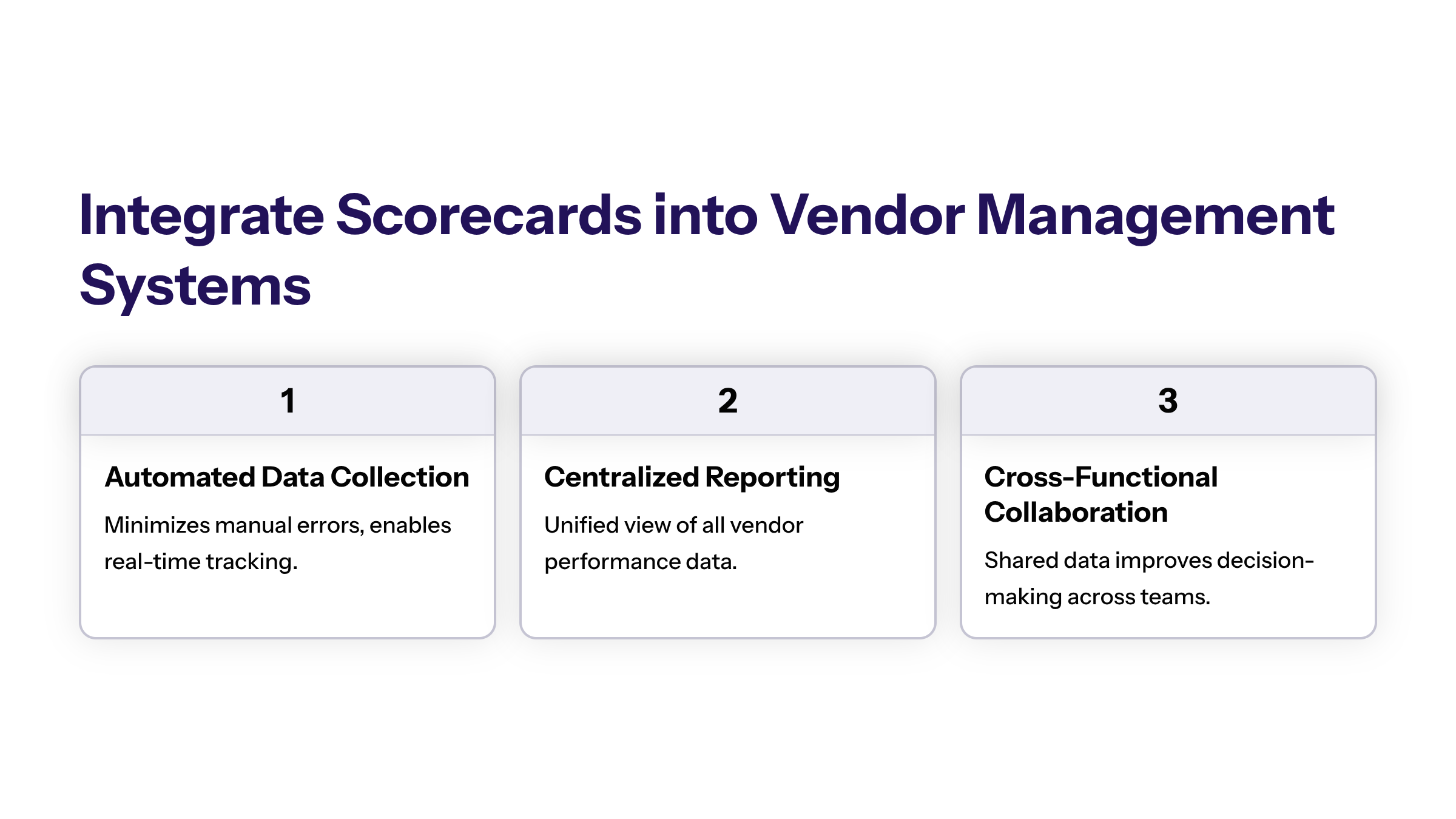
Integration of vendor scorecards within vendor management systems (VMS) enhances data accuracy, reporting efficiency, and cross-functional collaboration. By integrating scorecards into a VMS, organizations can track vendor performance and leverage supplier performance data for ongoing monitoring, enabling more informed decision-making and continuous improvement.
Benefits of System Integration
Automated Data Collection: Minimizes manual errors and provides real-time performance tracking.
Centralized Performance Dashboards: Offer executives and procurement teams comprehensive visibility into supplier performance trends.
Facilitated Collaboration: Enables shared access to scorecard data with suppliers, fostering transparency and joint improvement efforts.
Technologies Supporting Integration
Platforms like SAP Ariba, Coupa, and Precoro offer vendor management capabilities that include scorecard automation, KPI tracking, and supplier collaboration portals.
Best Practices for Integration
Define clear data governance policies to ensure data quality.
Train stakeholders on interpreting scorecard data and using system features.
Schedule regular reviews to update scorecard parameters and incorporate supplier feedback.
Expert Commentary
“Integrating vendor scorecards into a vendor management system transforms raw data into strategic insights, enabling procurement teams to act swiftly and collaboratively.”
— Procurement Insights Journal, 2024
Implementing Vendor Scorecards
Implementing vendor scorecards is a pivotal step in elevating vendor performance and aligning supplier activities with your business objectives.
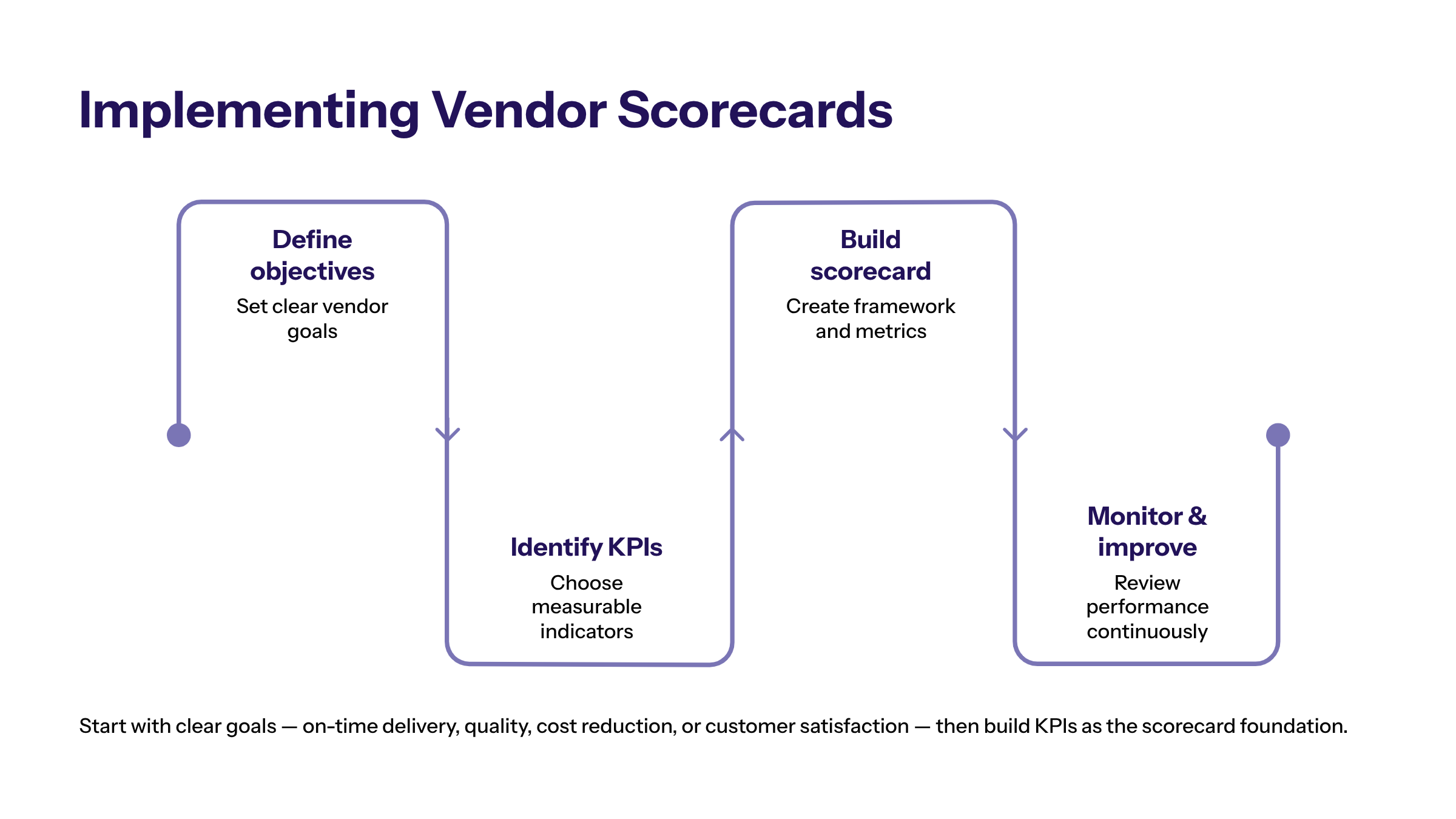
The process begins with a clear definition of what your organization aims to achieve—whether it’s improving on-time delivery, enhancing product quality, driving cost reduction, or boosting customer satisfaction.
Once these business objectives are established, the next step is to identify the key performance indicators (KPIs) that will serve as the foundation for your vendor scorecard.
To create a vendor scorecard that delivers actionable insights, start by selecting key metrics that reflect your priorities. Common metrics include on-time delivery rates, product quality scores, cost reduction achievements, and customer satisfaction ratings. Using a vendor scorecard template can streamline the process, allowing you to consistently track and measure vendor performance across multiple suppliers.
Integration with your vendor management system is essential for effective implementation. By embedding the scorecard into your existing vendor management workflows, you ensure that performance data is captured in real time and is accessible to all relevant stakeholders. This integration not only improves data accuracy but also supports ongoing monitoring and analysis.
Regular review of scorecard data is crucial for continuous improvement. Schedule periodic evaluations to assess vendor performance against your KPIs, identify trends, and pinpoint areas for improvement. Engage your procurement team and other stakeholders in these reviews to ensure alignment and foster a culture of collaboration.
Ultimately, a well-implemented vendor scorecard becomes a dynamic tool for vendor management, enabling your organization to make data-driven decisions, enhance supplier relationships, and achieve sustained improvements in supply chain performance.
Common Challenges and Solutions
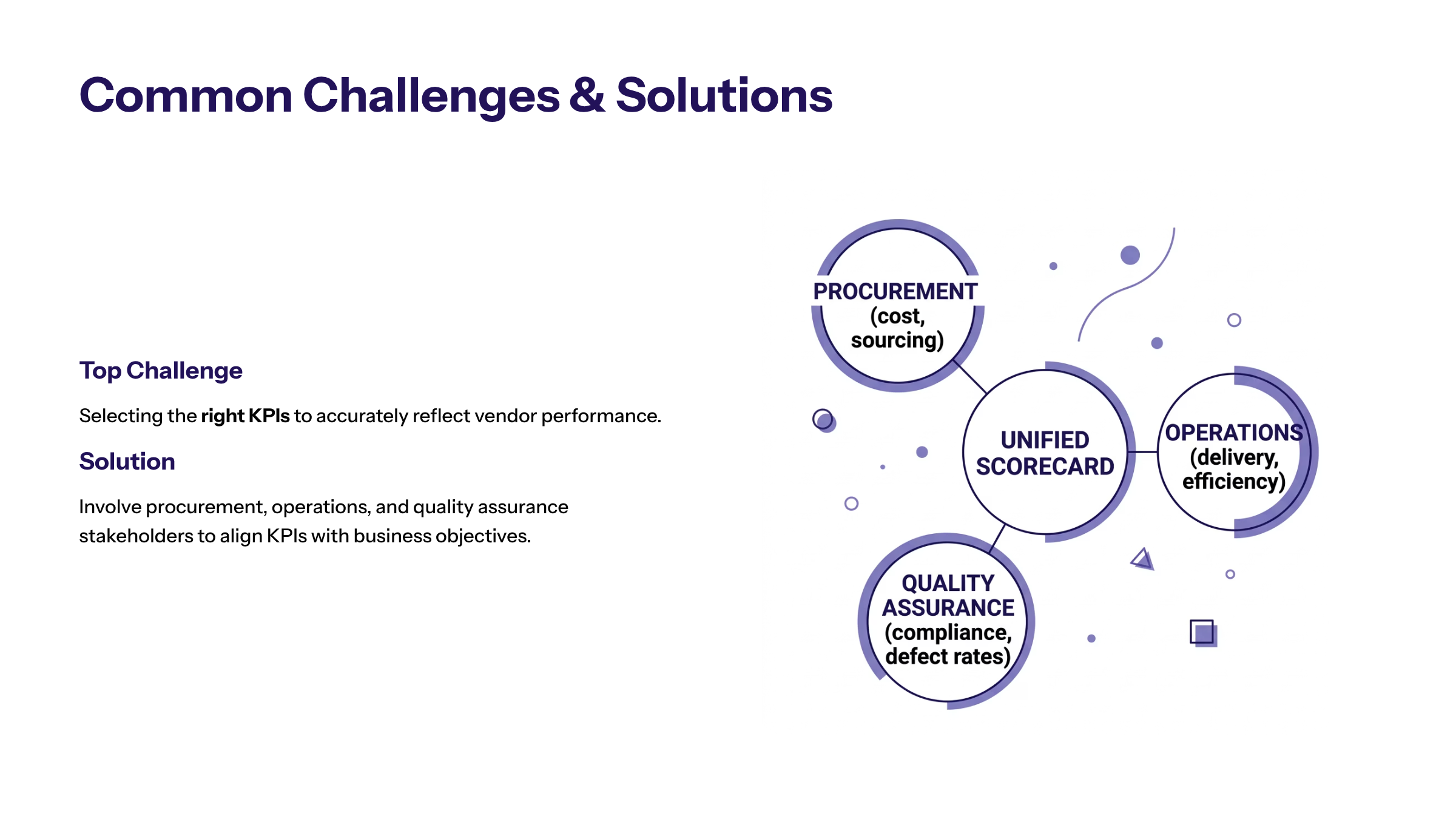
While vendor scorecards are powerful tools for supplier management, organizations often encounter several challenges during implementation. One of the most common hurdles is selecting the right key performance indicators (KPIs) to measure vendor performance.
To address this, involve stakeholders from procurement, operations, and quality assurance to ensure that your KPIs are aligned with overall business objectives and reflect the full spectrum of supplier contributions.
Another challenge is ensuring that the vendor scorecard is both balanced and comprehensive. Focusing too narrowly on a single aspect, such as cost, can overlook critical factors like quality or service.
Adopting a balanced scorecard approach allows you to evaluate vendor performance across multiple dimensions—quality, cost, delivery, and service—providing a holistic view that supports better decision-making and risk mitigation within the supply chain.
Resource constraints can also pose difficulties, as collecting and analyzing scorecard data can be time-consuming. To streamline this process, leverage your vendor management system or other digital tools to automate data collection and reporting. Automation not only reduces manual effort but also enhances the accuracy and timeliness of performance data.
Regularly reviewing and analyzing scorecard data is essential for driving continuous improvement. Use these insights to identify top performing suppliers, uncover opportunities for cost savings, and implement targeted process improvements. By proactively addressing these challenges, your organization can improve vendor performance, reduce supply chain risks, and foster stronger supplier relationships that support long-term business success.
How to Measure Supplier Performance Effectively
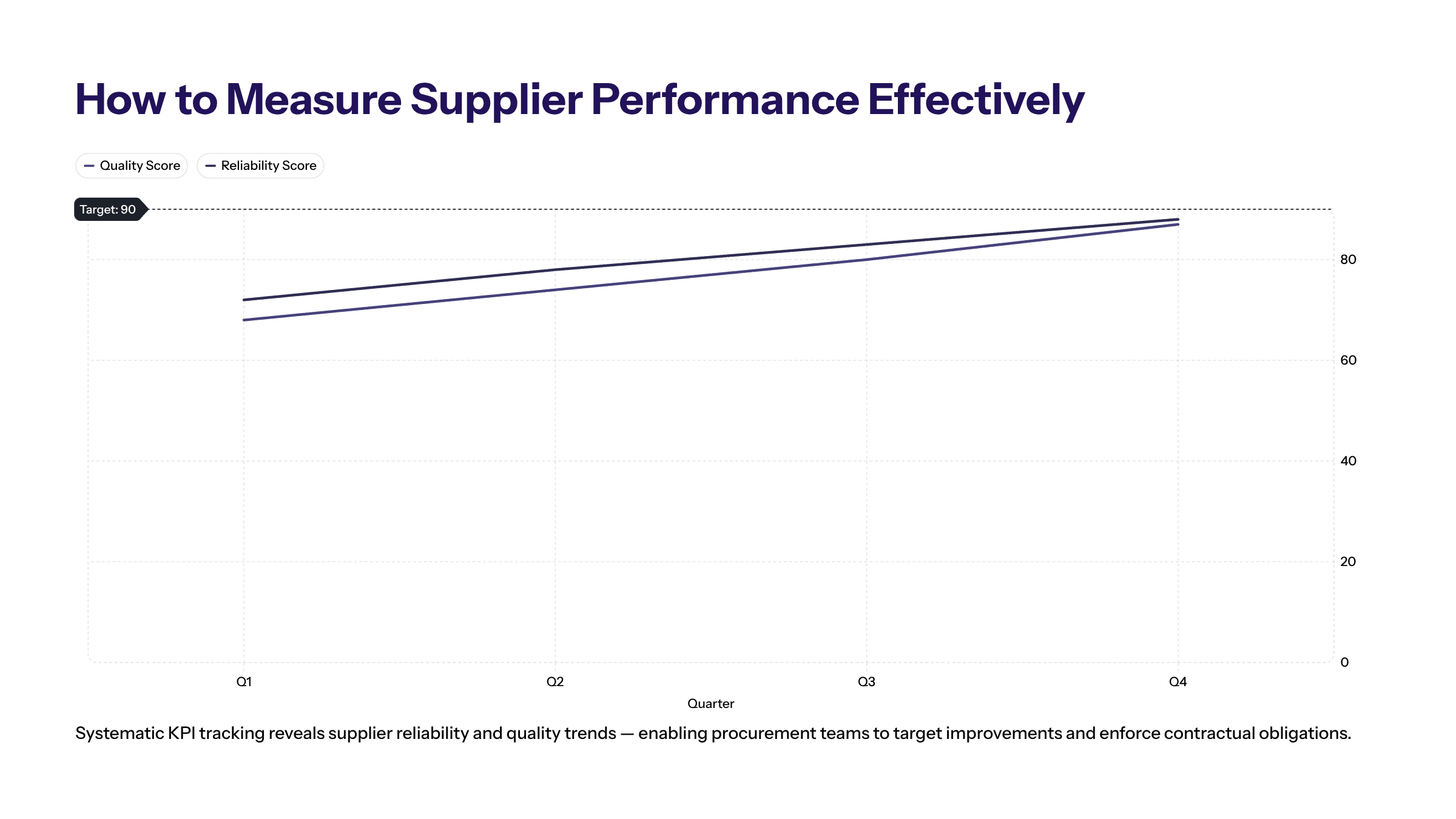
Measuring supplier performance is a critical component of maintaining a robust supply chain. By systematically tracking key performance indicators (KPIs), organizations can assess suppliers’ reliability, quality, and responsiveness. Effective measurement enables procurement teams to identify areas for improvement and ensure that suppliers consistently meet contractual obligations.
Key Steps to Measure Supplier Performance
Define clear, measurable KPIs aligned with business objectives.
Collect current performance data regularly to maintain accuracy.
Use a performance scorecard to visualize and analyze supplier metrics.
Engage suppliers in performance discussions to foster collaboration.
Implement continuous improvement plans based on scorecard insights.
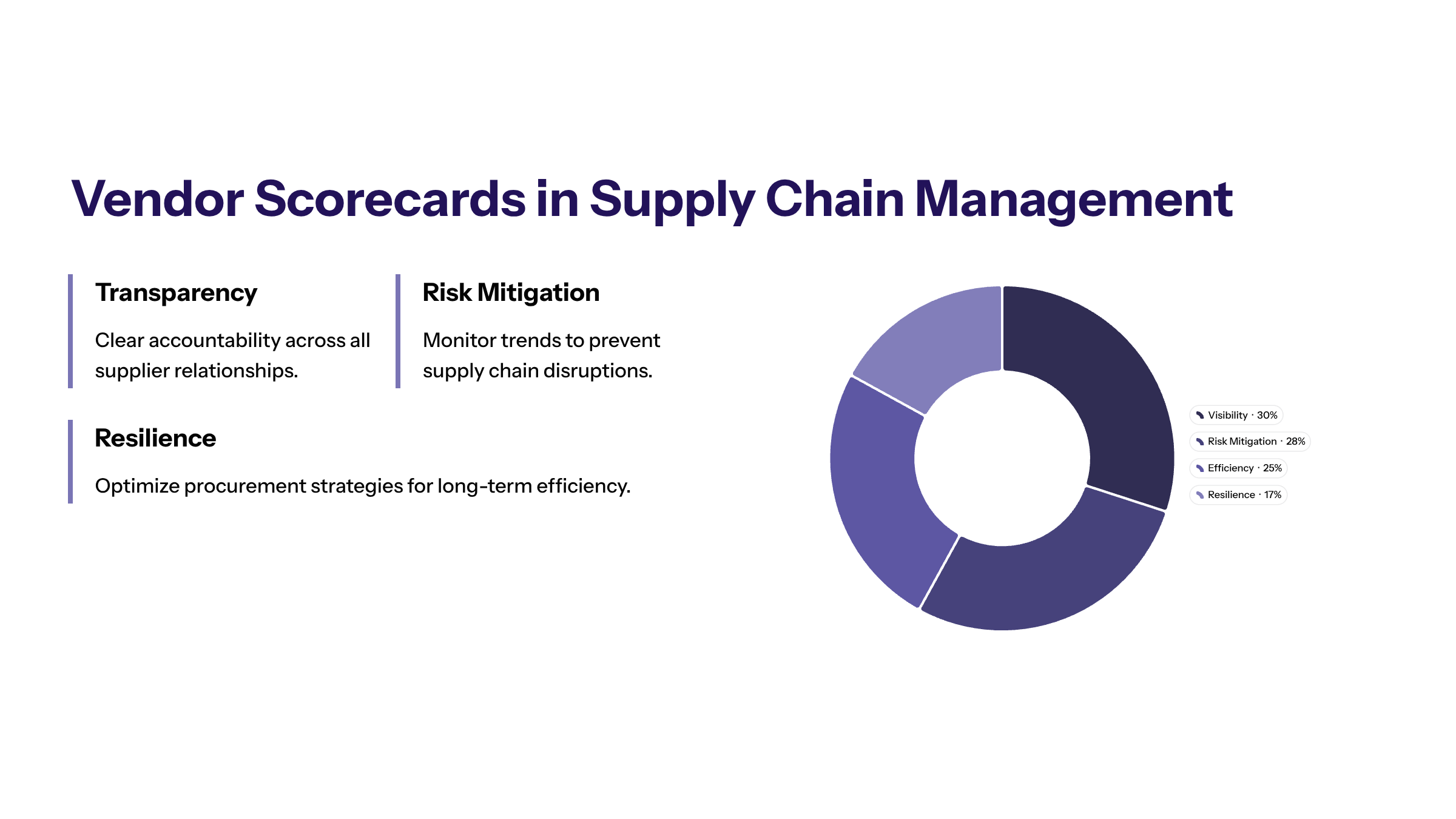
The Role of Vendor Scorecards in Supply Chain Management
Vendor scorecards play a pivotal role in supply chain management by providing transparency and accountability across supplier relationships. They help organizations monitor supplier trends, mitigate risks, and optimize procurement strategies, ensuring supply chain resilience and efficiency.
Enhancing Supply Chain Visibility with Vendor Scorecards
Vendor scorecards important for supply chain success as they offer real-time insights into supplier performance, enabling proactive management of potential disruptions. By integrating scorecards into supply chain management systems, businesses can streamline operations and maintain high service levels.
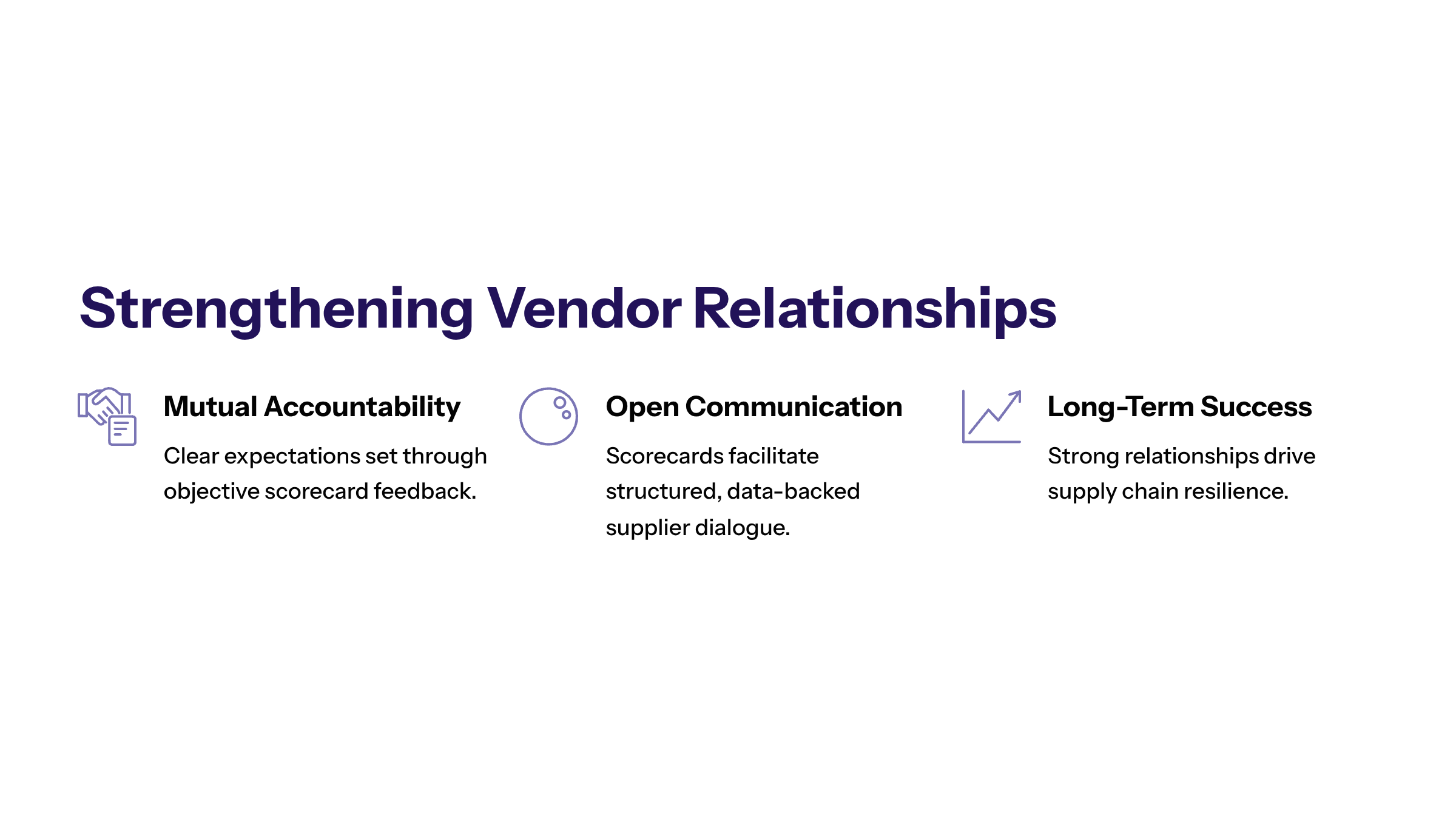
Strengthening Vendor Relationships through Supplier Performance Scorecards
Building strong vendor relationships is essential for long-term supply chain success. Supplier performance scorecards facilitate open communication and mutual accountability by setting clear expectations and providing objective performance feedback.
Benefits of Using a Supplier Performance Scorecard
Promotes transparency and trust between buyers and suppliers.
Encourages supplier innovation and process improvements.
Supports data-driven decision-making for vendor selection and retention.
Aligns supplier activities with organizational goals and compliance requirements.
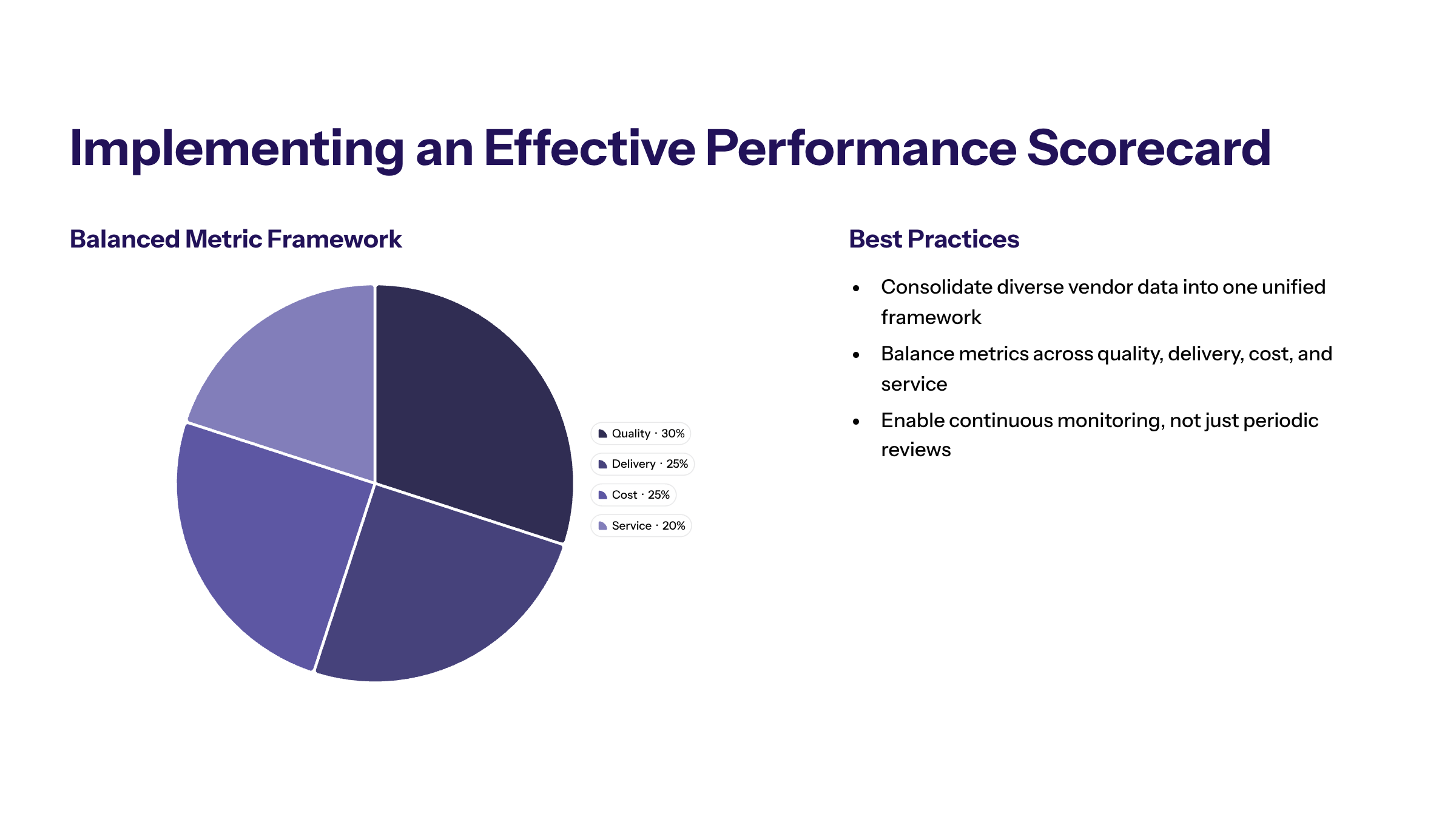
Implementing an Effective Performance Scorecard
A well-designed performance scorecard consolidates diverse vendor data into a unified framework, enabling comprehensive evaluation and continuous monitoring. Incorporating balanced metrics related to quality, delivery, cost, and service ensures a holistic view of supplier performance.
Best Practices for Performance Scorecard Development
Customize scorecard metrics to reflect specific business priorities.
Involve cross-functional stakeholders in scorecard creation.
Regularly update scorecard criteria to adapt to evolving market conditions.
Leverage technology and vendor management systems for automation and reporting.
Why Vendor Scorecards Are Important
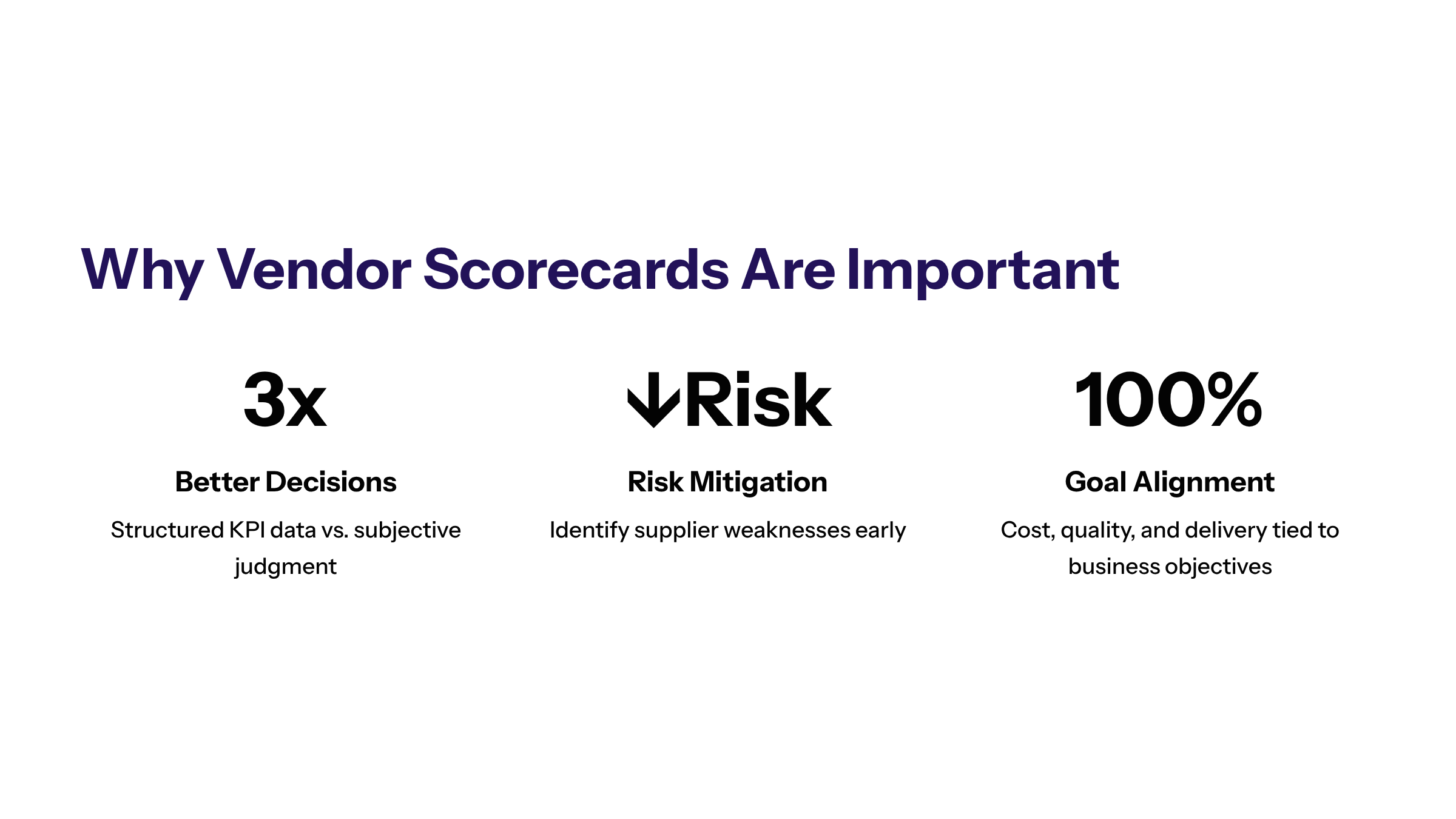
Vendor scorecards important because they provide a structured and objective framework for evaluating supplier performance, which is critical in today’s complex supply chain environments.
By systematically measuring key performance indicators (KPIs), vendor scorecards help organizations identify strengths and weaknesses among particular suppliers, enabling targeted improvements and risk mitigation.
This clarity supports procurement teams in making informed decisions that align with business objectives, such as cost savings, quality enhancement, and timely delivery.
Moreover, vendor scorecards important role extends beyond assessment—they foster transparency and accountability, strengthening supplier relationships through clear expectations and ongoing feedback.
This continuous improvement cycle drives not only operational efficiency but also innovation and collaboration, ultimately enhancing overall supply chain health and resilience.
In essence, recognizing why vendor scorecards are important empowers organizations to transform supplier management from a reactive process into a proactive strategic advantage.
Conclusion
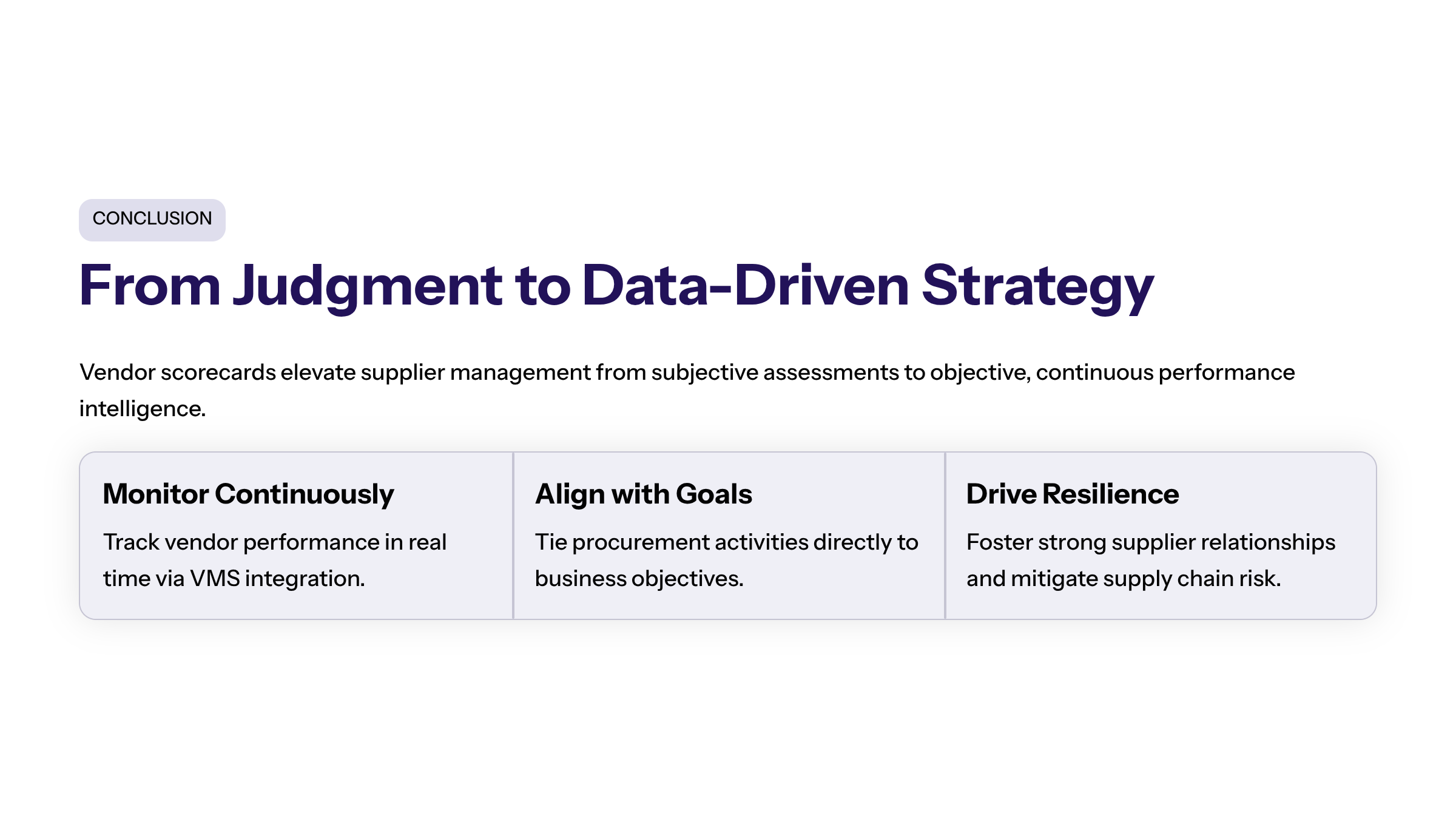
Vendor evaluation scorecards are powerful instruments that elevate supplier performance management from subjective judgments to objective, data-driven strategies.
When thoughtfully designed and integrated within vendor management systems, scorecards enable organizations to monitor vendor performance continuously, align procurement activities with business goals, and foster resilient supplier relationships.
Embracing vendor scorecards is essential for executives seeking to optimize supply chain health, mitigate risks, and drive sustainable business success.
By adopting best practices in scorecard creation, metric selection, and system integration, companies can unlock the full potential of their supplier networks, ensuring agility and competitiveness in today’s dynamic market landscape.