
Research Acceleration: How AI Coding Agents Support Scientific Work
Research acceleration at OpenAI describes the growing use of coding agents in research workflows. The company's September 6, 2026 research acceleration report presents internal indicators of adoption, execution, and intervention. These are preliminary organizational measurements, not a universal productivity benchmark.
For enterprise research and engineering teams, the question is not simply how many agents can run at once. It is whether those agents help produce useful, reproducible results at an acceptable cost, with appropriate oversight. More generated code or longer agent runtime can represent useful work, failed attempts, or additional review burden.
This guide explains how to interpret the reported metrics and apply a practical evaluation framework to your own workflows. It covers bounded delegation, parallel execution, outcome measurement, cost controls, and release decisions. It does not treat internal AI research results as proof of equivalent gains in biology, medicine, or every enterprise development environment.
The short answer: use agents to accelerate well-defined execution while measuring accepted outcomes and retaining scientific accountability. Compare the complete workflow, including testing, review, rework, and infrastructure, rather than treating agent activity as the result.
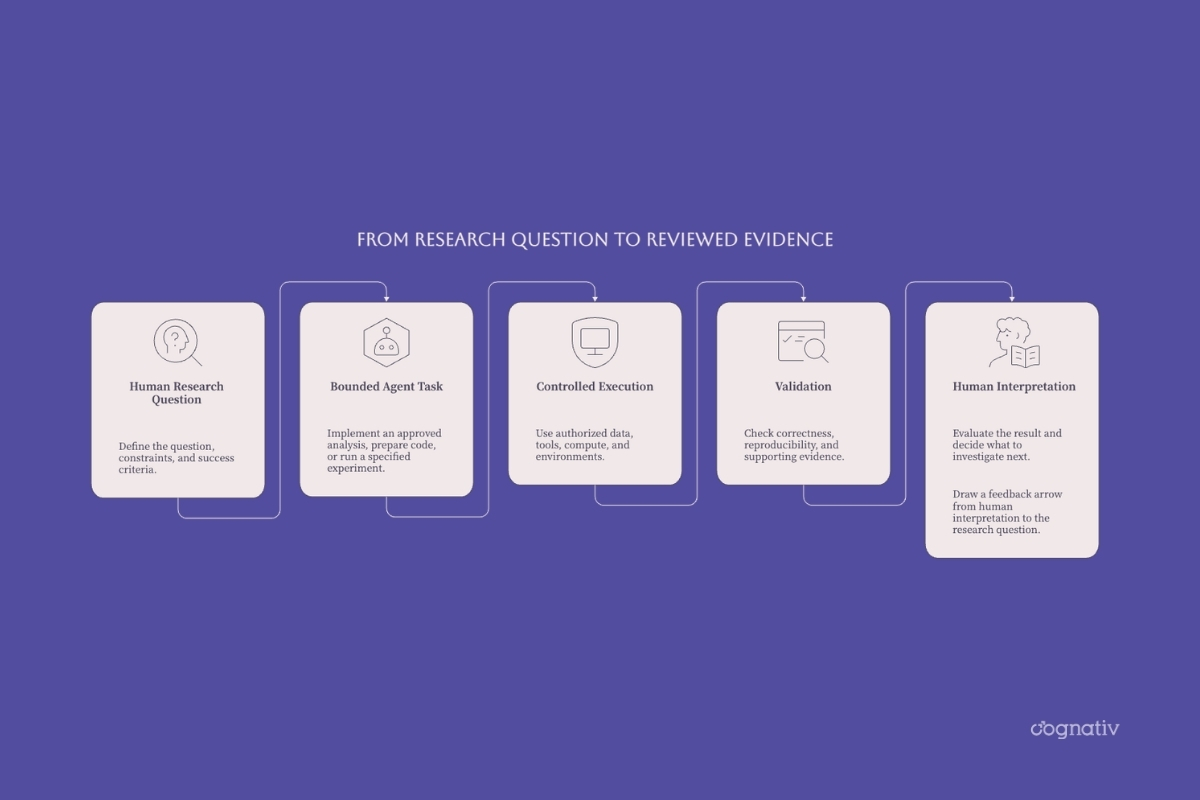
What OpenAI's Research Acceleration Metrics Mean
The figures below summarize selected observations from the linked report. Keep the measurement definitions alongside the numbers when discussing them with leadership.
| Indicator | Reported Observation | Interpretation Limit |
|---|---|---|
| Aggregate runtime | 3.1 agent-workdays per human workday by mid-August, using eight-hour workdays. | Not a 3.1-times productivity gain. |
| Daily inference usage | Above $600 for the median researcher; above $7,000 at the 90th percentile, valued at API prices. | Not necessarily actual internal expenditure. |
| Longer-task intervention | More than half of successful tasks estimated at four to eight human hours involved intervention. | Not a failure rate across all tasks. |
| Experiment activity | August experiments per active experimenter reached the tracked series' high. | Compute availability also increased; causation is not established. |
The report warns that activity measures do not directly establish overall research progress. Its methods exclude uncertain outcomes from some task analyses and use a broad definition of researcher. Treat its results as context for a local evaluation, not a staffing or budget formula.
Define Acceleration Before Measuring It
For a pilot, define acceleration as a change in the time or resources required to produce an accepted result at a specified quality threshold. An accepted result might be a reproducible analysis, a reviewed implementation, or a completed experiment with interpretable evidence. Define that unit before collecting a baseline.
Do not combine unlike outcomes into a single productivity count. A formatting change, a new evaluation dataset, and an experiment that changes a research decision carry different effort and value. A dashboard can group them, but it should preserve those distinctions so a change in task mix does not masquerade as improvement.
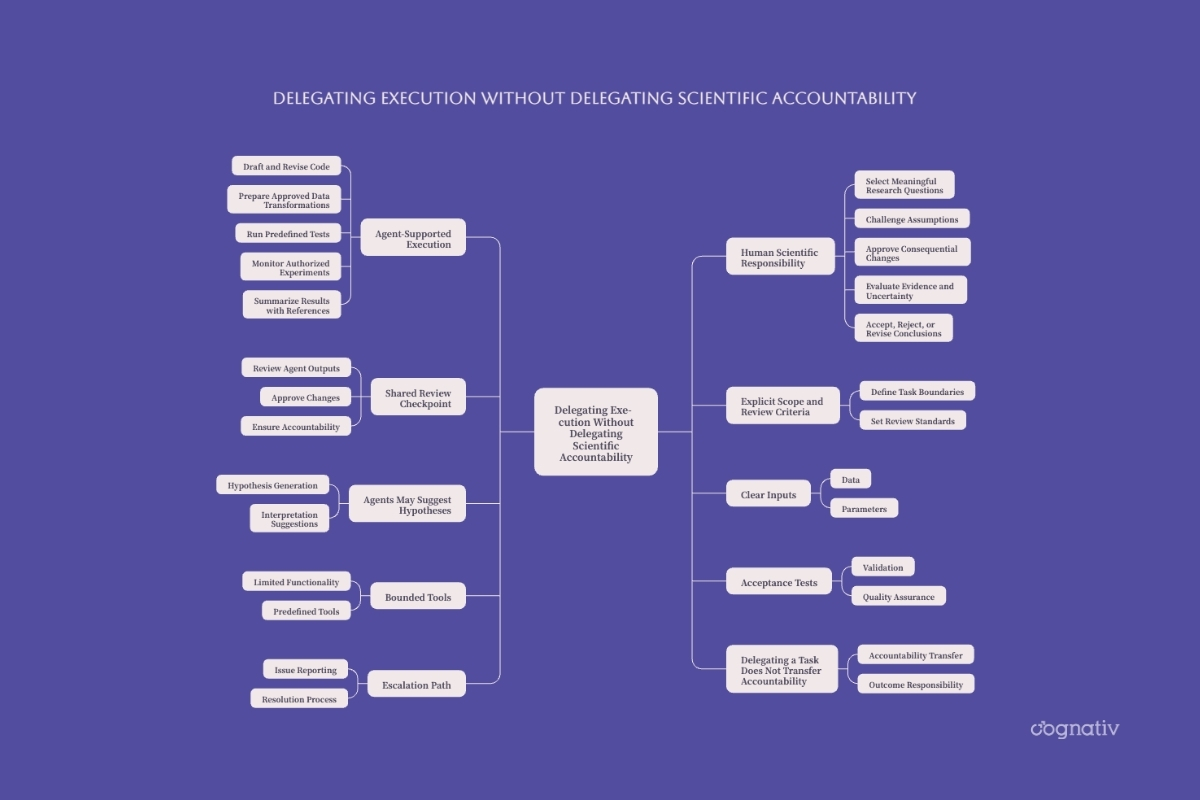
Delegate Execution Without Delegating Scientific Accountability
The strongest initial candidates for delegation have understandable inputs, bounded tools, a clear deliverable, and an independent way to check the output. A researcher should be able to explain what success means without accepting the agent's own assessment as the only evidence.
For example, a team might ask an agent to implement a specified data transformation against synthetic fixtures, investigate a failing test, or prepare a comparison from an approved result set. These are illustrative workflow choices, not claims about particular OpenAI experiments or Cognativ client outcomes.
Write a Task Contract
- Purpose: state the question the task supports and the output it should produce.
- Inputs: identify approved data, code versions, references, and assumptions.
- Authority: define allowed tools, destinations, resource limits, and prohibited actions.
- Acceptance: specify tests, evidence requirements, and the responsible reviewer.
- Escalation: define when to stop, ask a question, or return an incomplete result.
Scientific responsibility remains with the people directing the work. A model can suggest an interpretation or hypothesis, but the team must assess evidence, alternative explanations, and whether further experimentation is justified. Neither a plausible explanation nor passing software tests establishes a scientific claim on its own.
This separation is central to custom AI agent development for bounded workflows: implementation should make scope and review enforceable, rather than relying on a broad instruction to be careful.
Coordinate Parallel Agents Around Dependencies and Evidence
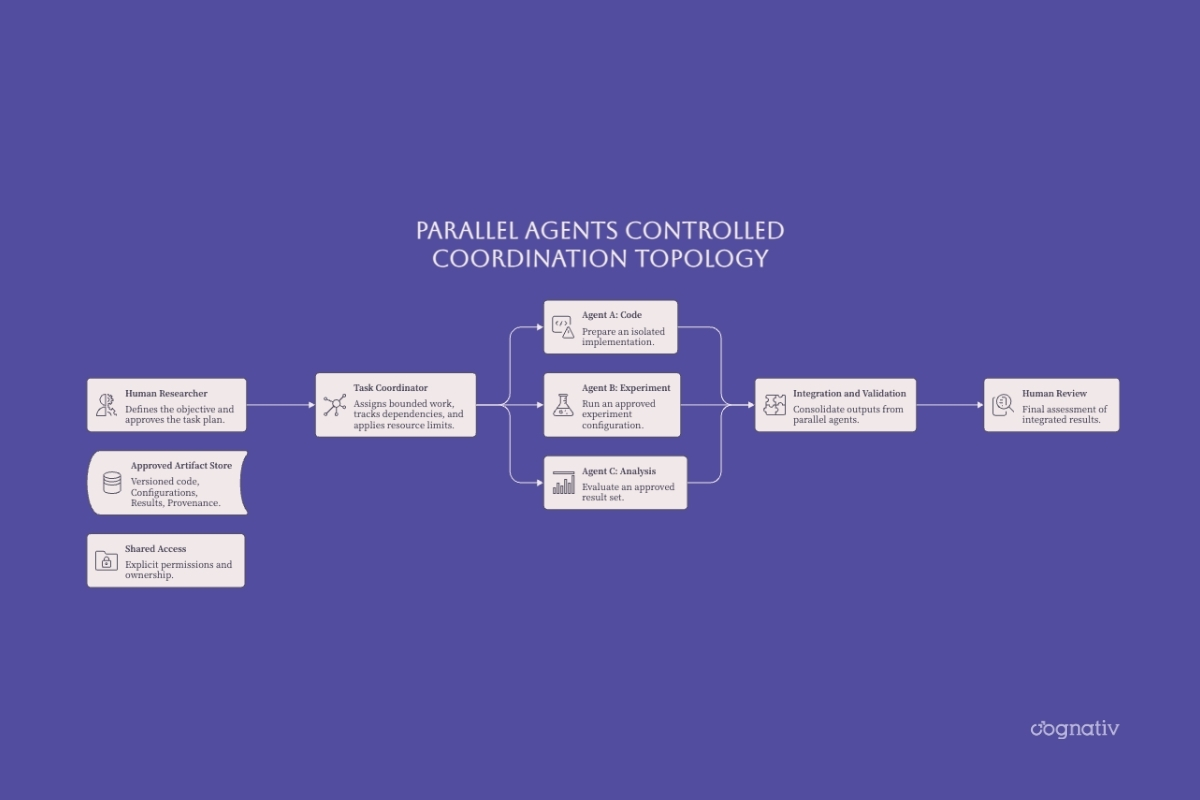
Parallel execution is useful when tasks are genuinely separable. It becomes counterproductive when multiple agents change the same files, repeat expensive work, or analyze results before their dependencies are complete. Start with a dependency map rather than a target number of simultaneous agents.
A controlled arrangement could separate implementation, experiment execution, and analysis. Each branch needs an approved input version and a defined output location. A coordinator can track readiness, but it should not silently expand scope or grant broader access to make a blocked task proceed.
Make Shared State Explicit
Give each task an isolated working area where practical. When artifacts must be shared, identify the owner, authorized readers and writers, and the version another task should consume. Distinguish exploratory output from reviewed evidence so later agents do not accidentally build on an unaccepted result.
Keep the complete chain visible: task request, input identifiers, generated changes, execution configuration, test results, and human disposition. For related deployment considerations, review enterprise AI agent permissions, controls, and ownership.
Treat Integration as Real Work
The final workflow needs time for merging changes, resolving conflicts, reproducing results, and checking whether combined outputs answer the original question. Include that time in the evaluation. If execution gets faster but integration consumes the savings, the system has moved the bottleneck rather than removed it.
Measure Accepted Outcomes Alongside Activity
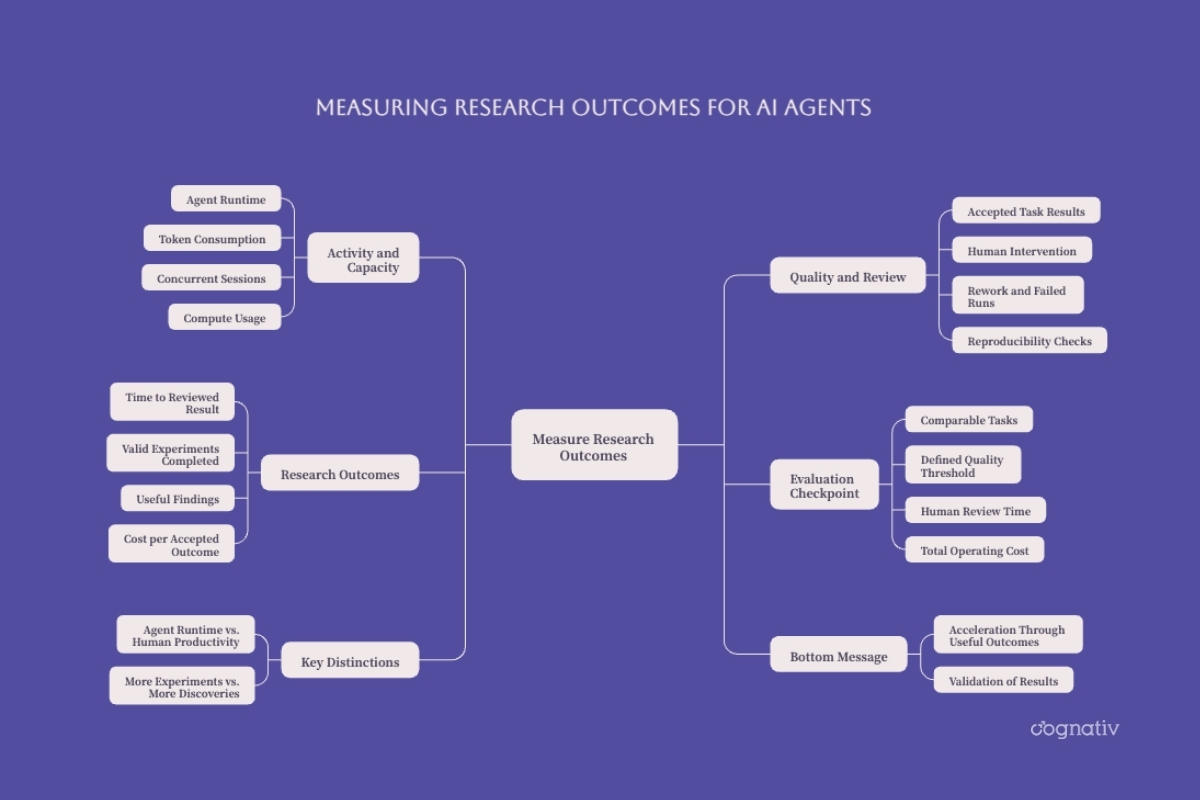
Use a small set of measures that connects execution to quality and cost. The table below is a proposed enterprise pilot scorecard, not OpenAI's methodology or a prediction of expected performance.
| Measure | Record | Avoid |
|---|---|---|
| Time to accepted result | Elapsed time from a ready task to reviewer acceptance. | Stopping the clock when the agent produces its first answer. |
| Acceptance rate | Accepted results divided by attempted tasks in a defined cohort. | Dropping failed, incomplete, or abandoned attempts. |
| Human effort | Preparation, supervision, review, integration, and rework time. | Treating low typing time as low human effort. |
| Reproducibility | Whether a reviewer can repeat the analysis from retained artifacts. | Accepting an unsupported narrative of what ran. |
| Cost per accepted result | Allocated inference, compute, tooling, and human cost. | Counting only successful-run token charges. |
| Research usefulness | A documented decision the result supports or changes. | Equating every completed experiment with a discovery. |
Choose comparable task cohorts and record changes to model versions, tools, data, infrastructure, and review requirements. If the assisted group receives easier work or more compute, report that difference. Where feasible, compare matched tasks or alternate comparable work between approaches; where it is not feasible, label the result observational.
Use Explicit Denominators
An intervention rate among successful tasks answers a different question from the proportion of all attempted tasks needing help. Likewise, cost per run differs from cost per accepted outcome. Define what is included, retain incomplete cases, and report the observation window.
A basic accounting expression is: cost per accepted outcome = total scoped pilot cost / accepted outcomes. If nothing is accepted, the ratio is undefined; report the expenditure and zero accepted outcomes instead of displaying a misleading zero cost.
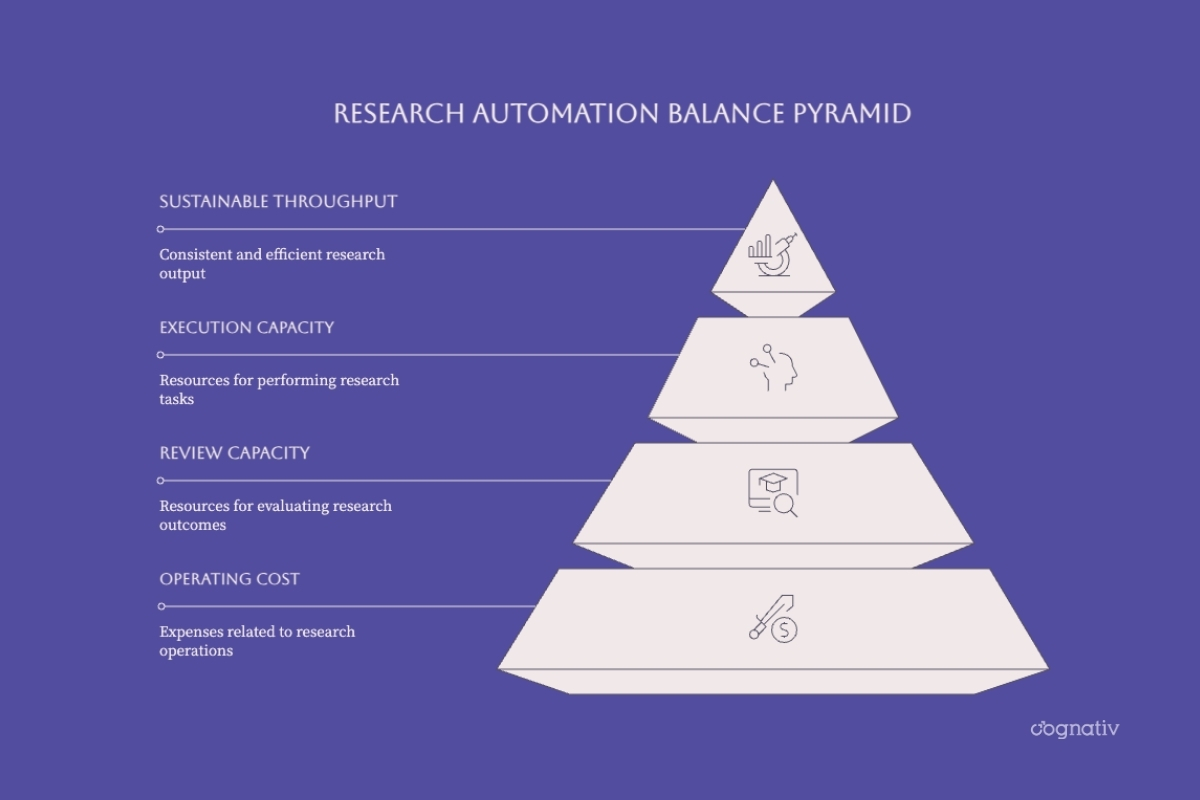
Balance Execution, Review Capacity, and Operating Cost
Set budgets at the task and project level before expanding concurrency. Include retries, delegated work, experiment compute, storage, and review effort. A parent task's limit should not be bypassed by spawning additional work, and an exhausted budget should trigger an explicit decision rather than indefinite retries.
Review capacity deserves its own limit. A queue of unchecked results can delay useful work and encourage rushed acceptance. Increase concurrent tasks only when the team can validate the additional output without weakening its quality threshold.
Plan Architecture Before Scaling the Agent Count
Decide where code executes, how data is isolated, how approved outputs reach existing systems, and who operates the workflow after the pilot. Model selection matters, but it cannot resolve missing ownership or inaccessible evidence. These questions connect to enterprise AI architecture before model selection.
AI-first architecture for governed production workflows can establish those boundaries across data, infrastructure, application logic, and operating responsibilities. The goal is a system the team can evaluate and maintain, not an assumption that every workflow needs multi-agent orchestration.
Choose the Simplest Useful Configuration
Some work needs a coding assistant; some benefits from a bounded agent; some remains better handled by deterministic software or a human researcher. Test a simpler arrangement first. Add coordination only when its contribution exceeds the additional scheduling, integration, cost, and oversight burden.
Scale Through Review Gates and Preserve the Ability to Pause
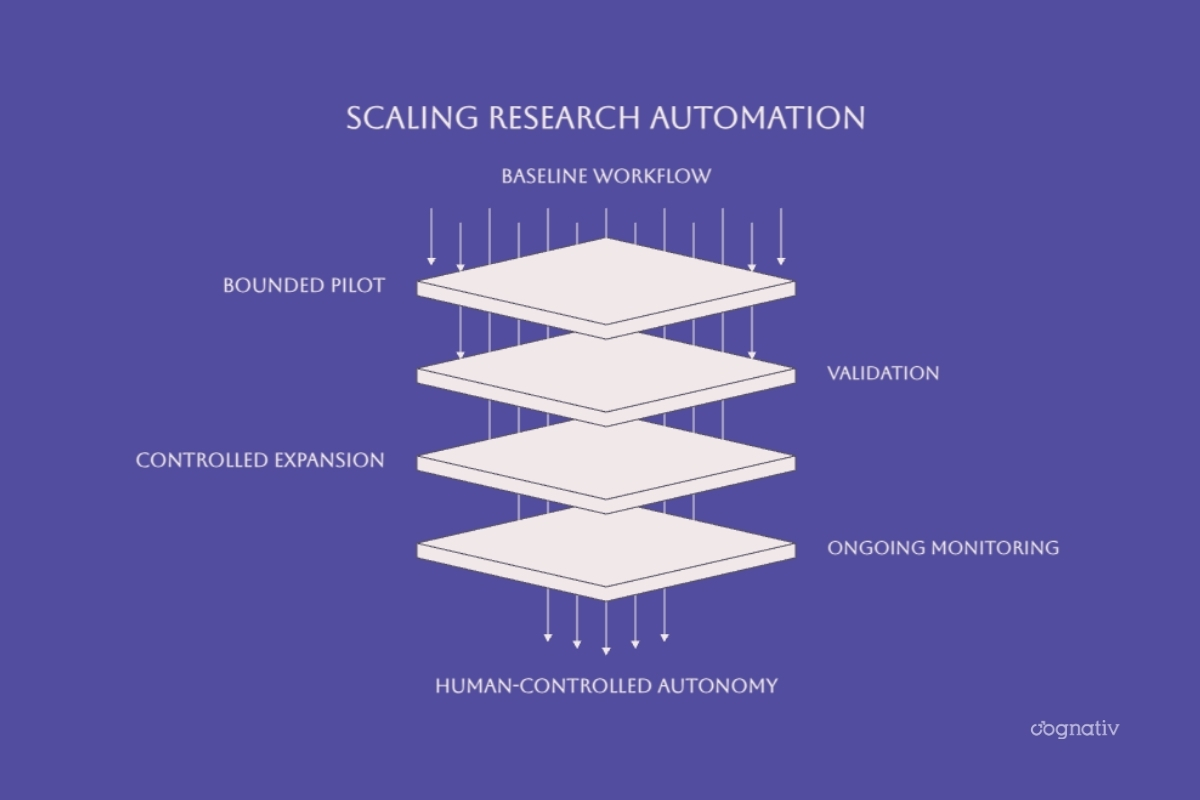
A staged rollout makes changes easier to evaluate and reverse. The following sequence is a proposed implementation approach. It is not a provider certification, a compliance guarantee, or evidence that an unrestricted research agent is ready for deployment.
- Establish a baseline: document the current task mix, accepted outcomes, effort, costs, and quality requirements.
- Run a bounded pilot: use approved data, scoped tools, named owners, and limited resources.
- Review evidence: examine correctness, reproducibility, human intervention, failures, and total cost.
- Decide: proceed, revise, or pause based on criteria agreed before the pilot.
- Expand one dimension at a time: increase task scope or concurrency while retaining comparable measurements.
- Revalidate material changes: assess new models, credentials, tools, and external integrations before broader use.
Test Interruption and Recovery
A pause mechanism must account for delegated tasks, queued work, active credentials, and external artifacts. Stopping the visible agent session does not establish that all downstream work has ended. Test interruption against controlled fixtures and retain evidence of the resulting system state.
When unexpected behavior occurs, restrict ongoing effects, preserve appropriate evidence, assess impact, and repair the failed boundary. A responsible person should authorize restart after validation. Spare compute should not automatically be redirected into an unreviewed workflow just because another workload has been paused.
Conclusion: Optimize for Reviewed Research Progress
Research acceleration should mean more useful evidence or lower effort to reach a dependable result, not simply more tokens, code, or concurrent sessions. Internal adoption figures can motivate a pilot, but your organization still needs to establish its own quality, cost, and control evidence.
Start with one bounded workflow, define acceptance before execution, and measure the complete path through human review. Keep successful outcomes, failures, and unresolved risks visible. Scale only when the next operating scope is justified.
To turn that evaluation into an implementation plan, discuss your AI-assisted research workflow with Cognativ.