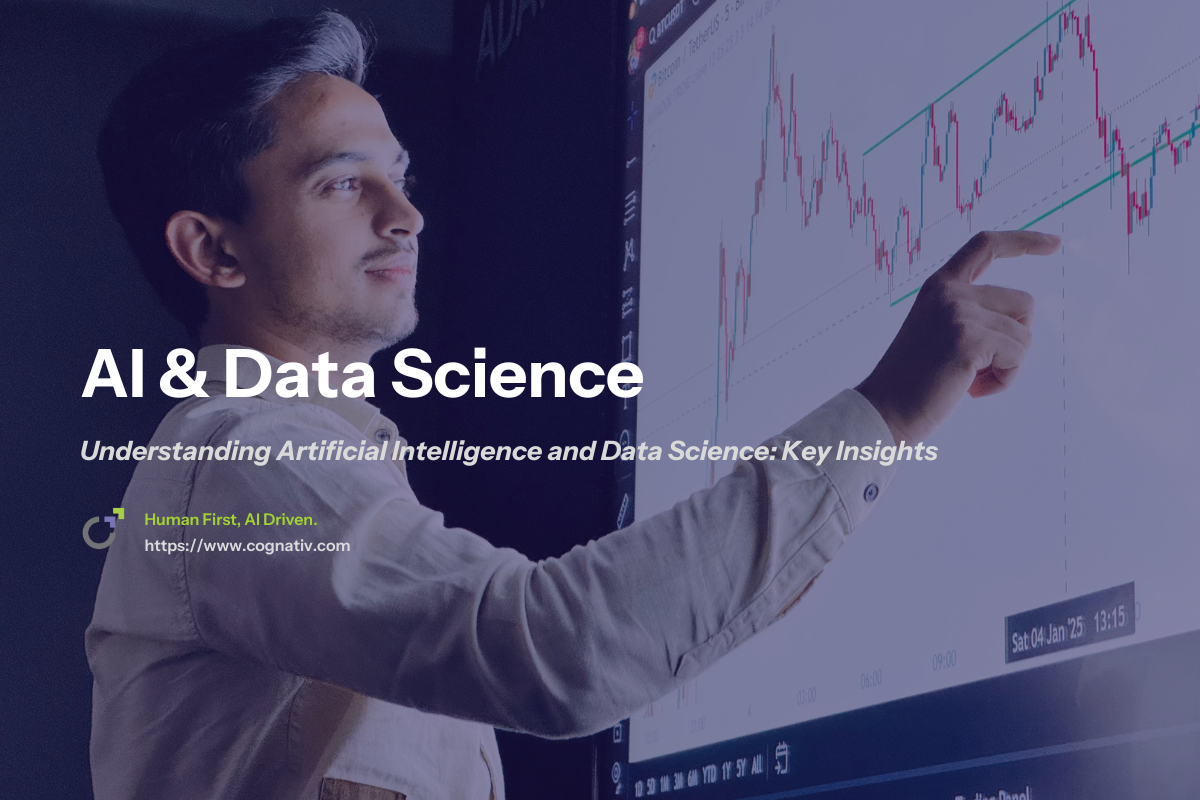
Understanding Artificial Intelligence and Data Science: Key Insights
In today's rapidly evolving technological landscape, artificial intelligence and data science stand at the forefront of innovation, driving transformative changes across industries. These two interconnected fields empower organizations to harness the power of data and intelligent systems to solve complex problems, optimize operations, and unlock new opportunities.
Data science focuses on analyzing raw data to extract valuable insights and inform strategic decision-making. It involves collecting, processing, and interpreting large volumes of structured and unstructured data using statistical analysis, machine learning models, and data visualization techniques. On the other hand, artificial intelligence (AI) centers on creating systems that mimic human intelligence, employing complex algorithms and machine learning to enable machines to learn, adapt, and perform tasks autonomously.
Together, AI and data science form a powerful synergy: while data science uncovers patterns and trends within data, AI leverages these insights to build intelligent systems capable of answering questions, making predictions, and automating decision-making processes. This blog post delves deep into the educational paths, key skills, tools, career opportunities, and future trends defining the exciting world of artificial intelligence and data science.

What is Data Science?
Data science is an interdisciplinary field that combines elements of computer science, statistics, mathematics, and domain-specific knowledge to analyze large volumes of data. Its primary goal is to extract meaningful information that can guide business strategies, improve products, and enhance customer experiences.
Data scientists work with diverse datasets, including historical data, training data, and unstructured data such as text, images, and sensor readings. They employ techniques like principal component analysis for dimensionality reduction, clustering to identify groups, and regression analysis to find relationships between variables. By building machine learning models, data scientists can predict future sales, detect fraud, and optimize supply chains.
For example, a retailer might use data science to analyze weather patterns and past sales data to forecast demand for seasonal products, enabling better inventory management and marketing strategies.
What is Artificial Intelligence?
Artificial intelligence is a branch of computer science dedicated to building systems that can perform tasks typically requiring human intelligence. These tasks include learning, reasoning, problem solving, understanding natural language, and recognizing images.
AI encompasses various subfields such as machine learning, deep learning, natural language processing (NLP), and computer vision. Machine learning models enable AI systems to improve their performance over time by learning from new data without explicit programming.
AI systems are increasingly prevalent in everyday life, powering applications like virtual assistants, facial recognition, autonomous vehicles, and recommendation engines. For instance, AI-driven chatbots use NLP to interact with customers, providing personalized support and enhancing user experience.
Educational Pathways in AI and Data Science
Understanding the educational requirements helps aspiring professionals choose the right path in these dynamic fields.
Education for Data Scientists
Aspiring data scientists typically pursue degrees in computer science, statistics, mathematics, or related fields. Their curriculum emphasizes statistical analysis, probability, data structures, algorithms, and database management. Practical skills in programming languages such as Python and R, along with proficiency in data visualization tools like Tableau and Power BI, are essential.
Hands-on experience with machine learning techniques and libraries such as scikit-learn and TensorFlow equips students to build predictive models and analyze complex datasets. Many universities also offer specialized programs in data science and artificial intelligence, blending theoretical knowledge with real-world applications.
Education for AI Engineers
AI education demands a deep understanding of algorithms, software engineering, and advanced computational techniques. Students often study neural networks, reinforcement learning, robotics, and cognitive computing. Proficiency in programming languages like Python, Java, and C++ is critical, alongside experience with AI frameworks such as PyTorch and TensorFlow.
AI-focused courses cover topics like natural language processing, computer vision, and ethical considerations in AI deployment. Graduates are prepared to develop intelligent systems that can learn, adapt, and solve complex problems autonomously.
Continuous Learning and Online Resources
Given the fast-paced nature of AI and data science, continuous learning is vital. Professionals and students alike benefit from online tutorials, research papers, and open-source tools. Platforms offering practical exercises in machine learning models, data analysis, and AI system design help build expertise. Examples include scikit-learn tutorials, Kaggle competitions, and AI research repositories.
Key Skills and Responsibilities
To excel in artificial intelligence and data science, professionals must develop a diverse set of skills focused on analyzing data, building machine learning models, and creating systems that leverage AI tools effectively. Understanding the key differences in responsibilities helps clarify the distinct roles of data scientists and AI engineers in driving innovation.
Skills Required for Data Scientists
Data scientists must master a blend of technical and soft skills, including:
Data analysis: Cleaning, organizing, and interpreting large datasets.
Statistical analysis: Applying statistical methods to identify trends and validate hypotheses.
Machine learning: Building and tuning models for prediction and classification.
Data visualization: Presenting complex data insights clearly to stakeholders.
Communication: Translating technical results into actionable business recommendations.
Skills Required for AI Engineers
AI engineers require expertise in:
Software development: Writing efficient, scalable code.
Algorithm design: Creating and optimizing AI algorithms.
Machine learning and deep learning: Implementing neural networks and reinforcement learning models.
AI tools and frameworks: Utilizing TensorFlow, PyTorch, and related technologies.
Problem solving: Designing AI applications for real-world challenges.
Responsibilities of Data Scientists
Data scientists focus on:
Extracting insights from large datasets.
Building and validating predictive models.
Collaborating with business units to address strategic questions.
Visualizing data to support decision-making.
Ensuring data quality and integrity.
Responsibilities of AI Engineers
AI engineers are tasked with:
Integrating AI components into existing software.
Optimizing AI algorithms for performance and accuracy.
Testing and deploying AI models in production.
Addressing ethical and security considerations in AI.
The Role of AI in Data Science
Artificial intelligence significantly enhances data science workflows by automating repetitive tasks, accelerating data processing, and uncovering complex patterns invisible to human analysts.
Automating Data Preparation
Data cleaning and preparation are often the most time-consuming parts of data science. AI-powered tools can automate tasks such as handling missing values, detecting outliers, and transforming raw data into structured formats, saving hours or days of manual work.
Building Predictive Models
AI enables the creation of sophisticated predictive models that forecast outcomes based on historical data. For example, AI can analyze weather patterns alongside sales data to predict future sales trends, helping businesses plan inventory and marketing campaigns effectively.
Advanced Pattern Recognition
AI excels at identifying subtle and complex patterns within massive datasets. These insights can drive innovations in fraud detection, facial recognition, and personalized recommendations, delivering tangible business value.
Leveraging Generative AI
Generative AI, a cutting-edge subset of AI, can create new content such as text, images, and synthetic data. In data science, generative AI assists during exploratory analysis by simulating scenarios and generating hypotheses for further investigation.
Tools and Technologies in AI and Data Science
Both data scientists and AI engineers utilize a rich ecosystem of tools to perform their work efficiently.
Programming Languages and Libraries
Python: The most popular language for AI and data science, supported by libraries like scikit-learn, TensorFlow, and PyTorch.
R: Widely used for statistical analysis and visualization.
SQL: Essential for managing and querying databases.
Data Visualization Tools
Tableau and Power BI enable interactive dashboards and reports.
Libraries like Matplotlib and Seaborn in Python support detailed visualizations.
Cloud Platforms
AWS, Google Cloud, and Microsoft Azure provide scalable infrastructure for data storage, processing, and AI model deployment.
AI and Machine Learning Frameworks
TensorFlow and PyTorch facilitate building deep learning models.
Scikit-learn supports traditional machine learning algorithms.
Career Paths and Job Outlook
The demand for professionals skilled in artificial intelligence and data science continues to grow, fueled by the increasing reliance on data-driven decision-making and intelligent automation.
Data Science Careers
Common roles include:
Data Analyst
Data Engineer
Data Scientist
Machine Learning Engineer
Research Scientist
Data scientists often advance to senior technical roles, project management, or executive positions such as Chief Data Officer.
Artificial Intelligence Careers
AI-focused roles include:
AI Engineer
AI Researcher
Machine Learning Engineer
Robotics Engineer
AI Product Manager
Career progression can lead to leadership roles like Chief Technology Officer or AI Strategy Director.
Job Outlook and Salaries
Data shows that employment in data science and AI is projected to grow significantly over the next decade, with competitive salaries reflecting the specialized skills required. Both fields offer robust job security and opportunities across sectors such as healthcare, finance, retail, and technology.
Real-World Applications of Artificial Intelligence and Data Science
AI and data science are revolutionizing numerous industries by enabling smarter, faster, and more accurate decision-making.
Healthcare: AI-powered diagnostic tools analyze medical images and patient data to assist clinicians.
Finance: Fraud detection systems use machine learning models to identify suspicious transactions.
Retail: Predictive analytics forecast demand and optimize supply chains.
Manufacturing: AI-driven automation improves quality control and reduces downtime.
Telecommunications: AI systems manage network optimization and customer service.
The Future of Artificial Intelligence and Data Science
Looking ahead, the integration of AI and data science will deepen, creating new opportunities and challenges.
Hybrid Roles: Professionals with expertise in both fields will be in high demand.
Ethical AI: Responsible AI development emphasizing fairness, transparency, and privacy will be critical.
Generative AI: Continued advances will transform content creation, simulation, and data augmentation.
Automation: AI will increasingly automate routine data science tasks, allowing experts to focus on strategic analysis.
Organizations that embrace AI-first architecture and leverage frameworks like RAPID (Research, Analyze, Plan, Implement, Decide) will gain a competitive edge by accelerating innovation and improving operational efficiency.
Conclusion
Artificial intelligence and data science are reshaping how businesses and societies operate, offering unprecedented capabilities to analyze large volumes of data, recognize intricate patterns, and create intelligent systems that answer questions and solve problems. Whether you are a student, professional, or organization looking to navigate this dynamic landscape, understanding the interplay between AI and data science is essential for success in the digital age.
By investing in education, embracing cutting-edge tools, and fostering collaboration between data scientists and AI engineers, we can unlock the full potential of these transformative technologies and build a smarter, more connected future.
If you're interested in exploring how AI and data science can drive innovation in your business, consider partnering with experts in AI-first architecture and digital transformation to create scalable, secure, and compliant solutions tailored to your industry needs.