Opaque Recurrence in AI Systems: Implementation and Safety Considerations
Opaque recurrence describes repeated internal model computation whose intermediate states are not directly readable by an outside observer. The enterprise question is not simply whether an AI model shows its reasoning. It is whether the complete application provides enough evidence, independent checks, and action controls for its intended use.
Recurrent depth, latent reasoning, hidden reasoning tokens, and opaque serial depth are related topics, but they are not interchangeable. A model can produce reasoning tokens that its provider does not expose without necessarily using a recurrent-depth architecture. Conversely, an internal recurrence mechanism does not establish what monitoring evidence a deployed service makes available.
This guide explains those distinctions and proposes a practical evaluation approach for enterprise technology, security, and governance teams. It covers architecture boundaries, monitoring limitations, operational records, vendor questions, and controlled rollout. It does not claim to identify an undisclosed commercial model architecture or prescribe a training implementation.
The short answer: do not treat fewer visible tokens as proof of lower cost, readable reasoning as proof of correctness, or missing reasoning traces as proof of malicious behavior. Evaluate the workload, available evidence, and consequences of failure together.
After reading this guide, you will be able to:
- Distinguish recurrent computation from reasoning visibility.
- Compare monitoring evidence without assuming complete explainability.
- Place policy checks and approvals outside model-generated reasoning.
- Define a reviewable run record and a measurable pilot.
- Identify deployment evidence that a vendor still needs to supply.
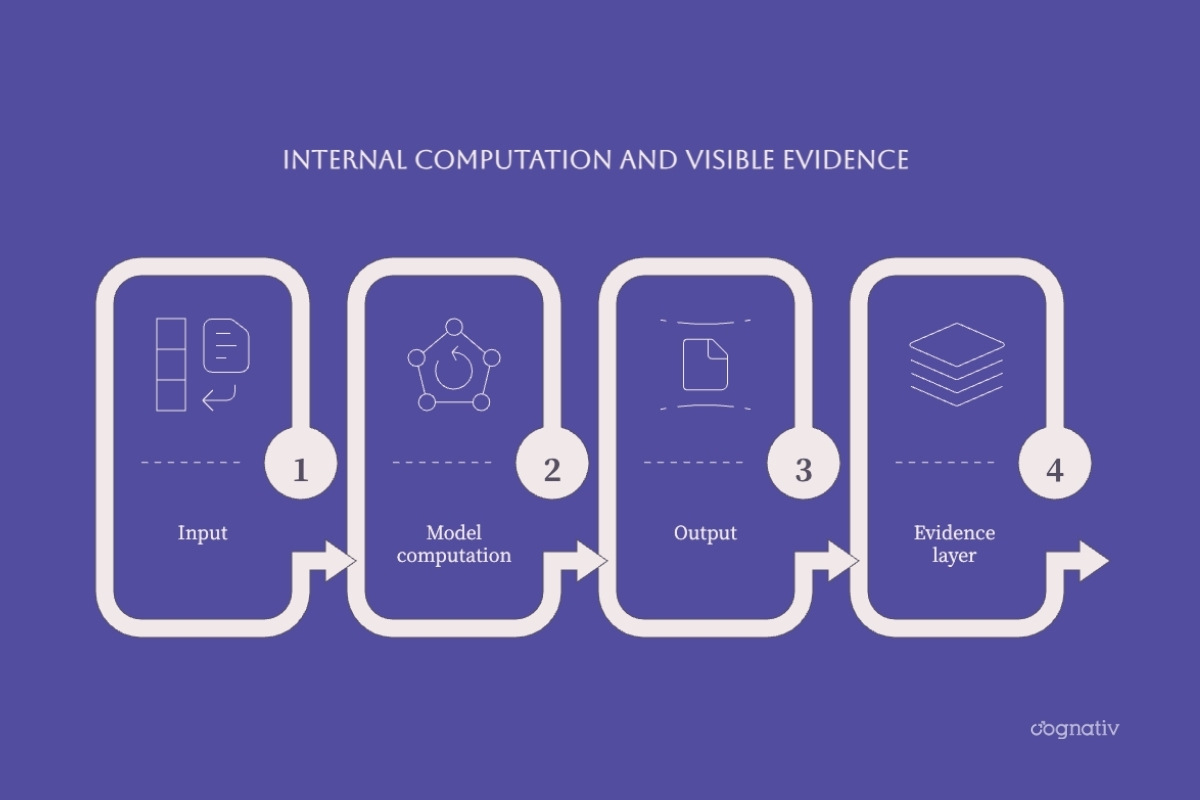
The evidence layer spans the entire workflow; it should capture relevant events as they occur, not only after the output is produced.
What Opaque Recurrence Means in AI Architecture
Use precise terminology before comparing models. Otherwise, procurement and engineering teams may discuss different mechanisms under the same label.
Recurrent Depth and Latent Reasoning
The research paper Scaling up Test-Time Compute with Latent Reasoning studies a language model that repeatedly applies a recurrent block at inference time. This offers a way to increase computation through internal representations rather than only by generating additional tokens. Its experimental results support further investigation; they do not establish universal savings or prove that a particular proprietary model uses the same architecture.
For an application team, recurrence is not a capability that can be added to any hosted model by writing a longer prompt. Architecture, training, runtime support, and exposed controls determine what can actually be configured. Ask the vendor which settings are documented and test those settings rather than inferring implementation from response length.
Opaque Serial Depth Is a Different Measurement
Research on opaque serial depth formalizes how long a computation can be without interpretable intermediate steps. The authors derive upper bounds for studied architectures. This is an analytical concept, not a count that an ordinary API log reveals and not a direct measure of whether a particular answer is deceptive.
A billing field labeled reasoning tokens is also not a measurement of recurrent passes. Keep architecture claims, token accounting, and user-visible explanations separate in evaluation records. Where the architecture is undisclosed, record it as unknown instead of presenting an inference as a confirmed feature.
Chain-of-Thought Visibility and Monitoring Limitations
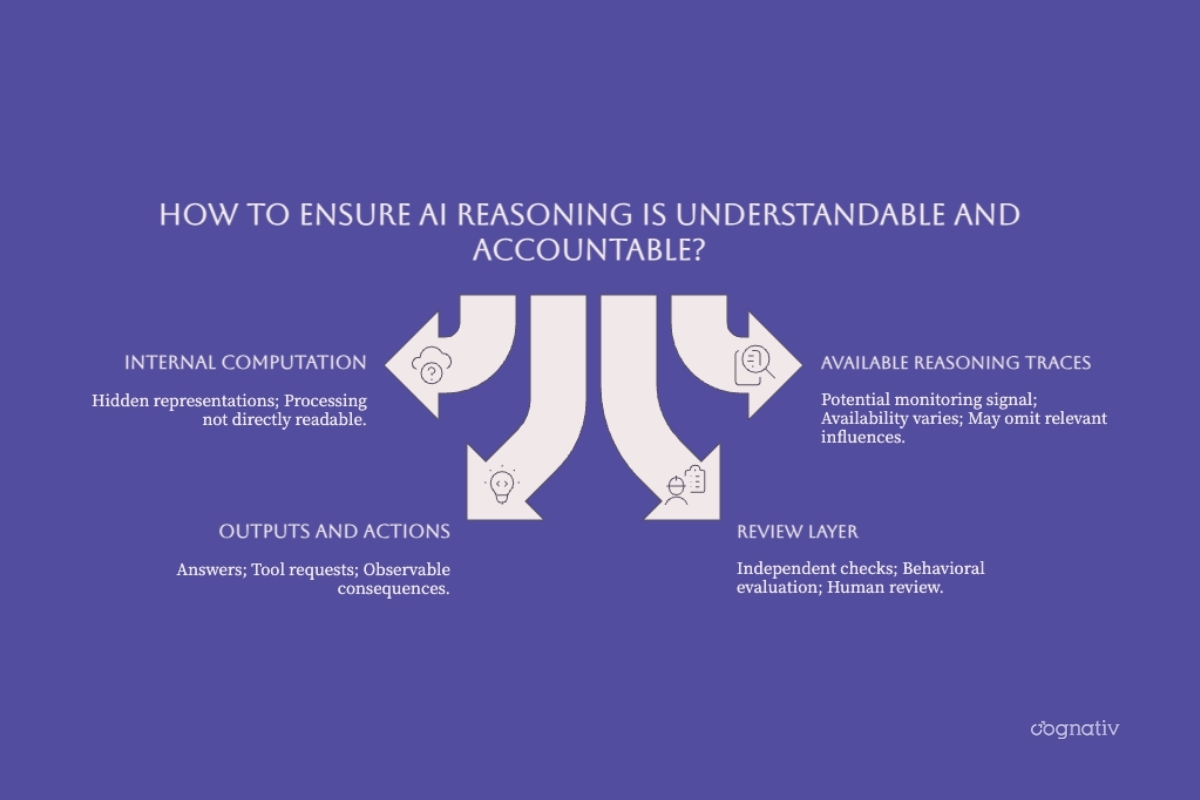
Reasoning traces can provide useful signals, but a plausible explanation should not be treated as a complete reconstruction of internal processing. Distinguish an available execution trace from a summary or an explanation generated after the answer.
OpenAI's chain-of-thought monitorability evaluation found that monitoring reasoning traces substantially outperformed monitoring actions and outputs alone in most studied settings. The work also describes limitations and treats monitorability as a property of both the monitored agent and its monitor. These findings do not guarantee detection for every deployment.
The following comparison concerns evidence available to an enterprise, not a ranking of model architectures. An application may combine several evidence types.
| Evidence | Useful for | Important limitation |
|---|---|---|
| Reasoning trace, when exposed | Additional signals for investigating model behavior | Not necessarily complete, faithful, or accessible to the customer |
| Generated explanation or summary | Communicating the stated basis of an answer | May omit relevant influences; verify against independent evidence |
| Retrieved sources and output checks | Checking factual support and task constraints | Source access and citation correctness need validation |
| Tool and policy logs | Reconstructing attempted and executed application actions | Describe observable events, not hidden model intent |
| Human review record | Recording approval, rejection, and accountable ownership | Review quality depends on evidence, expertise, and available time |
Build failure cases that challenge the monitor, including unsupported answers, contradictory sources, unauthorized tool requests, and apparently reasonable but incorrect outputs. A monitor that accepts normal examples is not necessarily capable of detecting the failures that matter.
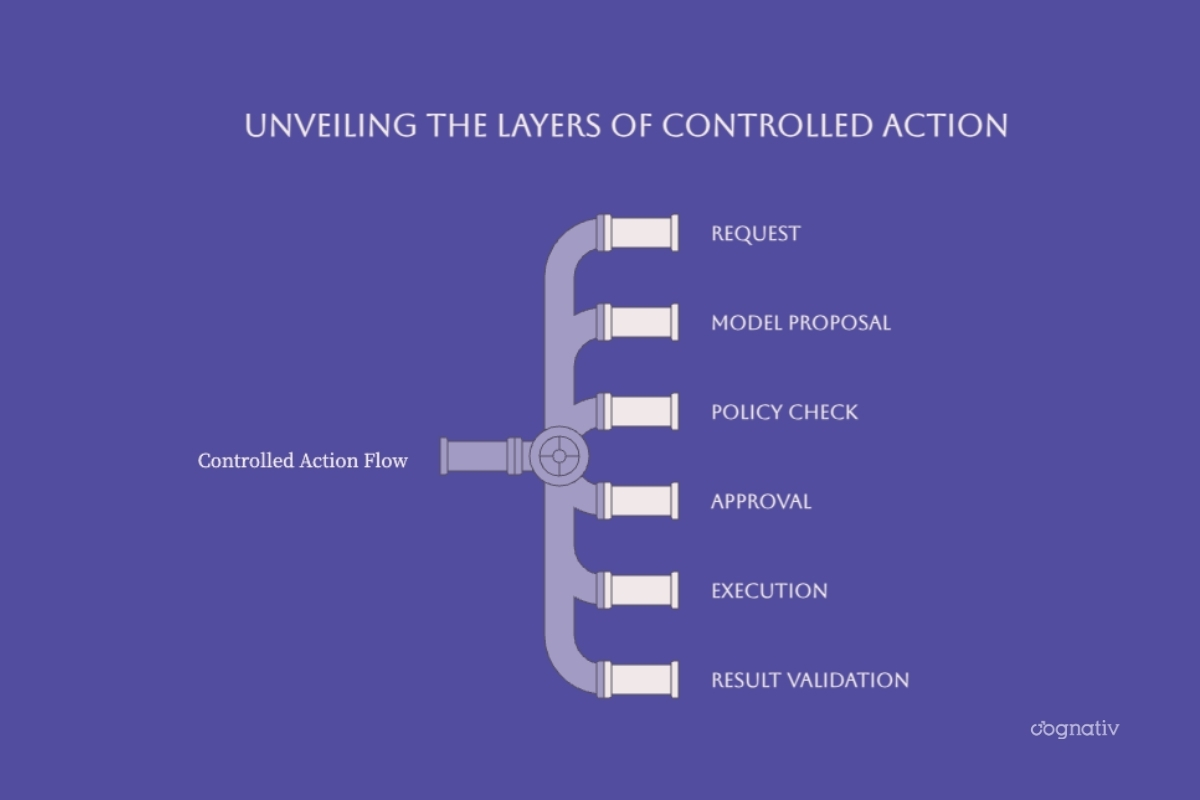
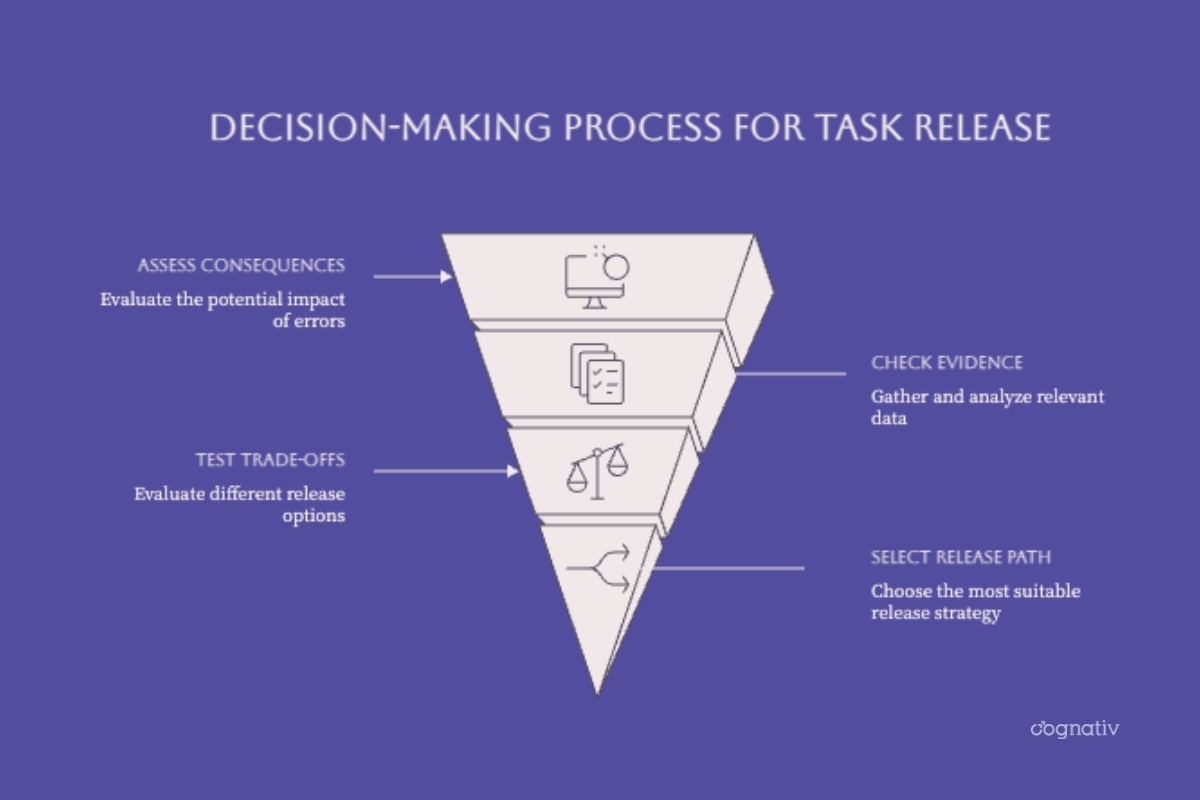
These are control stages, not parallel execution branches. Validate the proposed action before execution and require approval where policy specifies it.
Enterprise Safety Controls Outside the Model
The application should determine what may execute. A model-generated statement that an action is safe is not an authorization decision. Define those boundaries through enterprise AI agent permissions, controls, and ownership before connecting consequential tools.
Separate Proposals from Execution
A useful implementation pattern is request, model proposal, policy validation, approval where required, execution, and result validation. The executor should receive scoped credentials and validated arguments. Approval should bind to the specific action and target so that a changed proposal cannot reuse an earlier approval unnoticed.
Keep read-only tasks separate from changes to customer records, external communications, payments, or production infrastructure. Apply execution limits and a stop mechanism appropriate to each tool. Test rejection paths as deliberately as successful requests.
Treat Monitoring as a Layer, Not the Boundary
Alerts can help identify unexpected activity, but a delayed alert cannot undo every external action. Prefer prevention where feasible and define recovery for actions that remain permitted. These implementation questions connect directly to secure software development for controlled AI workflows, including authorization, testing, and release validation.
Do not equate an ordinary model error with misalignment. Record the observable failure first, investigate the contributing conditions, and preserve uncertainty about causes that the evidence cannot establish.
Evaluate Performance, Cost, and Deployment Risk
Start with a defined business task and an acceptable outcome. Compare candidates on the same representative inputs, tool permissions, and review requirements. A system that answers faster but requires more correction may not improve the workflow.
Establish enterprise AI architecture before model selection so that data access, monitoring, and ownership do not become assumptions hidden inside a model comparison.
| Dimension | Measure | Acceptance decision |
|---|---|---|
| Task quality | Accepted outputs, material errors, and correction effort | Meets the task owner's documented quality criteria |
| Latency | End-to-end median and tail latency, including tools | Fits the workflow's response-time budget |
| Total cost | Model usage, retries, tools, infrastructure, and review time | Acceptable cost per successfully completed task |
| Monitoring | Missed seeded failures and false alerts | Coverage and review load acceptable to the risk owner |
| Action safety | Blocked unauthorized requests and approval bypass tests | Required execution boundaries hold in the tested cases |
| Recovery | Stop, rollback, and incident reconstruction exercises | Operators can follow the documented recovery path |
This is a proposed evaluation framework, not a published benchmark or certification. Set thresholds before reviewing candidate results. Report sample size, test conditions, and failure examples alongside averages; a small successful pilot does not demonstrate safety in every operating condition.
Reduced visible output can coexist with more internal computation. Record actual usage and end-to-end timing rather than estimating savings from answer length. Repeat the evaluation after meaningful model, prompt, retrieval, or tool changes.
Audit Records, Compliance, and Vendor Evaluation
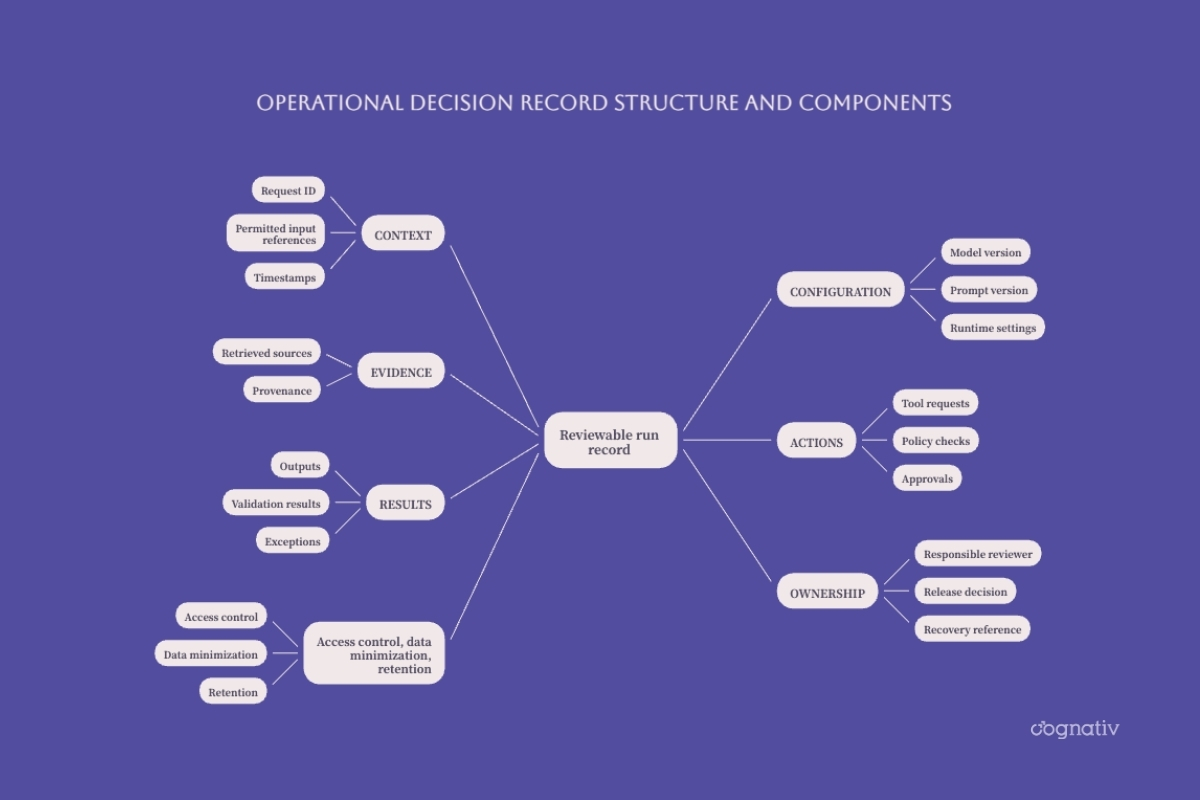
A useful audit record connects the request, the available evidence, the application checks, and the resulting action. It does not need to pretend that hidden model states have been reconstructed.
Record Observable Evidence Responsibly
- Context: run identifier, timestamps, authorized actor, and permitted input references.
- Configuration: model identifier, prompt version, retrieval configuration, and policy version.
- Evidence: source references, validation outcomes, and reasons recorded by reviewers.
- Actions: proposed tool calls, authorization results, approvals, execution outcomes, and exceptions.
- Ownership: responsible operator, escalation path, retention rules, and recovery reference.
Avoid logging secrets or unnecessary personal data. Restrict access and define retention before collection. Do not assume a hosted API exposes activations, attention maps, or hidden reasoning; specialized instrumentation would require explicit access and a separate justification. An application log is evidence of recorded events, not automatic proof that every event was captured.
Do Not Confuse Disclosure with Full Reasoning Access
The European Commission's Article 50 transparency guidance addresses obligations such as informing people about AI interactions and identifying certain AI-generated content. It is not a blanket requirement to disclose a model's complete chain of thought. Applicable obligations depend on the system, role, use, and jurisdiction; obtain qualified legal review rather than treating trace availability as a compliance certificate.
Map each applicable obligation to an owner, control, and retained evidence. AI governance consulting for operational controls can help organize that work across product, engineering, security, and compliance teams.
Ask Vendors for Evidence They Can Actually Provide
Ask which architecture details are documented, whether a returned explanation is a trace or summary, what usage fields mean, and which model versions can be pinned. Confirm logging access, data retention, change notification, incident support, and the procedure for reporting unexpected behavior.
Separate answers supported by documentation from contractual commitments and unsupported assurances. Where required evidence is unavailable, narrow the permitted use, add independent checks, or defer deployment. A vendor's confidence statement should not silently replace your acceptance criteria.
Implement Opaque-Reasoning Workflows Through Controlled Releases
Opaque recurrence is an architectural and oversight topic, not a shortcut to enterprise readiness. Decide from task performance, evidence quality, enforceable permissions, and residual risk rather than from a label attached to the model.
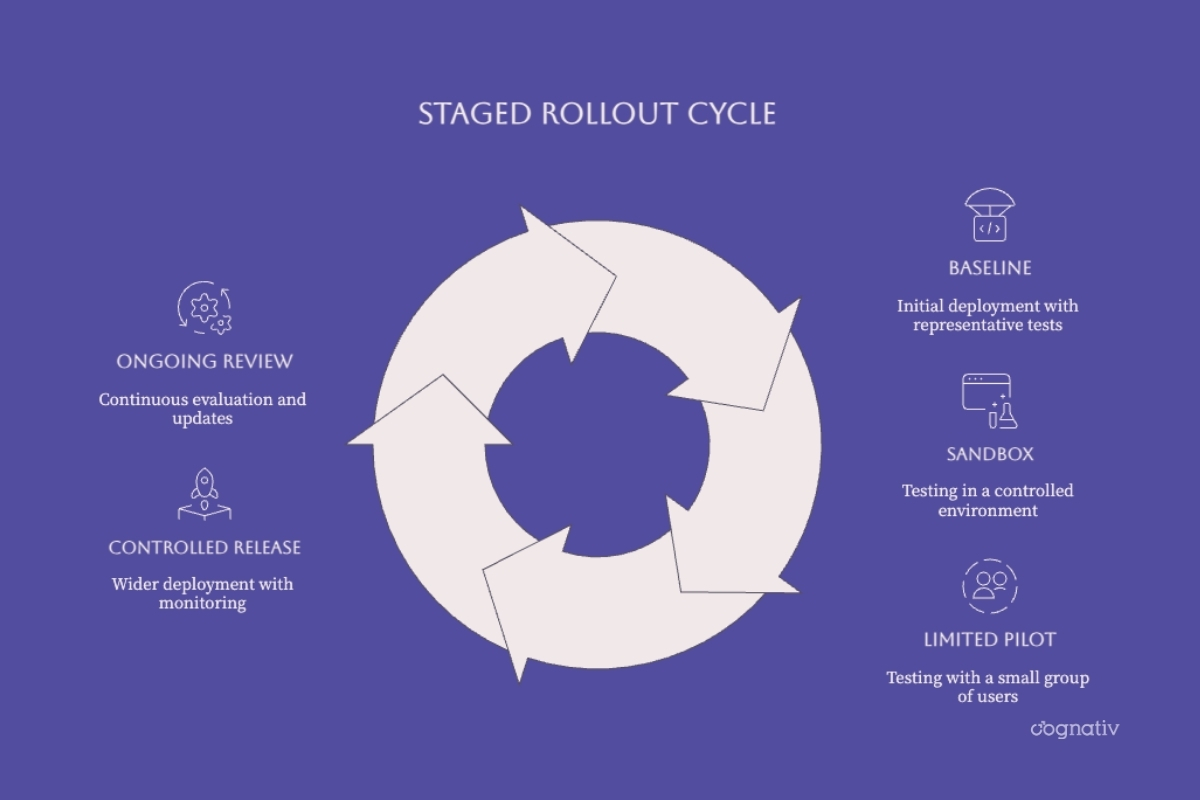
- Baseline: document the task, current performance, and unacceptable outcomes.
- Sandbox: test representative requests and failure cases without live side effects.
- Limited pilot: restrict users and tools, review exceptions, and measure correction effort.
- Controlled release: require named approval against the agreed scorecard.
- Ongoing review: monitor changes, revalidate, and pause or roll back when criteria fail.
For a deployment review, discuss your AI monitoring and governance requirements with Cognativ. Bring the workflow, available vendor evidence, planned tool access, and current evaluation results so that the next decision can be grounded in the actual system.