

Measurable Business Outcomes: Examples and a Measurement Template
A measurable business outcome describes a change in performance for a defined population over a defined period. It needs more than a percentage: specify the baseline, calculation, source, owner and conditions that would make the result misleading.
A measurable business outcome describes a change in performance for a defined population over a defined period. It needs more than a percentage: specify the baseline, calculation, source, owner and conditions that would make the result misleading.
“Launch a customer portal” is an output. “Increase successful self-service completion among eligible customers without increasing unresolved requests” is an outcome. Both can matter, but completing the first does not establish the second.
Download the editable outcome measurement card (CSV). The examples below are hypothetical planning examples, not benchmarks, forecasts or Cognativ customer results.
Five Examples That Make the Measurement Explicit
| Vague goal | Measurable replacement | Guardrail and source |
|---|---|---|
| Improve onboarding | For newly eligible accounts, raise completion within seven days from 60% to a proposed 70% over the next eight weekly cohorts. | Track support-assisted completions and cancellations separately; use account-event records. |
| Speed up invoices | For complete PO invoices in one unit, reduce median complete-receipt-to-approval time from six to four business days during the final four pilot weeks. | Incorrect approvals must not rise; retain intake delays and open cases in the report. |
| Reduce order errors | For fulfilled orders in the pilot warehouse, reduce orders requiring a correction from 5% to a proposed 3% over eight weeks. | Track cancellations and delivery delay; reconcile correction records to order IDs. |
| Improve software delivery | For comparable standard changes, reduce median approved-change-to-production time from ten to seven business days over the next quarter. | Track failed deployments, rollback and excluded urgent changes. |
| Make support more effective | For a defined request category, increase accepted resolutions without reopening within seven days from 75% to a proposed 82% across eight cohorts. | Report unresolved cases and customer effort; use linked support records. |
Each target requires a feasibility discussion. The examples demonstrate a measurement structure, not the improvement every organization should expect. A team with a different baseline, case mix or operating constraint may need a different target and time window.
Separate Activities, Outputs, Outcomes and Longer-Term Impact
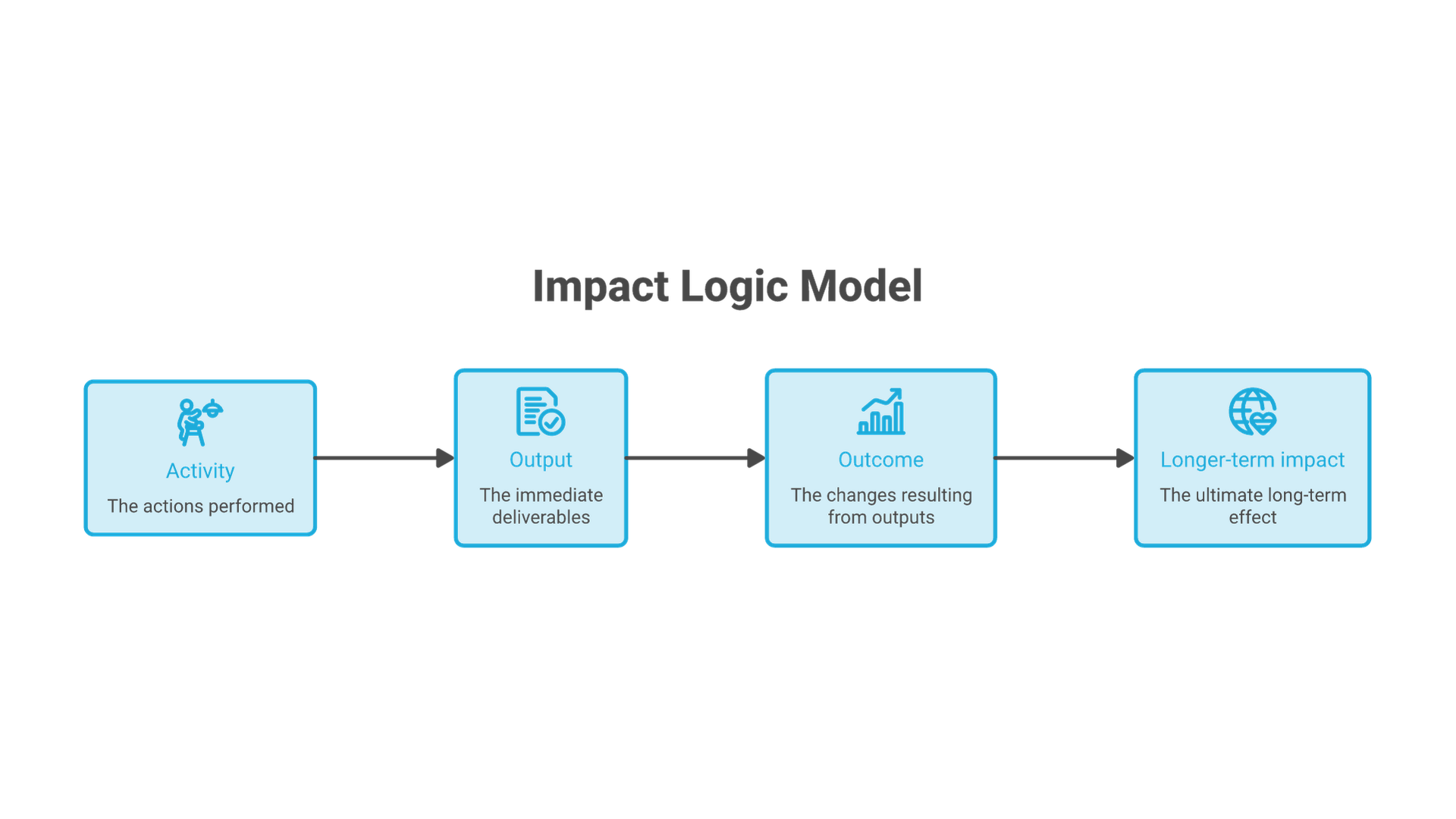
An activity is work performed: interview users, train staff or configure routing. An output is something delivered: a working portal, a training session or a revised workflow. An outcome is the resulting change in behavior or performance. Longer-term impact may involve wider business effects with many contributing causes.
The CDFA measurement guidance is a useful program-evaluation reference for distinguishing outputs from outcomes. The business definitions and worked examples here are purpose-built rather than a claim that grant-program rules apply to every company.
Keep output measures when they help manage delivery, but label them correctly. A team may need to know whether a feature shipped and whether users benefit. Reporting only deployment completion hides adoption and usability problems; reporting only revenue can hide the work needed to diagnose them.
Work Through the Numerator and Denominator
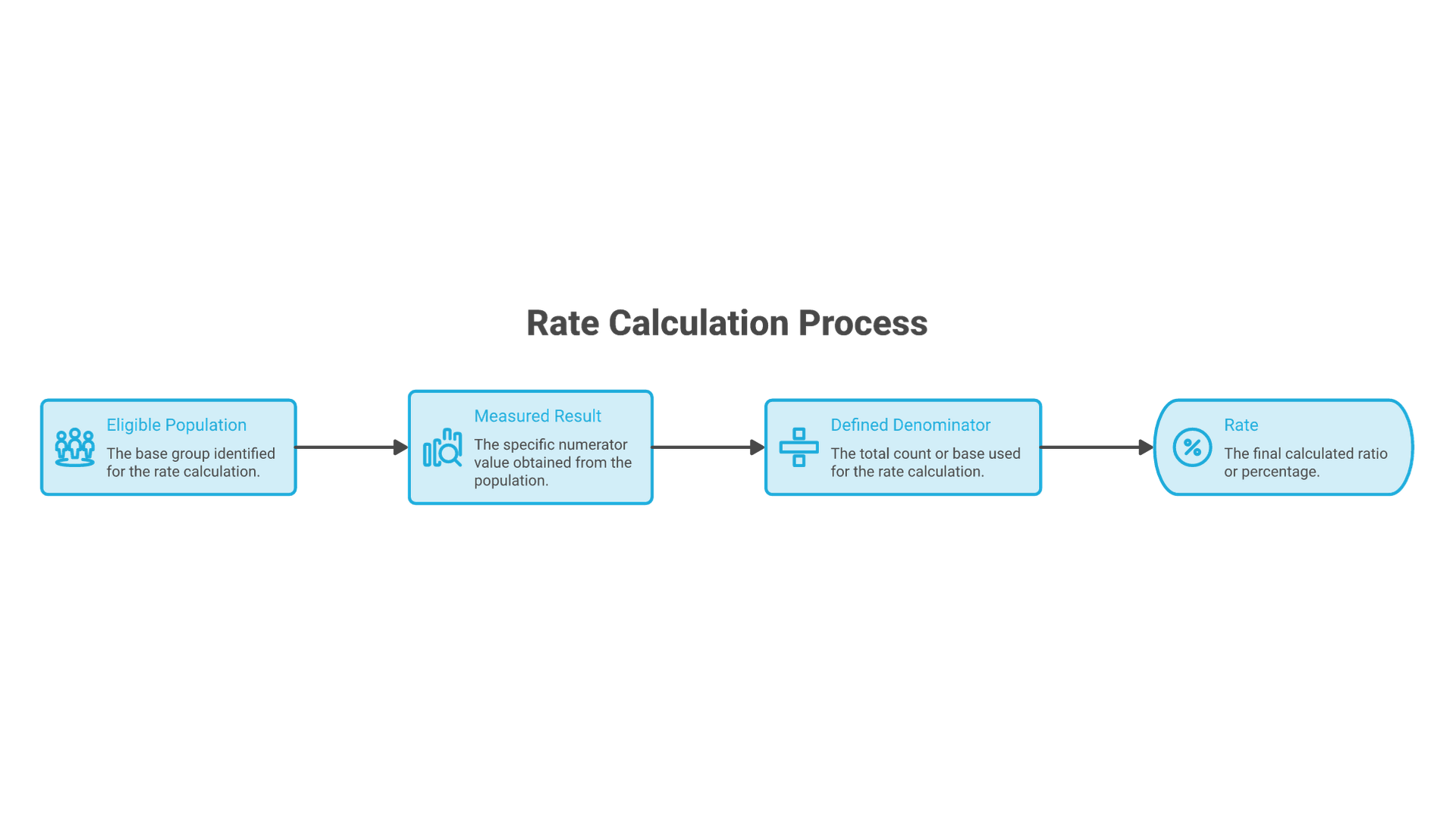
Suppose a baseline cohort has 200 eligible new accounts and 120 complete onboarding within seven days. Completion is 120 / 200 = 60%. A later cohort has 250 eligible accounts and 175 complete, giving 175 / 250 = 70%.
The completion count increased by 45. The rate increased by ten percentage points, or approximately 16.7% relative to the baseline rate. Those are different statements. Reporting only a 45-account increase misses the larger incoming cohort; calling the rate change “10% growth” is ambiguous.
Define eligibility before observing results. If the later cohort excludes difficult integrations that were included previously, the comparison is not like-for-like. Either retain the original population, report comparable segments or explicitly describe the changed scope.
Allow the outcome window to finish. A cohort created yesterday cannot be judged on seven-day completion today. Show incomplete observation windows separately rather than treating every not-yet-completed account as a failure or dropping it from the denominator.
Complete the Outcome Card Before Starting the Change
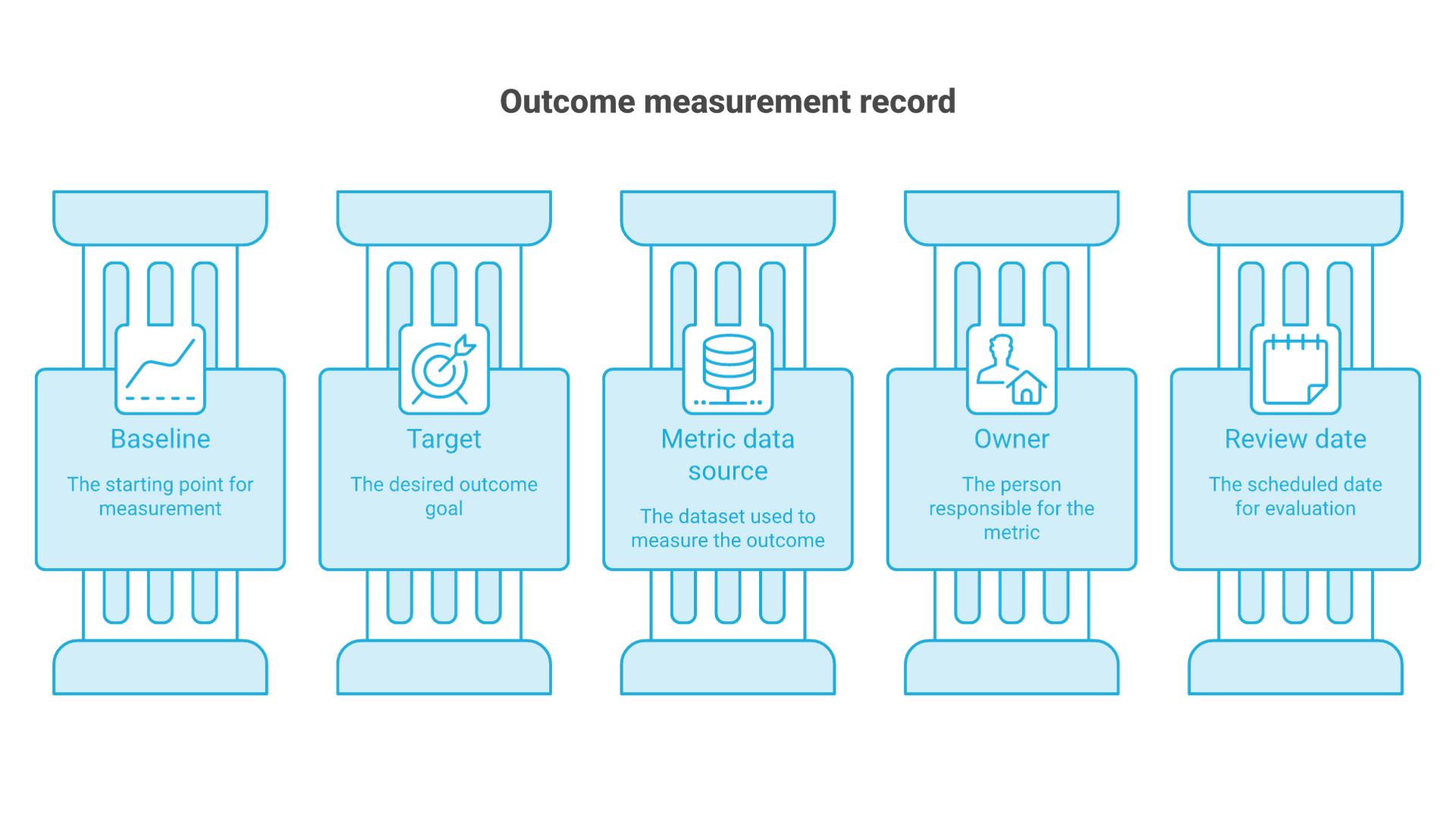
- Outcome: the change sought and the people or work affected.
- Definition: start/end events, units, numerator and denominator.
- Baseline: period, population, value, exclusions and data limitations.
- Target: proposed level, deadline and rationale.
- Source: system, record identifiers and reproducible calculation.
- Owner: who can explain the result and authorize a response.
- Guardrail: an adverse effect that must not be concealed by improvement.
- Review: frequency, decision trigger and evidence needed to expand or stop.
When no reliable baseline exists, the first deliverable is a measurement period, not an invented starting number. Use a provisional target only when its status is explicit. Do not backfill a baseline from memory and present it as an observed result.
Distinguish Contribution from Causal Attribution
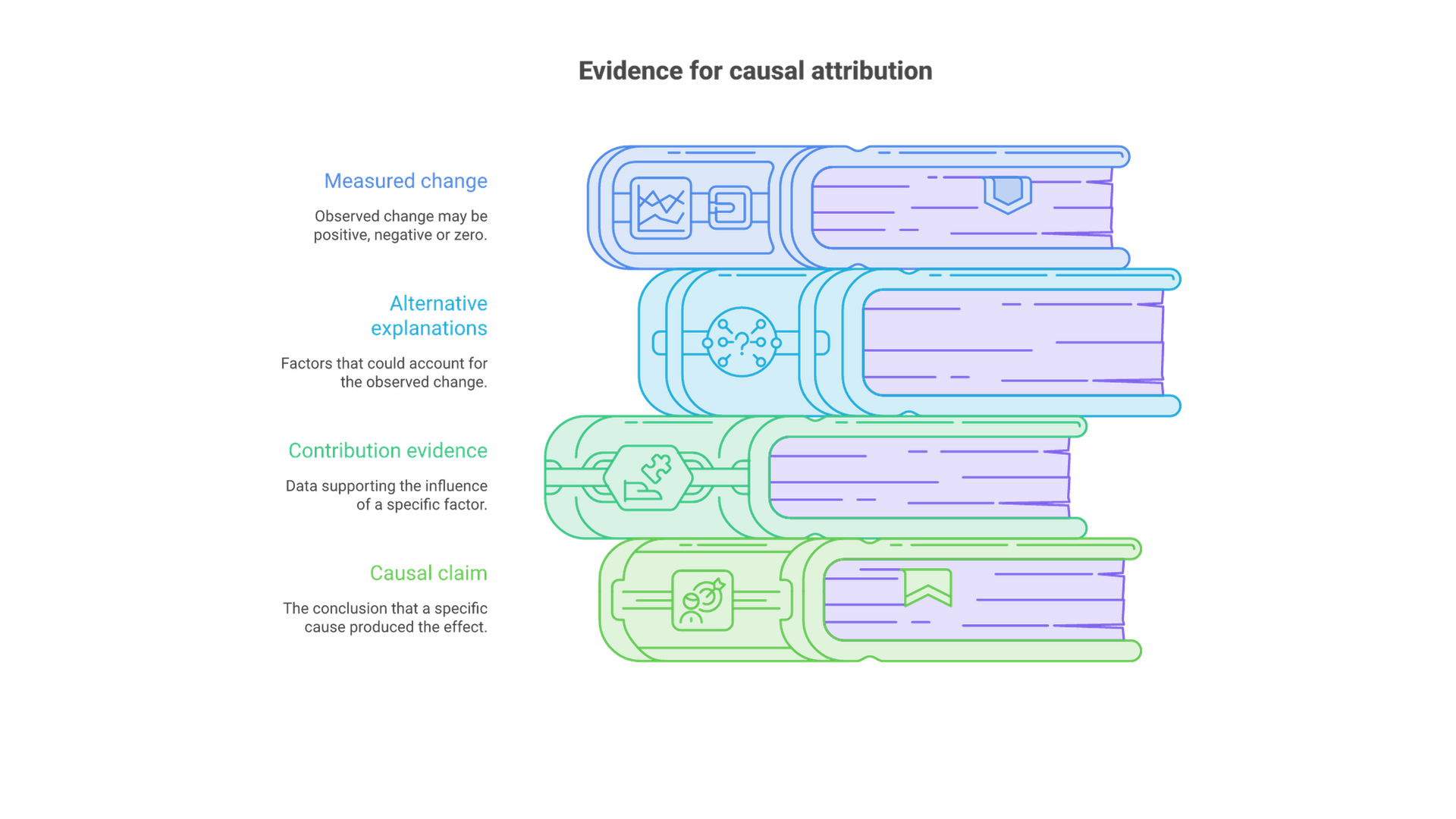
A before-and-after improvement does not establish that a project caused it. Demand, staffing, customer mix, pricing and seasonal changes can move the same metric. Record those changes and inspect their plausibility before attributing the result to a tool or framework.
Where appropriate and feasible, compare similar groups or introduce a change in stages. A credible causal design requires attention to selection, sample size, spillover and measurement consistency. Do not describe an informal pilot as a controlled experiment merely because one team started later.
For an operating decision, evidence can still be useful without proving causation. State the narrower conclusion: the pilot met its outcome and guardrail under these conditions, with these unresolved explanations. That is more informative than claiming a universal uplift.
Use the Result to Choose the Next Action
Review outcomes together with the mechanism expected to produce them. If onboarding completion is unchanged, inspect where eligible users stop and why. More reminders will not fix a broken integration. If invoice time improves but corrections rise, revisit the acceptance rule before expanding.
A useful outcome definition supports a choice: continue, adjust scope, investigate or stop. Keep the definition stable long enough to learn, and version it when the business question changes. Measurement is strongest when another person can reproduce the result and understand what it does not prove.