Software development services for US small and midsize businesses: custom applications, enterprise software, products, mobile, ecommerce and generative AI development, from first release to ongoing support. Start with a free consultation.
Whether you need a new application, a customer-facing product or improvements to an existing platform, the right scope starts with the users and workflows it must support. Explore the services below to compare delivery, integration, technology selection and ongoing support before defining the work with your team.
No software services match these filters.
Custom Software
Business WorkflowsIntegrationsAcceptanceModernization
Build an application around your operating workflow when packaged tools leave important gaps. Scope the users, integrations and acceptance criteria before development.
A custom application can bring a fragmented workflow into one place while retaining existing accounting, customer or inventory systems where they still fit. Define the people using it, the information they need and the actions each role can take. Then review integrations, security and acceptance criteria with the people who own the work.
Custom web applications and customer portals built around how your business works, connected to the systems you already run, and supported after launch.
Custom Web Application Development Around Your Workflow
Customer Portal Development That Clients Actually Use
Build or modernize software that coordinates processes, permissions and records across teams. Define where existing platforms can be extended and where a purpose-built application is needed, then plan the integrations and ongoing ownership.
Enterprise work may cross departments, locations and established applications. Map the records each system owns and the handoffs between teams before changing the platform. The scope can include extending an existing application, building a new component or connecting systems, with access, operational continuity and ownership considered throughout delivery.
Develop a customer-facing product with a clear first release, feedback cycle and roadmap. Connect product decisions with engineering scope and ongoing ownership.
Product development connects a business opportunity with the experience customers or employees will actually use. Establish the audience, a first useful release and the assumptions the team needs to test. Define the roadmap, integrations and ownership of the application, then agree how feedback and changes will be handled after launch.
Multi-tenant SaaS products designed, built, and scaled by one team: tenants and roles, subscriptions, integrations, and the operating discipline to keep shipping.
SaaS Product Development, From First Tenant to Scale
Multi-Tenant Architecture Decisions That Shape Your Margins
What a SaaS Development Company Should Own With You
Mobile WorkflowsPlatform ChoiceCustomer AppsAccount Journeys
Bring customer and employee workflows to mobile devices. Address platform choice, connectivity, identity and the systems the application must access.
A mobile engagement starts with the tasks people need to complete away from a desktop and the environments in which they work. Consider device support, access, connectivity and the information exchanged with other applications. Agree the initial platforms and acceptance tests before committing to later features or wider deployment.
Native iPhone and iPad apps built in Swift, designed for how Apple users expect an app to behave, and taken through App Store review to launch and beyond.
iOS App Development Services, From Idea to the App Store
Native Android apps in Kotlin that run well on the phones, tablets, and managed devices your users actually carry, released through Google Play or your own device fleet.
Android App Development Services Built for Device Variety
Native Android Development With Kotlin and Jetpack Compose
Modernize legacy applications in stages while the business keeps running on them. Rebuild, refactor or move each part, with old and new side by side until it is proven.
Legacy application modernization rarely means rewriting everything. Modernize the parts that hold the business back, keep what still works, and move users over one workflow at a time so every step can be checked and reversed.
Get an independent view before you build or modernize: architecture, code and delivery assessed against the business outcome, with a plan your team can act on.
Move data from every application, database and file into one place, accurately and on time. Build and run the pipelines that feed your warehouse and reports.
Data integration takes data from where it is created to where it is used, with checks at every step so the numbers can be trusted. Define the sources, the schedule and the owner of each pipeline, then monitor loads and failures after release.
Data Integration from Source to Report
Data Pipeline Development for Every Kind of Source
Connect applications, partners and platforms through APIs that are secure, documented and monitored, so information moves between systems without manual work.
Each integration starts with the systems involved, the data they exchange and the security it needs, which decides the kind of API to build. Agree data contracts, authentication, error handling and ownership at each boundary before development.
Choose the delivery arrangement that fits your internal team and the work to be done. Establish scope, decision ownership and the handoff before execution.
A delivery partnership can extend an internal team or give a defined piece of work to an external provider. Clarify who sets priorities, owns technical decisions, reviews changes and accepts results. Discuss communication, access to source code, documentation and handoff so the working arrangement fits the responsibilities your business retains.
Add experienced engineers to your team for as long as you need them: matched to your stack, working under your managers, and productive within your tools.
Comparing offshore software development quotes? Cognativ is a US-based team: your hours, US contracts, and senior engineers, priced against the full cost of an offshore engagement.
Looking at nearshore software development for time-zone overlap? Cognativ's team is based in the US, so it already works your hours and joins your sprints in real time.
What Companies Want From Nearshore Software Development
Test web, mobile and API applications, build automated suites that run on every change, and report quality in terms the business understands.
Testing covers what users touch and what they never see, with each type of testing applied where the risk is. Agree the critical journeys, supported devices and release criteria, then automate the checks that must run on every change.
Plan incident handling, updates, security patches and product improvements after release. Agree service scope, access and responsibilities before support begins.
Ongoing support should reflect how the application is used and who operates the surrounding infrastructure. Define how issues are reported and prioritized, which updates are in scope and how releases are reviewed. Document access, ownership, monitoring and escalation responsibilities so maintenance work can be coordinated with your team.
Build security requirements into software delivery through a defined scope for threat modeling, code review, application testing and release controls. Agree what the team will assess, how findings will be handled and which responsibilities remain with the people who own and operate the application.
Find and fix vulnerabilities in your web, mobile, and API applications before attackers do, with testing built into releases and findings your developers can act on.
Application Security Testing Methods, Layer by Layer
Security built into every stage of delivery: secure pipelines, automated checks, protected secrets, and monitored releases, without slowing your teams down.
Build and modernize commerce software around the way your business sells and fulfills orders. A scope can include the storefront, product information, checkout and connections to inventory, payment and fulfillment systems.
Begin by tracing a product and an order across the systems and teams involved. Identify which application owns pricing and inventory, where exceptions are handled and what customers need to see. Then assess whether to extend the existing platform, replace a constrained component or build a custom capability.
Build AI-powered applications and generative AI features around real user tasks, with evaluation and integration into the systems your team already uses.
Machine learning services that turn your data into forecasting, classification and recommendation models, measured against today's results and run in production.
Machine Learning Models That Answer a Business Question
Software requirements depend on the work an organization performs. A commerce team may need consistent product and order data; a healthcare organization may need reliable information exchange; a manufacturer may need to connect operational systems. Start with the specific people, records and decisions involved.
Industry experience helps frame questions, but each project needs its own assessment of integrations, access, privacy and operational responsibilities. Select the relevant service and review the actual project scope rather than assuming one industry solution fits every organization.
What every industry project assesses
Integrations
Map the systems that must exchange data and how each connection is tested.
Access
Define who can view, change or approve records, and how access is granted and removed.
Privacy & Compliance
Identify sensitive records and the obligations that apply to your activity and geography.
Operational Ownership
Agree who supports, monitors and changes the software once it is live.
Start with the software your business needs to build, improve or support, and the people, systems and outcome it affects. Bringing the owners of that work into the first conversation sets the dependencies, scope and acceptance criteria for a practical first release.
From Business Need to a Clear Scope
Identify the Business Need
Define the problem, the people involved and the outcome your initiative should support.
Choose Your Starting Point
Compare application development, delivery partnerships and ongoing support.
Review Systems and Priorities
Consider existing applications, architecture and delivery decisions before committing resources.
Define the Scope
Bring the relevant work together in a clear scope for your initiative.
RAPID Keeps Engineering Connected to the Product
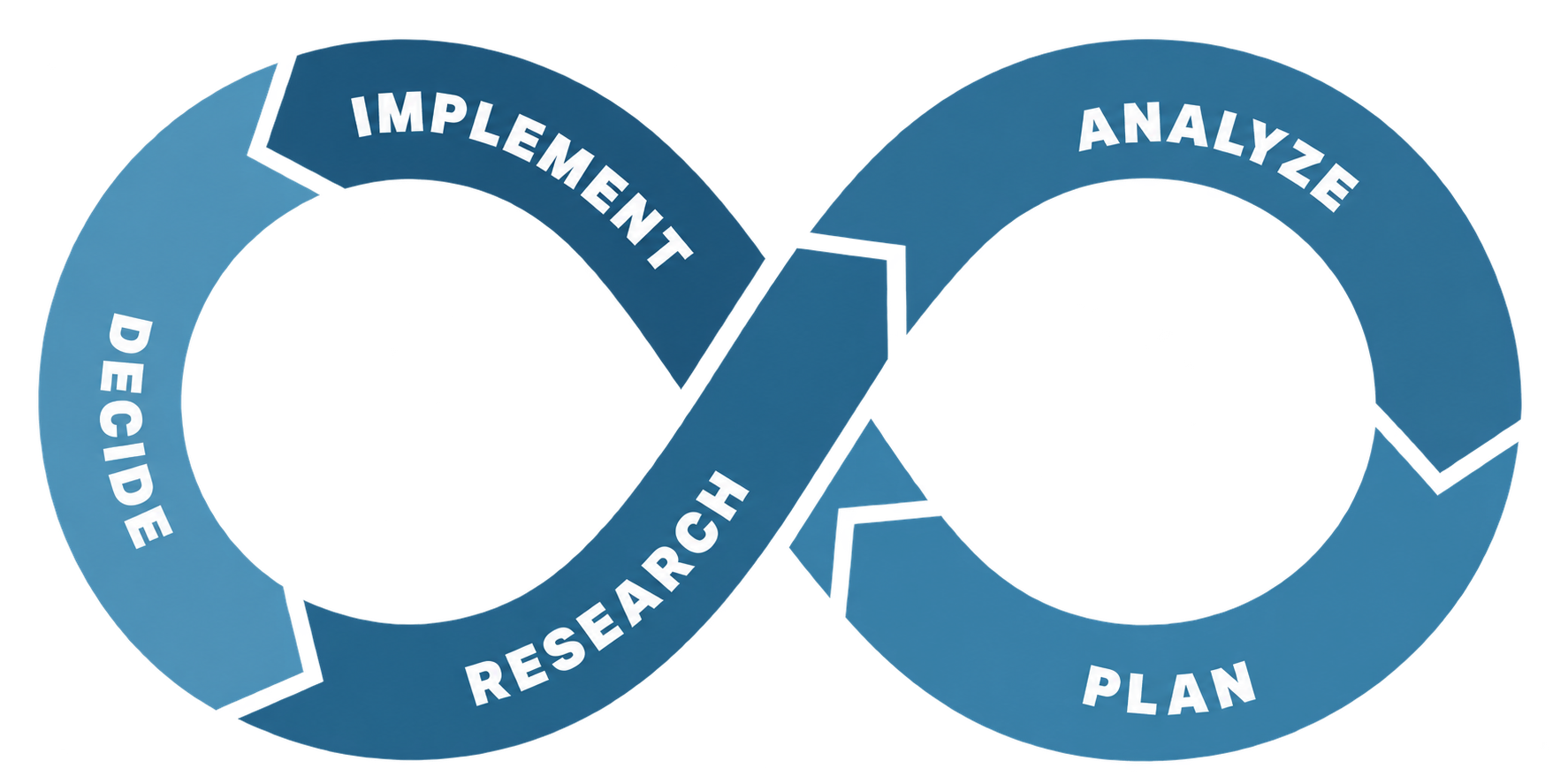
RAPID, created by Cognativ founder Ali Davachi, brings Research, Analyze, Plan, Implement, and Decide into the management of software delivery. It connects the reason for a change with the evidence needed to build, release, and improve it.
Two connected cycles, one RAPID engagement
Research and Analyze: Understand the Product and Codebase
Examine the user journeys, existing implementation, and dependencies behind the requested change. Identify the behavior that must be preserved and the limitations that need attention. This establishes a technical and product basis for the release scope.
Plan, Implement, and Decide: Deliver and Review Working Software
Sequence the implementation, testing, and release work with named owners and acceptance criteria. Review working increments with the people responsible for the product. Use those reviews and operating results to decide what is ready to release and what belongs in the next iteration.
Software delivery is more than development speed: planning, requirements, design, testing, deployment and maintenance each involve decisions about scope, quality and cost. RAPID keeps those decisions tied to the intended outcome. For a phase-by-phase overview, read our guide to the software development life cycle.
The SDLC defines the work. RAPID guides the decisions.
Planning
Set the outcome, scope, and delivery constraints.
Requirements Analysis
Clarify user needs and acceptance criteria.
Design
Define architecture, interfaces, and dependencies.
Development
Build and review working increments.
Testing
Evaluate behavior, quality, and release readiness.
Deployment
Coordinate release, rollback, and ownership.
Maintenance
Use operating evidence to prioritize improvements.
Research + Analyze
Examine user needs, technical constraints, test findings, and operating feedback. Revisit the problem when the evidence changes.
Plan + Implement + Decide
Prioritize the next increment, assign ownership, review results, and decide whether to continue, adjust, or stop.
RAPID applies throughout the lifecycle. Phases can overlap and repeat as the product evolves.
Why Businesses Choose Cognativ for Software Development
Cognativ builds and supports custom software for US businesses with one accountable team, a delivery method tied to business outcomes and results you can verify in our case studies.
Why businesses choose Cognativ
One Team From Discovery to Support
Strategy, design, engineering and ongoing support stay with one team, so decisions made in discovery carry through to release and maintenance.
Delivery Managed With RAPID
RAPID, created by Cognativ founder Ali Davachi, ties each release to a business outcome and a decision owner, keeping scope and spend visible.
Results Documented in Case Studies
Published work includes a 35% throughput increase for a B2B distributor and a branded mobile app launched in under 90 days.
Explore Cognativ case studies spanning a B2B marketplace, connected insurance data, a mobile product and distribution operations. Each example describes a particular business context and the systems involved.
Use the cases to compare the type of problem and delivery work with your own situation, then discuss yours in a free consultation.
Cognativ modernized a B2B marketplace experience with stronger product discovery, cleaner product data, and workflows built around business buying behavior.
The work improved search, bulk ordering, account-specific purchasing, and supply-flow visibility from discovery to purchase.
Mobile App DevelopmentMulti-Brand PlatformsSmartSaaSMobile Platforms
Cognativ designed and launched a mobile app that helped a promotional goods company turn commoditized gifting products into branded, interactive digital experiences.
The app launched in under 90 days, increased brand recall 3x, and supported stronger renewals and margins.
Tell us about your priorities, current systems and the workflow you want to improve. Your first consultation is free, and our U.S.-based team will review what you share and suggest whether to start with consulting or development.
Software Development Services: Frequently Asked Questions
Use these questions to compare the starting point, scope and responsibilities for a software initiative. They cover consulting versus development, combining services, keeping existing systems, what an engagement includes and how costs and timelines are set.
Should we start with consulting or development?
Start with development when the users, business problem and required outcome are already defined. Advisory work is useful when platform choices, investment priorities or dependencies still need to be resolved. The first conversation can clarify which scope fits.
Can an engagement combine services?
Yes. A project can combine application development with integration, data or infrastructure work. Define the responsibilities and acceptance criteria together so the scopes support the same business outcome.
Do we need to replace all our existing systems?
An existing platform may be retained, extended or integrated. The decision depends on its constraints, the work it supports and the cost of operating a replacement. Bring those systems into the initial scope discussion.
What can a software development engagement include?
An engagement can include planning, application design and development, integration with existing systems, testing, deployment and support. The right combination depends on the product, the systems involved and your team’s responsibilities. Define the deliverables and acceptance criteria together before work begins.
A defined engagement also makes the working model explicit: who prioritizes requirements, how the team demonstrates progress, and who accepts the release. A smaller first phase can focus on a bounded workflow before the wider roadmap is agreed.
How are software development costs and timelines determined?
Costs and timelines depend on the scope, the complexity of existing systems and integrations, security requirements, the delivery team and the level of support required. Start by identifying the users, workflows and decisions the software must support; those details help establish a realistic plan and estimate.
When comparing proposals, ask which assumptions are included, what information is still needed and how changes will be handled. Consider the effort your own team needs to provide for decisions, system access, testing and acceptance. The first consultation is free.
What happens after the software is launched?
After launch, the work may include monitoring, security updates, issue resolution and improvements as business needs change. Agree on support responsibilities, access, maintenance priorities and handoff arrangements as part of the engagement, so your team knows how the software will be operated.
The handoff should identify the people responsible for deployment, monitoring, documentation and access to the source and supporting services. The ongoing arrangement can then be scoped around the systems and responsibilities that remain with each team.
How should we scope an ecommerce modernization?
Map the customer journey and the operational flow behind it: catalog, pricing, inventory, checkout, payments and fulfillment. Identify the systems that own each record and the manual steps teams use to resolve errors. This makes it easier to isolate a useful first phase instead of assuming the entire platform needs replacement.
Discuss peak demand, integration testing, access to customer data and responsibility for releases with the people who operate the platform. Compare a targeted improvement with a broader rebuild using the costs and constraints of your actual environment.
What should we agree before development starts?
Describe the users, business outcome and workflows in scope, including the exceptions that make the work difficult today. Identify the systems that must exchange data and the people who can explain their behavior. Review assumptions about permissions, data quality and availability before they become delivery dependencies.
Agree who prioritizes work, how progress will be reviewed and what acceptance evidence is needed. Decide who owns the code, environments, documentation and post-launch support in the actual contract. Those decisions make handoff and changes easier to manage as the project evolves.
How can we reduce disruption to existing operations?
Start by identifying the records, integrations and workflows that must remain available during a change. A phased release can limit the first scope to a defined user group or process, provided the necessary data and dependencies are understood. Test the transition and identify who can resolve an exception before moving further.
The delivery plan should account for access, training, release windows and a practical way to reverse or pause a change when appropriate. These choices depend on the existing application and the business impact of interruption; they should be agreed rather than assumed.
How do we choose a software development company?
Before choosing a provider, compare the proposed deliverables and the decisions your team must make. Ask how the team will document requirements, test integrations, handle changes and demonstrate acceptance. Clarify access to source code and environments, responsibilities after release and the role of the people who use the system each day.
Cognativ answers these questions in writing before work starts, so you can compare the scope, responsibilities and assumptions with other proposals.
Related Software Development Insights
Recent Cognativ articles on building, modernizing, and maintaining business software. Each one explains a practical decision for business and technology leaders, with steps you can apply in your own organization.
A practical vendor selection guide: define success metrics, shortlist 3-5 firms, score them, ask the right questions, run a paid pilot and lock down IP terms.
Unit, integration, regression and acceptance tests plus Selenium, Playwright and Appium: how to design a functional testing suite you can trust on each release.
Python, TypeScript, SQL, Rust and more: see which languages lead the 2026 rankings, what each is best for and how AI coding agents shift what to learn next.
U.S.-Based EngineersNDA on RequestReply in 1 Business Day
Have a Backlog, a Codebase, or Just a Sketch?
Send what you have: wireframes, a legacy application, an app that needs a second platform, or a list of systems that must talk to each other. The first call sorts out scope, stack and release order.