
Begin With the Decision, Then Define the Scope
An AI workload depends on more than a model. Applications, information, network access, compute, storage, security controls and operating teams all influence how the service behaves. The infrastructure question is how those pieces should support a particular business task and the people responsible for it.
Cognativ offers AI Infrastructure as an advisory-led service. The first step is a meeting to understand what you want to do, what already exists and where decisions are unresolved. Only after that conversation do we discuss whether a further assessment, architecture work, implementation or another engagement is appropriate and agree its scope.
The conversation can begin with a single application, a proposed AI capability or an existing environment that is difficult to operate. You do not need a completed architecture diagram or a provider selected in advance. A useful starting point is the task, the systems it touches and the constraint that prompted the discussion.
-
Workload
Users, demand patterns and the application task.
-
Data
Sources, movement, access and retention.
-
Platform
Hosting, compute, network and deployment choices.
-
Operations
Owners, observability, recovery and cost.
What to Bring to the First Meeting
Bring the business or operational decision you are trying to make. You might be comparing hosting options, preparing an application to use a model service, reviewing an existing platform or deciding whether a pilot can be operated by your team. Describe the expected users and what would make the next decision useful.
Existing material can help: a high-level system diagram, the names of applications involved, known data restrictions, a rough usage pattern or a description of a recurring issue. Share only what your organization is permitted to share. If the evidence is incomplete, the meeting can identify what would need investigation before a recommendation is reliable.
We discuss who owns the application, data, infrastructure, security and budget, including any outside provider. The outcome of the meeting is a clearer understanding of the problem and possible next steps. A scope, deliverables, schedule and commercial terms are agreed separately if the parties decide to proceed.
Infrastructure Decisions to Evaluate
The relevant work depends on the workload and the existing environment. The following areas provide a practical way to organize the conversation; they do not assume that every engagement needs a new platform or the same set of services.
Compute and Workload Demand
- Demand
- Capacity
- Performance
Estimate the shape of demand before selecting capacity. A batch process that runs overnight has different requirements from an interactive application serving users throughout the day. Request volume, response-time expectations, model characteristics and changes in demand can affect resource choices.
Where accelerators or dedicated capacity are being considered, examine availability, utilization, provider limits and the work needed to operate them. An initial estimate is a planning input; representative testing and observed usage are needed before treating it as a capacity commitment.
Data and Network Boundaries
- Sources
- Access
- Integration
Identify the records and documents the workload needs, the systems that own them and how information will move between components. Consider source permissions, data freshness, network paths, encryption requirements and whether information is retained by connected services.
The design should name authoritative systems and the people who approve access. It should also account for missing or delayed inputs, connection failures and the way an application behaves when a dependency is unavailable. Specific controls are selected for the actual use case and organizational requirements.
Deployment and Change
- Hosting
- Release
- Ownership
Compare managed services, private environments and hybrid arrangements against the workload. A managed provider may handle parts of the platform while introducing dependencies on provider interfaces and terms. A private environment may provide different control but also require capacity, patching and operational ownership.
Define how configurations, models and application changes move between environments. A release plan can include version tracking, validation, approval and a way to revert a change. The meeting determines whether those topics require a separate assessment or delivery scope.
Reliability and Operating Cost
- Recovery
- Monitoring
- Cost
Consider which failures matter to users and how the service should respond. Monitoring can cover availability, response times, capacity and dependency errors; an owner must decide who receives an alert, how it is investigated and when the workload should fall back to another process.
Cost analysis connects usage patterns with compute, storage, data transfer, model access and operational effort. Review fixed commitments as well as variable charges, then identify who will monitor the budget. Estimates depend on actual workload assumptions and provider terms rather than a universal price.
Choose an Environment for the Actual Work
The choice between managed, private and hybrid infrastructure is a tradeoff across information handling, latency, integration, availability, operating skills and cost. Start with the requirements for the workload rather than assuming that one hosting label settles every security or performance question.
A managed model or platform can let a team focus on application behavior while the provider operates part of the stack. The organization still needs to understand access, data handling, provider dependencies, change notices and the service responsibilities it retains. A technical review may identify where those details need further confirmation.
A private or hybrid design may be appropriate when an organization has particular data, network or operating constraints. It can also introduce responsibilities for capacity planning, software updates, model access, support and recovery. The team should compare those responsibilities with available skills and the importance of the workload before deciding.
Many businesses will use a combination: an existing application and data platform may remain in place while a model service is added through a controlled interface. The architecture should show where information crosses a boundary and how the application handles a provider outage, rejected request or unexpected response.
Plan for Security, Reliability and Change
Infrastructure controls begin with the information and actions the workload actually needs. Review identities, service accounts, secrets, network access and the permissions used by applications and operators. For sensitive information, identify applicable requirements with the people responsible for security, privacy and legal decisions.
Define observable service behavior before establishing alerts. A response-time target, for example, needs a measurement point, an agreed time window and an owner who can investigate failures. Logs and traces should provide useful operational context while respecting retention and access requirements for the information they contain.
Recovery decisions depend on business consequences. A support tool may be able to route an incomplete task to a person, while another application may need a documented recovery sequence and communication plan. Identify the dependencies and owners that must participate before treating a recovery procedure as ready.
Changes to a model, provider, configuration or data connection can alter the behavior of the application. Agree which checks are needed before a change, how the previous version can be restored and who approves the release. These decisions can be addressed in a later engagement once scope and responsibilities are agreed.
Make the Next Decision With Evidence
A pilot can answer a useful question without proving that an infrastructure design is ready for a wider audience. Identify what the pilot needs to show, the environment and data it will use, and who will interpret the results. Separate a technical demonstration from acceptance of the complete operating service.
For a later assessment, a team might compare representative requests, expected concurrency, observed latency, failure behavior and the cost of the tested configuration. Results are meaningful only for the selected workload and test conditions. Record what was tested, what was not, and which assumptions would change at a different scale.
Operational readiness also depends on access, support, escalation and change ownership. A handoff should make it clear who maintains each component, where to find the configuration and what to do when a dependency fails. The appropriate depth of documentation and validation is determined with the customer after the advisory meeting.
The next step may be a focused assessment, a design comparison, a delivery project or coordination with an existing provider. Cognativ discusses the options with the people who own the workload so that any subsequent agreement reflects the decision, evidence and resources actually needed.
Related Work in Data and Connected Systems
These Cognativ cases describe telecommunications platform modernization and health data services. They illustrate architecture, operational visibility and data access decisions; the source records do not establish that the projects were AI infrastructure deployments. Two further cases, a telecom outage reduction and fintech platform stabilization, show related work in other settings.
Rebuilding a Telecom Delivery Platform
Platform Modernization
Telecom Software
Incident Management
Fault Tolerance
Rebuilding a Telecom Delivery Platform
Cognativ rebuilt a telecom delivery platform with modular, service-oriented architecture and real-time telemetry for client accounts.
The case describes work on infrastructure, ticketing, release management and client-facing documentation.
Explore the Telecom Platform Case
Building a Health Data Services Platform
Data Platforms
API Development
Data Integration
Data Marts
Building a Health Data Services Platform
Cognativ rebuilt a health data platform around normalized claims data and reporting across multiple plans.
The case describes normalized ingestion, a privacy-focused data mart, queryable APIs and dashboards.
Explore the Health Data Case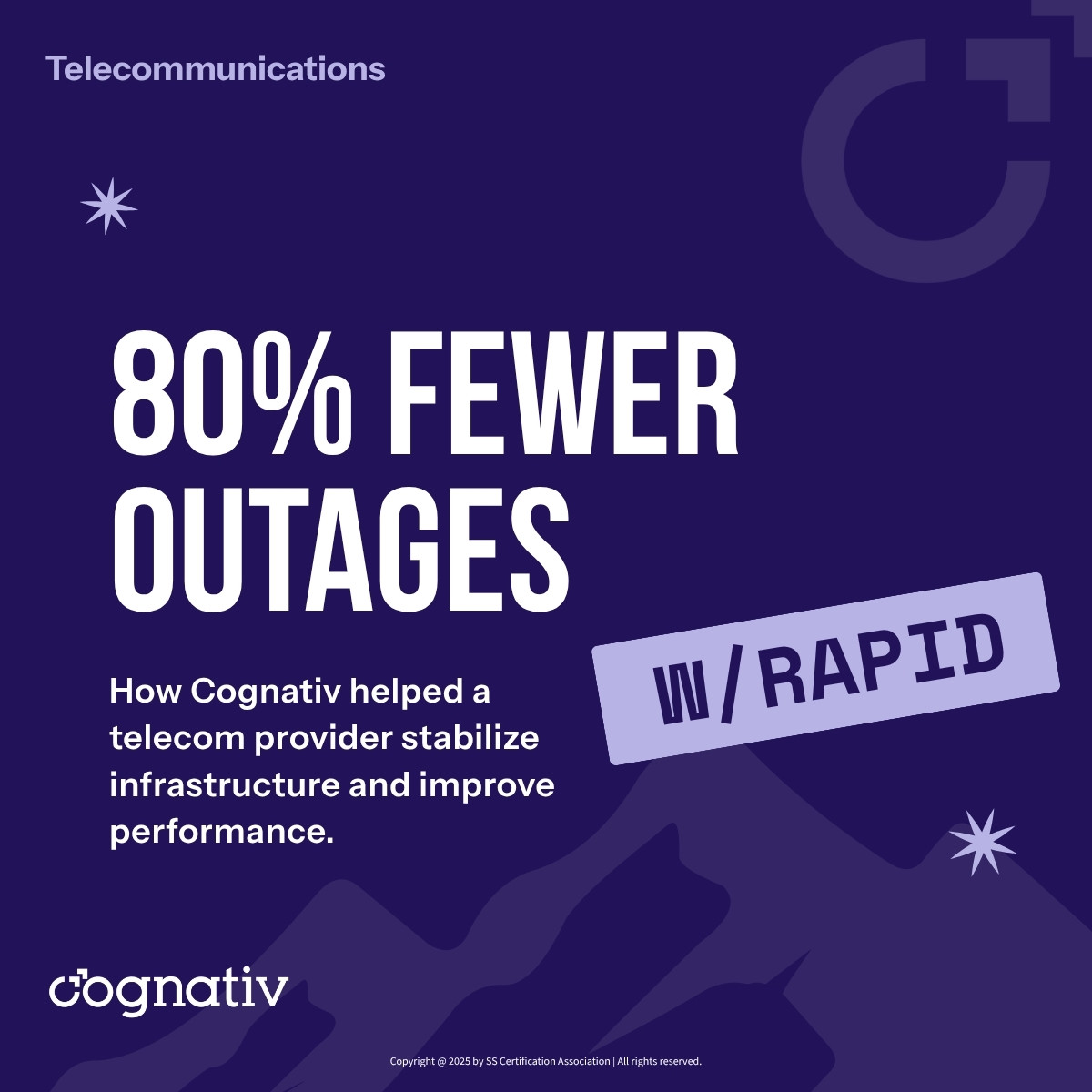
Virtual CTO Cuts Telecom Outages More Than 80%
Software Reliability
Platform Modernization
Release Management
Virtual CTO
Virtual CTO Cuts Telecom Outages More Than 80%
Cognativ provided Virtual CTO leadership to stabilize a telecom environment affected by outages, performance failures, and reactive technical operations.
The case reports that outages fell by more than 80% within months, alongside improved delivery discipline and a more reliable operating foundation.
Review the Outage Reduction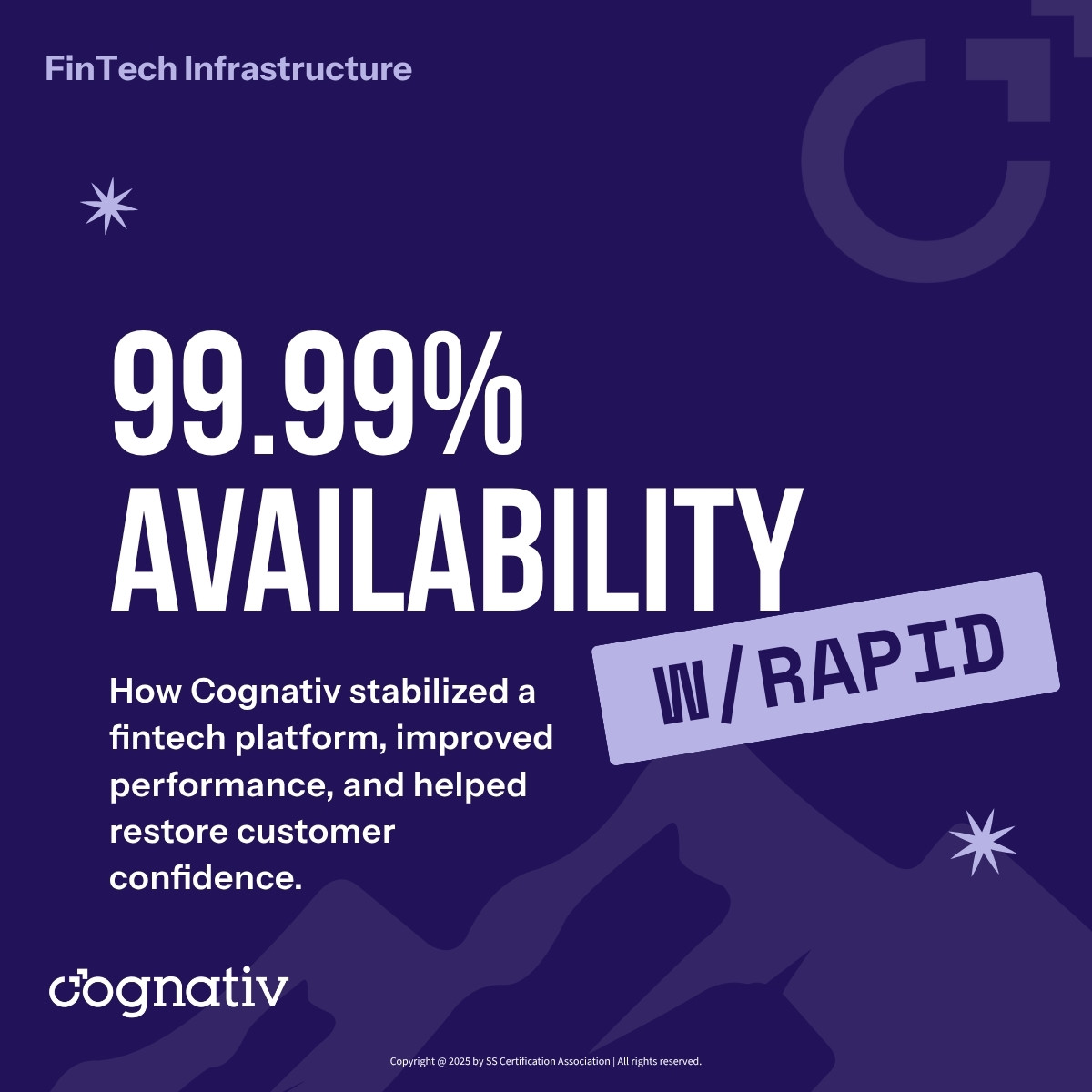
Fintech: Prioritize Stability Before Expanding the Roadmap
Platform Modernization
Elastic Scaling
Observability
Virtual CTO
Fintech: Prioritize Stability Before Expanding the Roadmap
A growing fintech platform faced outages, transaction failures and technical debt that pulled engineers away from product work. Cognativ's Virtual CTO engagement investigated those failure points, mapped dependencies and prioritized changes to the core platform.
The case reports 99.99% availability for core services over a trailing 12-month period. The decision was not simply whether to rewrite the application. It was which components needed attention, which behavior had to be preserved and how leadership would evaluate the next release.
Read the fintech platform stability case study.
Start an AI Infrastructure Conversation
Tell us what you are considering, the workloads involved and the decision your team needs to make.
The first step is an advisory meeting. We can discuss the environment and next decisions before agreeing on an assessment or delivery scope.
AI Infrastructure Consulting Questions
Explore the first meeting, deployment choices and the decisions that shape a potential engagement.
What happens in the first advisory meeting?
We discuss the workload, the business decision, the current environment and the people responsible for it. The conversation identifies questions and possible next steps. If further work is useful, its scope, deliverables, timing and terms are agreed separately.
Do we need to choose a cloud provider first?
No. The discussion can begin with your existing providers and requirements. A later assessment may compare managed, private and hybrid options against data handling, integration, operating capability and costs before your team selects an approach.
Can you work with our existing infrastructure?
The starting point can be an existing application, data platform or provider arrangement. The meeting helps identify dependencies and ownership. Any access, assessment or engineering work would be defined and agreed in the subsequent scope.
How do we decide what compute capacity is needed?
Start with the workload, expected users, request patterns and response-time requirements. Model characteristics and provider limits also matter. Estimates should be checked against representative usage and testing before a capacity decision becomes an operating commitment.
How are data security and privacy addressed?
Identify the data involved, its owners, permitted access and the paths it takes through the system. Qualified security, privacy and legal owners determine applicable requirements. The meeting can identify topics for a later assessment; no hosting choice alone guarantees compliance.
What should we monitor after deployment?
Relevant signals may include availability, response times, capacity, dependency failures and operating cost. The useful set depends on the workload. Agree who receives alerts, investigates issues and decides when to use a fallback or recovery process.
Can an engagement cover implementation and handoff?
It can be discussed after the advisory meeting. Depending on the decision and the teams involved, a later scope may address assessment, design, implementation or operating handoff. Responsibilities, validation, schedule and commercial terms are agreed before that work begins.
How are timing and cost determined?
They depend on the selected scope, existing environment, access, dependencies, provider choices and the depth of validation requested. The initial conversation clarifies the decision to be made; an estimate and terms follow only when the work is sufficiently defined.