

Restoring Transaction Reliability and Engineering Focus
Cognativ provided Virtual CTO leadership to diagnose recurring outages, harden critical transaction services, and introduce scalable SmartSaaS architecture so the fintech team could move from maintenance work back to product delivery.
Industry Context
Fintech & Financial Services
Specialty
Digital banking infrastructure, transactional platforms, and regulatory compliance
Solution
Virtual CTO leadership and full-stack optimization for performance, scalability, and reliability
Users Served
End users, operations, compliance teams, product leaders, and investors
About the Project
A rapidly growing fintech company hit a wall. Its user base was expanding, but platform stability could not keep up. Transaction failures and downtime eroded user trust, and Cognativ was brought in under a Virtual CTO model to stabilize the platform.
Performance issues caused transaction failures. Downtime eroded user trust. Internal tech teams were consumed by firefighting instead of building. CSAT scores were dropping, and churn was creeping up.
Cognativ was brought in under a Virtual CTO model to stabilize and scale the platform. Using RAPID, we assessed technical debt, rebuilt critical system components, and implemented a SmartSaaS architecture that could scale predictably, perform reliably, and free capital for innovation.
The Risk
Performance issues undermined new product launches, support queues ballooned, investors raised concerns, and teams could not predict when the next outage would hit.
The Situation
The client had strong market momentum, but platform instability was becoming an existential risk.
The Opportunity
Leadership needed clarity on whether to rebuild, refactor, or replace, and a plan that would actually work.
Transformation Objectives
Cognativ focused the engagement on Virtual CTO leadership, infrastructure scalability, high availability, and restoring engineering focus on customer growth. The objectives below start with improving platform stability and redesigning for high availability.
Improve Platform Stability
Provide Virtual CTO leadership to improve stability, reduce maintenance cost, and refocus product and capital on customer growth.
Redesign for High Availability
Redesign infrastructure for horizontal scalability and high availability.
Refocus Engineering Teams
Enable the internal team to spend less time reacting and more time delivering.
Core Business Challenges
Engineers were fixing bugs instead of building. Product could not deliver roadmap items on time. Leadership did not know whether to rebuild, refactor, or replace.
Growth was making the platform problems worse, and customer trust was deteriorating as performance and availability issues continued.
The company needed clarity and a solution playbook that could stabilize today while protecting tomorrow’s scale.
Unpredictable Downtime
Outages happened without warning during critical usage windows, creating customer frustration, support backlog, and revenue risk.
Poor Performance Under Load
As traffic increased, the system slowed down, causing latency spikes, timeouts, failed transactions, and broken experiences.
Tech Debt Bottlenecks
Previous quick fixes, hotfixes, legacy code, and brittle dependencies created deep system fragility that blocked feature rollouts.
High Maintenance Spend
A growing percentage of capital and engineering effort was spent just to stay online, not building value or differentiation.
Falling CSAT Scores
Support tickets spiked, NPS dropped, and customers lost faith in the product’s reliability, hurting retention, referrals, LTV, and growth.
No Path to Scale
Leadership knew growth would make the problems worse, but had no solution playbook.
The Cognativ Solution
Cognativ led a RAPID transformation as Virtual CTO, starting with platform diagnostics and ending with a high-performance, scalable architecture. The phases below begin with root cause analysis of major outages and a map of high-risk dependencies.
Phase 1: Platform Diagnostics
Cognativ conducted root cause analysis of major outages, performance regressions, and tech debt clusters.
Dependency and Risk Mapping
The team mapped high-risk dependencies, poor database design, and unstable middleware, then prioritized fixes based on customer impact and engineering feasibility.
Phase 2: SmartSaaS Rebuild
Cognativ rebuilt key systems under a SmartSaaS model and introduced composable architecture for transaction management, monitoring, and real-time data sync.
Architecture: Distributed and Observable
The new platform featured distributed compute, observability, modular services, elastic load scaling, and role-based traffic management designed for reliability, speed, and low maintenance.
How RAPID Guided the Transformation
“This wasn’t about rewriting everything. It was about knowing what to fix, what to harden, and how to get teams focused again. RAPID gave us speed without waste.”
– Ali Davachi, Cognativ Founder
Researching Failure Points
Cognativ investigated outages, latency, failed transactions, support pressure, and roadmap disruption.
Analyzing Technical Debt
The team separated urgent customer-impacting risks from lower-value rebuild ideas.
Planning Stability Work
The roadmap prioritized scalable transaction management, monitoring, real-time sync, and load handling.
Implementing SmartSaaS Foundations
Cognativ hardened core services and introduced scalable architecture without wasting time on unnecessary rewrites.
Deciding With Reliability Signals
Response time, availability, CSAT movement, maintenance spend, and release quality guided ongoing decisions.
What is the RAPID Framework?
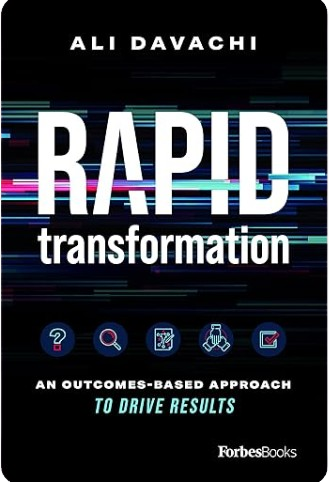
RAPID connects Research, Analyze, Plan, Implement, and Decide. In this engagement, Cognativ investigated outages, failed transactions, and technical debt to identify which services needed immediate attention.
Customer impact and engineering feasibility shaped the roadmap. Response time, availability, customer satisfaction, maintenance spend, and release quality then informed decisions about continued hardening and scale.
Results Obtained
Cognativ achieved major gains in platform performance, reducing average response time by over 60%. Core services were stabilized, reaching 99.99% availability over the trailing 12 months.
Core services were stabilized, enabling 99.99% availability over the trailing 12 months.
The company shifted capital spend from maintenance to innovation, freeing budget for GTM and new features while reversing CSAT decline and improving user confidence across multiple segments.
60%+ Response Time Improvement
Core user transactions now execute faster and with higher reliability under load.
99.99% Uptime Achieved
The system transitioned from unpredictable outages to industry-standard availability.
Reduced Maintenance Cost
Less capital was spent on firefighting, with more budget redirected to customer experience and growth.
Reversed CSAT Decline
User satisfaction rebounded as outages stopped, speed improved, and confidence returned.
Immediate Benefits
Stabilizing core services restored confidence among customers and investors while giving engineers time to deliver roadmap priorities instead of responding to platform failures.
Stabilized Core Platform
No more surprise outages or performance crashes.
Faster Feature Delivery
Engineers shifted from break/fix to roadmap execution.
Clearer Investor Narrative
Leadership could show control, capability, and growth focus.
Better Customer Retention
Confidence was restored among high-value user segments.
Ongoing Benefits
Observability and release governance support faster delivery with fewer regressions, lower support demand, and infrastructure decisions aligned with continued growth.
Faster Releases
The company now releases faster with fewer rollbacks or regressions.
Lower Support Volume
Support volumes have dropped, freeing teams to focus on proactive customer experience.
Operational Observability
Teams use monitoring and observability tools to stay ahead of issues.
Release Governance
Cognativ continues to guide infrastructure scaling, roadmap alignment, and release governance.
Why Fintech Companies Trust Cognativ
Cognativ helps fintech firms scale with confidence by fixing what is fragile and building what is next. Its Virtual CTO model and RAPID framework help teams become stable, stay performant and shift from maintenance to growth.
Whether a platform is experiencing performance issues, reliability failures, or architectural limits, Cognativ’s Virtual CTO model and RAPID framework help teams get stable, stay performant, and shift from maintenance mode to market leadership.
From Latency to Reliable Performance
Fintech systems need fast, consistent transactions under pressure, not performance that collapses as adoption grows.
From Fragile Dependencies to SmartSaaS Architecture
Composable architecture helps teams harden core services without turning every fix into a total rebuild.
From Firefighting to RAPID Execution
RAPID helps leaders know what to fix, what to harden, and how to get teams focused again.
Observability and Release Governance
Monitoring tools gave teams earlier visibility into operational issues, while Cognativ continued guiding infrastructure scaling, roadmap alignment, and release governance.
Ready to Reclaim Reliability and Refocus on Growth?
Let’s turn complexity into clarity. Partner with Cognativ to stabilize your platform, improve customer experience, and scale with confidence. The first consultation is free, so you can discuss your own platform before any work is scoped.


