Case Study Questions
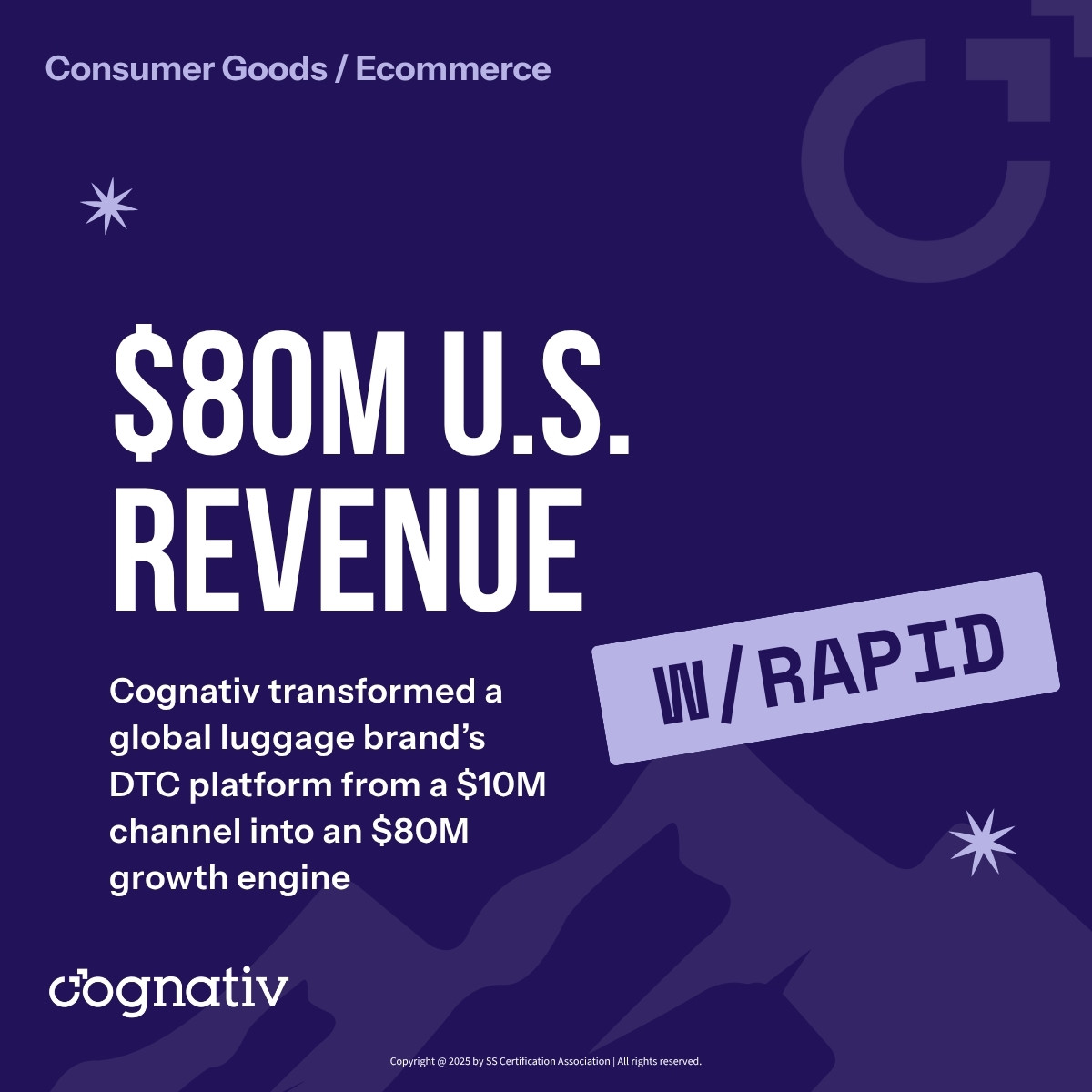
Explore the collection with your business question in mind. These projects span organization sizes and retain their original context, scope, and reported outcomes.
What types of case studies does Cognativ publish?
The catalog covers technology decisions, operational change, software modernization, integration, and platform delivery across several sectors.
Each case describes its own business context and project scope. Use the filters to find a relevant problem, not an implied industry-specific service package.
Why are some case studies anonymized?
Some published cases omit client names and identifying details.
Read the context and reported work without assuming a particular client's identity. An anonymized case is not permission to attribute the engagement to an organization.
How should we read these case studies?
Start with the situation, objectives, and constraints. Then review the work and results together.
Figures belong to the project and time period described; they are not forecasts for another organization. Why Cognativ explains how this experience informs our consulting approach.
The cases describe how research, analysis, planning, implementation, and decisions shaped the work.
Explore RAPID Transformation for the framework, and use each project account to understand its application in that setting.
Can Cognativ help if our challenge is similar but not identical?
A case can be a useful starting point for a conversation, but it is not a template to apply unchanged.
Technology consulting starts with your operating problem, existing systems, and constraints before considering a solution.
What kinds of business outcomes do Cognativ case studies usually show?
Depending on the engagement, the published cases discuss revenue, reliability, operational workload, delivery, or customer experience.
Review the original measures, baselines, and timeframes in each case. Not every project measures the same outcome, and results should not be combined into a general performance claim.
Do Cognativ case studies only apply to large enterprises?
No. Cognativ's current consulting focus is U.S. small and midsize businesses.
This historical collection includes organizations of different sizes, including enterprise engagements. Relevance depends on the problem and constraints; the original client scope and results remain specific to each case.
The published cases contain the level of detail available for public review, with identifying information omitted in some accounts.
Confidentiality requirements and any permission to disclose project details must be addressed for the individual engagement; this catalog does not grant access to underlying client data.
Can Cognativ use these case study patterns for AI or private AI initiatives?
Questions about workflows, ownership, data, and review can also inform an AI discussion.
That does not mean an older project used AI or that its results predict AI performance. The use case, data access, oversight, and operating risks need to be evaluated in their own context.
What should we do if one of these case studies feels relevant?
Note the case and the part of the problem that resembles yours.
Use our contact page to describe your situation, or visit About Cognativ for company context. We can begin with the decision you need to make rather than assume the same solution fits.