Giving Multiple Retail Brands One Platform for Growth
Under Virtual CTO leadership, Cognativ rebuilt a luxury retailer's product, inventory, pricing, and customer experience systems on TotalCommerce, giving business teams control of daily changes and a reusable foundation for new brands.
Industry Context
Ecommerce and retail
Specialty
Multi-brand fashion, lifestyle, and off-season retail
Solution
Platform rebuild under Virtual CTO leadership
Users Served
Merchandisers, inventory teams, marketing, CX, and executive leadership
About the Project
A luxury ecommerce operator managing multiple retail brands was struggling to grow because its legacy tech stack had become a platform bottleneck. Adding brands took months of custom development, and product data and inventory syncing were unreliable.
The Risk
Adding brands took months of custom development, while overwhelmed internal teams and costly external resources kept growth expensive.
The Situation
Product data was unreliable, inventory syncing was inconsistent, and every change required technical involvement.
The Opportunity
A modular SmartSaaS platform could support faster brand launches, centralized merchandising, supplier-linked inventory, and leaner operations.
Transformation Objectives
Cognativ focused the transformation on architecture, brand scalability, and operational control under Virtual CTO leadership. The objectives below start with faster brand onboarding and less dependence on custom-coded technology.
Enable Rapid Brand Onboarding
Redesign ecommerce architecture for faster brand launches, centralized merchandising, and supplier-linked inventory feeds.
Reduce Tech Resource Dependence
Move from custom-coded dependence to modular SmartSaaS capabilities controlled by business users.
Support Long-Term Retail Scale
Deliver a stable platform that supports growth in brands, traffic, product complexity, and fulfillment models.
Core Business Challenges
The client had built a strong presence in off-season retail and luxury overstock, but the backend could not keep up with growth. SKUs were entered by hand, supplier feeds came through spreadsheets, and promotions needed developer support.
SKUs were entered by hand, supplier feeds were pulled through spreadsheets, promotions required developer support, and new brand launches were blocked by platform constraints.
Customer experience suffered as items appeared out of stock, sizing information became outdated, and order routing logic broke too often.
Legacy System Bottlenecks
Custom-coded systems were fragile, slow to change, and unable to support modern ecommerce demands.
Manual Workload
Inventory sync, product entry, and promotions required constant technical or operational intervention.
No Brand Scalability
Each new store or SKU line required weeks of configuration, making growth expensive and unsustainable.
Underutilized Talent
Engineering was consumed with bug fixes, blocking innovation and growth initiatives that mattered to customers.
Supplier Sync Issues
Inventory data from brands and warehouses was out of sync, causing customer service issues and lost sales.
High Cost to Maintain
The platform was expensive to support, with poor ROI on both internal and outsourced technical labor.
The Cognativ Solution
Cognativ stepped in as Virtual CTO, aligning business goals with platform capability and leading a full-stack ecommerce transformation. The phases below begin with a systems audit of inventory logic, order routing and brand launch procedures, followed by a TotalCommerce migration.
Phase 1: Systems Audit and Discovery
Cognativ identified friction in inventory logic, order routing, merchandising workflows, and brand launch procedures.
Phase 2: TotalCommerce SmartSaaS Migration
The product catalog, inventory sync layer, pricing engine, and customer experience stack were rebuilt on a modular SmartSaaS foundation.
Architecture: Composable and API-Native
Business users gained control over merchandising, brand theming, SKU onboarding, pricing rules, and marketing workflows without developer involvement.
Operating Model: Modular Brand Shells
Four additional brands launched with a templated brand-shell framework, allowing updates and launches in hours instead of weeks.
How RAPID Guided the Transformation
“The challenge wasn’t ambition—it was architecture. RAPID gave us a clear path to align teams, rebuild fast, and eliminate the friction holding everything back.”
– Ali Davachi, Cognativ Founder
Researching Platform Constraints
Cognativ reviewed inventory logic, order routing, product data, brand launch steps, and merchandising workflows.
Analyzing Scale Blockers
The team identified where manual SKU work, fragile feeds, and custom scripts were slowing growth.
Planning Modular Brand Expansion
The roadmap prioritized brand-shell reuse, supplier-linked inventory, pricing control, and CX stability.
Implementing SmartSaaS Foundations
The TotalCommerce rebuild shifted core platform control from developer queues to business-ready workflows.
Deciding With Retail Performance Signals
Revenue growth, brand launches, staffing needs, and inventory accuracy guided the next roadmap phases.
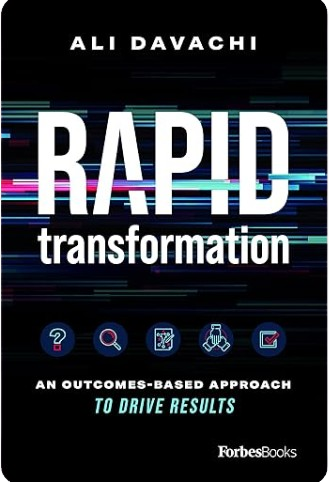
What is the RAPID Framework?
RAPID connects Research, Analyze, Plan, Implement, and Decide. In this engagement, it helped distinguish the retailer's growth ambitions from the platform constraints preventing teams from delivering them.
The framework organized decisions around modular brand launches, supplier-linked inventory, and business control, with retail performance signals informing the next roadmap phases.
Results Obtained
Cognativ redesigned the platform, removed manual dependencies, and launched new revenue-driving capabilities under a Virtual CTO engagement. The company scaled to four additional brands, reduced tech staffing needs and increased total revenue 4x.
Using RAPID and SmartSaaS architecture, the company scaled to four additional brands, reduced tech staffing needs, and increased total revenue 4x.
The transformation improved inventory accuracy and product availability through real-time supplier integration without increasing headcount or infrastructure spend.
4x Revenue Growth
More brands, better inventory, and faster merchandising helped the business scale without bloating overhead.
4 New Brands Launched
The client can now spin up branded storefronts by reusing infrastructure and content models.
Reduced Tech Staffing Needs
Business control and backend automation lowered engineering dependence without sacrificing innovation.
Higher Inventory Accuracy
Real-time supplier syncing reduced errors, improved sell-through, and cut customer service escalations.
Immediate Benefits
The rebuild made brand launches and merchandising changes easier for internal teams, while cleaner inventory information and observability improved the customer and support experience.
Faster Brand Deployment
Internal teams launched four new properties with no net tech headcount increase.
Clear Ownership
Merchandising and operations teams took control of their tools, reducing developer involvement.
Improved UX
Clean inventory logic and real-time updates showed customers what was actually available.
Simplified Support
Observability and modular design made issue resolution faster.
Ongoing Benefits
A shared platform now accommodates different fulfillment models and business-led retail changes, with Cognativ supporting the next stages of personalization and international expansion planning.
Multiple Fulfillment Models
The company supports drop-ship, warehouse, and hybrid fulfillment from the same platform.
No-Code Retail Changes
Promotions, pricing rules, and UX experiments can be deployed without code changes.
Higher Revenue per Employee
Platform automation enables lean, high-output operations across brands.
Future Roadmap Expansion
Cognativ remains engaged on roadmap expansion, personalization, and internationalization planning.
Why Ecommerce Leaders Trust Cognativ
Cognativ helps ecommerce companies turn technical debt into technical leverage, especially when growth depends on platform decisions that internal teams cannot keep carrying alone.
Whether operating one brand or many, SmartSaaS architecture enables faster brand deployment, automated fulfillment workflows, and centralized control over product, pricing, and performance.
From One-Off Sites to Brand Systems
Cognativ creates modular storefront foundations that let operators launch brands without rebuilding from scratch.
From Manual Feeds to Inventory Control
Supplier-linked inventory and product data flows reduce customer-facing errors and support leaner operations.
From Architecture Drag to RAPID Execution
RAPID gives leadership a practical path to prioritize fixes, align teams, and remove platform friction quickly.
Virtual CTO Direction for Retail Growth
Cognativ aligned business goals with platform capability and led the full-stack transformation, connecting architecture decisions to the retailer's expansion needs.
Scale More Brands Without Scaling Platform Drag
Bring product data, supplier feeds, merchandising, pricing, and fulfillment under a platform model that supports growth without overwhelming your technical team.