Software Development Services Across Industries
Explore industry-specific software development services for US businesses, from healthcare and manufacturing to financial services and retail. Each operating environment brings different systems, people and responsibilities. Cognativ helps teams identify the workflow they need to improve and select a practical scope for development, integration or modernization.
No industries match your search. Try a different term or reset the filters.
Healthcare: Care Systems Built for Scale
Healthcare: Care Systems Built for Scale
We create secure, compliant platforms that improve patient care, simplify back-end workflows, and reduce tech debt for growing healthcare networks. The work can connect care teams, patient-facing applications and the systems supporting day-to-day operations.
- EHR/EMR integration and HIPAA-compliant patient portals
- Telehealth, IoT, and mobile care apps for virtual treatment
- Workflow automation for intake, billing, and follow-up

Education: Learning Tools That Keep Up
Education: Learning Tools That Keep Up
Modern software for schools, districts, and edtech providers built for access, accountability, and measurable outcomes. Projects can connect learning applications, reporting and access workflows around the needs of educators and learners.
- Custom LMS platforms with adaptive learning tools
- Analytics dashboards to track engagement and retention
- Virtual classroom tools with secure login management

Transportation: Smarter Fleet and Dispatch Workflows
Transportation: Smarter Fleet and Dispatch Workflows
Purpose-built platforms that streamline dispatch, routing, fleet operations, and customer booking across freight and mobility sectors. We consider the handoffs between dispatch teams, drivers, customers and the systems they use.
- Fleet and routing systems with GPS integrations
- Custom booking portals for passengers or freight
- Operational dashboards for route optimization
Logistics: Supply Chains With Fewer Blind Spots
Logistics: Supply Chains With Fewer Blind Spots
We eliminate manual handoffs, lost visibility, and tech fragmentation across logistics operations. Projects can connect shipment information, warehouse systems and the people managing exceptions.
- Yard and dock scheduling tied to appointment data and carrier systems
- Mobile supply chain apps for OS&D, document capture, and real-time status
- Smart routing, tracking, and warehouse automation

Real Estate: Property Workflows Made Clearer
Real Estate: Property Workflows Made Clearer
Software for real estate firms, property managers, and investment groups designed for automation, visibility, and tenant experience. A focused scope can bring property records, tenant services and reporting into a more connected workflow.
- Property platforms tied to leasing, maintenance, and CRM
- Analytics for portfolio performance, turnover, and rent collection
- Listing portals with geolocation, appointment booking, and messaging
Nonprofit: Mission Systems That Reduce Admin
Nonprofit: Mission Systems That Reduce Admin
Mission-focused software that makes donor operations, outreach, and reporting easier while staying flexible and funder-ready. A focused engagement can connect the systems staff use to manage programs, supporters and reporting.
- Fundraising, CRM, and grant-tracking systems
- Volunteer and event management platforms
- Outcome-based dashboards for board reporting
Banking: Finance Tools With Built-In Control
Banking: Finance Tools With Built-In Control
We build finance-grade software with security, compliance, and data visibility at its core. The scope can address how financial records move between applications, teams and customer-facing services.
- Audit-ready, SOC 2 and PCI-compliant systems
- Custom tools for payment processing, lending, and capital operations
- Customer data layers and AI-powered reporting dashboards

Fintech: Products Ready to Scale
Fintech: Products Ready to Scale
Startup-fast, enterprise-strong systems for fintech platforms scaling payments, investing, compliance, or embedded finance. We can help define application and integration requirements as the product and its operating responsibilities evolve.
- Multi-tenant SaaS and billing engines
- Identity, KYC, and AML frameworks
- Open-banking and API-first systems

Manufacturing: Factory Operations With Better Signal
Manufacturing: Factory Operations With Better Signal
We digitize and automate core operations from shop floor to supplier without forcing risky ERP migrations. The scope can connect production data, plant workflows and existing business systems without assuming a full replacement.
- Modern MES platforms with work order, inventory, and scheduling tools
- Predictive maintenance dashboards to reduce unplanned downtime
- Document and compliance automation for lean manufacturing
Ecommerce: Commerce Systems Beyond Templates
Ecommerce: Commerce Systems Beyond Templates
For brands scaling beyond plug-and-play tools, we build technology that protects margin and accelerates growth. An engagement can address the integrations, checkout workflows and operations behind the customer experience.
- Composable storefronts and order platforms with custom back-end logic
- Checkout and fulfillment stack optimization to reduce bloat and speed issues
- Loyalty, personalization, and CDP-powered campaign tools

Retail: Operations in One Flow
Retail: Operations in One Flow
Retail teams need connected systems that bring inventory, customer data, merchandising, and order operations into one reliable workflow. We examine how stores, digital channels and fulfillment systems exchange the information teams need.
- Omnichannel retail platforms for stores, ecommerce, and marketplace operations
- Inventory, POS, and order management integrations for better operational visibility
- Customer data, loyalty, and personalization tools that support repeat buying

Telecommunications: Operations Without the Drag
Telecommunications: Operations Without the Drag
Custom platforms for telecom operations designed to integrate legacy billing systems, customer portals, and field operations. A focused engagement can address the handoffs between customer operations, billing and service delivery.
- BSS and OSS platform modernization
- Customer self-service portals with plan changes, support, and usage data
- Network dashboards for coverage, capacity, and analytics

Media: Content Platforms Built to Move Fast
Media: Content Platforms Built to Move Fast
Powerful content platforms that combine flexible CMS, subscriber management, and real-time analytics. The scope can connect publishing, subscriptions and audience data across the platforms already in use.
- Custom CMS with paywalls and access control
- Recommendation and personalization engines
- Ad operations and user analytics dashboards
Energy: Data Where Teams Need It
Energy: Data Where Teams Need It
Secure, scalable platforms for traditional and renewable energy providers aligned with compliance and infrastructure goals. Projects can address the flow of operational data between field teams, assets and business systems.
- IoT and SCADA integrations for grid intelligence
- Energy trading and DER orchestration tools
- Emissions tracking and regulatory reporting systems

Technology & Hi-Tech: SaaS and AI Products Built Right
Technology & Hi-Tech: SaaS and AI Products Built Right
We partner with SaaS firms and tech-forward enterprises to build robust, future-ready platforms. The work can encompass product development, integrations and the operational needs of a growing software business.
- Multi-tenant SaaS and product development with subscription and usage billing
- DevOps and cloud-native architecture modernization
- AI/ML and LLM integration pipelines

Travel: Experiences That Stay Connected
Travel: Experiences That Stay Connected
Full-stack travel and hospitality platforms built to drive guest engagement, streamline operations, and unify bookings. Projects can connect reservation information, guest applications and staff workflows across the customer journey.
- Custom booking engines with dynamic pricing and inventory
- Mobile guest apps with itineraries, messaging, and mobile check-in/out
- Staff dashboards for housekeeping, scheduling, and real-time tasking
Move from Industry Context to a Delivery Plan
Industry context is the starting point for a software development engagement, not a substitute for a delivery plan. Cognativ works with US businesses to understand the workflow, existing applications, decision owners and constraints that shape the work. RAPID connects those priorities to a defined outcome, while the engineering scope identifies the integrations, responsibilities and acceptance criteria needed to move forward. For SMBs and larger teams alike, the goal is to agree on a practical next step before committing to implementation.
Workflow
Identify the work to improve and the people responsible for it.
Systems
Map the applications and integrations the workflow depends on.
Information
Identify the data needed, where it moves and who may access it.
Acceptance
Define the operational and technical conditions the change must meet.
Define the Decision with RAPID
Research the operating problem, analyze dependencies and plan a bounded change. RAPID connects the work to an explicit business outcome and helps the team make decisions using the information available at each stage.
Why RAPID for Digital Transformation
RAPID connects industry priorities with accountable decisions across research, planning, implementation and review. Explore why the framework helps teams align stakeholders, define outcomes and move from a technology challenge toward a practical delivery plan.
Selected Work Across Industries
These case studies show how Cognativ addressed specific software development and integration needs across industries. Explore the operating problem, the systems involved and the scope of each engagement to see how an approach can be adapted to a different business context. The industry catalog above provides a broader view of the workflows our services can support.
Healthcare: Connect Requests, Documentation and Hospital Systems
Healthcare Software
HL7 Integration
Secure Data Exchange
Healthcare Integration
Healthcare: Connect Requests, Documentation and Hospital Systems
An emergency teleneurology provider needed an application that reflected its care model. Its existing EMR created unnecessary data entry and made hospital integration difficult. Cognativ built a purpose-designed EMR and request portal connecting in-hospital requestors with remote neurologists.
The engagement centered on the request-and-response workflow, the information clinicians needed to document, and repeatable exchange with hospital systems. For a healthcare software initiative, those boundaries help define the application scope before a feature list expands.
Read the emergency teleneurology case study.
Commerce: Follow an Order Across Applications
Systems Integration
Workflow Automation
Order Management
Observability
Commerce: Follow an Order Across Applications
An order can pass through a storefront, payment service, inventory system and fulfillment operation. In Cognativ's omnichannel retail engagement, integration automation and observability addressed failures across that connected order lifecycle.
When reviewing a commerce platform, identify where an order changes state, which application owns each update and how teams recover an exception. That makes it possible to distinguish a storefront problem from an integration or fulfillment problem.
Explore the retail order integration case study.
Logistics: Give Customers and Operations a Shared View
Logistics Software
Customer Portals
Workflow Automation
Systems Integration
Logistics: Give Customers and Operations a Shared View
A logistics business needed to move beyond manual processes and a stalled modernization initiative. Cognativ delivered shipment tracking, mobile-friendly appointment scheduling and digital overage, shortage and damage reporting, alongside a B2B portal.
The project connected customer self-service with the information operations teams needed to manage delivery. Similar initiatives start by identifying the events customers need to see, who supplies those updates and how exceptions move back into operational work.
Read the logistics platform modernization case study.
Subscription Businesses: Connect Signup, Billing and Service
Subscription Software
Billing Systems
Platform Modernization
Billing Integration
Subscription Businesses: Connect Signup, Billing and Service
A digital subscription business had demand but an unstable MVP. Customers could not reliably sign up, pay and activate their service. Cognativ rebuilt the subscription platform around onboarding, billing and operational reporting.
A subscription journey continues after the first payment. Plan changes, trials, cancellations and support access need clear behavior and ownership. Reviewing those transitions together exposes problems that a successful checkout test alone can miss.
Explore the subscription platform rebuild.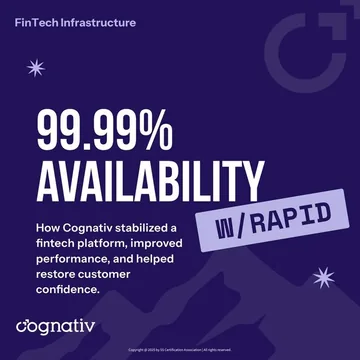
Fintech: Prioritize Stability Before Expanding the Roadmap
Platform Modernization
Elastic Scaling
Observability
Virtual CTO
Fintech: Prioritize Stability Before Expanding the Roadmap
A growing fintech platform faced outages, transaction failures and technical debt that pulled engineers away from product work. Cognativ's Virtual CTO engagement investigated those failure points, mapped dependencies and prioritized changes to the core platform.
The case reports 99.99% availability for core services over a trailing 12-month period. The decision was not simply whether to rewrite the application. It was which components needed attention, which behavior had to be preserved and how leadership would evaluate the next release.
Read the fintech platform stability case study.
Branded Mobile App Launches in Under 90 Days
Mobile App Development
Multi-Brand Platforms
SmartSaaS
Mobile Platforms
Branded Mobile App Launches in Under 90 Days
Cognativ designed and launched a mobile app that helped a promotional goods company turn commoditized gifting products into branded, interactive digital experiences.
The case reports delivery in under 90 days and a 3x brand recall boost among digital-enabled campaign recipients; it does not specify the comparison baseline. Clients using the mobile experience renewed campaigns and expanded scope in the following quarter, and the case reports improved margins.
See the Mobile App Launch
Discuss Your Industry and Software Initiative
Tell us which workflow needs to improve, which systems it depends on and what your team needs to achieve. Your first consultation is free, and our U.S.-based team will review what you share and suggest where the first scope should start.
Industry Software Development Questions
Find answers about software development services across industries, including how an engagement can fit existing systems, operating requirements and your team’s priorities. These questions can help US organizations identify the right scope before discussing implementation.
Can you improve an existing system instead of replacing it?
Yes. The starting point can be an application, an integration or an operational workflow. Reviewing what must be preserved and where the current system fails helps determine whether to extend, integrate, modernize or replace a component.
How do you define industry-specific requirements?
We start with the people using the system, the decisions they make, the data involved and the constraints on the work. Those findings inform architecture, integration boundaries, access controls and acceptance criteria.
How are regulatory requirements handled?
The applicable requirements depend on the jurisdiction, organization, data and service involved. Establish those obligations with the responsible business, legal and security stakeholders, then define the controls and evidence the implementation must support.
What should we bring to an initial discussion?
Bring the workflow you want to improve, the systems it touches, the problem with the current approach and your delivery constraints. Existing process documentation, architecture diagrams and representative examples help make the scope concrete.
How do we choose a workflow to address first?
Compare the problems your team encounters with their business impact, the people affected and the dependencies involved. A well-defined starting point makes the decision and the expected outcome easier to evaluate.
Can a project connect with the systems we already use?
Integration can be part of the scope. Review the available interfaces, data ownership, access permissions and operational dependencies before deciding how systems should exchange information.
What affects the scope and cost of an industry software project?
The workflows in scope, existing systems, data requirements, integration complexity and operational responsibilities all affect the work. Define these factors before estimating the effort and choosing a delivery approach.
How can a small or midsize business start with a manageable scope?
Choose a bounded workflow and agree on what the first release must demonstrate. Consider what can be delivered independently and what dependencies need to be resolved before expanding the work.
Who should be involved in defining the requirements?
Include the people responsible for the workflow, the systems and data it uses, and the decisions affected by the change. Bring in legal or security stakeholders when their review is relevant to the project.
How do we evaluate a proposed solution before expanding it?
Agree on acceptance criteria and the evidence needed to assess the change. Review the results with the people who use and operate the system before deciding what to improve or address next.
Related Software Development Insights
Recent Cognativ articles on building, modernizing, and maintaining business software. Each one explains a practical decision for business and technology leaders, with steps you can apply in your own organization.

Functional Testing: Types, Tools, Strategies and Best Practices
Unit, integration, regression and acceptance tests plus Selenium, Playwright and Appium: how to design a functional testing suite you can trust on each release.

Best Programming Languages to Learn in 2026: Top Picks by Use Case
Python, TypeScript, SQL, Rust and more: see which languages lead the 2026 rankings, what each is best for and how AI coding agents shift what to learn next.

Application Architecture: Key Concepts, Types and Patterns
From monoliths and N-tier layers to microservices, events and serverless: how each architecture pattern works, its trade-offs and a framework for choosing.