Connecting Order Data From Checkout to Fulfillment
Cognativ helped an omnichannel retailer connect fragmented systems, automate order exceptions, and give fulfillment, customer experience, and technical teams a shared view of order health.
Industry Context
Ecommerce
Specialty
Omnichannel retail and direct fulfillment
Solution
Order flow automation and real-time observability
Users Served
Fulfillment, CX, and technical operations teams
About the Project
A leading omnichannel retail brand partnered with Cognativ to resolve rising operational friction caused by poorly integrated systems and limited order lifecycle visibility.
The Risk
Customers were experiencing delayed shipments, inconsistent updates, and product unavailability, even when inventory existed.
The Situation
Consumer demand was strong, but internal workflows were collapsing under disconnected tools, reactive support, and inaccurate data.
The Opportunity
Real-time integration and observability could reduce fulfillment failures, improve support visibility, and help the brand scale without sacrificing reliability.
Transformation Objectives
Cognativ focused the transformation on reliable order data, automated exception handling, and a shared operating view across fulfillment, CX, and technical teams.
Synchronize Order Data
Build a robust integration architecture synchronizing real-time order data across ERP, OMS, WMS, and CX platforms.
Automate Exception Handling
Enable automated exception handling and live alerts to reduce fulfillment delays and downstream support volume.
Unify Observability
Provide every team with a unified dashboard that offers true order observability and customer interaction history.
Core Business Challenges
While the client had invested heavily in traffic generation and brand awareness, the post-purchase experience failed to meet expectations. As order volumes grew, legacy systems fell out of sync, and customers ordered products shown in stock only to receive backorders.
As order volumes grew, legacy systems struggled to maintain sync. Customers would order products showing “in stock,” only to receive backorders.
Internally, frustration mounted. Operations blamed tech. Tech blamed marketing. CX absorbed the fallout, while leadership lacked a shared dashboard that could reveal root issues.
Tool-Stack Paralysis
The business ran on six disconnected systems that lacked reliable data flow.
Order Flow Failures
A single missed API call or queue delay could leave orders in limbo, creating customer dissatisfaction and loss.
No Observability Layer
Support teams lacked a real-time view of order status, failure points, or system health.
Reactive Support Experience
Customer service was caught off guard by failures they could not see coming, creating friction and escalations.
Unpredictable Inventory Visibility
Back-end data did not reflect front-end stock accurately, leading to overpromising and underdelivering across multiple SKUs.
CX-Ops-Tech Misalignment
Each department had its own view of the world, with no shared metrics, tools, or dashboards to align execution.
The Cognativ Solution
Using the RAPID framework, Cognativ assessed the integration gaps and designed a scalable order automation strategy to fix them. The phases below begin with an audit of order failure modes and a shared view of order status, alerts and retries for every team.
Phase 1: Audit Order Failure Modes
Cognativ conducted deep system audits with business and engineering leads across the order lifecycle.
Phase 2: Deploy Observability
Every team could see order status, alerts, failure reasons, and automated retry attempts in real time.
Architecture: Resilient Integration Layer
The SmartSaaS™ composition model added full logging, fallback logic, and future extensibility.
Operating Model: Cloud-Native and Vendor-Agnostic
The solution was cloud-native, vendor-agnostic, and easy to evolve without refactoring core logic.
How RAPID Guided the Transformation
“Fixing customer experience isn’t always about the UI. It’s about the plumbing. RAPID helped us prioritize the invisible systems that power every promise your brand makes.”
– Ali Davachi, Cognativ Founder
Researching Order Friction
Cognativ traced order failures across ERP, OMS, WMS, ecommerce, CX, and finance systems.
Analyzing Integration Gaps
The team identified missed API calls, queue delays, manual triage patterns, and visibility failures.
Planning Resilient Automation
Patchwork APIs were replaced with event-based triggers and redundancy paths to prevent breakdowns.
Implementing Real-Time Visibility
The observability platform made status, alerts, failure reasons, and retries visible to support and fulfillment teams.
Deciding With One Source of Truth
Leaders and operators gained a shared dashboard for order health, troubleshooting, and customer communication.
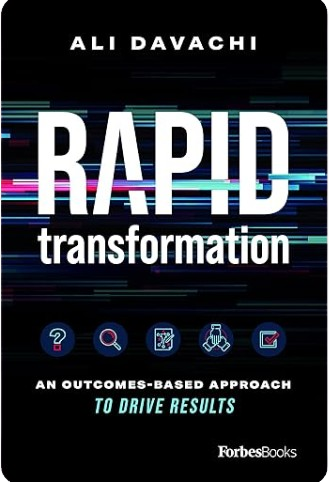
What is the RAPID Framework?
RAPID stands for Research, Analyze, Plan, Implement, and Decide. For this retailer, it directed attention to the integration failures behind missed customer expectations.
The approach connected system audits with resilient automation and shared order visibility, giving business and technical teams a common basis for improving the post-purchase experience.
Understand the RAPID Framework
Results Obtained
By implementing real-time order flow automation and a centralized observability layer, Cognativ reduced order cancellations by 22% and cut manual triage efforts by 40%.
Support teams gained the ability to act proactively, contributing to an 18-point lift in Net Promoter Score.
A unified dashboard now connects all departments to a single source of truth, streamlining fulfillment, enhancing customer communication, and equipping the brand to scale without sacrificing reliability.
22% Order Cancellation Reduction
Replacing fragile integrations with real-time automations helped orders flow smoothly across systems.
+18 Net Promoter Score Lift
Better data and clearer updates helped support teams resolve issues before they escalated.
40% Reduction in Manual Triage
Triage work was streamlined with one real-time dashboard instead of portals, spreadsheets, and guesswork.
Central Observability Platform
Every department now uses the same tool to track, analyze, and troubleshoot fulfillment from one source of truth.
Immediate Benefits
Live order tracking and system alerts gave teams earlier warning of fulfillment problems, helping support respond proactively and operations prepare for campaign demand.
Real-Time Visibility
Orders are tracked live from checkout through last-mile delivery.
Proactive Support
CX now sees delays before customers do, enabling faster and friendlier resolution.
Error Reduction
System-wide alerts catch data sync failures before they snowball.
Faster Campaign Readiness
Teams can launch promotions without the risk of system lag or order misfires.
Ongoing Benefits
The shared operating view now supports reporting, training, and service monitoring, while Cognativ continues to help plan and tune the platform. The benefits below include executive reporting and SLA monitoring, faster training and fewer support tickets.
Executive Reporting
The observability platform is used for executive reporting, SLA monitoring, and CX forecasting.
30% Faster Training
Training times dropped across support and operations as workflows became clearer.
40% Fewer Support Tickets
Support tickets tied to failed orders or broken discount logic dropped by 40%.
Roadmap Co-Planning
Cognativ continues to support performance tuning, uptime monitoring, and roadmap co-planning.
Why Ecommerce Leaders Trust Cognativ
Cognativ specializes in turning system chaos into intelligent, interconnected platforms. Its SmartSaaS and RAPID frameworks help ecommerce brands remove manual errors, speed up fulfillment and give support teams the visibility they need.
Our SmartSaaS™ and RAPID frameworks help ecommerce brands eliminate manual errors, boost fulfillment speed, and give support teams the visibility they need to deliver stronger customer experiences.
From Integration Chaos to Operational Control
Cognativ connects fragmented systems with resilient data flows, logging, fallback logic, and clear ownership.
From Reactive Support to Proactive CX
Support teams gain the order visibility needed to engage earlier, explain issues clearly, and reduce downstream escalations.
From Backend Friction to RAPID Execution
RAPID helps prioritize invisible backend systems that power every promise the brand makes to customers.
Integration Built for Future Change
The vendor-agnostic design lets the integration layer evolve without refactoring core logic, preserving flexibility as the retailer's systems and requirements change.
Ready to Transform Your Operations?
Let’s turn complexity into clarity. Partner with Cognativ to build smarter systems, streamline workflows, and future-proof your tech stack. The first consultation is free, so you can discuss your own systems and workflows before any work is scoped.