
Build Around the Production Process
Manufacturing modernization connects work across planning, production, quality, maintenance and fulfillment. An order can pass through ERP, a manufacturing execution system, warehouse software and machine interfaces before the finished product leaves the facility. Each handoff needs a clear owner, a consistent record and a way to handle exceptions.
Cognativ starts with that operating context. We examine how people use existing systems, where information is re-entered and which decisions are delayed by incomplete data. The resulting scope can extend a valuable platform, connect separate applications or introduce a new capability for a defined production process.
The design must account for the environment in which it will operate: shift patterns, plant connectivity, maintenance windows, operator access and the responsibilities of central and local teams. Those conditions shape the architecture and rollout.
- Planning and ERP
- Orders, materials and schedules agreed before work reaches the floor.
- MES and machines
- Production, quality checks and maintenance events captured at the source.
- Warehouse and fulfillment
- Finished goods, inventory and shipping status confirmed for the customer.
Resolve the Gaps Between Systems and Operations
Prioritize the operational problem before choosing a platform. A delayed production report can come from an unavailable source, an inconsistent definition or a workflow that still depends on manual entry. Review the affected handoffs with operators and system owners, then define the information, actions and exception paths the solution must support. This keeps the scope connected to the problem the team needs to resolve.
Disconnected Production and Business Records
- ERP and MES
- Record Ownership
- Reconciliation
Connect ERP, MES, warehouse, supplier and logistics records around the events they share. Define where orders, material quantities, production status and quality decisions originate, then reconcile changes across consuming systems.
Integration includes duplicate messages, partial updates and failed transfers. Operators need a visible exception path as well as the normal flow.
Limited Operational Visibility
- Production Data
- Downtime
- OEE
Bring machine, production, inventory and quality information into views that support a specific decision. Establish the source, timestamp and meaning of each measure before treating a dashboard as an operating record.
For downtime and overall equipment effectiveness, agree on event categories and calculation inputs so that comparisons between shifts or facilities remain interpretable. Early warnings can also flag quality deviations or material shortages for review.
Manual Workflows and Repeated Entry
- Operator Workflows
- Approvals
- Exceptions
Digitize the steps that connect scheduling, procurement, inspections, shop-floor reporting and order fulfillment. Preserve the approvals and exception handling that make the process workable.
An operator interface should expose the next action and the information needed to perform it. Supervisors need a clear view of unresolved work and ownership.
Expansion Across Plants and Product Lines
- Plant Configuration
- Phased Rollout
- Ownership
Separate the capabilities shared across facilities from the configuration that belongs to an individual plant. Plan for different equipment, local workflows and integration availability before extending the same release to another location.
Security and Operational Continuity
- Access Control
- Recovery
- System Boundaries
Define access, system boundaries, recovery responsibilities and maintenance procedures alongside functional requirements. Connected devices, remote support and supplier interfaces each introduce a distinct access path that the design must address.
Manufacturing Software Solutions
The solution can focus on one production workflow or connect several operating systems. Select the scope around the information, users and acceptance criteria involved, while retaining the parts of the current environment that already serve the business. The areas below cover shop-floor execution, equipment data, quality, inventory and reporting. Each can be scoped independently or combined when shared records and operational dependencies call for an integrated approach.
Explore software engineering and integration services
Manufacturing Execution Systems
- MES
- Production Tracking
- Quality Checks
Develop or extend MES capabilities for production tracking, shop-floor workflows, downtime records and quality checkpoints. Connect the resulting events with ERP orders, machine data and operator activity.
Plant-floor access, supervisor reporting and exception handling belong in the same design. Define the timing and ownership of updates rather than assuming every system needs the same refresh interval. Mobile-friendly access can help operators and supervisors record and review activity at the point of work.
Industrial IoT and Edge Processing
- IIoT
- Edge Processing
- Asset Monitoring
Connect sensors and equipment data with the applications that use it. Define device onboarding, telemetry validation, buffering and monitoring for the signals in scope.
Place processing at the edge or in a central environment according to connectivity and response requirements. Condition monitoring, asset tracking and maintenance alerts depend on usable signals and a defined operational response.
Supply Chain and Supplier Platforms
- Materials
- Suppliers
- Planning
Connect materials, component availability, shipments and supplier updates with production planning. Integration can bring ERP, carrier, supplier and customer information into a shared operating view.
Support collaboration, inventory decisions and demand planning with traceable records. Make changes and exceptions visible to the people who can resolve them. Supplier performance and shipment changes can inform the next planning decision.
ERP Extensions and Integration
- ERP Extensions
- APIs
- Modernization
Extend existing ERP workflows where a custom module or integration meets the need. Connect MES, warehouse and quality systems through the interfaces available in the current environment.
Modernization can include API development, reporting, platform migration or an improved user workflow. Assess product versions, vendor access and data ownership before deciding which boundary to change. Cloud or hybrid migration is an option when the application, vendor support and operating constraints justify it.
Quality Management and Traceability
- QMS
- CAPA
- Traceability
Build workflows for inspections, nonconformance records, corrective and preventive actions, supplier quality and controlled documentation. Link quality decisions to the relevant production and material records.
Define review roles, change history, retention and the evidence needed for an audit. Translate the organization’s applicable quality requirements into explicit software behavior and acceptance checks.
Warehouse and Inventory Workflows
- WMS
- Inventory
- Fulfillment
Connect stock movements, picking, replenishment and manufacturing demand. Barcode, RFID and device integration can support traceability where those capabilities fit the process.
Coordinate WMS events with ERP, MES and transportation systems. Design for stock adjustments, partial movements and delayed updates as well as the expected transaction. Replenishment alerts and picking workflows should reflect the way each facility handles materials.
Industrial Analytics and Prediction
- Analytics
- Forecasting
- Energy Data
Develop analytics around production trends, equipment condition, quality, supplier performance and energy use. Establish the underlying records and metric definitions before selecting a model or dashboard.
Forecasting and anomaly detection require representative data, a baseline and a response workflow. Evaluate the proposed output against the decision it supports and monitor how it behaves as operating conditions change. Use the results to investigate supplier risk or changes in production, rather than treating a forecast as a guaranteed outcome.
Design Quality, Security and Recovery into the Workflow
Design operational records and recovery around the facility, product and data flows in scope.
Accountable records
Define authorship, approvals, version history and retention for quality records. Assign ownership and follow-up for incidents or near misses where required by the safety team.
Access boundaries
Separate production interfaces, business applications and remote support; define permissions and monitoring.
Recovery and testing
Agree on backup and recovery tests, release windows, rollback and escalation with system owners.
Read the detailed considerations
Manufacturing software carries operational records as well as production information. Define the controls that make those records usable, attributable and recoverable. The business and system owners establish which requirements apply to each facility, product and data flow.
Records and Responsibilities
Quality records need clear authorship, approval steps, version history and retention. Safety reporting needs incident ownership and a visible follow-up process. Employee, supplier and customer information needs defined access and handling rules.
Capture the requirements for specialized production environments during discovery, then connect them to the relevant workflows and validation evidence. Incident and near-miss reporting can be included when safety teams need an accountable follow-up workflow.
Access and Continuity
Separate production interfaces, business applications and remote support access according to their responsibilities. Define authentication, permissions, monitoring and the response to a failed or unexpected connection.
Include backup and recovery tests, release windows, rollback criteria and escalation ownership in the delivery scope. These controls must be usable by the teams maintaining the environment. Scope any vulnerability assessment or penetration testing with the responsible system owners and operational safety constraints.
Apply RAPID to Manufacturing Modernization
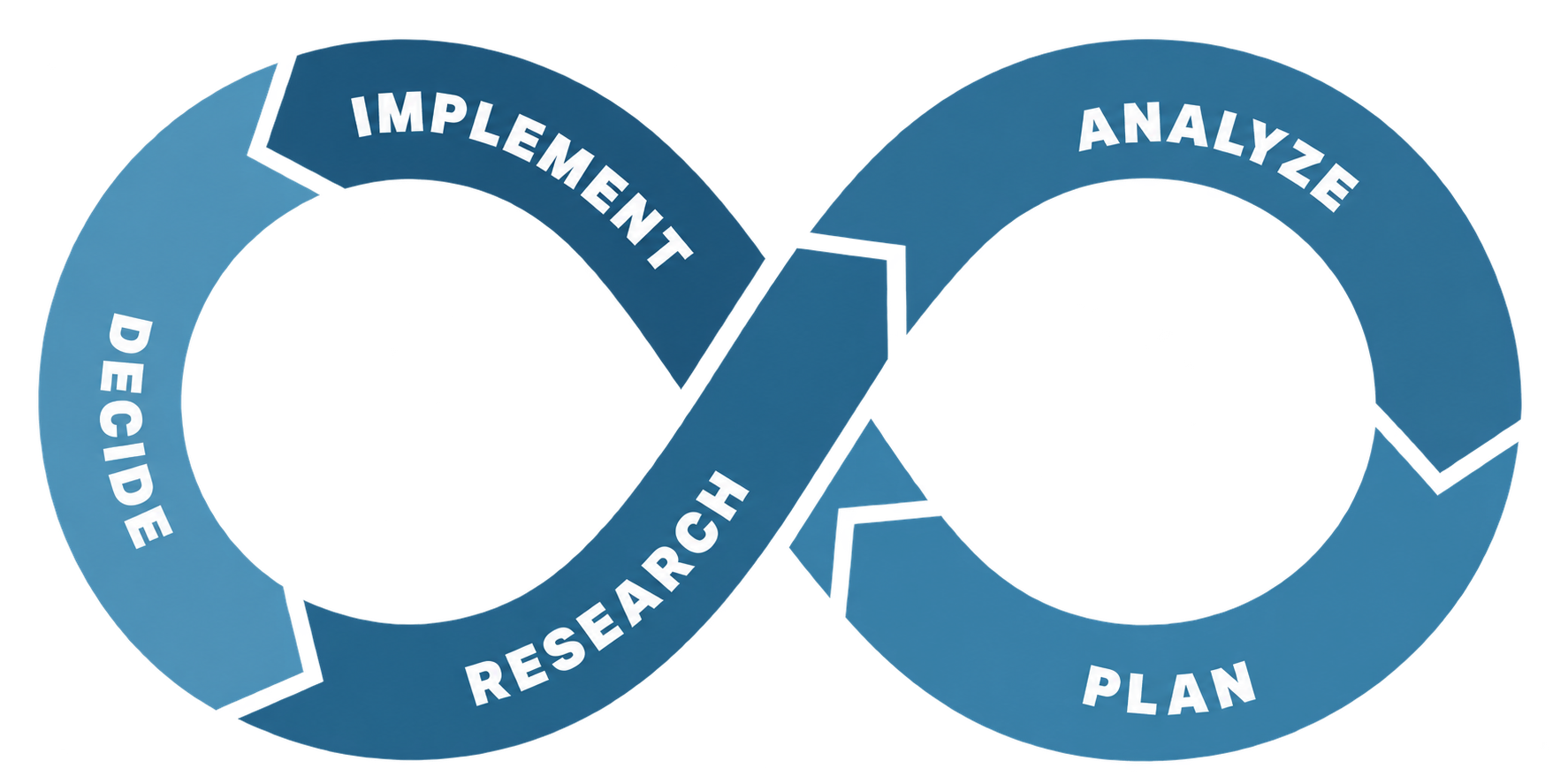
RAPID connects Research, Analyze, Plan, Implement and Decide. For manufacturing, the framework keeps the production problem, the engineering work and the decision to expand a release connected throughout the engagement.
Research and Analyze
Work with plant operators, engineering, maintenance, IT and business owners to map the process and its constraints. Examine source records, current integrations and the causes behind the problem. Identify critical integrations and agree on the quality, security and operational requirements with their owners.
Use that evidence to define the first outcome and its baseline. Distinguish a missing capability from a data-quality problem or an operating process that needs to change.
Plan, Implement and Decide
Define scope, dependencies, acceptance checks and an operating rollout that fits the facility. Implement in manageable increments with feedback from the people doing the work. A first release can test a focused workflow before the team commits to a wider rollout.
Review the observed results and unresolved issues before expanding to another workflow or plant. Decide whether to continue, adjust the approach or stop a change that does not meet the agreed need.
Read how RAPID guides delivery
Choose the Next Manufacturing Capability Deliberately
Connected factories, predictive maintenance, digital twins and industrial AI address different problems. Evaluate each opportunity against the process it will change, the information available and the team that will operate it.
Explore data and analytics consulting
Connected Operations and Hybrid Infrastructure
Coordinate machine interfaces, edge processing and centralized applications around the actual needs of the plant. A hybrid design can keep local processing near equipment while sharing selected information across facilities.
Assess connectivity, data latency and operating ownership before choosing a deployment model. Consider the cost and support implications of local, cloud and hybrid components.
Predictive Maintenance and Industrial AI
Start with the available equipment history, signals and decisions. Define how a prediction or alert will change maintenance, scheduling, inventory planning or quality review.
Compare the approach with the existing process and establish how false alarms, missing data and changing conditions will be handled. Possible uses include demand forecasting, production scheduling and quality review when the available data supports them.
Digital Twins and Advanced Automation
Define what a simulation or digital representation must explain before building it. Production-line changes, commissioning and process optimization require an explicit model boundary and a way to compare modeled behavior with observed operation.
Robotics coordination, operator assistance and human-machine interfaces also need clear authority, handoff and exception boundaries.
Energy, Waste and Resource Reporting
Connect energy use, material waste and resource information to production activity. Establish units, measurement boundaries and source ownership so teams can investigate a change in the reported result.
Support the organization’s reporting and improvement process with traceable data and a documented calculation method. Supplier information and recycling records may also be relevant to that reporting scope.
Define a Manageable First Scope
Choose a scope that can be validated before expanding across facilities or capabilities.
Operating baseline
Identify the workflow or facility, current workarounds and source systems.
Evidence of progress
Agree on expected behavior, data ownership and the evidence needed to evaluate the change.
Ownership and handoff
Discuss operating constraints, monitoring, documentation, training and support responsibilities.
A focused delivery scope

Discuss Your Manufacturing Software Priorities
Tell us where disconnected systems, manual work or limited visibility affect your manufacturing operations.
Include the facilities, production process, current platforms and first outcome you want to address. We will discuss the scope and next step together.
Questions About Manufacturing Software Development
Clarify the systems, operating constraints and scope before choosing the next step. These answers address integration with existing platforms, modernization choices, delivery planning and the evidence needed to evaluate an initial manufacturing software engagement.
Which manufacturing environments can this work address?
The scope can address discrete, process, mixed-mode or contract manufacturing workflows. Discovery establishes the specific production process, facilities, equipment interfaces and quality requirements involved.
A single-facility modernization and a multi-plant rollout need different integration and operating plans.
Which systems can be part of the integration?
ERP, MES, QMS, WMS, SCADA, device platforms and logistics systems can be relevant. The interfaces, product versions, access arrangements and data responsibilities determine the actual integration approach.
Cognativ assesses those dependencies before defining the implementation scope.
How is the delivery timeline established?
The estimate follows discovery of the workflow, integrations, data readiness and acceptance requirements. It also accounts for plant access, testing environments and release windows.
A phased plan separates the first usable capability from subsequent facilities or features.
Can existing platforms be modernized instead of replaced?
Yes. An integration, extension or improved workflow can retain the useful parts of an existing platform. Evaluate that option alongside replacement according to fit, supportability and the required change.
The plan defines what stays, what changes and how records move across the boundary.
How are quality and security requirements handled?
Identify applicable requirements and owners during discovery. Map them to permissions, record handling, workflow approvals, monitoring and recovery behavior, with acceptance evidence for the controls in scope.
Include operating procedures and the responsibilities of the receiving team in the handoff.
Where should a manufacturer start with AI or digital twins?
Start with a concrete decision or process change and the evidence available to support it. Equipment prediction, production scheduling and simulation have different data and validation needs.
Define the baseline and evaluation method before expanding the scope.
Explore AI and automation consulting
When is custom development appropriate?
Custom work is useful when the required workflow, integration or operating model needs capabilities that the existing platforms do not provide. The decision can lead to a focused extension rather than a complete new system.
Compare the options against implementation effort, ongoing ownership and the outcome the business needs.
How should a manufacturer plan a multi-plant rollout?
Start by mapping which workflows and system interfaces are shared and where individual facilities differ. Agree on plant-level testing, local responsibilities and release windows before extending the first implementation to other sites.
Manufacturing and Distribution Case Studies
ERP modernization, warehouse automation and B2B ordering work for companies that make and move physical products.

B2B Distribution Throughput Increases 35%
ERP Modernization
API Integration
Inventory Management
Warehouse Automation
B2B Distribution Throughput Increases 35%
Cognativ helped a B2B distributor modernize legacy ERP limitations, automate warehouse workflows, and improve operational visibility.
The transformation increased throughput by 35%, raised average order size by 20%, and lifted gross margins by 15%.
See the Throughput Gains
B2B Marketplace Improves Search and Bulk Ordering
B2B Ecommerce
Marketplace Development
Product Data
Bulk Ordering
B2B Marketplace Improves Search and Bulk Ordering
Cognativ modernized a B2B marketplace experience with stronger product discovery, cleaner product data, and workflows built around business buying behavior.
The work improved search, bulk ordering, account-specific purchasing, and supply-flow visibility from discovery to purchase.
Explore the B2B Marketplace Rebuild
Digital Advisory Practice Tops $3M in Year One
Technology Consulting
ERP Implementation
Digital Finance
Digital Advisory
Digital Advisory Practice Tops $3M in Year One
Cognativ helped an accounting firm launch and scale a digital advisory arm, moving from traditional tax and audit services into ERP implementation, digital finance transformation, and strategic advisory.
The new practice generated more than $3M in year-one revenue.
Review the $3M Practice Build
Ecommerce Order Cancellations Fall 22%
Systems Integration
Workflow Automation
Order Management
Observability
Ecommerce Order Cancellations Fall 22%
Cognativ implemented integration automation and real-time observability to reduce failed orders, improve customer communication, and stabilize fulfillment operations.
The work reduced order cancellations by 22% and manual order triage by 40%; more proactive support contributed to an 18-point rise in Net Promoter Score.
See the Order RecoveryRelated Software Development Insights
Recent Cognativ articles on building, modernizing, and maintaining business software.

Understanding Data Transformation: Types, Benefits, and Best Practices
From raw records to business-ready tables: how cleaning, joins, pivots, encoding and tested, modular models make data reliable for analytics and ML work.

System Development Methodology Types Compared: How to Choose the Right One for Your Project
Stable scope, high risk or shifting needs? See which development model fits, when a hybrid makes sense and the factors that should drive your team's choice.

Kubernetes Architecture Diagram: Complete Guide to Cluster Components
From the API server hub to kubelets on every node, see how each Kubernetes component fits together, how a Pod request flows, and how to draw your cluster.