DevOps Development Services: Scope, Tools and Acceptance Criteria
DevOps development services improve how a team builds, releases and operates software. An engagement can cover infrastructure as code, CI/CD, configuration, observability and operating support.
DevOps development services improve how a team builds, releases and operates software. An engagement can cover infrastructure as code, CI/CD, configuration, observability and operating support. The useful deliverable is a release process the team can inspect, repeat and recover, not simply a new collection of tools.
Start with an observed failure: a build that cannot be reproduced, staging and production configuration drifting apart, or recovery that depends on one developer. Define the change, owner and acceptance evidence before choosing a platform or managed-service package.
Specify Deliverables, Not Just Service Labels
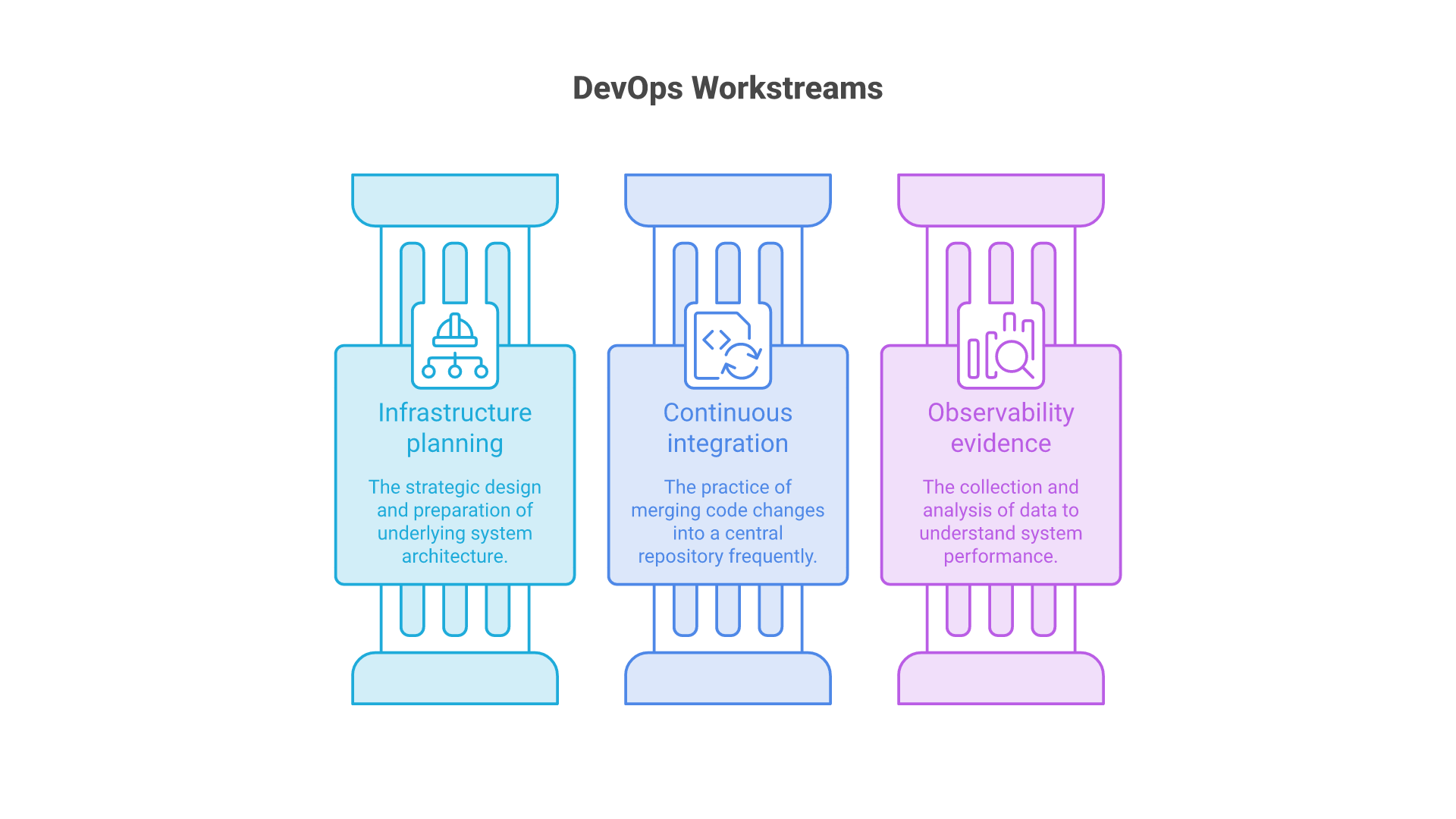
| Workstream | Deliverable | Acceptance evidence | Not implied |
|---|---|---|---|
| Infrastructure as code | Versioned resource definitions, state ownership, review and drift handling. | A reviewed plan, controlled apply and recovery exercise for the scoped resources. | Application correctness or approval of destructive changes. |
| Continuous integration | Versioned build/test process and traceable artifacts. | A reproducible build and representative failing checks with an owner. | Every production risk has been tested. |
| Delivery and deployment | Promotion sequence, authorization and environment configuration. | The tested artifact reaches the target; a failed deployment follows a rehearsed response. | Database or external business actions can always be rolled back. |
| Configuration management | Declared settings and a process for intentional differences and drift. | Known configuration changes and unauthorized drift can be distinguished. | Environments with different data behave identically. |
| Observability | Logs, metrics and traces for identified operating questions. | A responder can trace a sample user-visible failure without exposing secrets. | 24/7 response or automatic remediation. |
| Operating support | Coverage, escalation, maintenance and exit responsibilities. | A response and handoff exercise with the named team. | Application defects, security incidents or cloud costs are all included. |
Continuous integration checks combined changes. Continuous delivery keeps an evaluated artifact ready for release. Continuous deployment releases changes automatically when the specified gates pass. A manual production decision can coexist with extensive automation; choose the policy appropriate to the system rather than using the terms interchangeably.
Worked Example: One Artifact From Build to Recovery
Consider a hypothetical customer portal that works in staging but fails after release because production uses different configuration. Recovery depends on the developer who assembled the build. The engagement should address those specific dependencies, not promise a generic transformation.
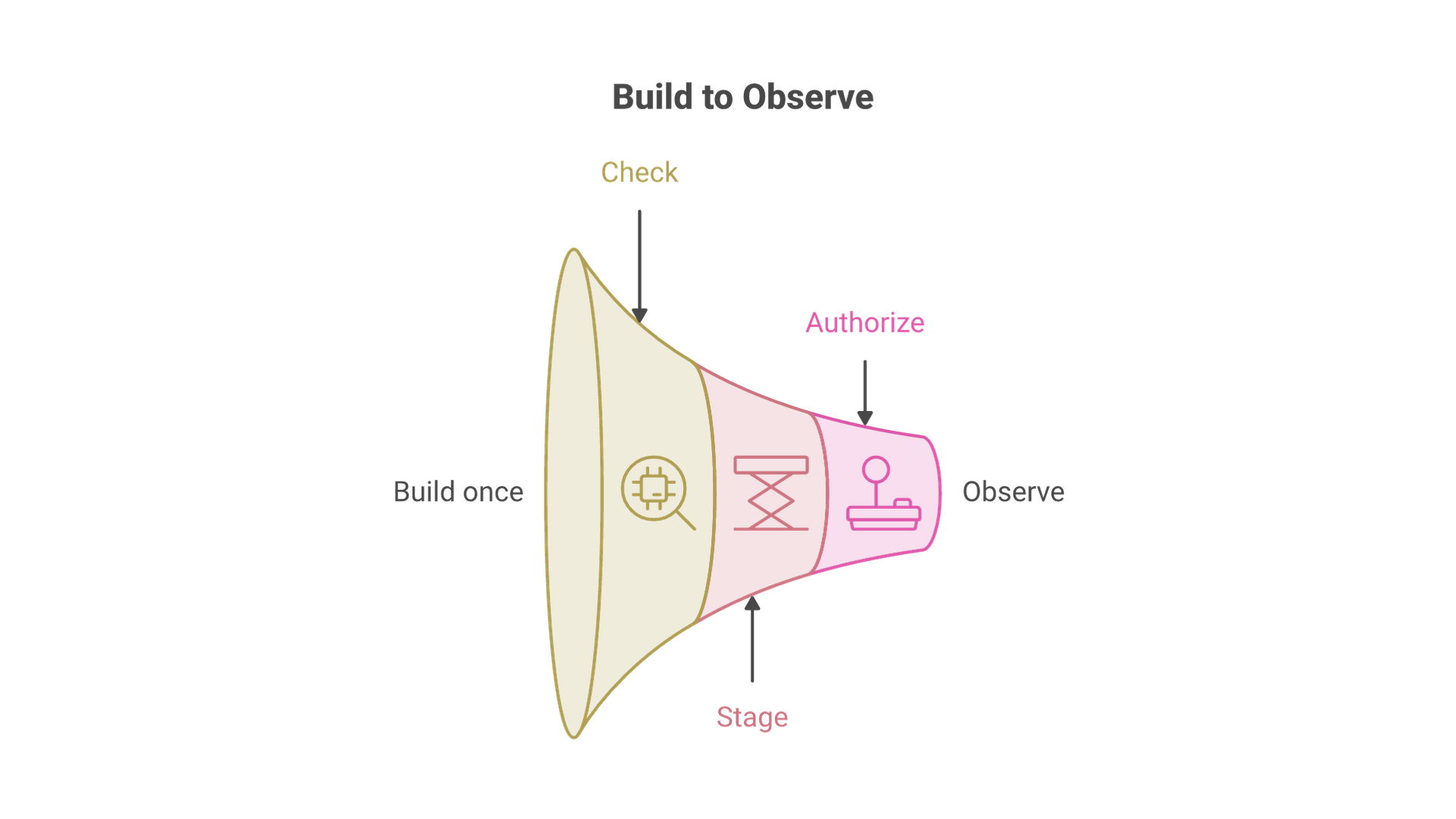
Produce one versioned artifact and record its source revision, build configuration and dependency resolution. Promotion should refer to that artifact's identity. Rebuilding from an ambiguous branch for each environment can produce different software from the package that passed testing.
Keep environment configuration explicit and secrets outside the artifact. Deliberate differences, such as a service endpoint, should be distinguishable from accidental drift. A production credential must not become available merely because an untrusted pull request runs a job.
Rehearse a failed deployment in an approved nonproduction environment. Suppose the new application requires a database column. Determine whether the previous version still works after that schema change. An expansion-and-contraction sequence may preserve compatibility; destructive migrations may require a different recovery design. Rolling back a container image does not reverse a payment or reconstruct deleted data.
The exercise should show the release decision, deployed artifact, observed failure, responsible responder and resulting recovery state. At closeout, another authorized team member should be able to reproduce the build and diagnose that failure using the documentation, without relying on private credentials or undocumented instructions.
Match Tools to Their Actual Role
DevOps is not restricted to cloud infrastructure. Choose tools around the deployment target, existing identity model, support skills and evidence requirements. Avoid adding a new platform where the current one can provide a maintainable capability.
| Tool or platform | Role | Decision still required |
|---|---|---|
| AWS CodePipeline | Models and orchestrates a release sequence. | Which build/deployment actions run, their permissions and approval policy. |
| Azure DevOps | Boards, Repos, Pipelines, Test Plans and Artifacts cover different delivery responsibilities. | Repository policy, service selection, artifact retention and release authority. |
| Google Cloud Build and Cloud Deploy | Build produces artifacts; Deploy manages delivery through target environments. | Artifact provenance, target configuration and required approvals. |
| Build and configuration tools | Maven or Gradle can compile/test/package; tools such as Ansible or Puppet address configuration work. | Supported versions, operating ownership and whether the selected tool fits the actual step. |
Infrastructure tooling also needs lifecycle review. Google's Deployment Manager notice states that support ended April 1, 2026, with limited migration-support arrangements and service shutdown planned after June 30, 2027. Existing use needs a migration assessment; it is not a sensible default for a new implementation. Check the current notice and account-specific arrangements rather than assuming that a support date means all underlying resources stop running.
Evaluate a Managed Service as an Operating Commitment
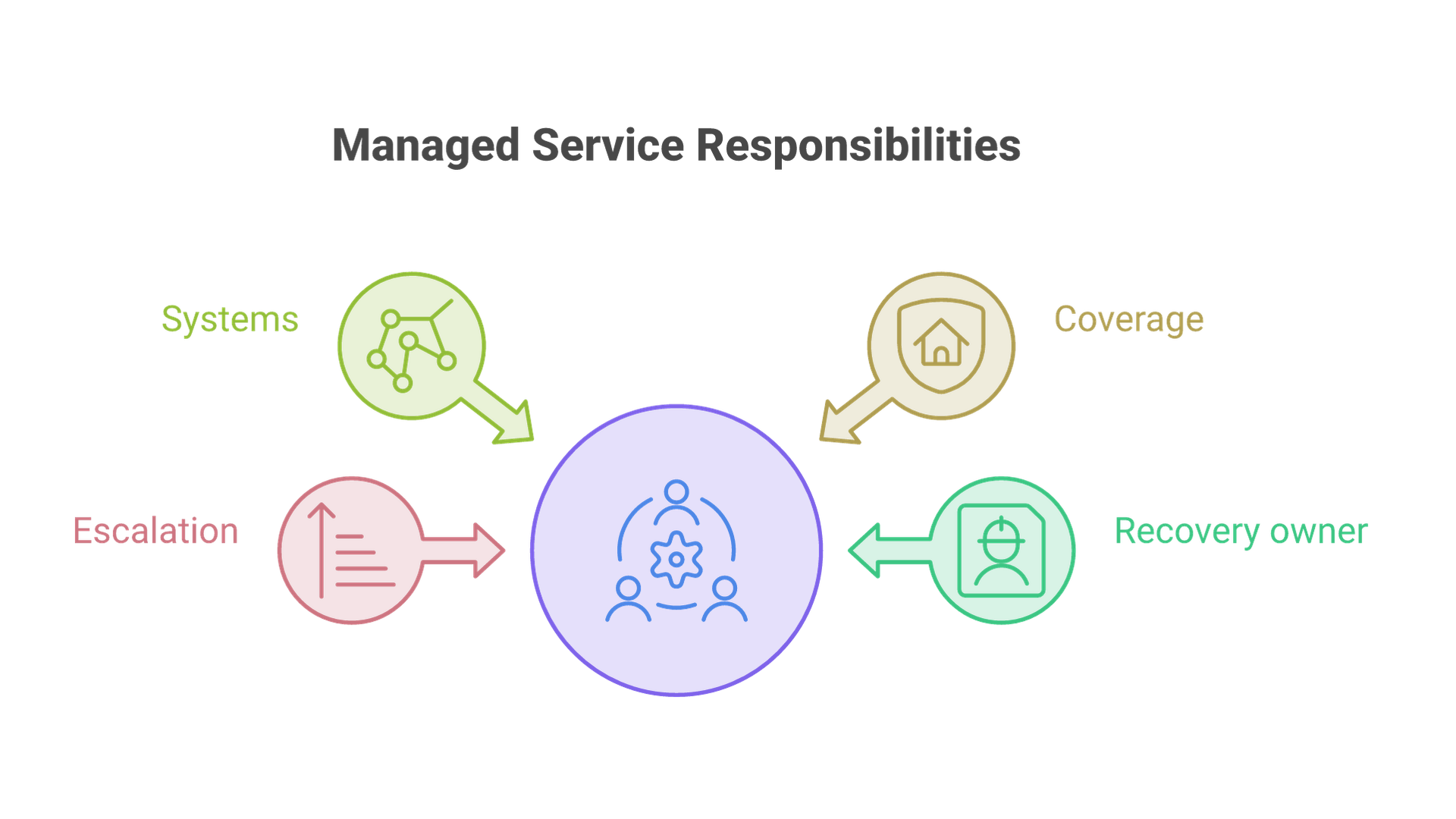
A managed provider may maintain pipelines, infrastructure, monitoring and incident response, but the label does not define coverage. Write down included systems, hours, severity definitions, response expectations, escalation and exclusions. Ansible and Puppet are tools, not substitutes for that commitment.
Name the owner of cloud accounts, infrastructure state, application defects, security incidents and cost decisions. Retain client release authority where required. Compare the complete service cost with the internal alternative, including coordination, migration and eventual exit.
Use the release-and-recovery example as a bounded provider assessment. Ask the actual operating team to explain a failed build, trace the deployed artifact and handle an escalation. A polished pipeline demonstration without access ownership or recovery evidence is incomplete.
Ensure that responsibilities survive a personnel change. Keep configuration, decisions and runbooks under agreed organizational control. A second person should be able to inspect state and continue operating if the original engineer or provider leaves.
Build Security and Observability Into the Workflow
Define controls across source access, dependencies, build credentials, artifacts and runtime configuration. Review pipeline code and permissions with the same care as application code: automation can repeat a safe procedure or propagate a faulty one.
NIST SSDF 1.1 provides a framework for discussing secure-development responsibilities throughout the lifecycle. An API gateway, cloud migration or vulnerability scanner does not by itself establish secure development. Specify the relevant practices and evidence rather than presenting the framework as a vendor certification.
Choose logs, metrics and traces to answer concrete questions: which request failed, what users experienced, which dependency was involved and who responds. Avoid storing credentials or unnecessary customer information. A notification should convey affected service, observed impact, owner and next update, not simply announce that an alert fired.
AI assistance can propose a test or explain a build failure. Evaluate false diagnoses, sensitive-data handling and review effort. Keep proposal, validation, approval and execution separate; generated suggestions should not gain production privileges by default.
Accept the Service Against a Stable Baseline
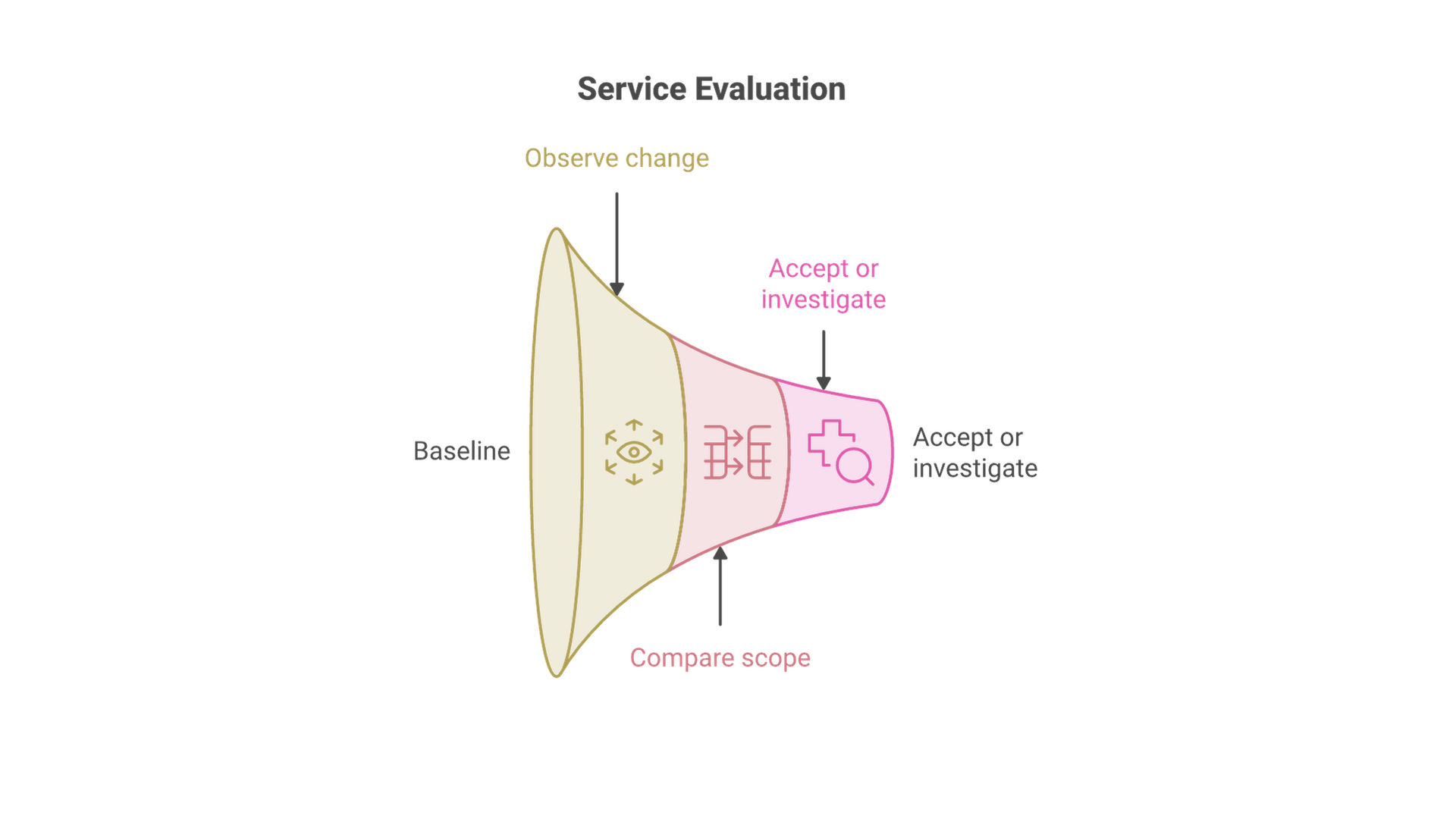
Record the bottleneck before changing it. Measure the time from the defined change starting point to release availability, the proportion of releases needing intervention and time to restore a specified failed service. Keep boundaries and observation periods consistent; examine distributions and the work mix instead of comparing only favorable averages.
More deployments are not automatically better if failures or rework rise. A green pipeline proves that its configured checks passed, not that the software meets every operating need. Combine automated evidence with representative acceptance and recovery exercises.
- Identify one release path and its current failure or delay.
- Agree on workstream deliverables, retained ownership and acceptance cases.
- Implement and rehearse in a bounded environment.
- Have a second authorized person reproduce the operating steps.
- Review outcomes and unresolved risks before extending the arrangement.
Cognativ's software engineering services are a starting point for discussing these implementation boundaries. Bring the existing release path, failure examples and retained responsibilities so the scope can address an actual operating problem.