Business Transformation: Make the Operation Follow
A new service, a growing customer base, or a shift in strategy changes what the business needs from its teams. When business priorities change, the operation needs to follow.
A written summary of what the video covers, with its chapters where it has them, so you can scan the key points, jump to the part you need or read along instead of watching.
Processes that once worked become bottlenecks. Decisions take longer, handoffs multiply, and people work around the same recurring problems.
Cognativ examines how work moves across the organization, from request to completion, and where the operating model no longer supports the outcome. Then we clarify who owns each outcome, where teams depend on one another, and how competing priorities are resolved.
Change lasts when the people doing the work are part of it. We involve the teams closest to the process, and their feedback shapes the change before it becomes the way work gets done.
RAPID manages the transformation. Research and Analyze show what needs to change. Plan, Implement, and Decide make the change work in practice.
In an accounting firm, that meant building a digital advisory practice and internal delivery talent. In logistics, it meant addressing service visibility and manual workflows.
Chapters
When priorities change, the operation follows
How work moves and who owns it
Change that lasts
RAPID manages the transformation
Accounting and logistics
Where to start
More Videos
Related videos on the same topic, nearest first. Each one runs about a minute and covers one service, practice, industry or case study; the full library is on the video hub.
AI & Automation: Start With the Work, Not the Tech
ConsultingVideo1:20Oct 2026
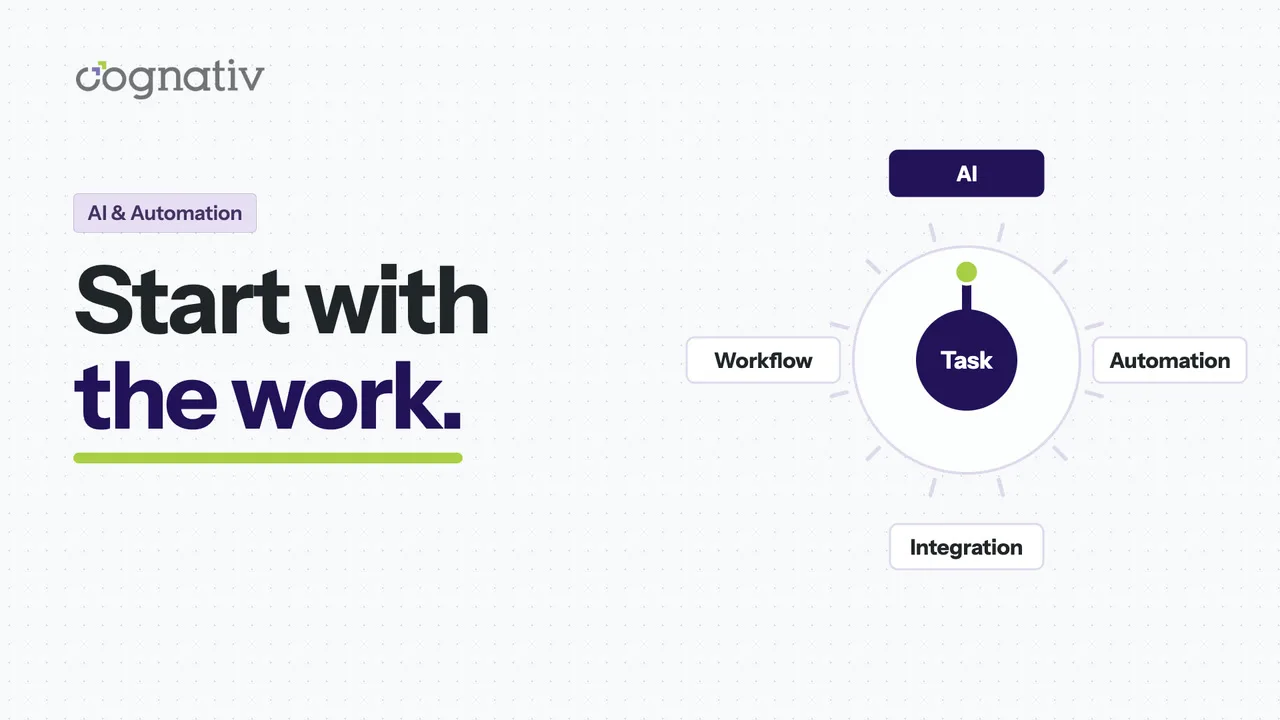
Start with the work, not the technology. The strongest starting point for AI is a clearly defined task: what people need to accomplish, what information they use, and where the process falls short.
Technology Consulting: Start With the Problem, Not the Practice
ConsultingVideo1:09Nov 2026
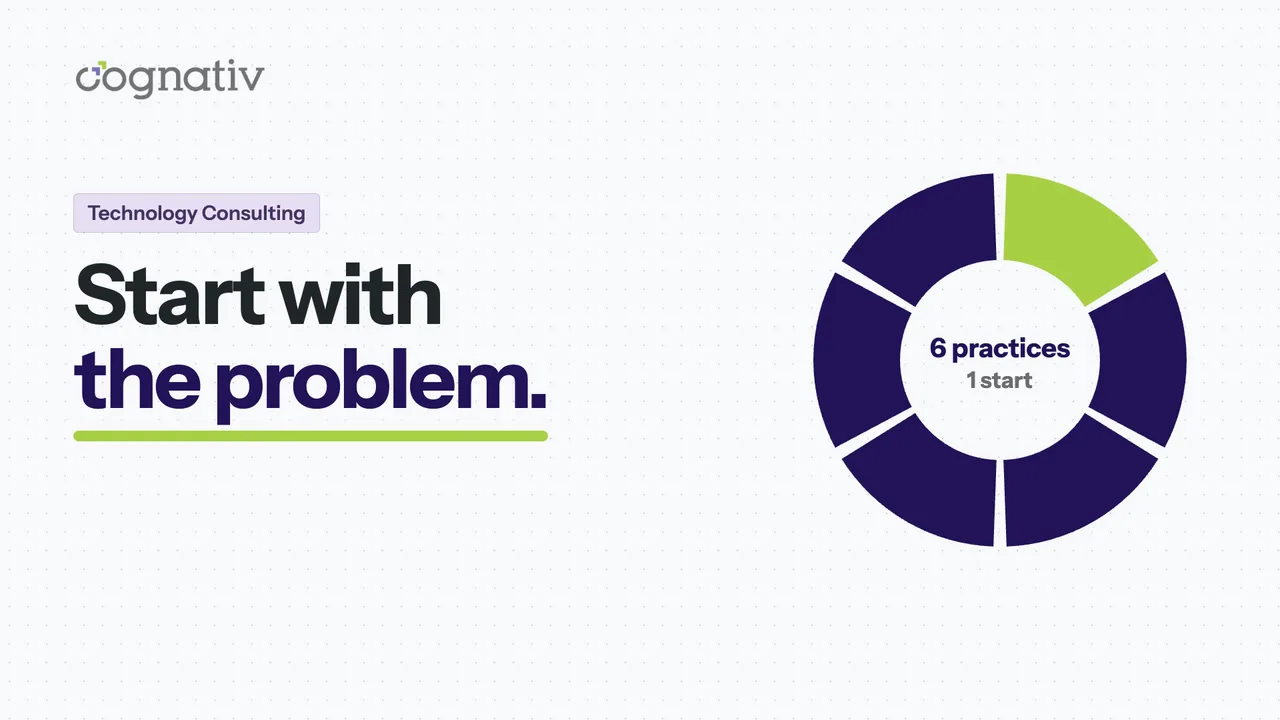
Some technology decisions carry real cost: a platform replacement, a build-or-buy choice, an AI investment. Cognativ helps US businesses decide what to change, then follows that decision through delivery.
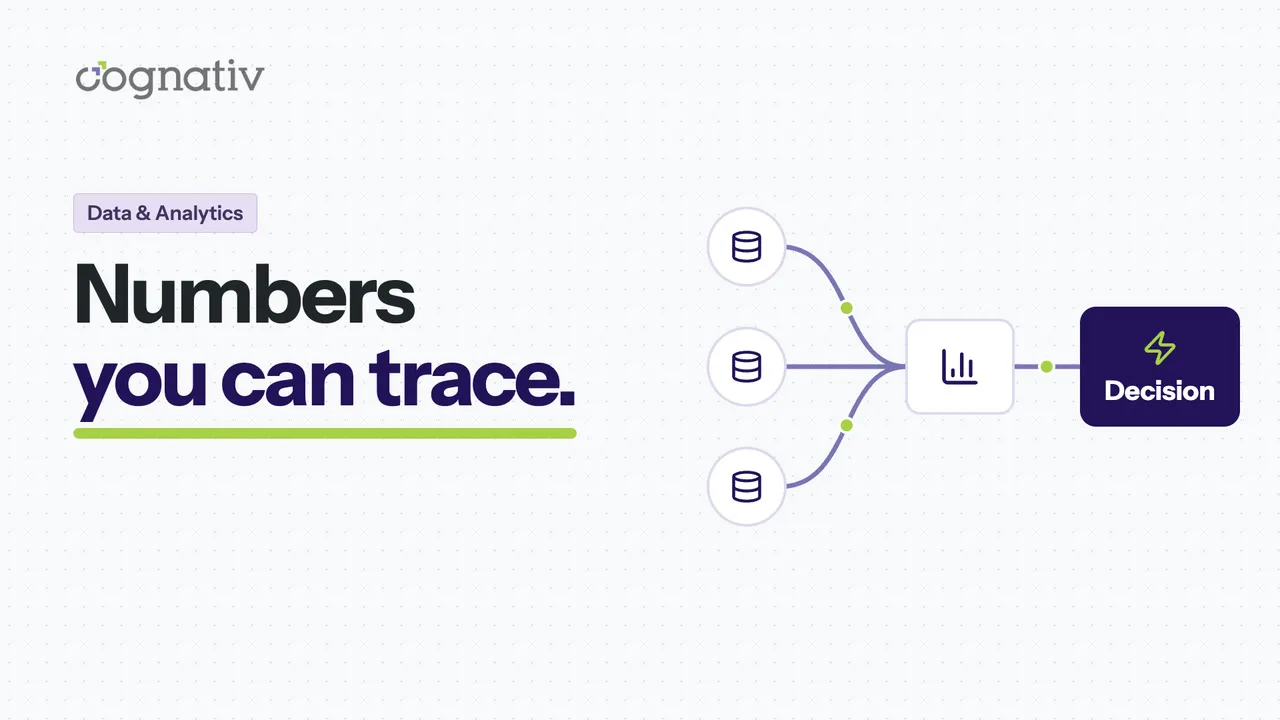
A dashboard is only useful when people understand what its numbers mean. Conflicting definitions, disconnected systems, and manual reconciliation leave teams debating the report instead of acting on it.
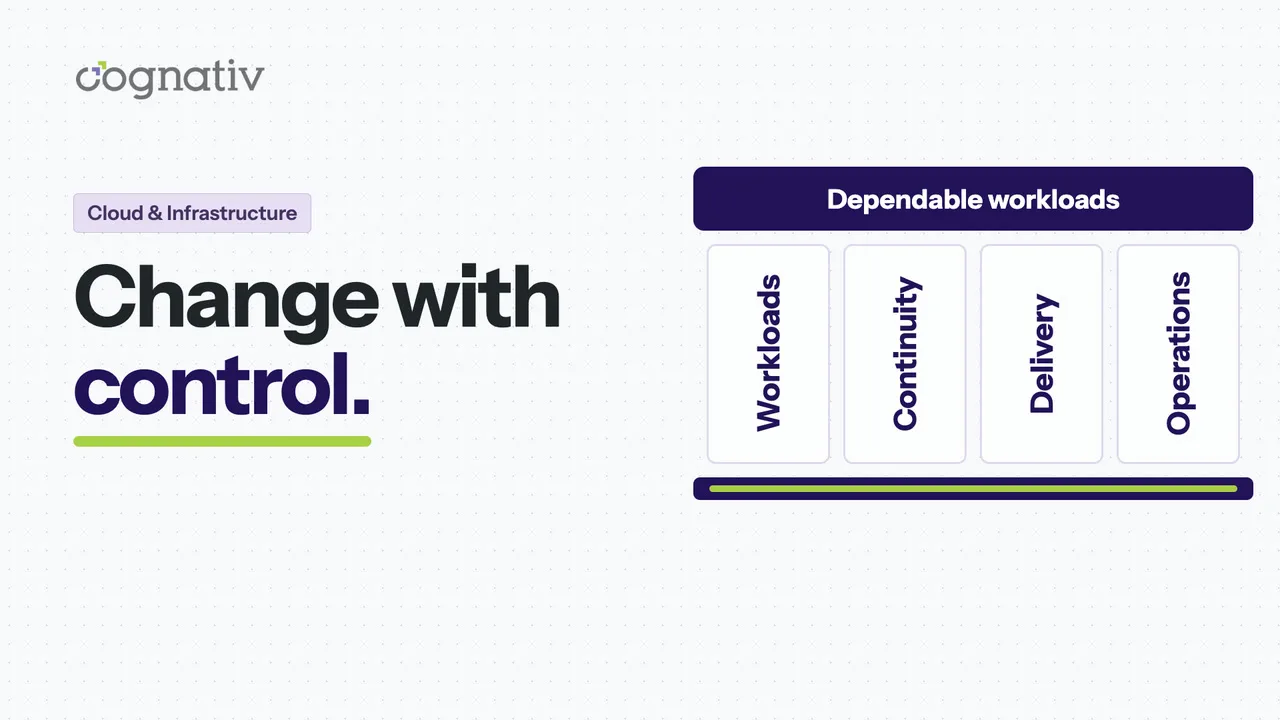
An infrastructure decision affects more than where an application runs. It changes how teams deploy, detect problems, recover service, and manage capacity and cost.