Software Engineering: Build Software That Fits Your Business
Build software that fits the way your business works. Cognativ develops applications, connects existing systems, and modernizes platforms that have become difficult to change.
A written summary of what the video covers, with its chapters where it has them, so you can scan the key points, jump to the part you need or read along instead of watching.
Delivery depends on more than the speed of development. Planning, requirements, design, development, testing, deployment, and maintenance each involve decisions about scope, quality, cost, and value.
So we clarify acceptance criteria before work expands, and expose dependencies before they block delivery. Every integration gets a data contract, authentication, error handling, and an owner at the boundary. Testing checks what happens when information is missing, delayed, or rejected.
A release decision should be defensible. Defects and unresolved risks stay visible, so product and engineering owners decide what is ready.
RAPID manages delivery. Research and Analyze understand the product and the codebase. Plan, Implement, and Decide deliver and review working software.
After its first MVP failed to support the business, Cognativ rebuilt a telecom subscription platform, bringing billing, onboarding, and subscriber reporting into a dependable core.
Chapters
Build, connect, modernize
Decisions across the lifecycle
Scope, dependencies and integration
Release decisions and RAPID
Rebuilding a telecom platform
Where to start
More Videos
Related videos on the same topic, nearest first. Each one runs about a minute and covers one service, practice, industry or case study; the full library is on the video hub.
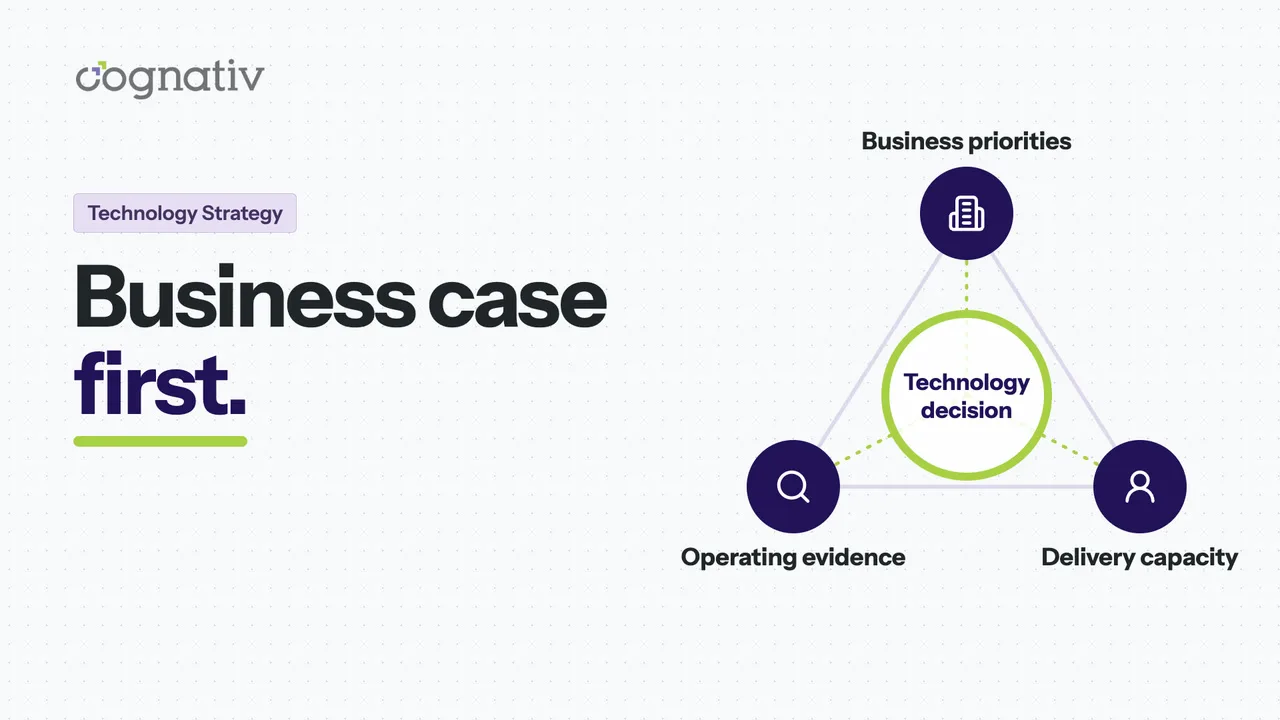
Technology Strategy: Make the Business Case First
ConsultingVideo1:23Oct 2026
A new platform, a replacement system, or a growing software portfolio: every technology investment changes how your business works. Make the business case before the technology commitment.
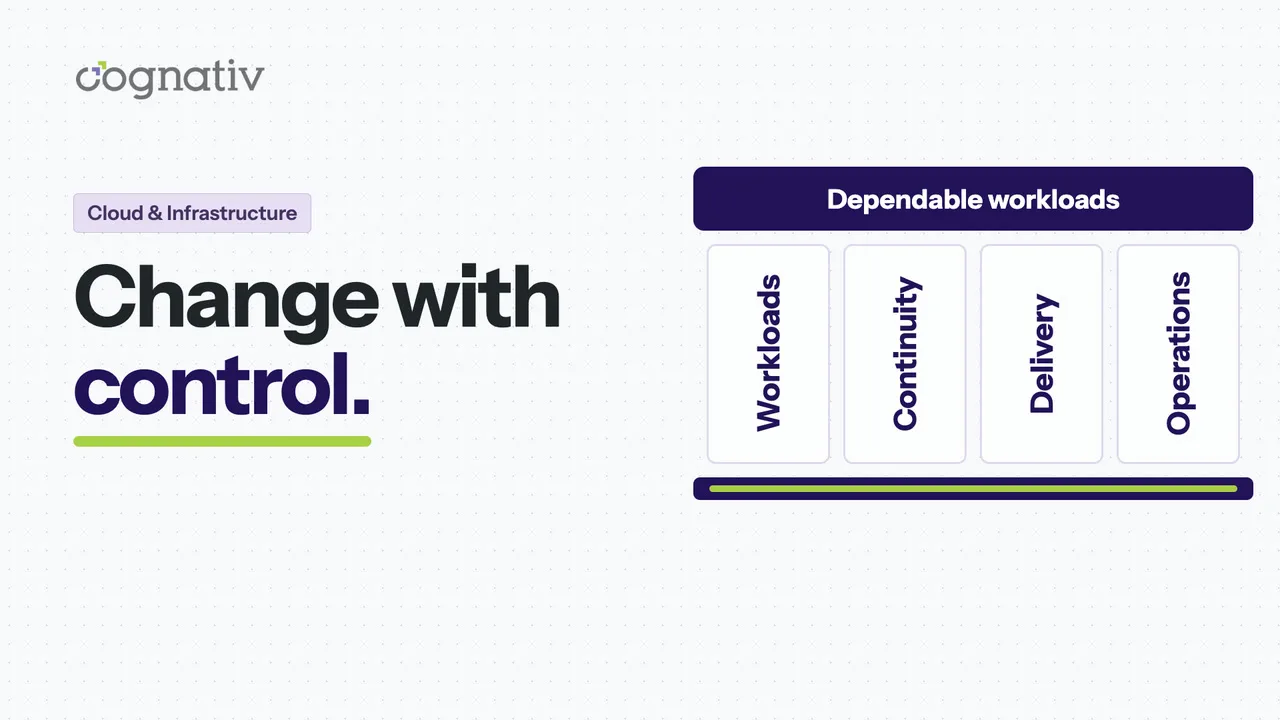
An infrastructure decision affects more than where an application runs. It changes how teams deploy, detect problems, recover service, and manage capacity and cost.
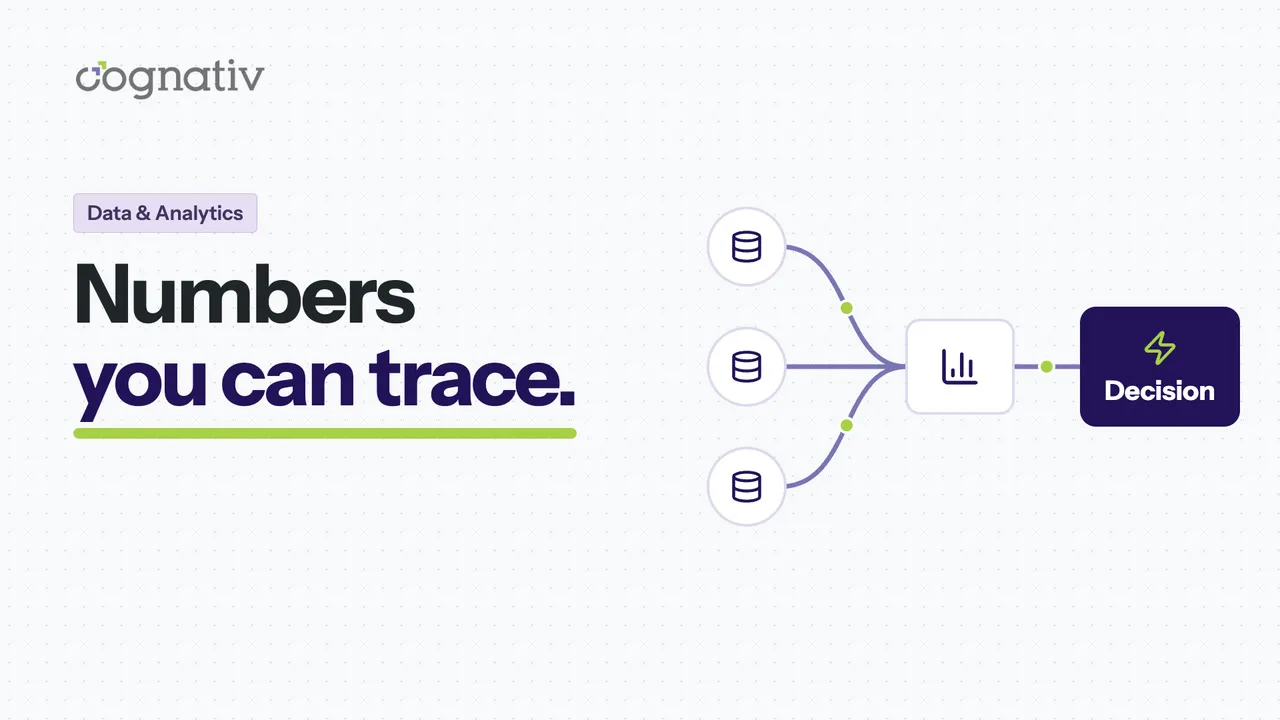
A dashboard is only useful when people understand what its numbers mean. Conflicting definitions, disconnected systems, and manual reconciliation leave teams debating the report instead of acting on it.
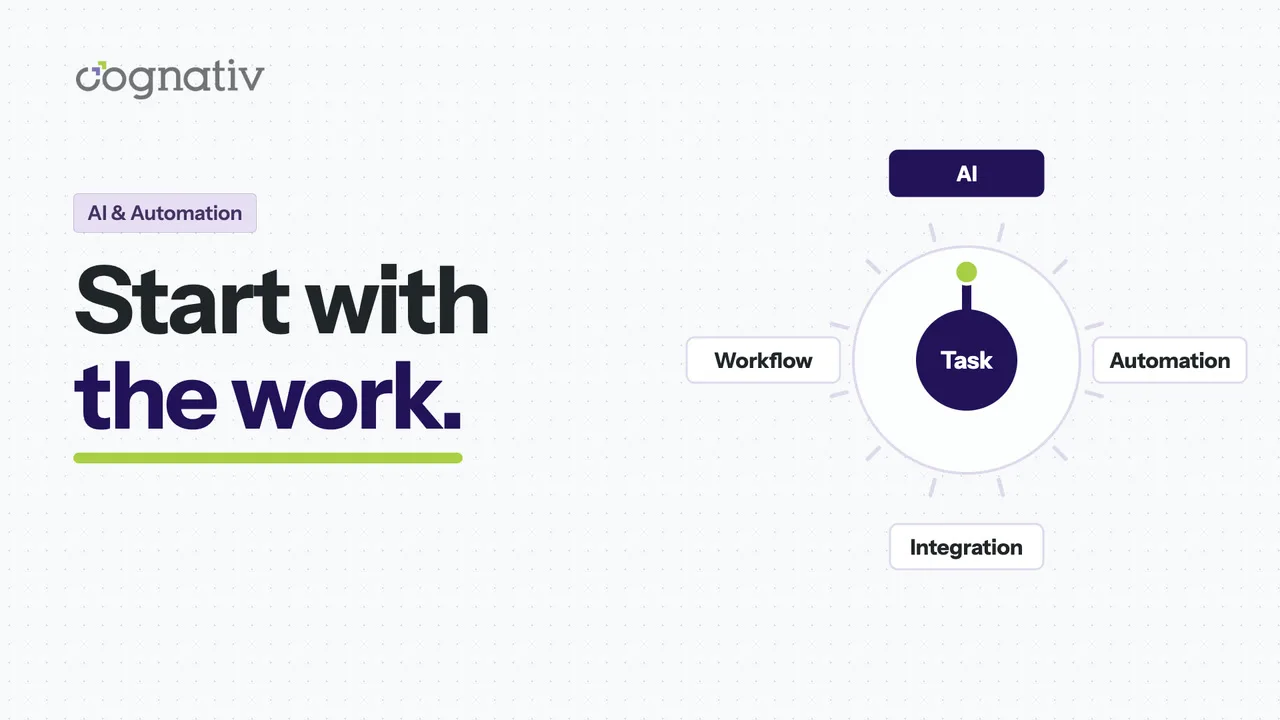
AI & Automation: Start With the Work, Not the Tech
ConsultingVideo1:20Oct 2026
Start with the work, not the technology. The strongest starting point for AI is a clearly defined task: what people need to accomplish, what information they use, and where the process falls short.