
Fiserv Job Cuts Reach 3,000 as It Expands AI in Risk Reviews, Support and Code
Fiserv's CFO says most of the new $1B in Project Elevate savings comes after 2027. What the 3,000 cuts and AI rollout mean for banks, Clover and integrators.
The Fiserv job cuts disclosed this month are only the first visible step of a program whose payoff is mostly years away. About 3,000 employees and contractors are gone since June, the cost-savings target has doubled to $1 billion, and the company's finance chief told analysts that most of the new savings arrive after 2027.
The wait affects more than Fiserv's own staff. Community banks, credit unions, Clover merchants and software firms that connect to Fiserv gateways will live through the product exits, platform consolidation and AI-run support that the savings depend on.
Fiserv Cut 3,000 Employees and Contractors Since June
Chief executive Takis Georgakopoulos gave the figure on the third-quarter earnings call on November 3, saying, according to a published transcript, "we have reduced contractors and employees by 3,000 people." The total includes a cut of more than 10% in senior management. People Matters, citing Reuters, reported that the reductions date from June and that Fiserv had more than 38,000 employees at the end of 2025. The company has not said how the 3,000 split between staff and contractors.
The same day, the Fiserv third-quarter 2026 earnings release filed with the SEC raised Project Elevate's projected savings to $1 billion from $500 million after a portfolio review. Activist investor Jana Partners had pushed for $1.25 billion, according to the same People Matters report citing Reuters. The quarter was flat on organic revenue, and a $6.45 billion goodwill impairment produced a GAAP loss. Georgakopoulos framed the overhaul as simplifying the company with an "AI-everywhere mindset."
The $1 Billion Arrives Mostly After 2027, and the Bills Come First
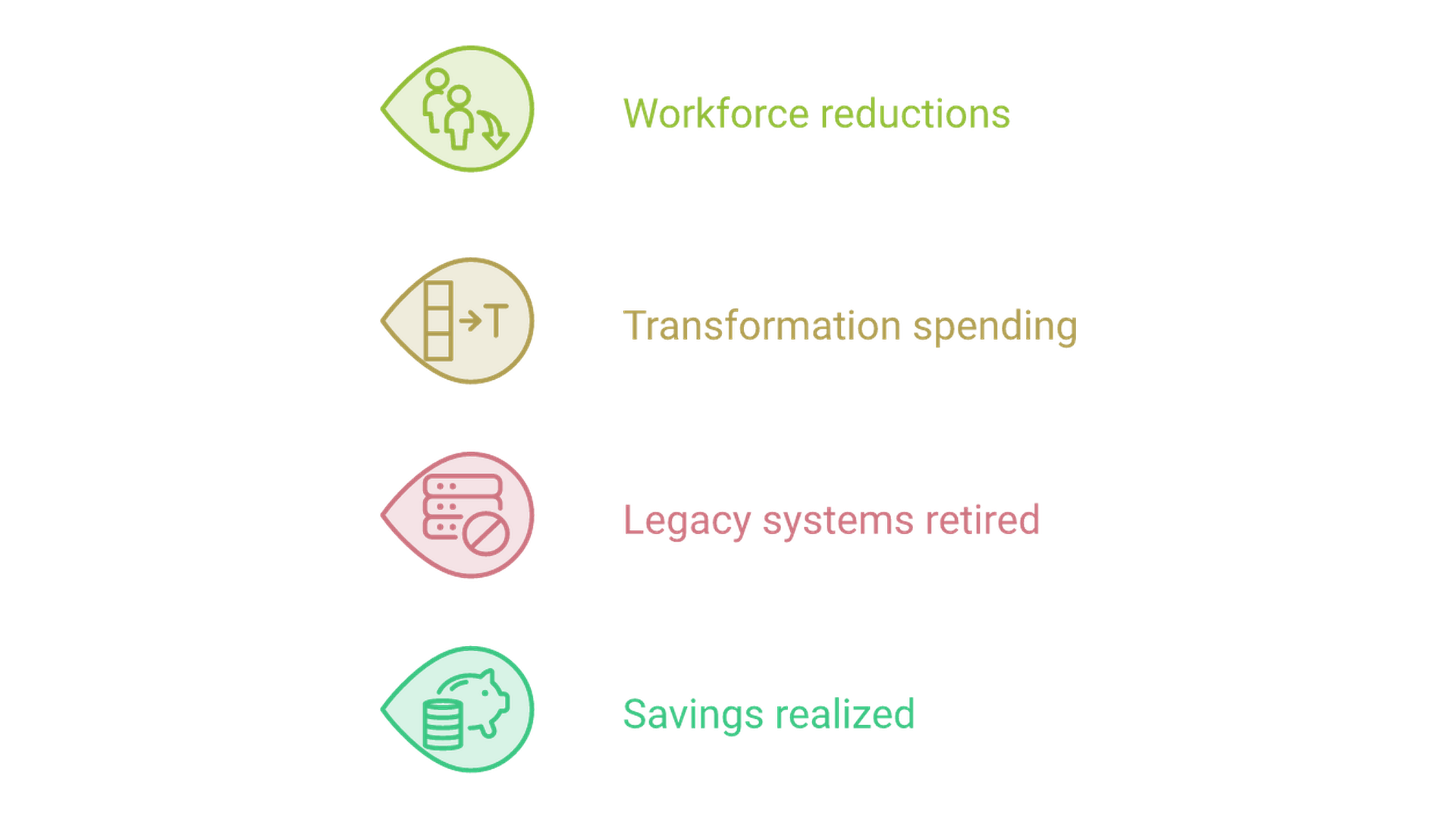
On the call, chief financial officer Paul Todd said the additional savings "will largely come beyond the 2027 timeframe." His reasoning: the biggest gains come from switching off legacy systems, and decommissioning happens late. He added that transformation spending continues into 2027 and should hold near third-quarter levels in the fourth quarter.
The release shows what Fiserv has spent so far. Severance reached $83 million in the third quarter and $196 million for the first nine months. Spending on the One Fiserv transformation program, which the company describes as enabled by AI, was $158 million in the quarter and $487 million year to date. Both are left out of the adjusted earnings Fiserv guides to.
| Stage | Status | Source |
|---|---|---|
| About 3,000 workforce reductions | Done since June 2026 | Earnings call; People Matters, citing Reuters |
| $487 million transformation spend | First nine months of 2026, continuing into 2027 | SEC release, CFO on call |
| Legacy gateways and products retired | Planned, no dates given | Earnings call, PYMNTS |
| Most of the added savings | Largely after 2027 | CFO on call |
Read in order, the program front-loads headcount reductions and spending, then waits on the retirement of systems that clients still run on. That is why the next two years matter most to Fiserv's customers.
Where AI Is Replacing Manual Work at Fiserv
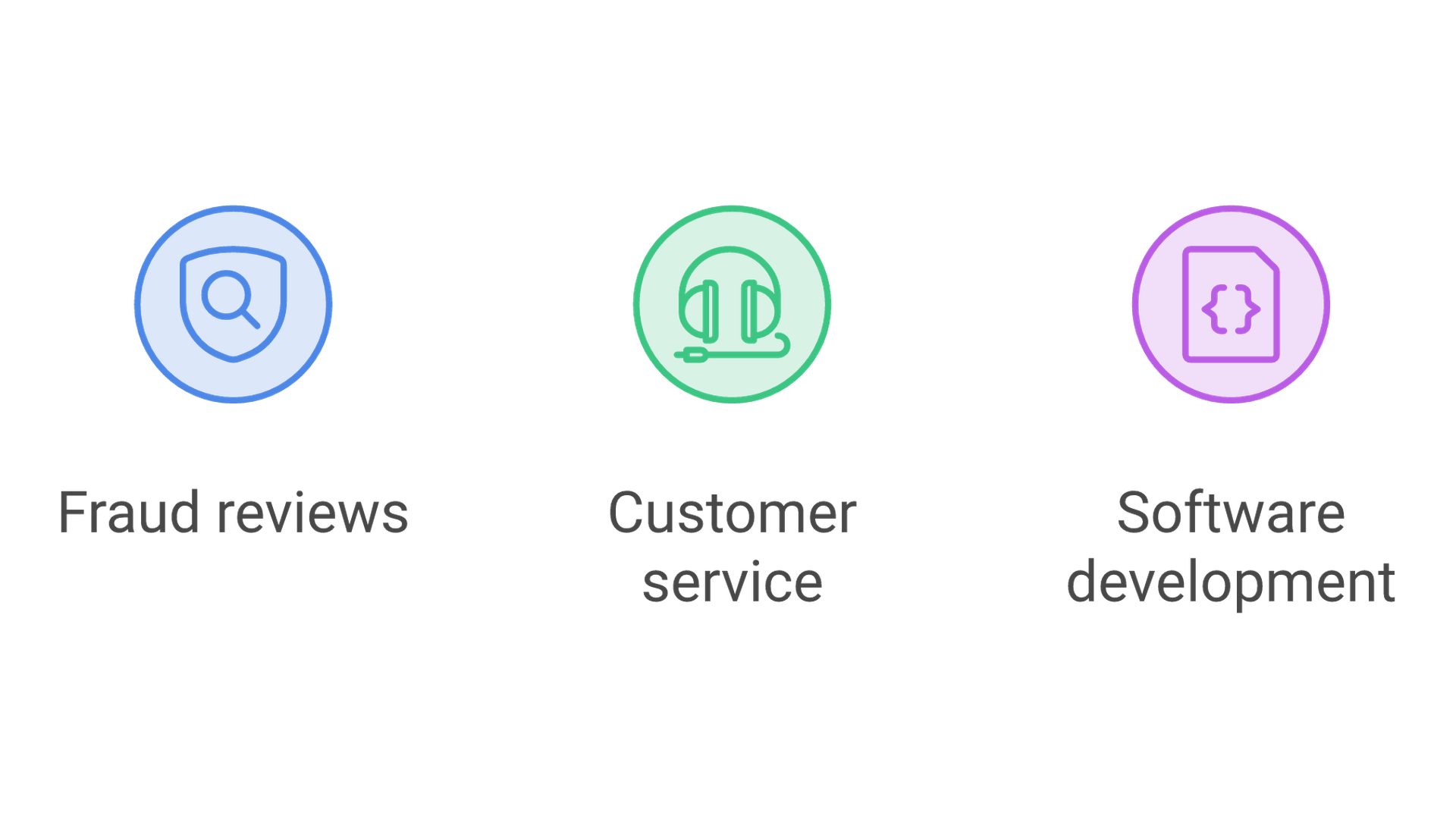
Georgakopoulos named three areas. The first is merchant risk: AI agents now sit in the Clover risk-hold process, which decides whether a merchant's payments are held for review. He said decision times fell by two-thirds and false positives fell by more than 40%. His broader argument was that machine learning in manual review queues cuts the people needed per case.
The second is customer service, through an agentic call center Fiserv deployed in partnership with Sierra AI. According to the transcript, he said it returns 5 to 10 times its token costs with no negative impact on customer NPS. The third is engineering: he named Cognition, Anthropic and OpenAI as partners behind faster code deployment and legacy modernization, and said the work focuses Fiserv's 14,000 engineers on lower-cost targets.
Each example is a queue with a measurable before and after, which is what makes the savings claims checkable. A business copying the approach should start the same way, with a baseline per workflow, and a structured AI adoption consulting review can rank which queues qualify. PYMNTS cautioned that faster risk decisions are operational indicators, not yet proof of realized companywide savings.
What Changes for Banks and Credit Unions on Fiserv Platforms
Fiserv management says the company supports about 40% of the US banking market, PYMNTS reported. Two moves from the call affect them directly. Fiserv plans to exit more than a dozen smaller, low-adoption products, and its Core Modularity initiative moves several banking cores toward shared software components.
There is also a new product to weigh. American Banker reported that Fiserv's agentic AI offering for banks has about 200 institutions in its pipeline, with broader availability expected in 2027. A bank deciding whether to join that queue is deciding while its own vendor is mid-restructuring.
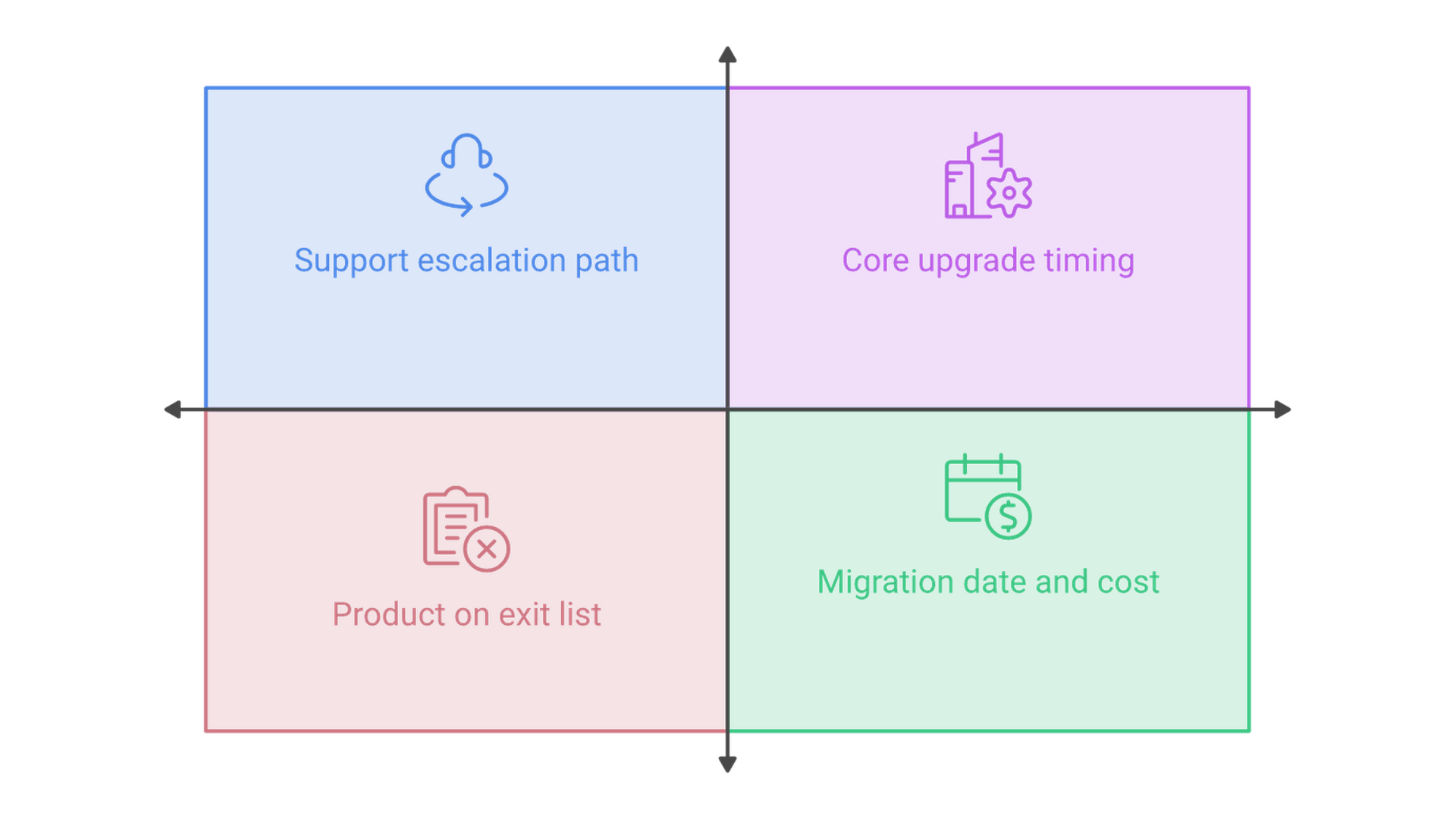
For a community bank or credit union, four questions belong on the agenda with the Fiserv relationship manager before 2027 budgets close: whether any product in use is on the exit list, what the migration date and cost would be, whether the Sierra-based call center will handle the institution's support tickets and how escalation to a person works, and how Core Modularity changes upgrade timing.
What Clover Merchants and Software Partners Should Watch
On the merchant side, PYMNTS reported from the call that Fiserv will consolidate merchant services onto its Commerce Hub platform, replacing more than a dozen legacy gateways and switches. American Banker added that a version of Clover for larger businesses is planned for 2027. For a restaurant group or retailer on Clover, the AI risk-hold results are the near-term change to track: fewer false positives should mean fewer legitimate payments held, and merchants can confirm that against their own hold history.
Software companies and ISVs that built point-of-sale or billing products on older Fiserv gateways face the bigger task. A gateway retirement means new endpoints, fresh certification and regression testing of payment flows, usually on the vendor's schedule. Mapping every place your product touches a Fiserv gateway now, as part of a systems integration plan, makes a migration notice a scheduled project rather than an emergency.
FAQs About the Fiserv Job Cuts
What clients, employees and investors are asking after the third-quarter disclosure.
Is Fiserv laying off more employees?
Fiserv has not announced a further headcount target. The 3,000 figure covers reductions since June 2026, and the company says transformation work continues into 2027.
Who is Fiserv's CEO?
Takis Georgakopoulos leads Fiserv. He disclosed the workforce figures and the AI examples on the third-quarter 2026 earnings call.
Which Fiserv products are being discontinued?
Fiserv has not named them. The CEO said they are smaller products without the performance, growth or margins the company wants, so clients should ask their account team directly.
How did Fiserv stock react to the job cuts news?
Shares rose about 9.5% in premarket trading after the November 3 results, as adjusted earnings of $1.75 per share topped analyst expectations, People Matters reported, citing Reuters.
Put Fiserv's 2027 Timeline Into Your Own Budget
Fiserv has already taken the headcount step. The product exits, gateway consolidation and core changes that produce most of the $1 billion are still ahead, and the CFO placed the bulk of those savings after 2027. Banks, credit unions, merchants and integrators that depend on Fiserv should treat 2027 as a migration year and reserve budget and staff time for it now.
The practical first step is a list of every Fiserv product, core module and gateway your operation touches, with an owner and a contract date for each. Cognativ can build that Fiserv dependency map and size the 2027 migration work with you.