Salesforce Cresta Acquisition: What Changes If Your Contact Center Doesn't Run on Salesforce
Salesforce's Cresta deal moves a neutral voice AI vendor under CRM ownership. See the closing timeline and the contract terms to settle before the deal closes.
The Salesforce Cresta acquisition puts a voice AI vendor that plugs into Five9, Genesys, NICE, Amazon Connect, HubSpot, Zendesk and Zoho under the ownership of a company that sells its own CRM and customer service software. Salesforce signed the agreement on November 2, 2026, and plans to fold Cresta into Service Cloud.
That leaves a tension for every contact center that runs Cresta, or is shortlisting it, on another stack. Salesforce has promised continued support for other telephony platforms, but the promise is one sentence long, and the months before closing are when buyers still hold leverage.
The Deal Announcement: Signed November 2, Price Unconfirmed
According to the Salesforce announcement, the companies signed a definitive agreement on November 2, 2026. Cresta sells voice agents that resolve customer calls end to end, plus real-time guidance, coaching and conversation analysis for human representatives. Marriott, Comcast and Alaska Airlines are the named customers. Salesforce did not disclose terms; SiliconANGLE, citing The Information, put the price at about $2.7 billion, a figure Salesforce has not confirmed. Closing is expected in Salesforce's fiscal first quarter of 2028, subject to regulatory approvals.
Salesforce's official X account posted the agreement the same day, pitching the deal around tying calls to measurable service outcomes.
We’ve signed a definitive agreement to acquire @Cresta, bringing advanced voice agents and conversation intelligence together with Service Cloud. Connecting every customer conversation to what matters: resolution, retention and revenue. More: https://t.co/qworzdrOpl
Cresta Runs on Five9, Genesys and HubSpot Today. One Promise Covers That
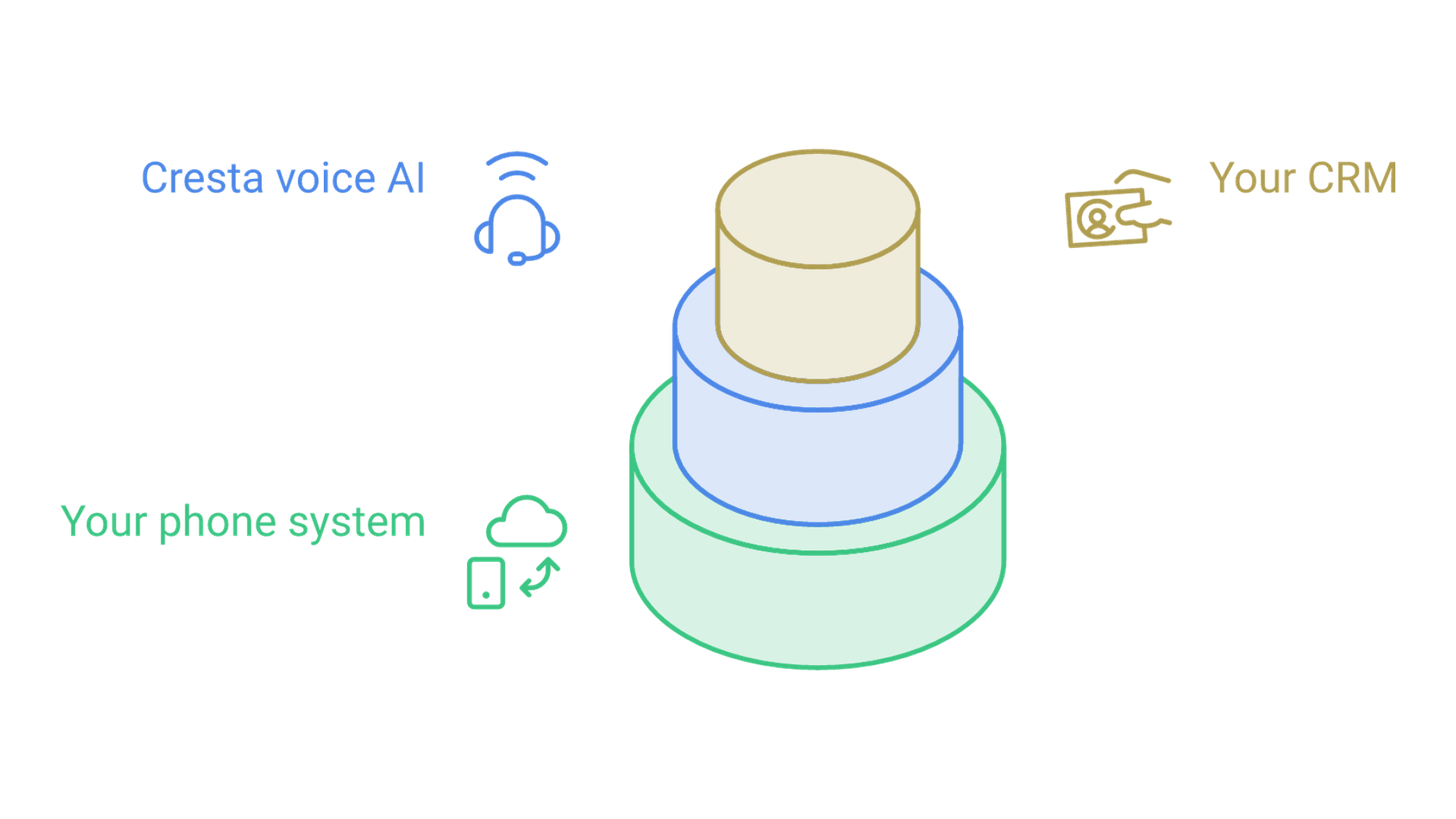
Cresta's integrations page lists telephony and contact center connections that include Five9, Genesys, NICE, Avaya, Cisco, Twilio and Amazon Connect, and CRM connections ranging from ServiceNow and Microsoft Dynamics 365 to HubSpot, Pipedrive and Zoho. Salesforce appears in both groups, but as one option among many. That breadth is part of why Cresta was attractive as a standalone purchase: a company could add AI voice agents without changing its phone system or its CRM.
The announcement addresses this in one sentence: after closing, Cresta will continue supporting the contact center and telephony platforms its customers use today. That is a meaningful commitment, and it is also narrow. It speaks to telephony, not explicitly to CRM connectors such as HubSpot or Zoho, and it says nothing about how long support lasts, how roadmap priority will be set, or whether pricing will change for customers who never buy Service Cloud.
Consider a 150-seat contact center at a regional insurance carrier running Genesys for calls and ServiceNow for cases. Today Cresta is a neutral layer between the two. After closing, its owner also sells a direct rival to ServiceNow's case management, and Salesforce's stated plan is to connect each conversation to the customer and to the outcome it drives, using Salesforce data. The likely result is that the deepest features land first where Salesforce data lives. Nothing published says the other connectors will degrade, but buyers on other stacks should stop assuming feature parity and ask for it in writing.
A Dated Timeline for Cresta Customers and Shortlisters
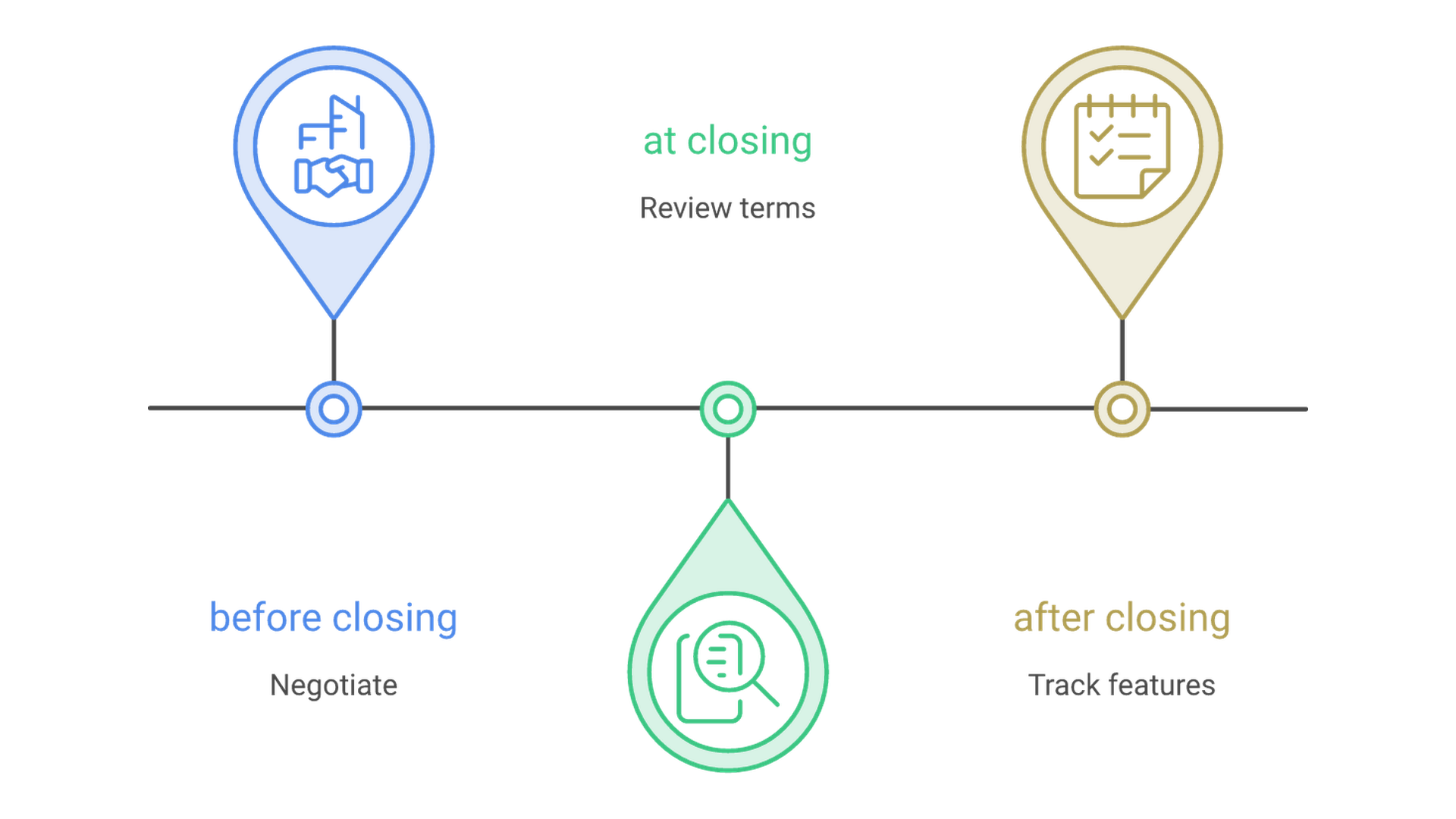
The deal has three windows, and each calls for different action. CMSWire places Salesforce's fiscal first quarter of 2028 between February and April 2027, so the gap between signing and closing is three to six months.
- Now through closing (November 2026 to roughly spring 2027): Cresta remains independent and still needs to win deals. This is the strongest point for negotiating multi-year pricing, contract terms and written integration commitments.
- At closing: Watch for changes in account ownership, support channels, data processing terms and any move of the product into Salesforce's licensing.
- The first year after closing: Track which new features ship for non-Salesforce stacks versus Service Cloud, and compare release notes against what you were promised.
The contract questions to raise during the first window are specific. Does the agreement include a change-of-control clause that lets you exit or renegotiate if the owner changes? Can call recordings, transcripts and tuned agent configurations be exported in a usable format? Is there a price cap on renewal? Which named integrations are guaranteed, and for how long? A buyer shortlisting voice AI vendors this quarter should put these questions to every finalist, not only Cresta; a structured software selection process treats vendor ownership and exit terms as scored criteria rather than legal fine print.
Can a Voice Agent Resolve the Call? The Service Cloud Bet
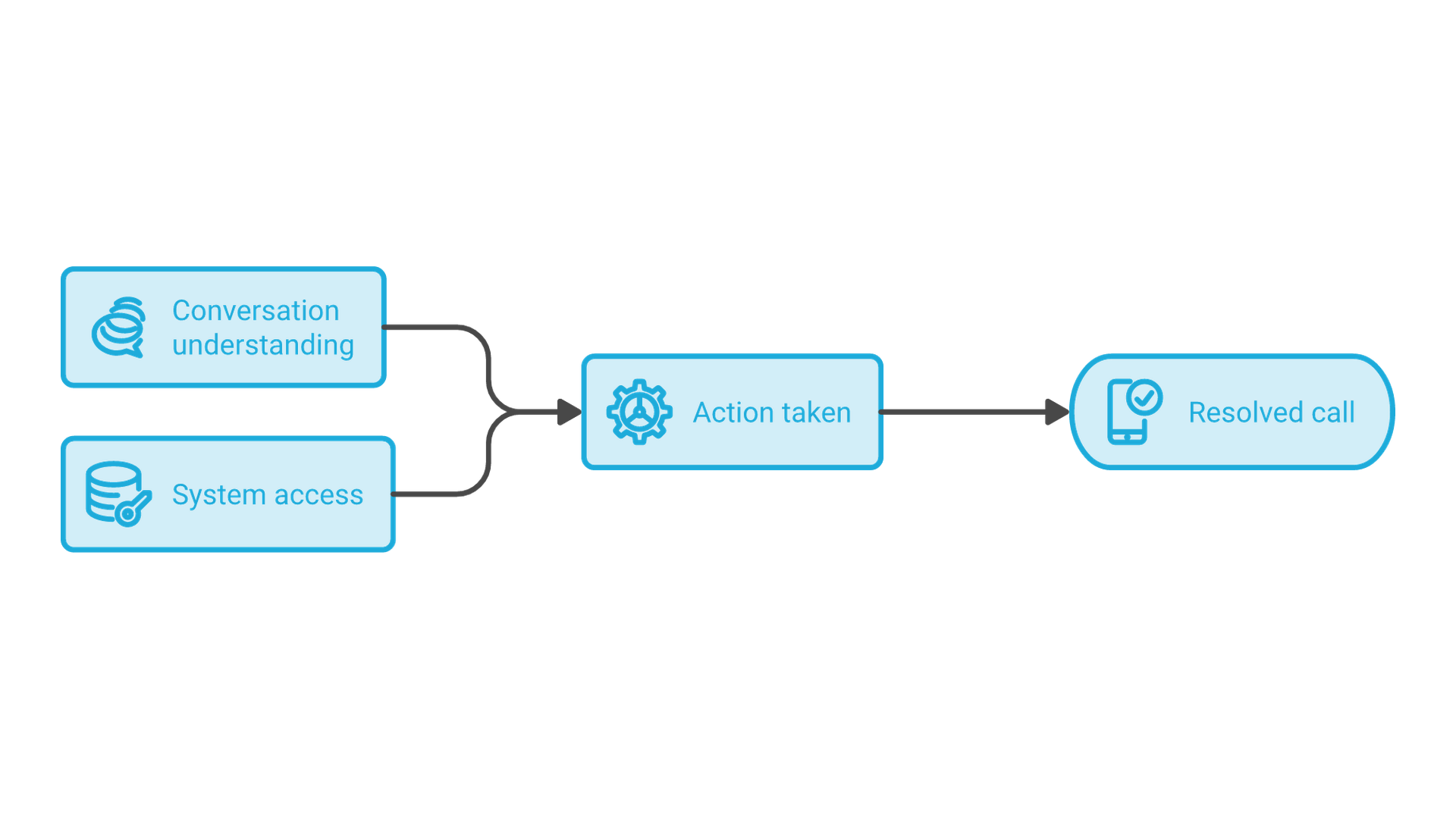
Salesforce's reason for the deal is a division of labor. Salesforce supplies the customer's history and the systems that carry out work; Cresta supplies the understanding of the spoken conversation and agents that act on it. Kishan Chetan, who runs Agentforce and Service Cloud, said "Cresta has built voice agents that handle complex, high-volume calls". Constellation Research editor Larry Dignan tied the purchase to Salesforce's growing focus on selling outcome-based processes, where a resolved call is the product.
That thesis holds whether or not a company uses Salesforce. A voice agent that can hear a request but cannot look up the order, change the appointment or issue the credit only adds a step before a human transfer. Techstrong.ai made the related point that containment, the share of calls kept from staff, can flatter a deployment: an automated call can still be expensive when a customer spends minutes with the AI before getting help. The engineering that decides resolution is the connection between the voice layer and the systems of record: permissions, allowed actions and an audit trail of what the agent changed. That is AI integration work, and on a Genesys-plus-ServiceNow stack it remains the buyer's job, not Salesforce's.
Cresta CEO Ping Wu said that inside Salesforce "we will realize our full vision at scale." For Service Cloud customers, that points to tighter voice features ahead. For everyone else, it is a reason to judge any voice agent on the actions it can complete in your systems, not on the demo.
FAQs About the Salesforce Cresta Deal
The deal questions buyers ask most: price, leadership, funding and Salesforce's other 2026 purchases.
How much did Salesforce pay for Cresta?
Salesforce did not disclose it. SiliconANGLE and CMSWire, both citing The Information, report about $2.7 billion; Salesforce has not confirmed the figure.
Who is the CEO of Cresta?
Ping Wu is Cresta's CEO. He is quoted in Salesforce's announcement of the agreement.
How much funding had Cresta raised?
CX Network reports that Cresta raised $282 million from investors including Sequoia Capital, Andreessen Horowitz and the Qatar Investment Authority.
What other companies has Salesforce agreed to buy in 2026?
CMSWire lists Contentful, Fin (formerly Intercom), Listen Labs and Braze among this year's customer experience agreements. Constellation Research and SalesforceBen also note the Rune Technologies deal, announced the week before Cresta.
Before Your Next Contact Center Renewal
The Cresta agreement turns an independent voice AI vendor into part of Salesforce, with a public commitment to keep supporting other telephony platforms and no published detail beyond that. Companies already on Cresta, or shortlisting it, have until closing in 2027 to lock in the terms that a promise in a press release does not cover.
If a Cresta renewal or a voice AI shortlist lands before the 2027 closing, settle the change-of-control, data export and integration terms first, then map how the voice agent will act in your CRM and phone system before it takes live calls.