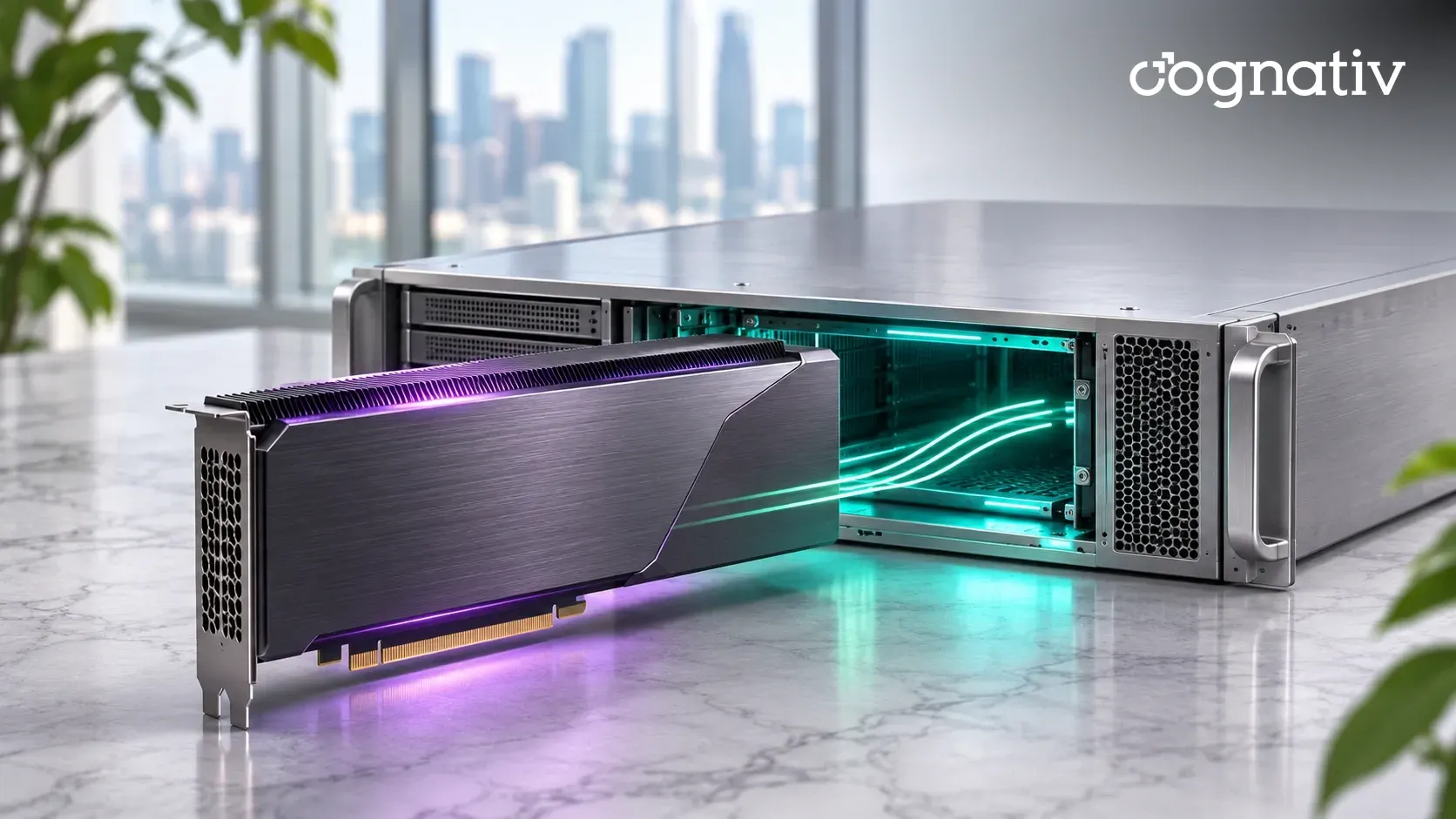

AMD MI350P Windows Server Support: Announced Now, in Preview From the First Half of 2027
AMD says AIMs and partitioning are supported at launch; Microsoft puts the Windows Server preview in 2027. The dates, card needs and questions to ask.
AMD's Instinct MI350P, the PCIe inference card it introduced in May, is coming to Windows Server 2025 and the new Windows Server 2028. The two companies announced it on November 17, the opening day of Microsoft Ignite, with AMD Inference Microservices and GPU partitioning named as launch features.
The headline reads like something you can order this quarter. Microsoft's own announcement puts the card in preview starting in the first half of 2027, and AMD's spec sheet still lists Linux as the only supported operating system. For a company that runs its business on Windows Server and is weighing local AI inference, that gap sets the calendar.
AMD Says Supported at Launch; Microsoft Says Preview in H1 2027
The same news came out in two posts on the same day, and they describe its timing differently. Both are worth reading side by side before anyone budgets for hardware.
AMD's blog, written by Kumaran Siva, AMD's CVP for enterprise AI, says AMD and Microsoft are announcing MI350P support for Windows Server 2025 and the upcoming Windows Server 2028, with AMD Inference Microservices (AIMs) and GPU partitioning "supported at launch." The pitch is on-premises inference for companies with data sovereignty or residency requirements, paired with AMD EPYC servers that consolidate older workloads to free power and rack space.
Microsoft's Windows Server 2028 announcement, by Windows Server general manager Neil Hinnant, is more precise: the MI350P card is in preview starting H1 2027 for in-market supported Windows Servers and Windows Server 2028. The same post says the hybrid intelligence features reach only a limited number of customers through an early access program, with hardware requirements. Hinnant's line in AMD's blog frames the goal as helping customers "bring inference closer to the data that remains on premises." Read together, "at launch" most likely means when the Windows support launches in preview, not November 2026.
The Dates That Matter for a Windows Server Refresh
Several of these dates come from different Microsoft and AMD pages, and one of them has nothing to do with AI at all. Placed in order, they show which decisions can wait and which cannot.
| Date | Event | Stated by |
|---|---|---|
| May 7, 2026 | MI350P PCIe card introduced for air-cooled servers | AMD |
| November 17, 2026 | Windows Server 2028 enters public preview; MI350P support announced | Microsoft and AMD |
| January 12, 2027 | Windows Server 2016 extended support ends | Microsoft |
| First half of 2027 | MI350P preview on supported Windows Server versions | Microsoft |
| Not announced | Windows Server 2028 general availability, editions and pricing | Microsoft |
The January date is the one with consequences. A business still on Windows Server 2016 has to move those hosts, or buy Extended Security Updates, probably before the MI350P preview opens, so the hardware it buys for that refresh is the hardware a later AI pilot will have to live with.
What the MI350P Card Asks of a Server Today
AMD's product page, checked on November 18, describes a card built for existing racks but not a light one. Its listed requirements are the first filter for any server bought in the next few months.
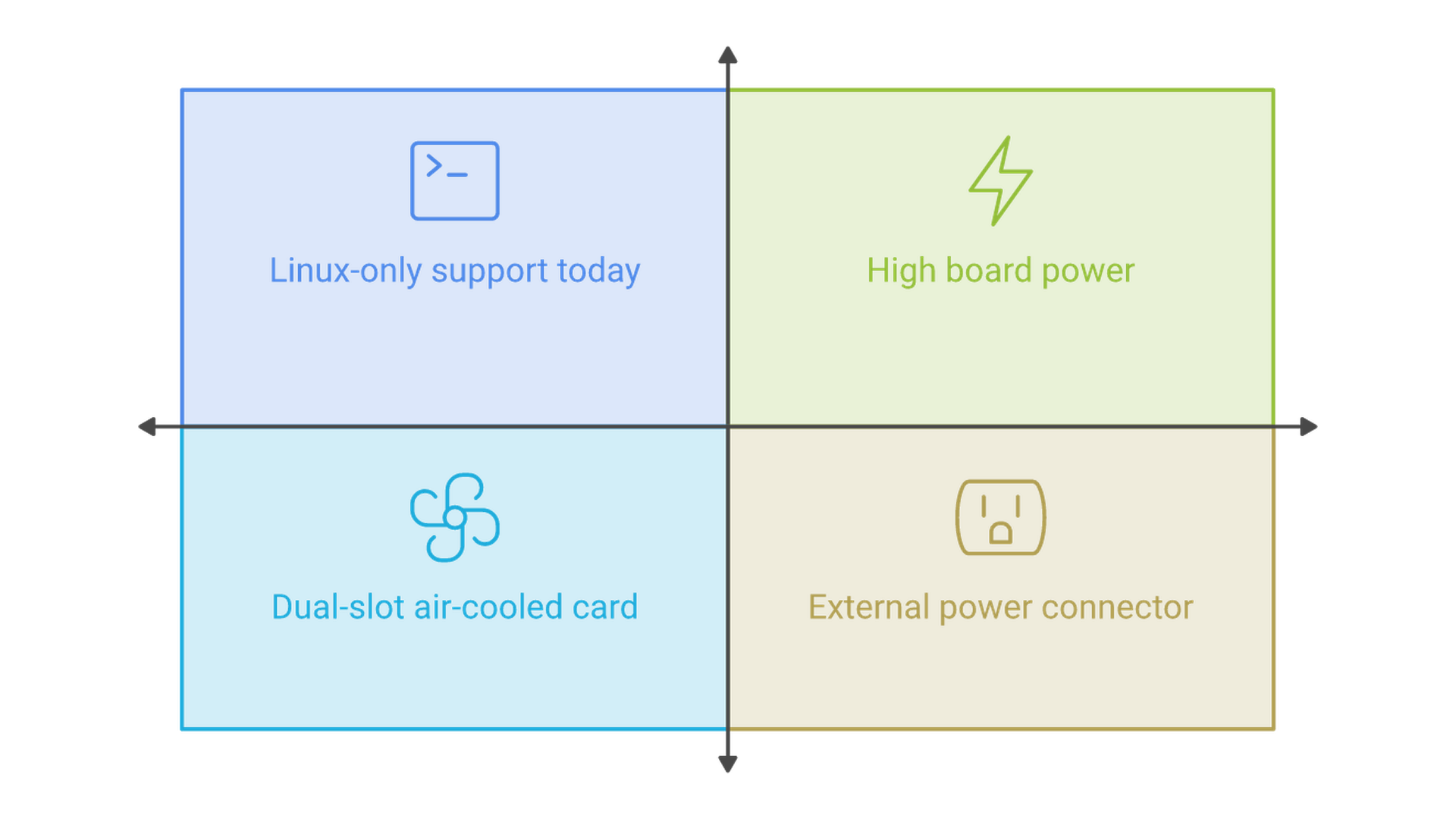
The MI350P is a dual-slot PCIe card for standard air-cooled servers, with 144GB of HBM3E memory and up to eight cards per system, according to AMD's May launch post. The spec sheet lists a typical board power of 600W maximum, configurable down to 450W, a 12V-2x6 external power connector, and 64-bit Linux on x86 as the only supported operating system. Windows Server support is due in preview in H1 2027.
That makes power delivery, airflow and slot layout the practical questions for a refresh now. Whether a host you are about to buy can take a card of that class later is a question an infrastructure assessment of your current servers and racks answers better than a vendor brochure.
GPU Partitioning: One Card for Several Small Models
Partitioning is the feature that makes a single expensive card make sense for a midsize company, because many internal AI services may not need a whole accelerator to themselves.
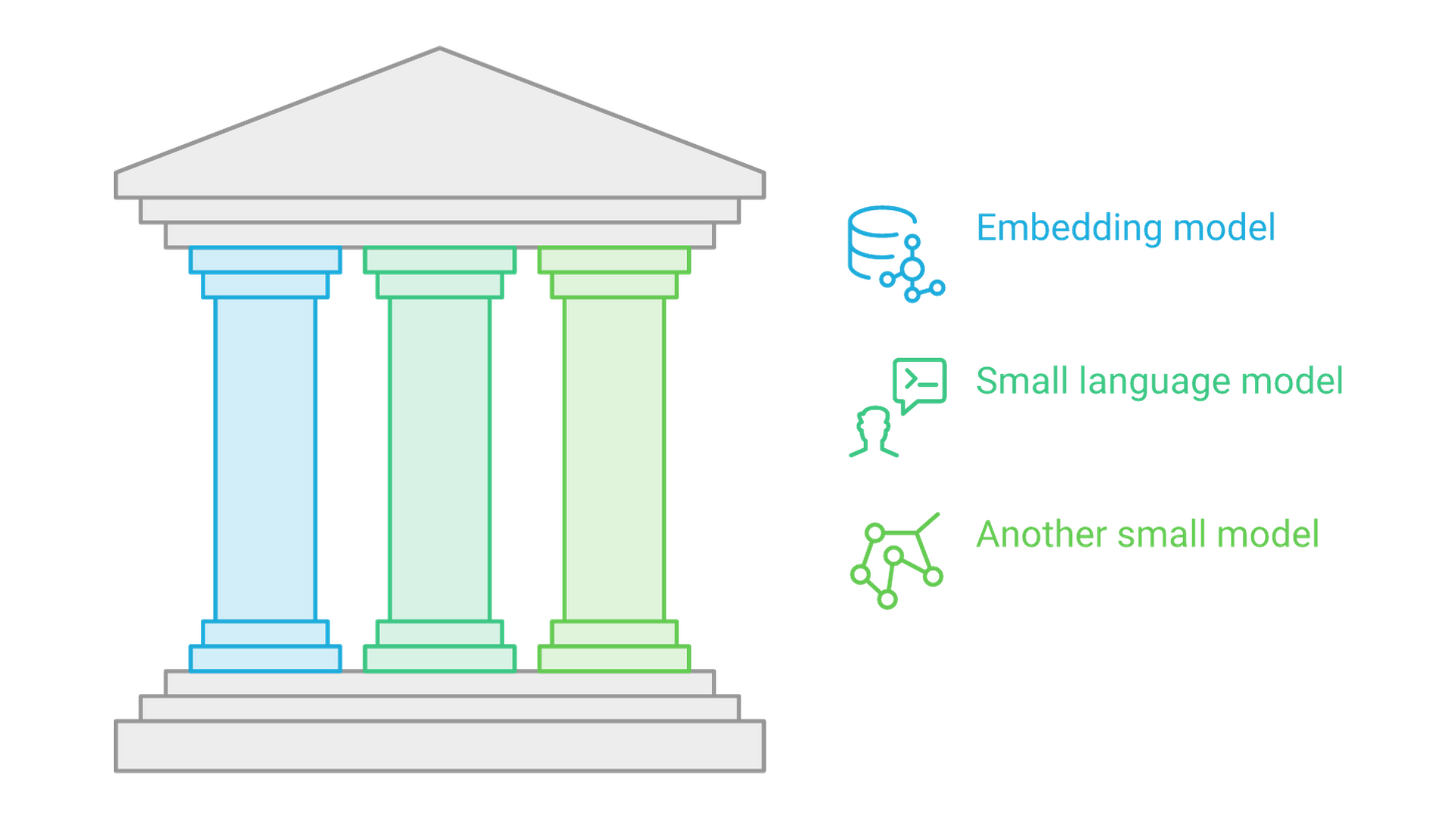
AMD's argument is that an embedding model or a smaller language model needs only part of a GPU, so the MI350P can be divided into supported partitions and allocated across several model services. Windows Server already has a partitioning mechanism of its own: Microsoft introduced GPU partitioning (GPU-P) for Windows Server 2025 in June 2024, with live migration and failover clustering for virtual machines that use a partition, and the GPU vendor quoted at the time was NVIDIA, for the Datacenter edition.
Neither November 17 post says whether MI350P partitions will appear to Hyper-V through that same GPU-P path, how many partitions the card supports on Windows, or whether partitioned virtual machines can live-migrate. Those answers decide whether the card fits an existing Hyper-V cluster or needs a dedicated host, so they belong on the list of questions for the preview.
SQL Server 2025 Vectors and Coding Agents Are the Named Workloads
AMD's blog lists four uses for the card on Windows Server, and two of them map directly onto software that many Microsoft shops already license or are planning to deploy.
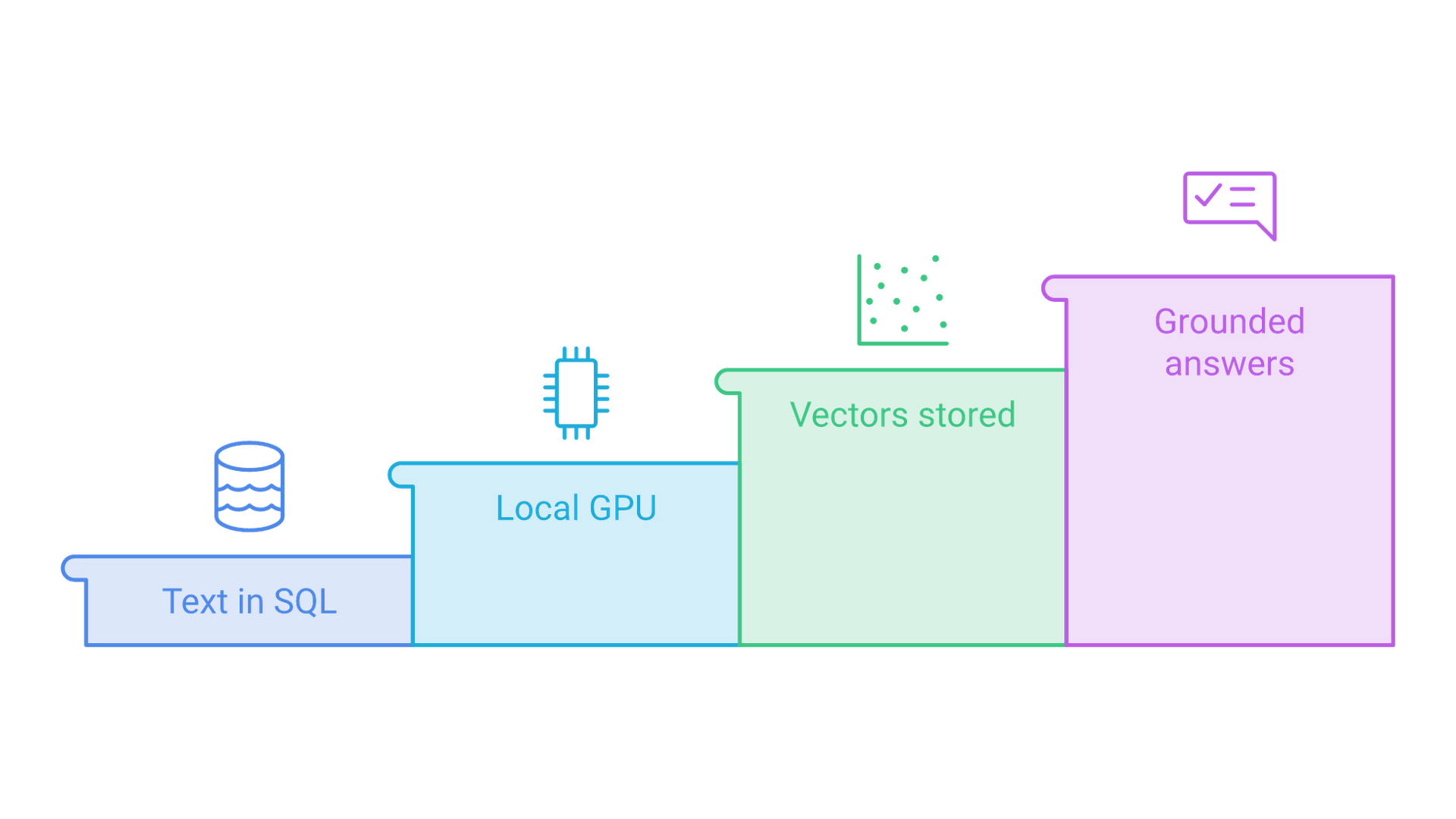
The first is retrieval for SQL-connected applications: SQL Server 2025 has native vector capabilities, and locally hosted embedding models on the MI350P would generate the vectors that ground AI answers, so embedding stays on enterprise-controlled infrastructure. AMD calls its demonstration with Microsoft's SQL Server team planned, not shipped. The second is shared model services for coding agents, which keep proprietary source code in-house and centralize the inference bill across developer teams. AMD also names enterprise copilots and knowledge assistants, and AI help for users of Azure Virtual Desktop hybrid sessions without a GPU at every endpoint.
Each of these assumes a model-serving layer, access rules that limit retrieval to what each user may see, and a plan for which requests stay local and which go to a cloud model. Designing that layer is the work behind AI infrastructure for private, on-premises inference, and it can start on Linux or in the cloud long before the Windows preview arrives.
FAQs About AMD MI350P and Windows Server
These are common follow-up questions after the Ignite announcement, answered only from what AMD and Microsoft have published as of November 18.
Will the MI350P work on Windows Server 2022?
Unclear. AMD names only Windows Server 2025 and 2028. Microsoft refers to currently supported Windows Server versions without listing them, so confirm with Microsoft or your server vendor before planning around 2022.
How can I try Windows Server 2028 Preview?
Security, performance and management features are available through the Windows Server Insider Program. Microsoft also invites organizations to apply to its Windows Server Technology Adoption Program for early access and direct contact with engineering.
What are AMD Inference Microservices?
AIMs are AMD's cloud-native packages for deploying supported models on Instinct GPUs. They sit in AMD's enterprise AI stack alongside a Kubernetes GPU Operator and native PyTorch support.
When will Windows Server 2028 be generally available?
Microsoft has not given a date. Its announcement says only that it will keep working with customers as it moves toward general availability, and editions and licensing prices are not published yet.
Buy for the 2016 Deadline, Pilot the GPU When the Preview Opens
The announcement changes what a Windows-based company can plan, not what it can deploy this year. The sequence that follows from the published dates is short and simple to state.
Replace Windows Server 2016 hosts on their own schedule, and specify the new servers with the power, cooling and PCIe room a card of this class would need. Pick one workload, such as embeddings for a SQL Server application or a shared coding assistant, and measure what it costs in the cloud today, so the 2027 preview has a baseline to beat. Then put the open questions about partitioning, live migration and supported versions to Microsoft and AMD in writing.
If you want a second view on how a refresh and a local inference pilot fit together, talk with Cognativ about your Windows Server plans.