

Notebook LLM: How AI-Powered Notebooks Change Research in 2026
See how AI research notebooks turn uploaded files into cited notes, mind maps, slide decks and audio overviews, and what a governed enterprise rollout needs.
The way organizations synthesize knowledge is shifting. Notebook LLM platforms are replacing the old cycle of reading, highlighting, and manually summarizing by turning scattered files into structured, citable insights inside a single interface.
What Is Notebook LLM and Why It Matters Now
A notebook LLM is an AI powered research workspace that ingests your documents, reasons across them, and produces grounded output-notes, reports, analysis-tied directly to the materials you provide. Unlike a general-purpose chatbot pulling from broad training data, a notebook LM confines its thinking to the sources you upload, creating a curated context for every conversation.
Notebook environments have long provided interactive workspaces that combine code, explanations, and visualizations. Data scientists use notebooks for tracking experiments and documenting research, while many data science notebooks provide access to cloud-based GPUs for improved computation. Using notebook environments enhances rapid prototyping and experimentation with machine learning models. What's changed is the addition of large language model reasoning on top of that foundation.
Google NotebookLM, recently rebranded as Gemini Notebook, illustrates the concept at scale-over 30 million users and 600,000 organizations now rely on it. The broader Google Gemini ecosystem includes a general AI chat app, but the notebook product is distinct: it operates on curated, notebook-specific sources rather than open web search. Google Workspace and Google Drive files feed directly into notebooks, keeping context tight and answers grounded.
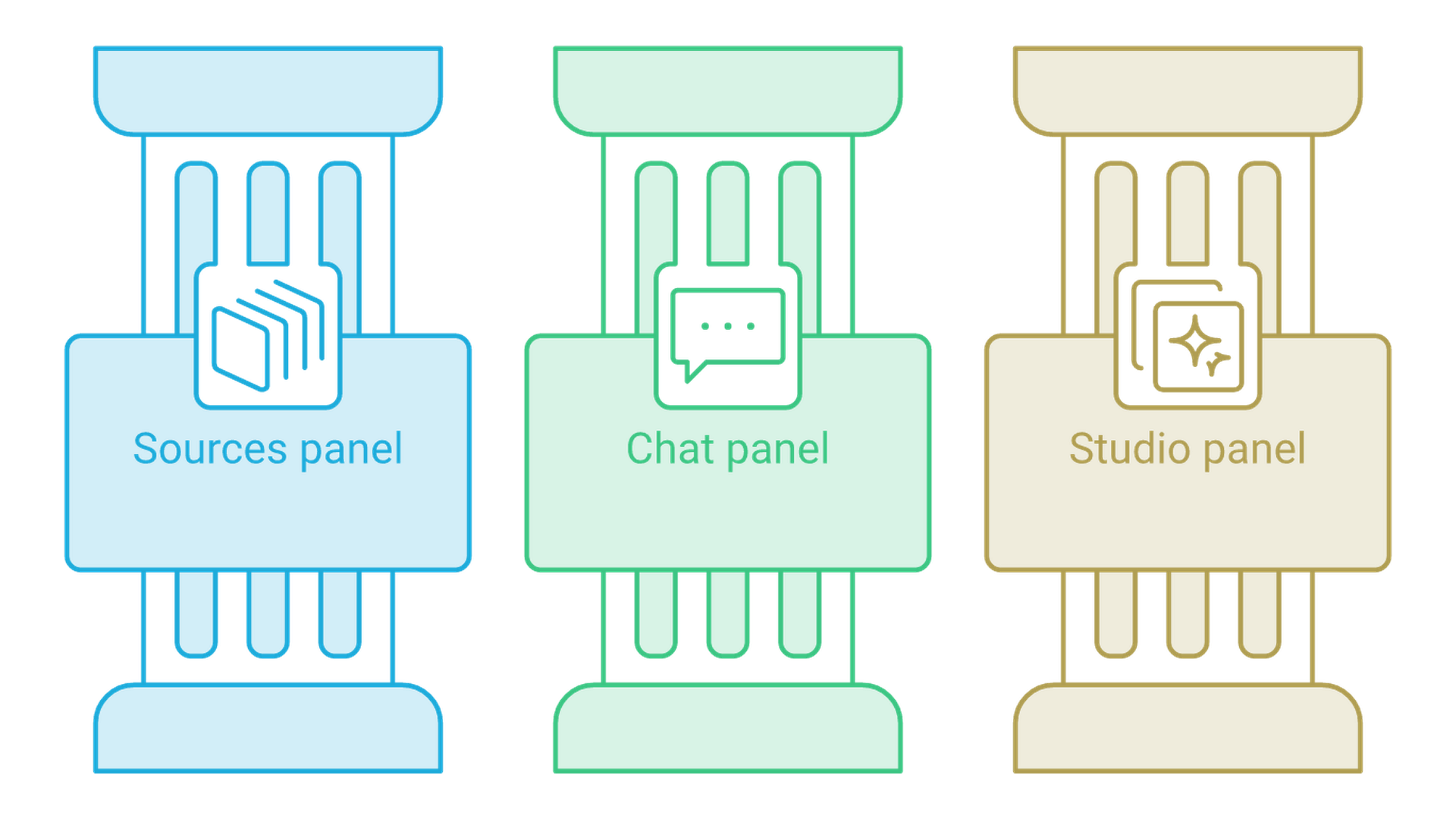
The interface typically combines three panels: a sources panel for uploaded sources, a chat panel for questions and analysis, and a studio or output panel for generating notes, mind maps, audio overviews, and tailored reports. Common use cases include:
- Academic research across research papers and lecture materials
- Enterprise knowledge bases built from policies, SOPs, and architecture docs
- Client briefs, onboarding materials, and meeting preparation
- Sales enablement with up-to-date competitor data
Core Capabilities of a Modern Notebook LLM
Modern notebook LLMs read and reason over multiple sources simultaneously-users can upload up to 50 sources per notebook on the free plan, including PDFs, Google Docs, slide decks, websites, YouTube videos, audio files, and transcripts. The system indexes everything for fast querying.

- Notebook LLMs use Retrieval-Augmented Generation to ground responses in specific uploaded sources, providing citations back to exact pages, paragraphs, or timestamps. This directly reduces hallucination risk.
- The tool can generate summaries, structured outlines, study guides, FAQs, timelines, and executive briefings-each linked to source material. Notebook LM allows users to create tailored, high-quality documents and generate tailored reports instantly from uploaded content.
- Multimedia comprehension spans PDFs, docs, slide decks, public web pages, images, and audio or video transcripts from meetings or webinars-the system supports various content types including YouTube videos.
- Data privacy is maintained as uploaded personal data is not utilized to train models-a critical distinction for enterprise adoption.
- Users can share notebooks publicly as read-only resources or grant edit access within teams, building shared knowledge spaces across projects.
From Documents to Insights: Working With Multiple Sources
Consider a concrete example: a strategy team needs to compare cloud infrastructure pricing trends from 2023 to 2025. They upload an industry report as a PDF, three competitor slide decks, and internal meeting notes. The notebook LM indexes everything and surfaces answers with citations.
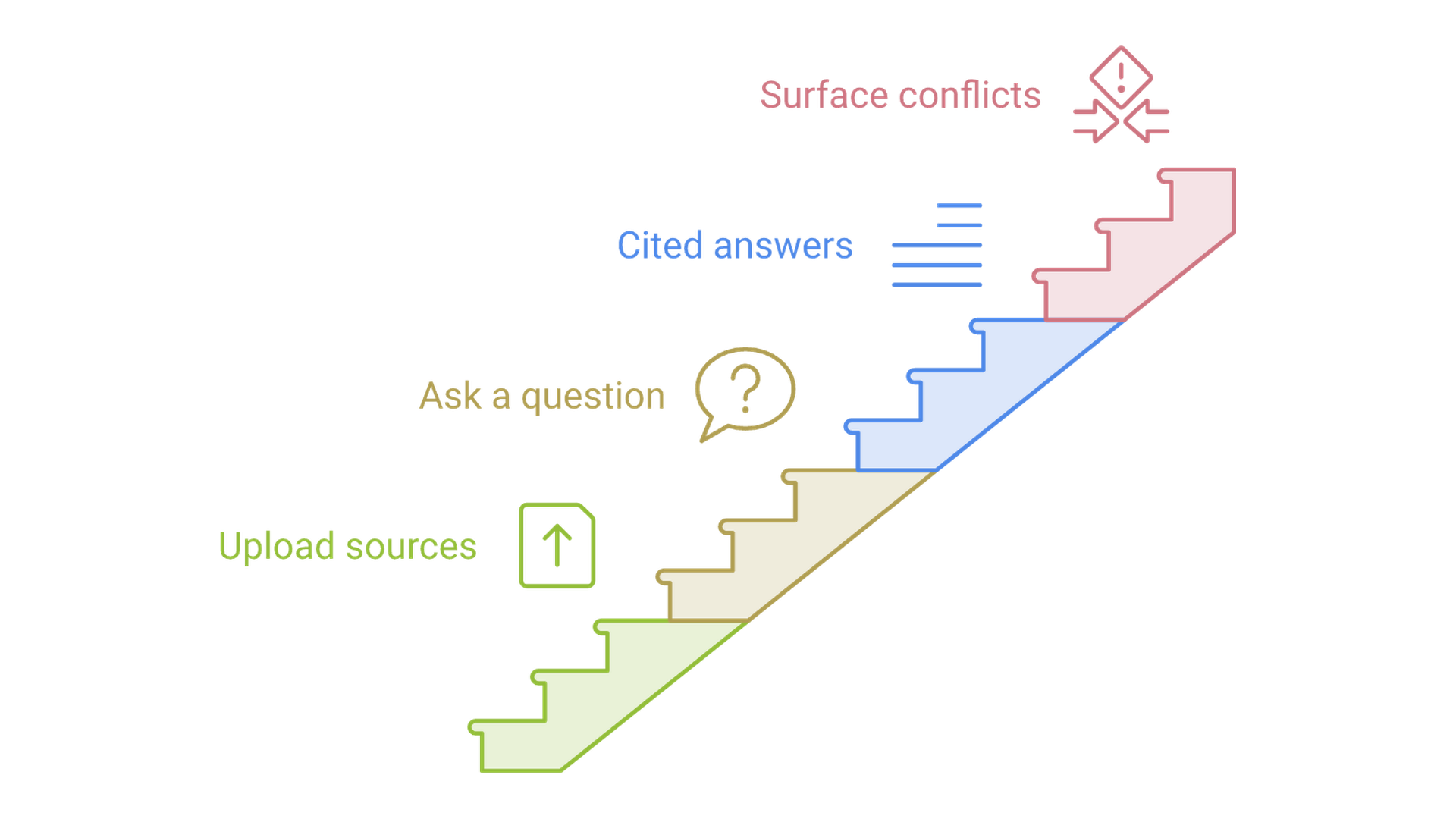
- Upload or connect files via drag-and-drop, paste URLs, or link Google Drive files. The system creates copies or auto-synced versions for analysis without modifying originals.
- Ask a question like "Compare pricing trends across all sources from 2023 to 2025." The AI returns a structured table with citations pointing to specific pages and slides.
- The notebook detects conflicts-for example, where one competitor's deck claims price reductions while the industry report shows stable pricing-and surfaces gaps where data is missing rather than fabricating connections.
- Interactive coding facilitates debugging by allowing execution of code in discrete steps, and notebooks help in visualizing data through immediate graphics and performance metrics evaluation.
- Notebook LLMs can assist with data collection, processing, and exploratory data analysis in machine learning, and notebooks streamline hyperparameter tuning and model evaluation processes when data work goes deeper.
- AI tools can generate tailored reports for process improvement, and the tool can generate tailored reports based on uploaded content-turning raw analysis into formatted output.
- For enterprise safety: apply per-notebook permissions, access controls, and align with internal data governance. Sensitive notebooks should live in governed environments.
Transforming Content: Notes, Mind Maps, Slide Decks, and Audio Overviews
Notebook LLMs convert raw materials into multiple formats, each automatically generated with source citations:
- Notes and outlines: Structured bullet notes organized by topic, each citing the source document. Users interact with the output to expand or collapse sections.
- Mind maps: Central theme with branches for subthemes-useful for discovery workshops, strategy sessions, or curriculum planning. Nodes link back to source passages for verification.
- Slide decks: Turn a long report into a 10–15 slide presentation with key charts, talking points, and speaker notes. Users refine the output before presenting.
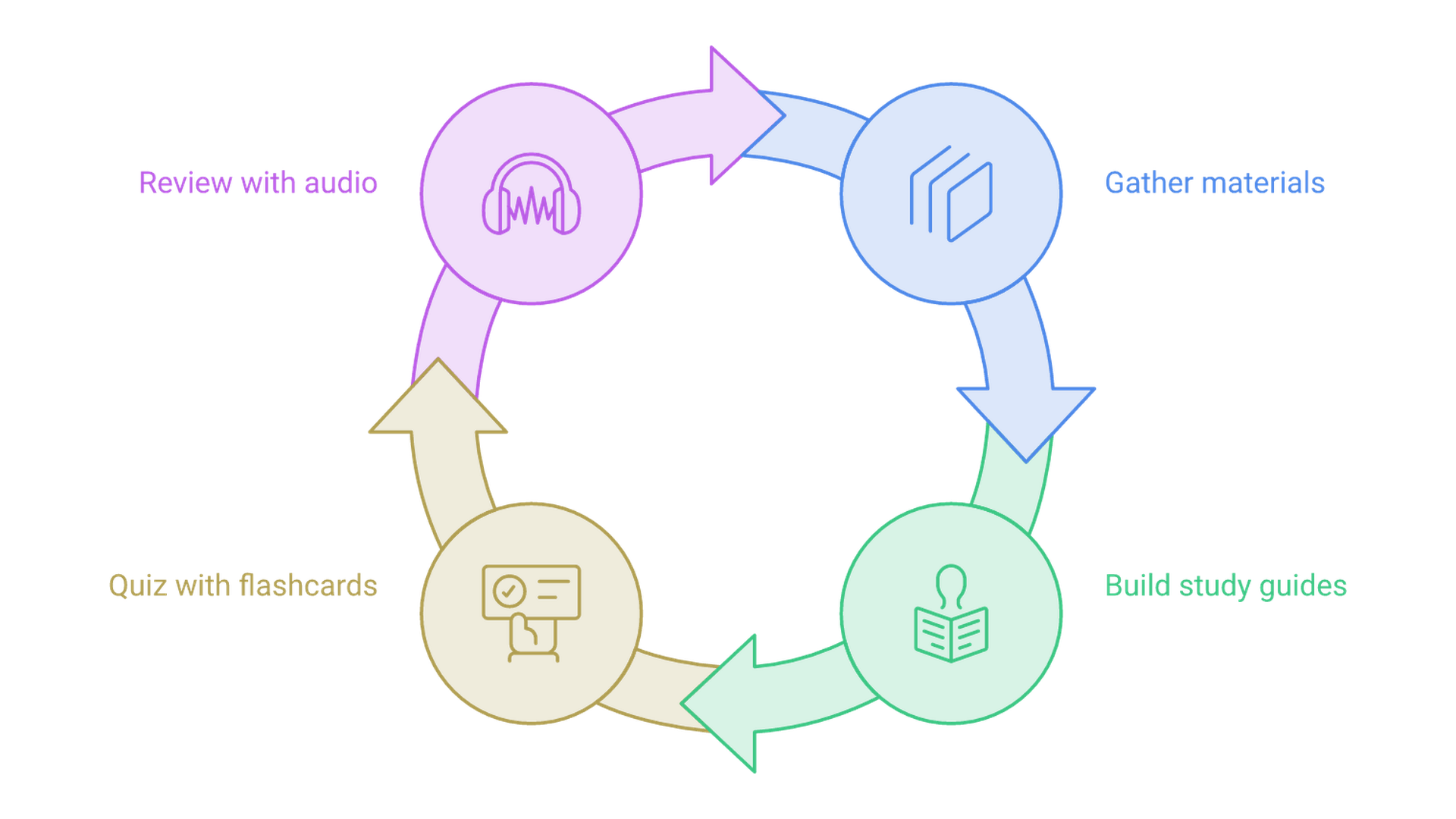
- Audio overviews and video overviews: Notebook LM can generate AI-driven podcasts based on uploaded sources. Users can generate audio podcasts from multiple sources-short, podcast-style summaries featuring two AI hosts exploring a topic. These work for commuting, pre-meeting review, or on-the-go revision.
- Advanced formats: Debate-style audio with two voices arguing pros and cons of a strategy, plus deep-dive learning formats designed for training contexts.
Study, Research, and Public Notebooks for Learning
Students and researchers use notebook LLMs to pull together textbooks, lecture slides, and academic papers into a single new notebook. Notebook LM generates flashcards and quizzes from documents and creates interactive study guides from academic sources. AI can generate interactive study guides and quizzes from uploaded materials, testing comprehension rather than just providing answers.
Public notebooks act as curated, read-only resources built from trusted sources. For example, a public notebook on AI ethics might aggregate EU AI Act documents, 2022–2024 policy papers, and major research papers-letting users ask probing questions and explore deeper insights across the collection. Education-focused AI platforms are accelerating adoption of these formats.
Audio overviews support accessibility-learners can revise while commuting. Simplified explanations serve non-specialists, with the ability to toggle between concise and detailed answers across formats.
Notebook LLMs in Enterprise Workflows
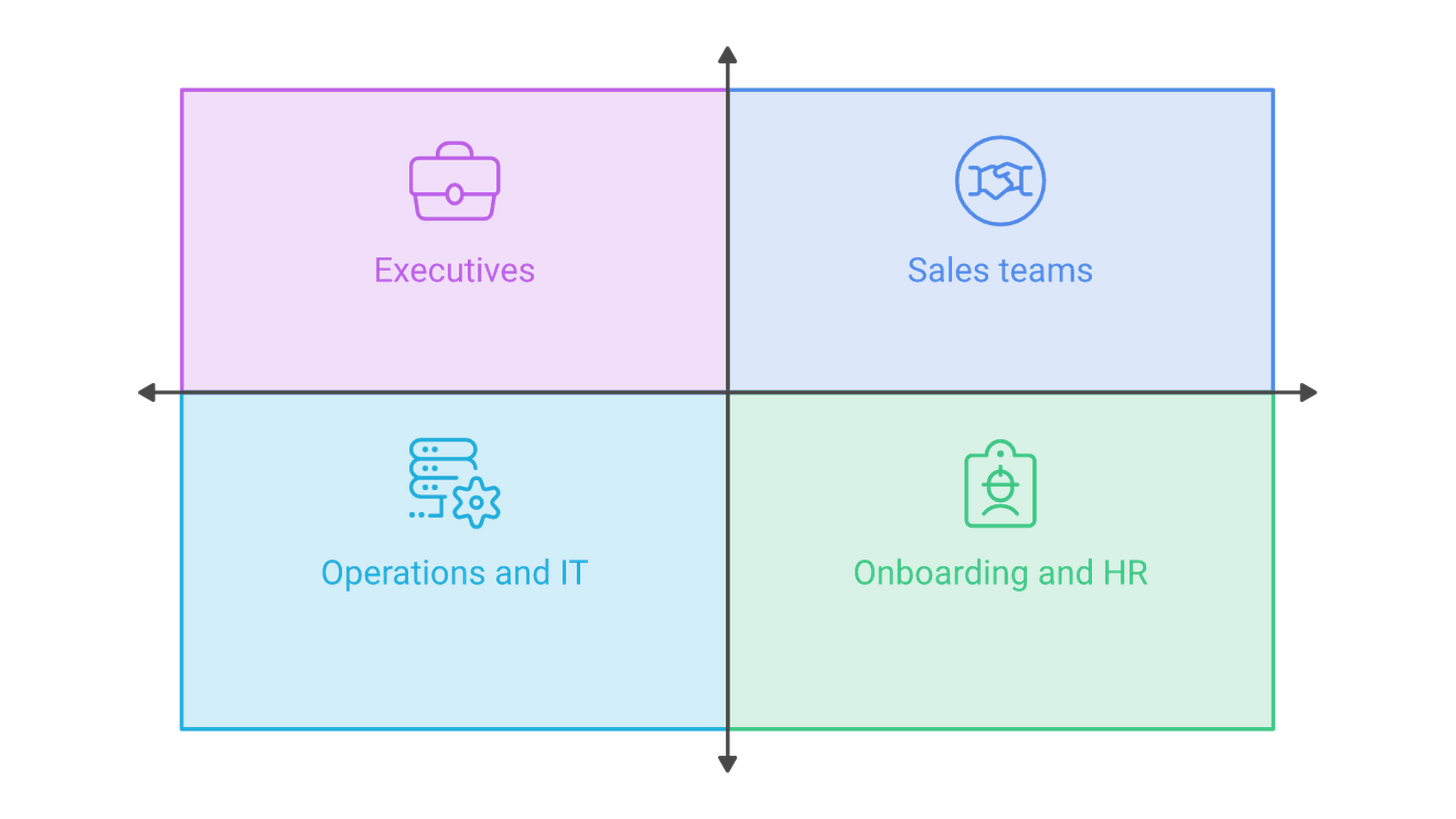
Enterprise adoption centers on specific needs across personas:
- Executives: Combine board reports, market analyses, and operational dashboards to generate decision briefs with clear trade-offs. Notebook LM helps analyze emotions from multiple journal entries-useful for culture surveys or stakeholder feedback analysis.
- Operations and IT leaders: Wrap legacy system documentation, SOPs, and architecture diagrams into searchable notebooks. Notebook LM can analyze workflows to suggest enhancements. AI-driven solutions streamline operations and boost efficiency when applied to the right knowledge base.
- Sales teams: Maintain notebooks with current product data, competitor analysis, and marketing materials. Generate summaries and talking points before client conversations.
- Onboarding and HR: Optimizing business processes can improve onboarding procedures-aggregate policies, training manuals, and corporate context into learning modules. AI integration enhances workflow efficiency across these business operations.
- Notebook LM allows users to create tailored reports and documents instantly for any of these workflows. Connecting to email archives, knowledge bases, and collaboration suites requires governance, role-based access, and sound enterprise AI architecture.
Designing a Secure, AI-First Notebook Platform (Cognativ's Perspective)
Building a notebook LLM platform for enterprise use requires more than selecting a model. It requires secure data connectors, encryption, access control, separation of training versus inference data, and clear boundaries on how AI uses uploaded sources.
- Cognativ helps organizations design and implement custom enterprise software that wraps legacy document stores, ticket systems, and data warehouses with a governed notebook LLM interface-without replacing everything at once.
- The RAPID framework aids in structured technology implementation with measurable business outcomes: identify research bottlenecks, assess architecture, plan guardrails, implement, and deploy with monitoring.
- Differentiating features of Cognativ include AI-first modernization and custom software aligned with business workflows. Measurable ROI is a key focus for Cognativ in technology solutions-every notebook deployment should track time saved, error reduction, adoption rates, and knowledge reuse.
- Start with a focused pilot-one team, one workflow, one measurable sign of impact-then scale from pilot to program with governance intact.
The organizations that build governed, AI powered research platforms now will compound their knowledge advantage. Start with a focused assessment of where notebook-style AI can reduce operational friction, and talk to Cognativ about a secure, ROI-focused roadmap.