
Enterprise Architecture Consulting Across Four Layers
Our enterprise architecture consulting connects what the business does with the technology that supports it, so every investment can be traced to a capability and every system to an owner.
-
Business
Capabilities, processes, and the outcomes they serve.
-
Data
Core data entities, ownership, and how information flows.
-
Applications
Systems, what each one does, and how they integrate.
-
Technology
Infrastructure, platforms, and standards underneath.
Solution Architecture Consulting for Each Decision
Architecture becomes practical one decision at a time. For each system in the landscape, and for each major project, our solution architecture consulting recommends what to do and records why.
Request a free enterprise architecture consultation
Integration Architecture and the Path to the Target State
The target state is reached through transitions, not a single cutover. Each transition is planned with its integration architecture, so systems keep talking to each other while the landscape changes. Cognativ has guided this kind of change for a national logistics firm and a B2B distributor whose throughput rose 35%.
Define the Target State
The capabilities, data, systems, and standards the business needs in three to five years.
Plan the Steps
A sequence of changes, each one usable on its own, with owners and dependencies.
Explore IT modernization strategy
When Companies Bring in an Enterprise Architect
The usual triggers are growth that outpaces the systems, an acquisition that doubles the application landscape, rising IT costs from overlapping tools, or a major program such as an ERP replacement or cloud migration that needs a target to aim at.
In each case the first deliverable is the same: a clear picture of what exists, what the business needs, and the few decisions that matter most right now.
Enterprise Architecture Consulting Questions
What to expect before you start.
What does an enterprise architecture consultant do?
An enterprise architecture consultant maps how a company's capabilities, data, applications, and infrastructure fit together, defines the target state, and plans the changes and standards needed to reach it.
Do you use TOGAF?
We use TOGAF concepts, such as the business, data, application, and technology layers, where they help, without turning the engagement into a documentation exercise.
What is the difference between enterprise and solution architecture?
Enterprise architecture covers the whole landscape and its direction. Solution architecture designs one system or project within that landscape.
Can you help us reduce the number of applications we run?
Yes. Application rationalization is one of the most common outcomes: finding duplicate and low-value systems and planning their retirement.
Do we need a full architecture repository?
Rarely at the start. A capability map, an application inventory, and a target-state view cover most decisions; tooling can follow if the practice grows.
How does an engagement start?
With a free first consultation about the decisions in front of you, then interviews and an inventory with a fixed scope and fee.
Architecture Case Studies
Engagements where connecting systems and data across the business changed how it operated.

Logistics Platform Reduces Customer Churn by 35%
Logistics Software
Customer Portals
Workflow Automation
Systems Integration
Logistics Platform Reduces Customer Churn by 35%
Cognativ helped a logistics firm recover from a failed digital transformation by delivering a unified logistics platform through RAPID.
The work reduced customer churn by 35%, increased portal engagement 5x, lifted existing-client revenue by 22%, and cut compliance workflow time by 40%.
See the Logistics Reset
B2B Distribution Throughput Increases 35%
ERP Modernization
API Integration
Inventory Management
Warehouse Automation
B2B Distribution Throughput Increases 35%
Cognativ helped a B2B distributor modernize legacy ERP limitations, automate warehouse workflows, and improve operational visibility.
The transformation increased throughput by 35%, raised average order size by 20%, and lifted gross margins by 15%.
See the Throughput Gains
Healthcare Data: 20x Exit Valuation
Data Platforms
API Development
Data Integration
Data Marts
Healthcare Data: 20x Exit Valuation
Cognativ helped a traditional third-party payer reposition from a claims-processing service provider into a strategic healthcare data broker.
The transformation reshaped the company’s go-to-market model and increased exit valuation by 20x.
See the 20x Exit Story
Ecommerce Order Cancellations Fall 22%
Systems Integration
Workflow Automation
Order Management
Observability
Ecommerce Order Cancellations Fall 22%
Cognativ implemented integration automation and real-time observability to reduce failed orders, improve customer communication, and stabilize fulfillment operations.
The work reduced order cancellations by 22% and manual order triage by 40%; more proactive support contributed to an 18-point rise in Net Promoter Score.
See the Order RecoveryRelated Software Development Insights
Recent Cognativ articles on building, running, and modernizing business software.

Functional Testing: Types, Tools, Strategies and Best Practices
Unit, integration, regression and acceptance tests plus Selenium, Playwright and Appium: how to design a functional testing suite you can trust on each release.

Best Programming Languages to Learn in 2026: Top Picks by Use Case
Python, TypeScript, SQL, Rust and more: see which languages lead the 2026 rankings, what each is best for and how AI coding agents shift what to learn next.
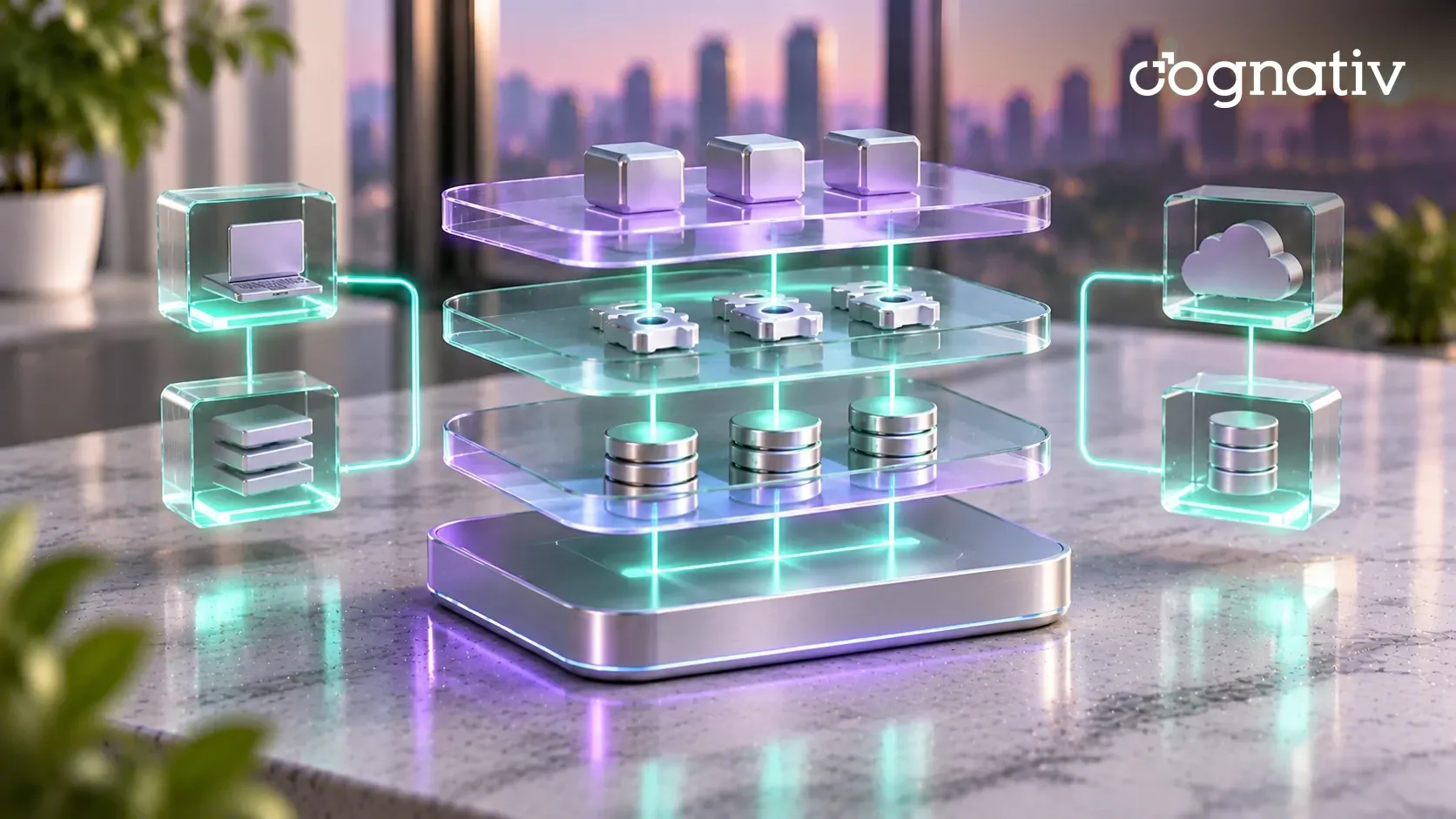
Application Architecture: Key Concepts, Types and Patterns
From monoliths and N-tier layers to microservices, events and serverless: how each architecture pattern works, its trade-offs and a framework for choosing.