


Arm's Own AI Chip: How the AGI CPU Turns Arm's Roadmap Into a Direct Enterprise AI Bet
Arm spent 35 years licensing designs. Its AGI CPU, built with Meta and sold as finished silicon, puts it in the server CPU race. Here's what buyers should know.
Arm's own AI chip is now real. On March 24, 2026, Arm launched the Arm AGI CPU, a data center processor it designs and sells as finished silicon, the first production chip in the company's history. For more than three decades Arm licensed its architecture and core designs to other chipmakers and collected royalties. Selling its own chip turns that roadmap into a direct bet on enterprise and cloud AI infrastructure.
The launch matters beyond Arm's income statement. It adds a new supplier to the server CPU market that Intel and AMD have long dominated, and it puts Arm in competition with some of its own licensees. Below is the event, a dated update through October 31, 2026, and what Arm-based AI chips for data centers mean for enterprise buyers.
Key takeaways
- The Arm AGI CPU packs up to 136 Neoverse V3 cores, is built by TSMC on a 3nm process, and has Meta as lead partner and co-developer.
- Arm reported customer demand of more than $2 billion across fiscal 2027 and 2028 and has delivered initial product to multiple customers.
- Most enterprises will meet the chip through cloud instances and OEM servers, not by buying silicon directly.
What Is the Arm AGI CPU, Arm's Own Chip?
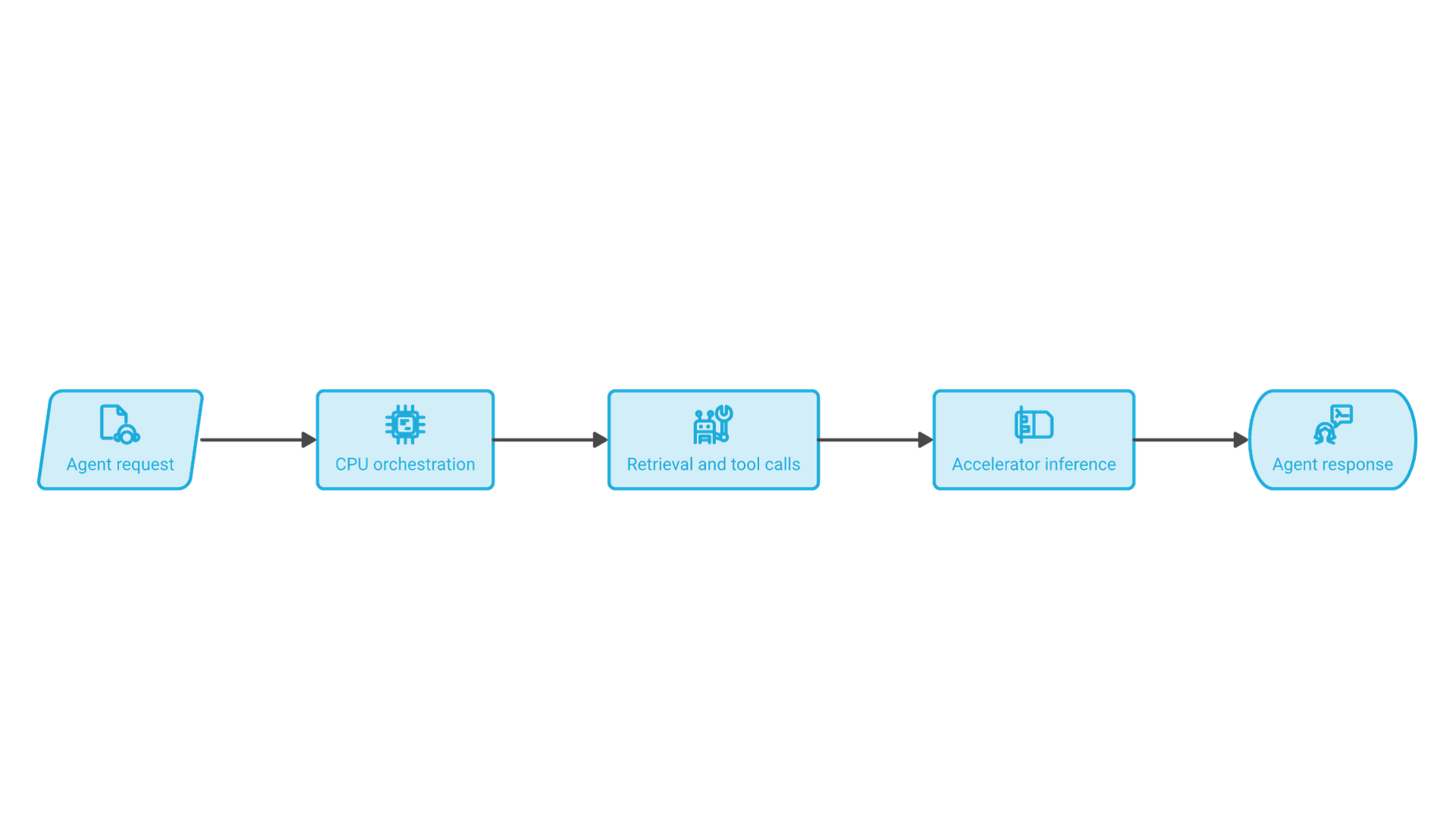
The Arm AGI CPU is a server processor aimed at what Arm calls agentic AI infrastructure: the general-purpose compute that coordinates AI agents, moves data, calls tools and feeds accelerators. In its launch announcement, Arm described it as its first Arm-designed data center CPU and its first production silicon product. Despite the name, "AGI" is product branding; the chip is a CPU, not a GPU or a dedicated AI accelerator.
Specifications and Claims
According to Arm, the chip offers up to 136 Arm Neoverse V3 cores, a 300-watt thermal design power and high memory bandwidth per core. TSMC manufactures it on its 3nm process.
Arm's headline claims are more than twice the performance per rack of x86 platforms and up to $10 billion in capital expenditure savings per gigawatt of AI data center capacity. Arm labels both as estimates. They should be treated as vendor figures until independent, workload-specific benchmarks are widely available.
Who Is Buying It?
Meta is the lead partner. The two companies co-developed the design, and Meta plans to run it alongside its own MTIA accelerators. Arm named Cerebras, Cloudflare, F5, OpenAI, Positron, Rebellions, SAP and SK Telecom as committed customers, with ASRock Rack, Lenovo, Quanta Computer and Supermicro building systems. More than 50 companies, including AWS, Google, Microsoft and Nvidia, backed the platform.
Why Arm Moved From Licensing to Its Own Silicon
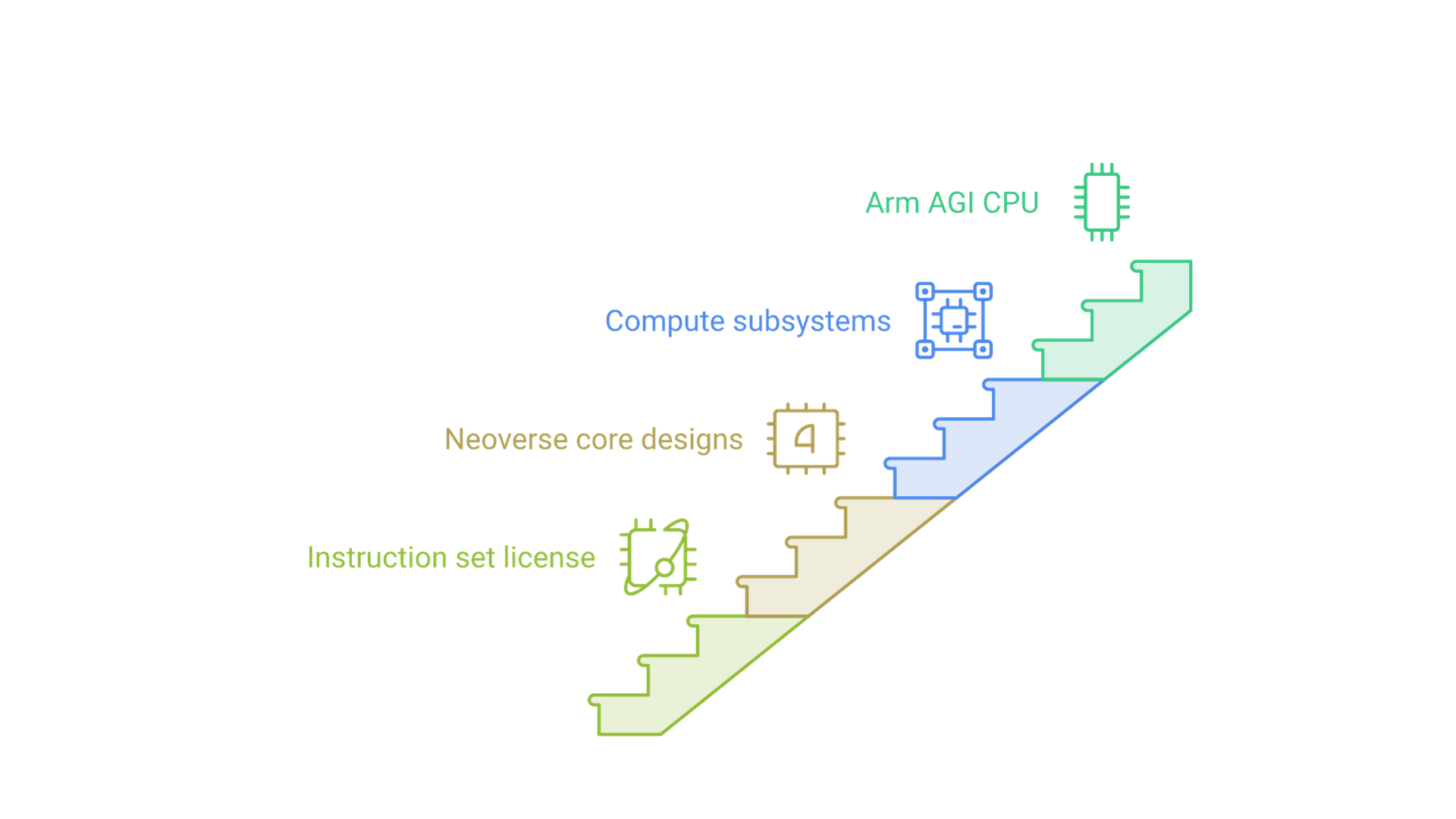
Arm's traditional business has two revenue lines. Licensing fees pay for access to its instruction set and core designs, and royalties are paid on every chip shipped that uses them. Over time Arm moved up the stack, from cores to Neoverse server designs and pre-integrated compute subsystems. A finished chip is the next step on that path.
The Road to the March 2026 Launch
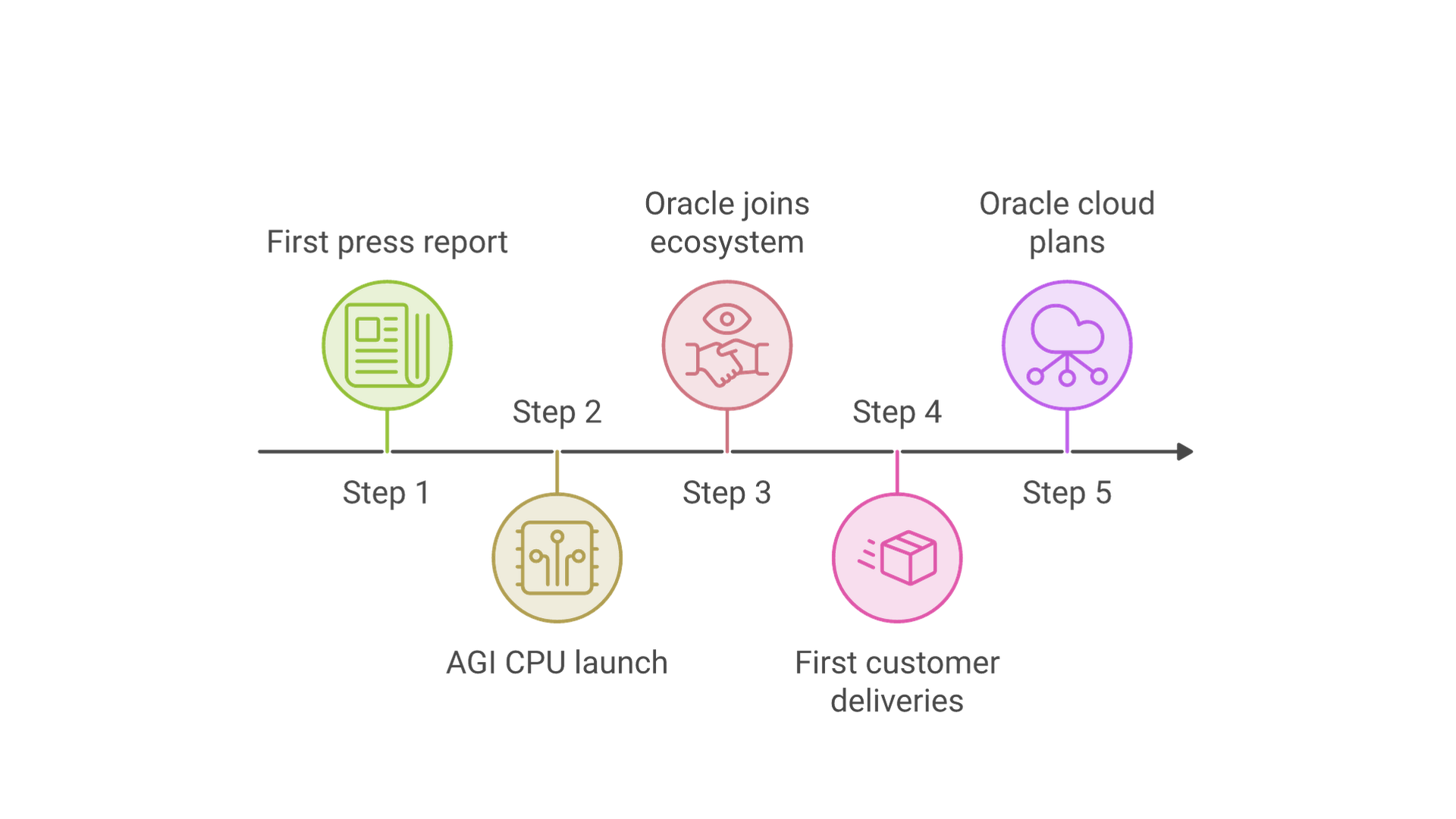
The move did not come out of nowhere. In February 2025, the Financial Times reported that Arm planned to launch its own server chip with Meta as a customer, as TechCrunch summarized at the time. Thirteen months later the plan became a product with named customers and volume production planned for the second half of 2026.
Why Now: Agentic AI Needs More CPUs
The case for the chip rests on a shift in AI workloads. Agents spend much of their time on CPU-bound work: orchestration, retrieval, tool execution and data handling between model calls. Arm estimates that data centers will need more than four times today's CPU capacity per gigawatt. In October 2026, TrendForce said the ratio of CPUs to GPUs or custom accelerators in AI servers is shifting from about one to eight toward one to two, or even one to one.
Competing With Its Own Customers
CNBC noted that Arm, long seen as the neutral "Switzerland" of chip design, now competes with companies such as Apple, Nvidia, Amazon and Google, all of which build Arm-based chips. Nvidia's Arm-based Grace and Vera CPUs pair with its GPUs, and that full-stack approach is a big part of what we covered in Nvidia's competitive edge in the AI chip market. Arm is betting that customers who do not design their own silicon will buy a ready-made Arm CPU rather than switch to x86.
The Key Numbers Explained
At launch, CEO Rene Haas told Reuters he expected the chip line to generate about $15 billion in annual revenue in roughly five years, within an overall company target of about $25 billion in revenue and $9 in earnings per share over the same period, according to Reuters. Arm shares rose 6.5% in extended trading after the projections. These are long-range targets.
The nearer-term figure came in Arm's first-quarter fiscal 2027 results on July 29, 2026. Arm said AGI CPU demand "now exceeds $2 billion across FYE27 and FYE28," that initial product had been delivered to multiple customers, and that it was adding customers in the US and China. It also said it had secured manufacturing capacity for the original $1 billion opportunity, which means demand currently runs ahead of secured supply. Total revenue for the quarter was $1.29 billion, up 22% year over year, and Futurum Group reported that data center royalties more than doubled.
Arm vs x86 for AI Servers
The AGI CPU enters a market where x86 still leads but Arm is growing quickly. TrendForce estimated on October 22, 2026 that x86 held nearly 90% of server CPUs in 2025, with Arm just past 10%. It forecasts Arm above 20% in 2026 and about 30% in 2027, driven largely by Nvidia Vera and new in-house chips from cloud providers. Those shares count all Arm-architecture chips, not only the ones Arm sells itself.
| Factor | Arm-based server CPUs | x86 server CPUs |
|---|---|---|
| Main suppliers | AWS Graviton, Google Axion, Microsoft Cobalt, Nvidia Grace and Vera, Ampere, and now the Arm AGI CPU | Intel Xeon and AMD EPYC |
| Market position | Fast-growing share, concentrated in hyperscale clouds | Large majority of installed servers |
| Design emphasis | High core counts and performance per watt | Broad compatibility and a long-established platform |
| Software fit | Strong for Linux, containers and modern languages; some binary-only tools still need porting | Widest support for legacy enterprise applications |
| Role in AI systems | Host and orchestration CPU next to GPUs, TPUs and custom accelerators | Long-standing default host CPU in GPU servers |
| How enterprises get it | Mostly cloud instances; AGI CPU through OEM servers | On-premises servers and every major cloud |
For most AI deployments, the CPU decision is not about raw model speed. It is about how efficiently the host handles orchestration, data movement and the many small tasks around inference, which is why CPU choice belongs inside broader AI inference infrastructure considerations rather than being made in isolation.
What Has Happened Since the Launch
Seven months after launch, the chip has moved from announcement to early deliveries. The milestones below are confirmed by Arm or its partners.
June 2026: Oracle Joins the Ecosystem
At COMPUTEX on June 2, 2026, Arm said Oracle Cloud Infrastructure was joining the AGI CPU ecosystem, and Supermicro introduced air-cooled and liquid-cooled AGI CPU platforms. Oracle's language at that stage was exploratory.
July 2026: Demand Doubles the Initial Estimate
The July results raised the demand figure above $2 billion and confirmed first deliveries. Arm promised a fuller AGI CPU update at its fiscal third-quarter results.
October 2026: A Cloud Roadmap
On October 28, 2026, Arm said that at Oracle AI World, Oracle outlined plans to bring the AGI CPU to OCI in fall 2027. Arm also noted that Nvidia's Arm-based Vera CPUs are now generally available on OCI. TrendForce reported the same month that Arm's in-house processors had entered mass production and shipment. Arm is scheduled to report fiscal second-quarter results on November 4, 2026.
What Arm's Own Chips Mean for Enterprises
For most enterprises the practical effect is more choice in where AI workloads run, not a new chip on the purchase order. Hyperscalers already offer Arm instances and server makers are shipping AGI CPU systems. The question is which workloads benefit and how to test them safely.
Workloads That Suit Arm-Based AI Chips for Data Centers
Agent orchestration, retrieval pipelines, API services, data preprocessing and CPU-based inference for smaller models are the clearest candidates, because they are parallel, cloud-native and sensitive to power and cost. Teams sizing their own hardware can compare these needs against our guide to local AI server specs, which covers how CPU, memory and accelerator choices interact.
How to Evaluate the Shift
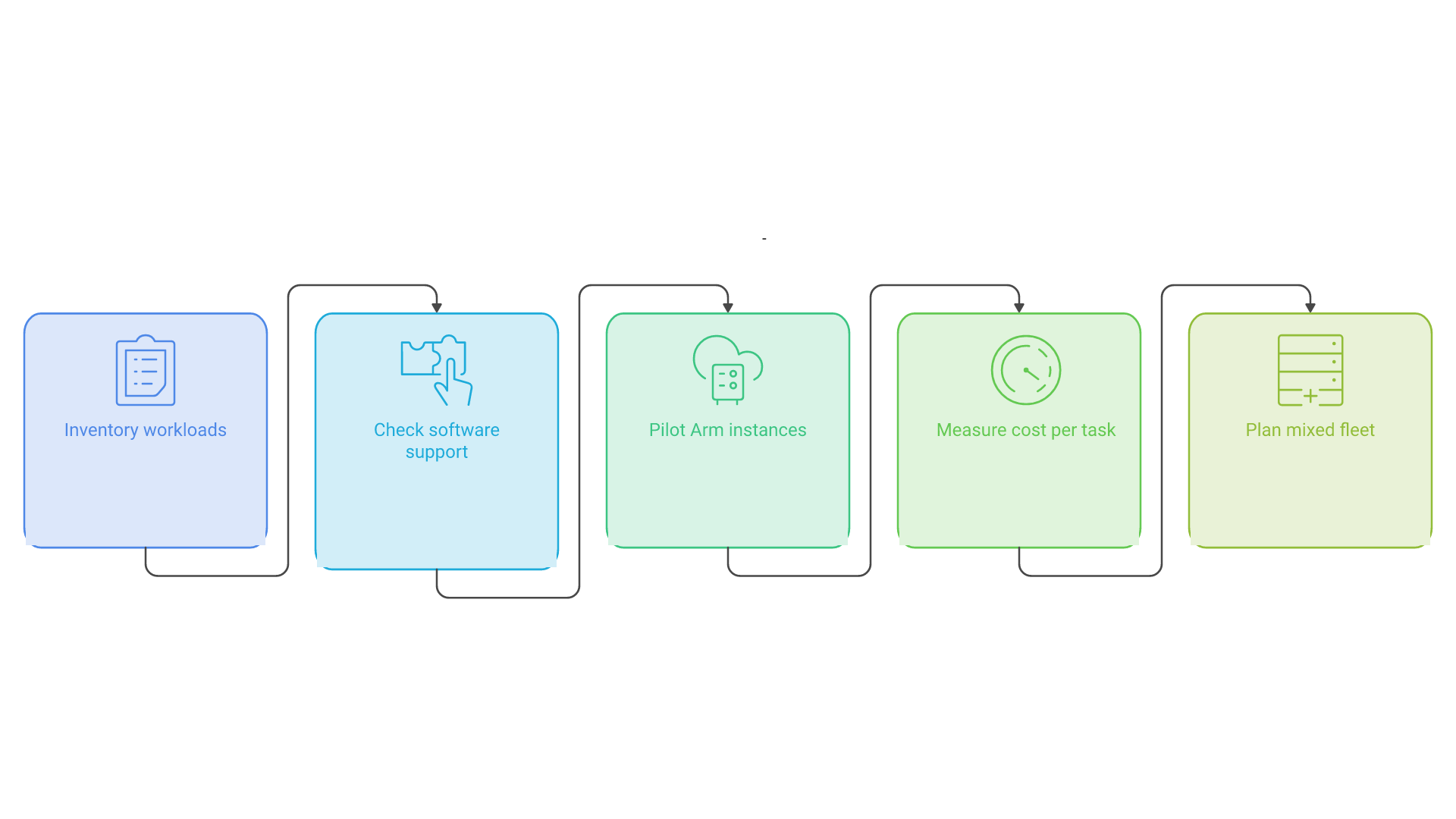
Start with a workload inventory and check every dependency for Arm64 support, including container images, drivers, monitoring agents and any commercial software with x86-only builds. Then run a bounded pilot on Arm cloud instances and measure cost per completed task, not just benchmark throughput. Planning that kind of mixed Arm and x86 fleet is part of our AI infrastructure services.
Risks and Open Questions
Supply is the first constraint: Arm has said demand exceeds the capacity it has secured so far, so delivery schedules may favor the largest customers. Pricing has not been disclosed, and the performance claims remain Arm's estimates until independent results across varied workloads are public. Running a silicon business is also new for Arm, which adds execution and support risk.
Channel conflict is the second question. Licensees may weigh how far to depend on a supplier that now competes with them. For buyers, the safest posture is portability: keep workloads containerized, avoid architecture-specific lock-in and review cloud contracts for flexibility, which our cloud infrastructure consulting team helps companies structure.
Frequently Asked Questions
Does Arm make its own chips now?
Yes. With the AGI CPU, launched on March 24, 2026, Arm sells a finished data center processor for the first time. It still licenses its designs to other chipmakers.
What is the Arm AGI CPU used for?
It is a server CPU for AI data centers, aimed at agentic AI work such as orchestration, retrieval, tool execution and feeding accelerators. It is not a GPU or a training accelerator.
Is Arm better than x86 for AI servers?
It depends on the workload. Arm-based CPUs emphasize core counts and performance per watt and suit cloud-native services, while x86 offers the widest compatibility with legacy software. Arm's claim of more than twice the performance per rack is an Arm estimate.
Who are Arm's AGI CPU customers?
Meta is the lead partner and co-developer. Arm also named Cerebras, Cloudflare, F5, OpenAI, Positron, Rebellions, SAP and SK Telecom at launch, and in July 2026 said it was adding customers in the US and China.
Is Arm competing with Nvidia?
Partly. Nvidia builds its own Arm-based CPUs, Grace and Vera, so Arm's own chip competes in the same CPU market. Arm does not make GPUs, and Nvidia publicly supported the AGI CPU launch.
Can enterprises buy the Arm AGI CPU?
Yes, through server makers such as Lenovo, Supermicro, ASRock Rack and Quanta. Most enterprises will more likely use it through cloud providers; Oracle plans to offer it on OCI in fall 2027.
Conclusion: Arm's Direct Enterprise AI Bet
Arm's own AI chip marks the end of its purely neutral role in the compute stack. The AGI CPU puts Arm alongside Intel, AMD and its own licensees in the server CPU market, betting that agentic AI will keep driving demand for CPUs next to accelerators.
For enterprise buyers, the opportunity is practical: more Arm capacity in clouds and servers, and a stronger reason to make workloads architecture-portable now. Supply, pricing and independent benchmarks are the open questions to track.
If you are deciding how Arm, x86 and accelerators should fit your AI roadmap, talk to Cognativ about your AI infrastructure.