

Hims & Hers Data Breach: How a Customer Support Platform Hack Exposed Core-System Risk
Social engineering gave attackers Hims & Hers support tickets in February 2026. See the verified facts and the controls that keep help desks from exposing data.
The Hims & Hers data breach did not start with a flaw in the telehealth company's medical systems. In early February 2026, an unauthorized party used social engineering against two employees and reached the company's third-party customer service platform, where support tickets held customer names, contact details and, for some people, the category of treatment they had asked about.
The incident is a clear example of a wider pattern: help desks and support platforms hold sensitive data, connect to identity systems and are often guarded less tightly than core applications. Below is what Hims & Hers has disclosed, what has been reported but not confirmed, what has happened since, through October 31, 2026, and how to protect core systems from support-channel compromise.
Key takeaways
- Unauthorized access to support tickets ran from February 4 to February 7, 2026, according to the company's notification letter.
- Hims & Hers says its electronic medical record and communications with health care providers were not affected.
- The entry point was people and identity, not a software vulnerability: the company describes a social engineering attack on two employees.
What Happened in the Hims & Hers Data Breach
Hims & Hers Health, Inc. first described the incident in its annual report on Form 10-K, filed February 23, 2026. The company said that in early February 2026 it identified a cybersecurity incident in which an unauthorized third party gained access to certain systems through a social engineering attack on two employees. It isolated the affected systems, brought in external cybersecurity advisors and coordinated with law enforcement.
Individual notifications followed. In the sample notice filed with the California Attorney General, dated April 2, 2026, the company said it became aware of suspicious activity on its third-party customer service platform on February 5, 2026, and that certain tickets sent to its customer service team were accessed or acquired without authorization between February 4 and February 7.
Timeline of the Incident
| Date | Event | Source |
|---|---|---|
| February 4 to 7, 2026 | Support tickets accessed or acquired without authorization | Company notice |
| February 5, 2026 | Company becomes aware of suspicious activity on its support platform | Company notice |
| February 23, 2026 | Incident disclosed in the annual report on Form 10-K | SEC filing |
| March 3, 2026 | Company identifies personal information in the affected tickets | Company notice |
| April 2, 2026 | Notification letters dated and sample filed in California | Company notice |
| August 10, 2026 | Quarterly report says required notifications are complete | SEC filing |
What Data Was Exposed
According to the 10-K, the vast majority of customer information accessed was limited to names and email addresses, and less frequently phone numbers and physical addresses. For customers who contacted customer service through the online platform between mid-February 2025 and early February 2026, the attacker may also have accessed the category of treatment and other information included in those messages.
The notification letter says the information may include name, contact information and other ticket-specific details, and that customer medical records and communications with health care providers were not impacted. Affected people were offered 12 months of credit monitoring and identity restoration through Cyberscout. The company has not published a total count of affected individuals; the California sample notice mentions approximately 13 Rhode Island residents, which is a state-level figure only.
How Attackers Reached the Support Platform
Hims & Hers has not named the platform vendor or the attackers. BleepingComputer reported on April 3, 2026, citing sources, that the attackers used a compromised Okta single sign-on (SSO) account to access the company's Zendesk instance and steal millions of support tickets, and that the ShinyHunters extortion group was behind it. Those details come from press sources, not from the company.
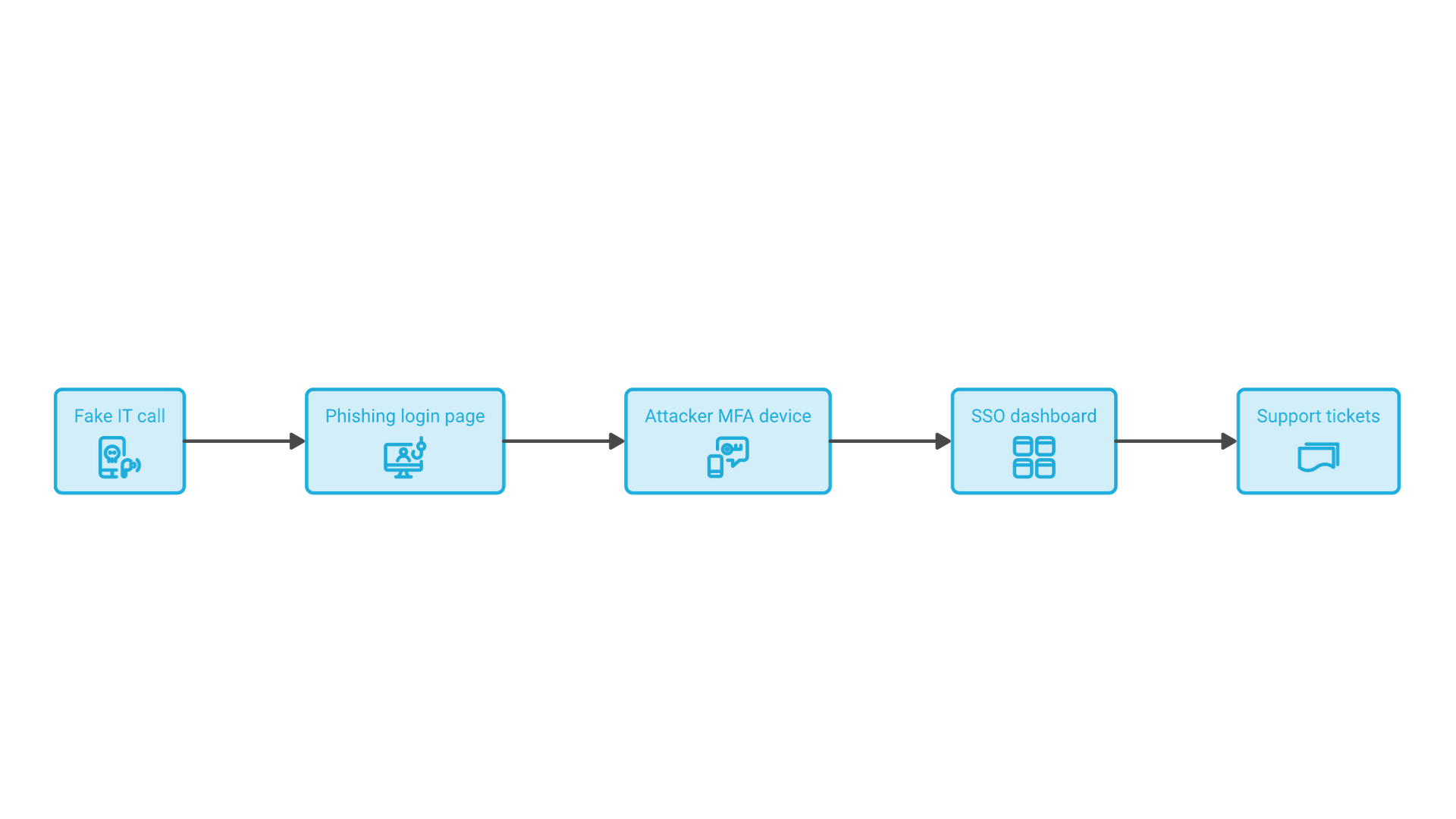
The reported method matches a campaign Google documented in January. In a January 30, 2026 Google Threat Intelligence Group analysis, researchers described callers posing as IT staff who steered employees to company-branded phishing sites, captured SSO credentials and one-time codes, enrolled their own device for multi-factor authentication (MFA) and then moved through the SSO dashboard into connected SaaS applications. Google stressed that the activity was not the result of a vulnerability in vendors' products.
Why SSO Turns One Login Into Many
SSO is a security improvement, but it concentrates risk. A single trusted session can open every application assigned to a user, including the help desk. If an attacker controls that session and has registered an MFA factor, downstream applications usually see a legitimate login, not an intrusion.
Why Customer Support Platforms Are a Core-System Risk
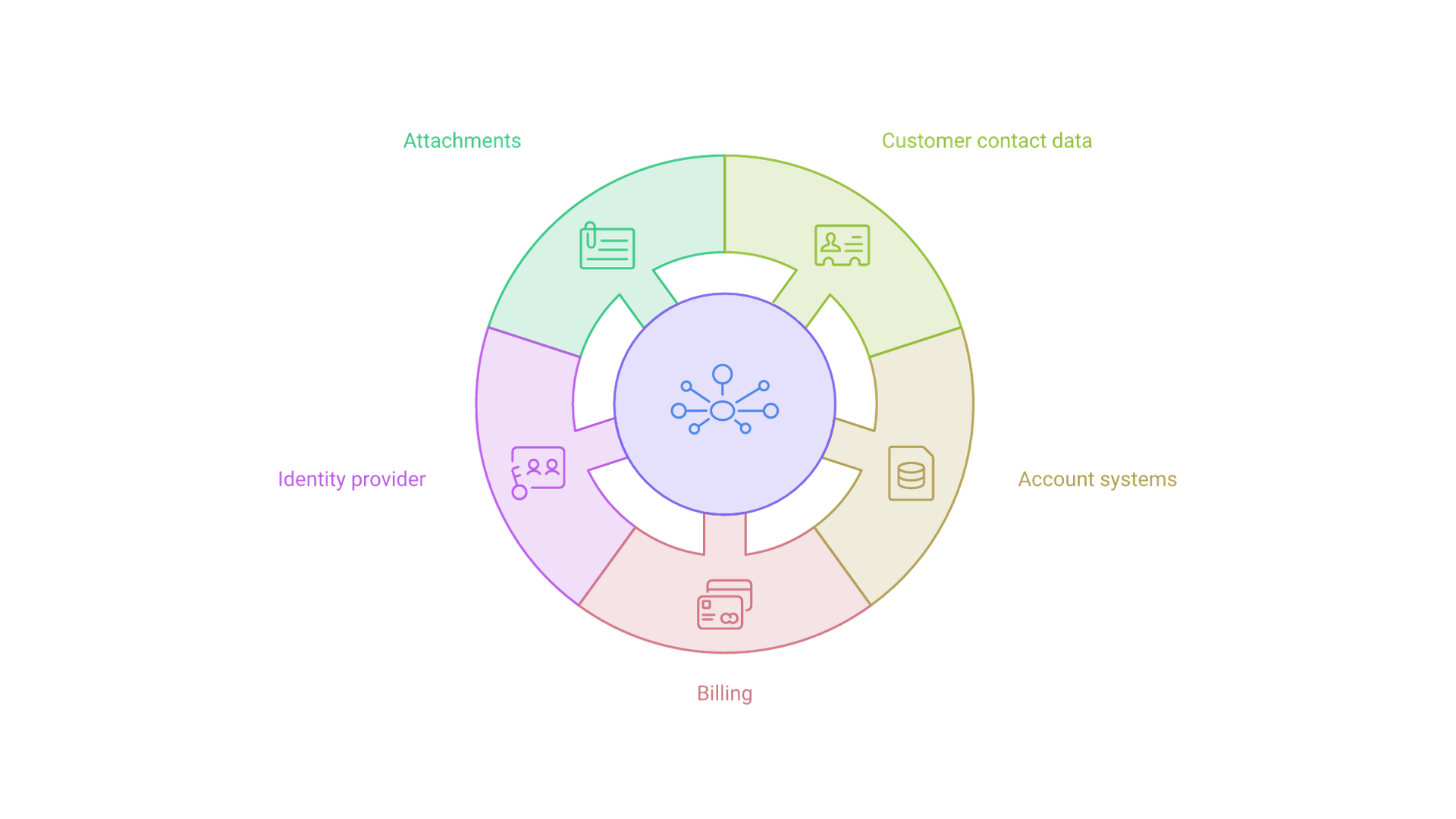
Customer support platforms are often treated as front-office tools, yet they hold some of the most sensitive data a company has. Tickets carry names, contact details, order and account history, free-text descriptions of problems and attachments such as screenshots or logs. In health care, a customer's own words can reveal a condition even when the medical record stays untouched.
Support platforms are also wired into core systems. Agents look up accounts, trigger refunds, reset credentials and see data pulled from billing, identity and product databases through integrations and API tokens. That makes the help desk both a data store and a path into other systems.
A Recurring Pattern
The Hims & Hers incident is not isolated. Okta's root-cause report on its 2023 support system breach found that an attacker used a stored service account to view files tied to 134 customers, some of which contained session tokens, and that downloads through one interface were not logged. In February 2026, European retailer ManoMano said a breach at a third-party customer service provider affected 38 million customers, exposing contact details and customer service communications.
The lesson is consistent: whoever can read support data, including outsourced agents and connected tools, is part of your security perimeter. Our analysis of the Anthropic threat intelligence report shows how quickly attackers adapt their tooling, which makes identity and access the controls that matter most.
What Has Happened Since (Through October 31, 2026)
In its quarterly report for the period ended June 30, 2026, filed August 10, 2026, Hims & Hers said it had completed the required regulatory and individual notifications. In the 10-K it said it did not believe the incident was reasonably likely to materially affect its financial condition or results of operations.
As of October 31, 2026, the company had not publicly confirmed the vendor, the attacker or the number of people affected. Law firms announced investigations after the April notice, but this article does not treat any resulting claims as established.
How to Protect Core Systems From Support-Channel Compromise
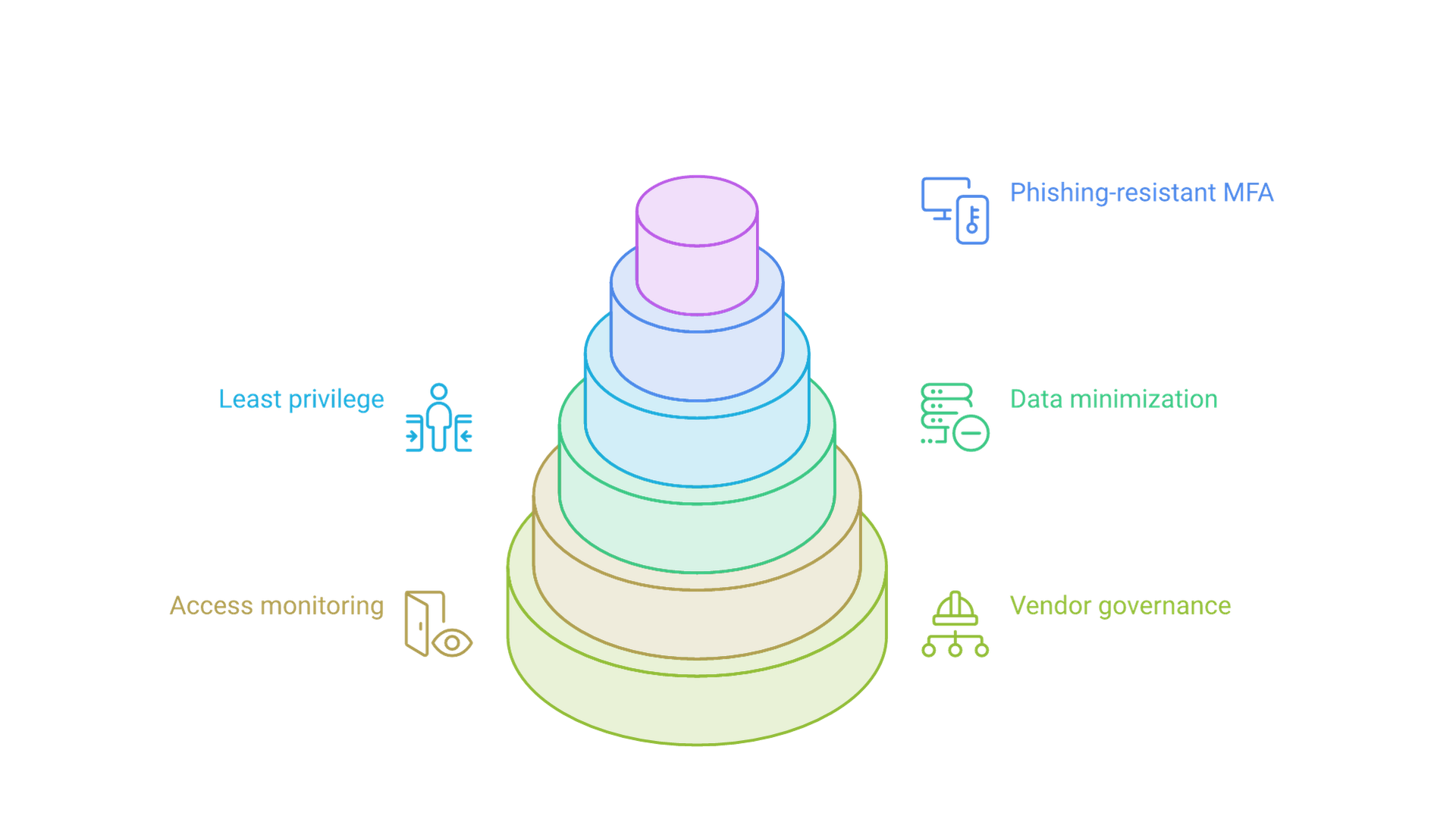
Help desk security works best as a layered program. The controls below address the techniques seen in this incident and similar third-party SaaS breaches.
Make Identity Phishing-Resistant
Voice phishing defeats one-time codes and push approvals because the victim hands them over. CISA's guidance on phishing-resistant MFA points to FIDO2 security keys and passkeys, which bind authentication to the legitimate site. Pair them with alerts on new MFA device enrollments and a call-back procedure for any request that claims to come from IT.
Apply Least Privilege to the Help Desk
Give agents only the data and actions their queue requires, set sessions to expire, and remove bulk export rights from everyday roles. Review which admins and service accounts can read every ticket, and rotate integration tokens on a schedule.
Minimize What Tickets Store
Redact or block sensitive fields at intake, purge closed tickets on a defined retention schedule and never ask customers to upload files that contain secrets, such as browser session logs, without a scrubbing step. Data that is not stored cannot be stolen.
Monitor for Mass Access
Log ticket views, searches, exports and API pulls, and send them to your security monitoring. A single user reading thousands of tickets in an hour, or a login from a new device right after an MFA change, should trigger review.
Govern Vendors and Outsourced Agents
Contracts with support platforms and business process outsourcers should require SSO, logging access, breach notice timelines and data deletion. Teams that run support tooling on their own cloud infrastructure should apply the same identity and logging standards there.
What It Means for AI-Powered Customer Support
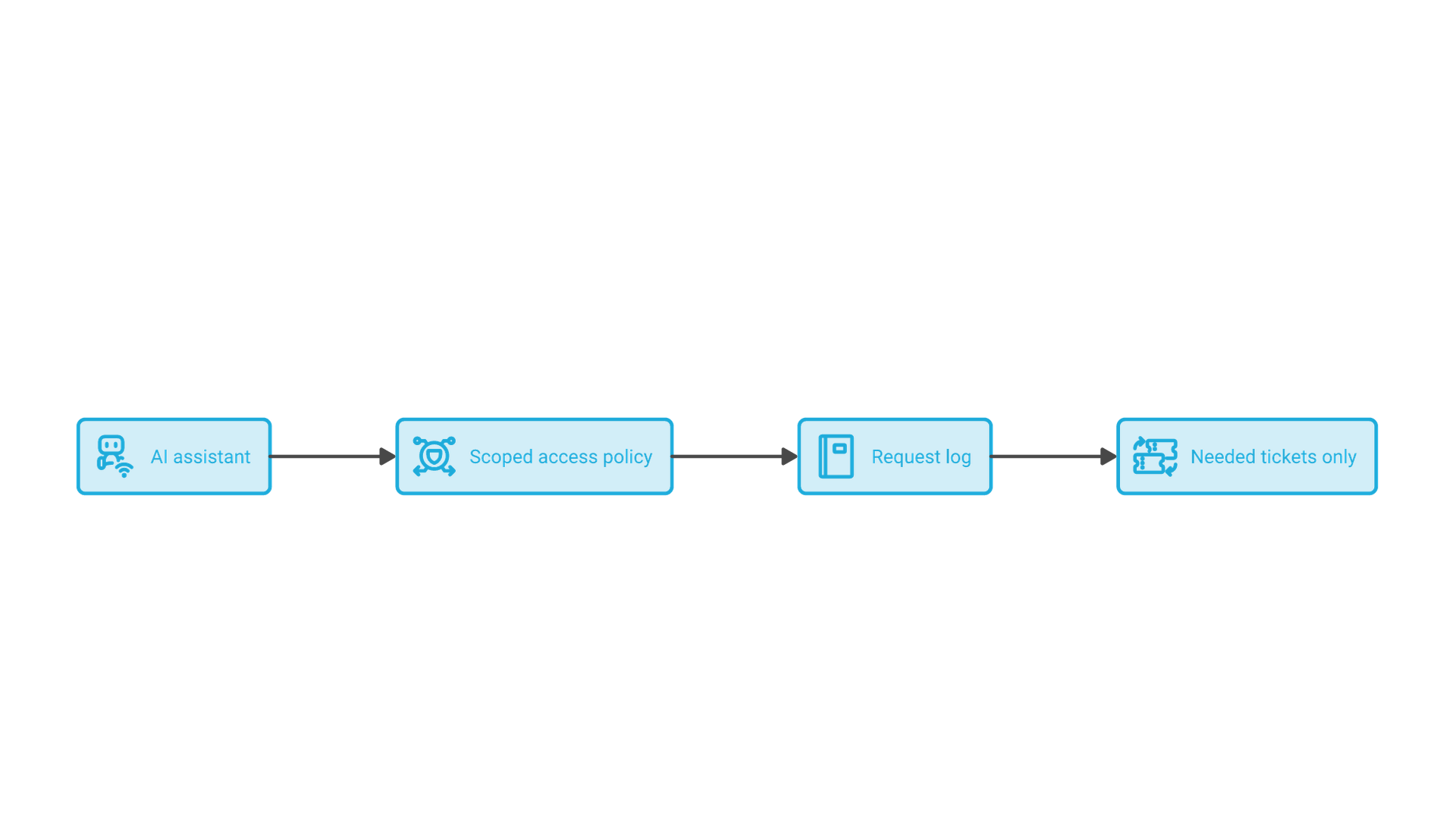
Many companies are adding AI assistants that summarize tickets, draft replies or search past cases. Each one becomes another identity with read access to support data. Scope these assistants to the minimum ticket set, keep their access logged like a human agent's, and avoid copying full ticket history into external services. Our guide to using LLMs with private data covers deployment patterns that keep customer records inside your boundary.
Ownership matters as much as tooling. An enterprise AI governance framework should name who approves an assistant's data access and who reviews its logs, and formal AI governance services can help map those data flows before an assistant goes live.
Frequently Asked Questions
Was Hims & Hers hacked?
Yes. The company disclosed that an unauthorized third party accessed its third-party customer service platform in early February 2026 after a social engineering attack on two employees.
What information was exposed in the Hims & Hers breach?
Mostly names and email addresses, and less often phone numbers and physical addresses. For some customers who contacted support online, the category of treatment and message content may also have been accessed.
Were medical records affected?
No. Hims & Hers says its electronic medical record and communications with health care providers were not accessed.
Was the Hims & Hers breach caused by Zendesk?
The company has not named its vendor. Press reports say attackers used a compromised SSO account to reach a Zendesk instance, which points to account takeover rather than a Zendesk product flaw.
How many people were affected?
Hims & Hers has not published a total count. Reports of millions of stolen tickets come from press sources and are not confirmed by the company.
How can companies secure their help desk?
Use phishing-resistant MFA, limit agent and integration permissions, minimize stored ticket data, log bulk access and hold support vendors to the same security standards.
Conclusion: Treat the Help Desk as a Core System
The Hims & Hers data breach shows that attackers do not need to break into a medical record or a production database when a support platform already holds names, contact details and the reasons customers reached out. Identity was the way in, and SSO made the support platform reachable once one account fell.
Protecting customer support data means applying core-system controls to it: phishing-resistant MFA, least privilege, data minimization, logging and vendor oversight. If you want to review how your support stack and AI assistants handle customer data, talk to Cognativ about your security priorities.