
Google Will Turn Off Search for Schools That Restrict AI: The Plan and the Backlash
K-12 schools that keep Google's AI off will lose Google Search too. A look at the November 2026 policy, the backlash it drew and the lesson for AI buyers.
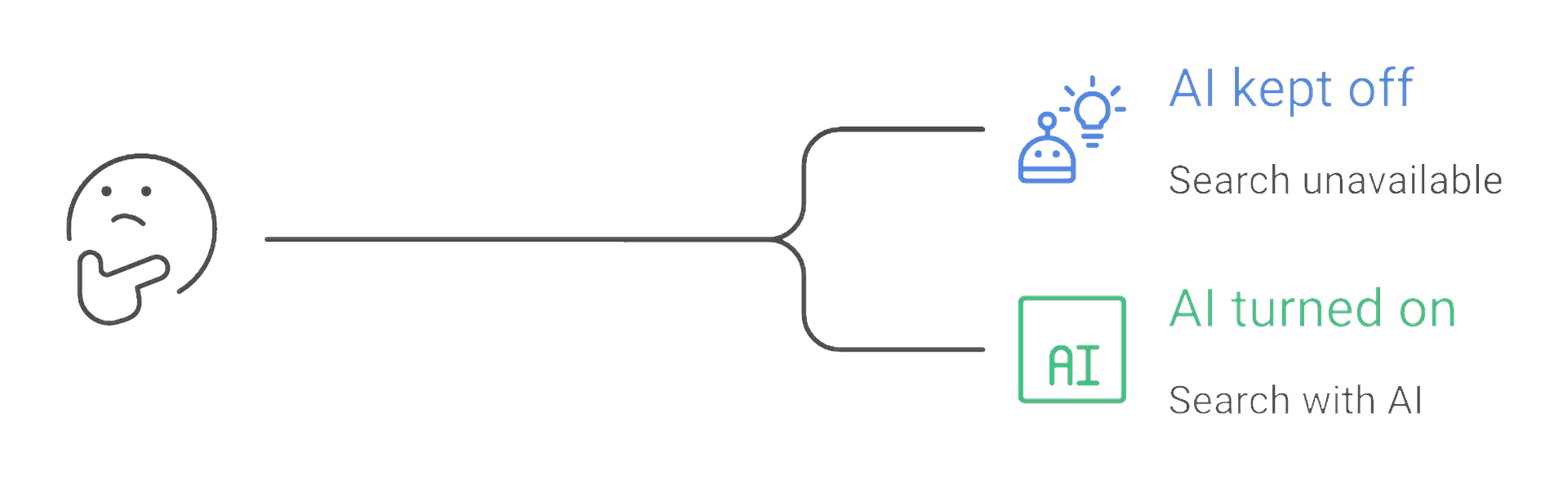
Google plans to switch off Search for K-12 schools that decline its AI tools. In an announcement on November 3, 2026, the company said Gemini, Gemini Notebook, Gemini in Classroom and Google Search will be off by default for K-12 student accounts until administrators turn them on, and that schools choosing to keep AI off will lose Search along with it.
Within hours, senators, a former Federal Trade Commission chair and the mayor of New York City were criticizing the policy. This article covers what Google announced, why Search cannot be separated from AI in Google's design, how critics responded and what the episode tells businesses about AI built into the platforms they depend on.
What Google Announced for K-12 Schools
The change was introduced in a Google blog post by Chris Phillips, the company's vice president and general manager for education. Google said the AI products will stay entirely off for K-12 student accounts until school administrators explicitly enable them, and that administrators can turn each product on separately. The company said it consulted schools, teachers, researchers and policymakers, and that it will share more specifics in the coming months before the changes roll out.
The same post announced Guided Learning for students. In Google Classroom it is available now as a study tool tied to class material that a teacher assigns. In Search, Google is building a version that detects certain homework requests and walks students through the problem step by step instead of giving an answer, starting with a pilot in select U.S. schools this month.
Why Google Says Search Cannot Be Separated From AI
The controversy comes from treating Search as one of the AI products. Phillips told The New York Times that "Search and AI are deeply integrated." Students at schools that do not opt in will not have Search and will see a message from their school saying it is unavailable.
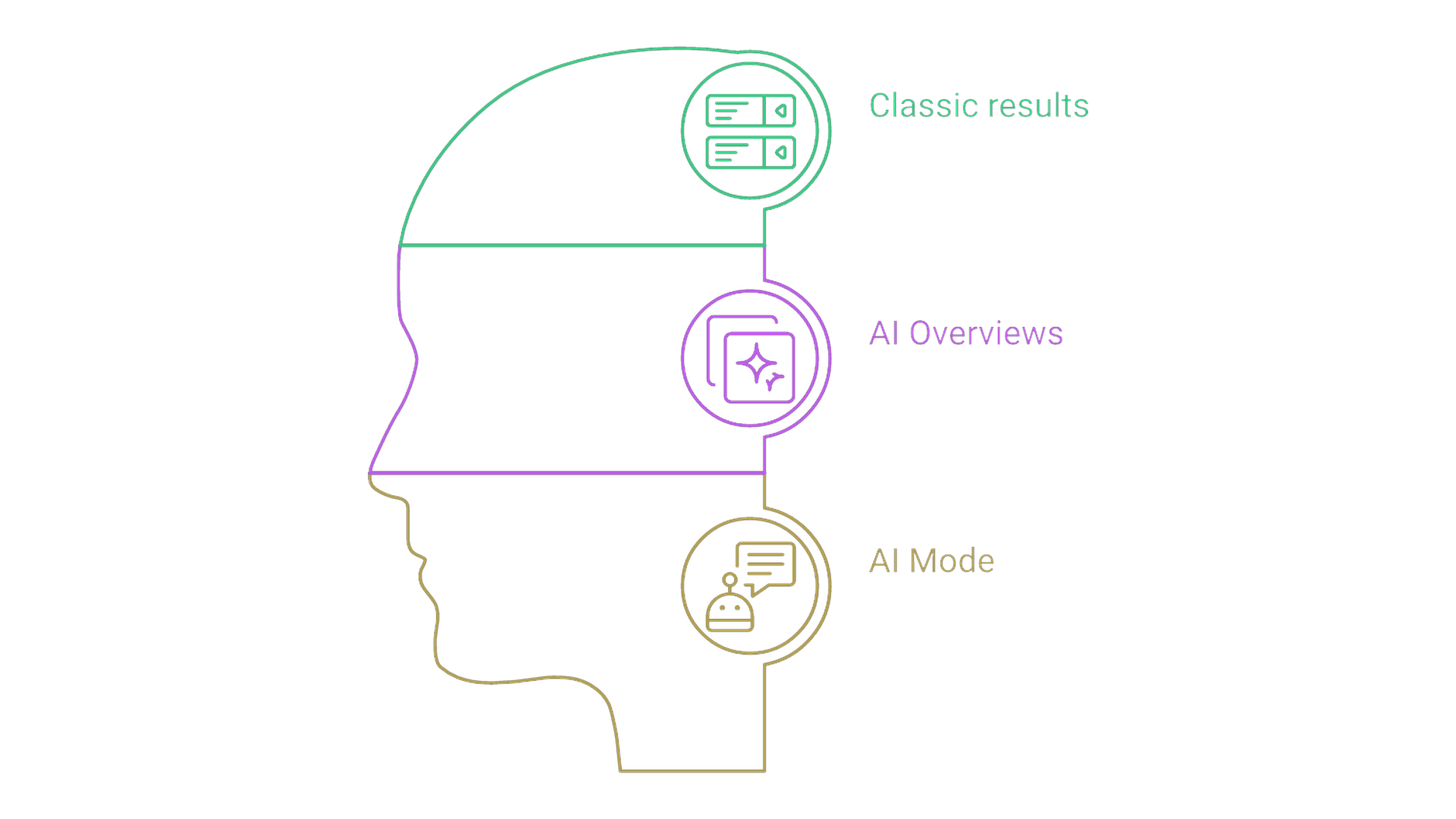
Google Search now includes AI Overviews at the top of results and AI Mode, a conversational interface. Neither has a separate switch for schools, so the choice is all or nothing. Critics argue the AI layer could be disabled while keeping ordinary results; Google has not offered that option.
The coupling is a design decision, and it shapes what customers can control. When a supplier merges an essential function with a newer feature, buyers lose the ability to adopt one without the other. Organizations that map these dependencies through enterprise architecture work can see in advance which capabilities they could lose if a vendor changes its terms.
The Backlash From Lawmakers and Critics
Sen. Bernie Sanders responded on X that Google was threatening to cut schools off from Search if they kept students away from AI. "That's not love. That's extortion," he wrote, contrasting the move with President Trump's claim that AI leaders could regulate themselves.
President Trump claimed that AI oligarchs could regulate themselves because they “love our country.” Now, Google is threatening schools: if you stop your students from using AI, we will cut off your access to Google Search. That’s not love. That’s extortion. PAUSE AI NOW.
Others followed. Sen. Richard Blumenthal said Google cared more about pushing Gemini into schools than helping students succeed. Lina Khan, the former FTC chair, called the policy coercion by a search monopoly and argued it shows the danger of letting an unregulated monopolist control an essential service, noting that courts have already found Google violated antitrust law. New York City Mayor Zohran Mamdani said no corporation should dictate how children are taught.
Google defended the announcement on its official news account, saying it had listened to educators by turning AI products off by default and that the change gives "schools more choice, not less." In a statement, the company said it knows people worry about students using AI to shortcut schoolwork and that it will keep working with educators on controls and on improving Search for learning.
We want to clarify what we announced today about our education services. Today’s announcements give schools more choice, not less. Here’s what we announced: - Gemini, Gemini Notebook, and Search will be OFF 🔴 by default. This is based on K-12 schools asking for more control…
The Pressure That Preceded Google's Decision
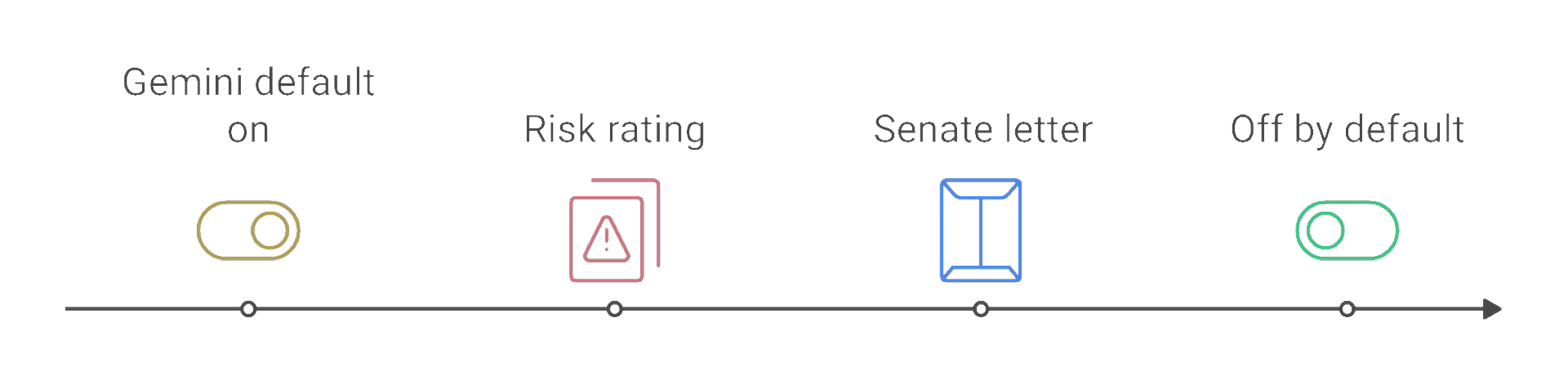
The policy follows months of scrutiny of Google's AI in classrooms. In August 2026, The New York Times reported that Google had turned Gemini on by default for many K-12 student accounts, a change several administrators said they learned about after the fact.
Common Sense Media then gave Google Search its lowest rating, "Unacceptable Risk," after testing AI Overviews and AI Mode with accounts set up for 11- and 15-year-olds. Its researchers found AI Mode completed all 180 homework assignments they submitted, and the group recommended that Google turn the AI features off by default for school and minors' accounts.
On October 21, Sens. Blumenthal and Josh Hawley wrote to Alphabet chief executive Sundar Pichai asking why AI features were default settings on school devices and what Google knew about the effect on children, with answers due November 2. Google's announcement came one day after that deadline. It meets part of that request by making AI opt-in, but it attaches the cost of losing Search to the decision.
What Google's School Policy Means for Businesses
The policy applies to K-12 student accounts, not business customers. Still, it shows a pattern that any organization relying on large software platforms should plan for: AI features increasingly arrive inside tools that are hard to replace, and the controls to turn them off may be partial or tied to other functions.
Three steps reduce that exposure:
- Inventory embedded AI: list which of your core tools now include AI features, which are on by default and which can be disabled independently.
- Read the admin controls and terms: check what happens to related services if you disable an AI feature, and whether your contract protects you from bundling changes.
- Set your own policy first: decide where AI is acceptable for your staff and customers before a vendor decides for you.
A written policy with clear owners keeps those decisions consistent as vendors change their products. Companies building that framework can draw on AI governance support to define acceptable use, review vendor features and document who approves each change.
Frequently Asked Questions
Is Google turning off Search for schools?
Only for K-12 schools that keep its AI tools off. Google said Search will be off by default for student accounts along with Gemini, and administrators must turn it on.
Can schools turn off AI Overviews in Google Search?
Not separately. Google says Search and AI are deeply integrated, so schools that enable Search for students also get its AI features.
When does Google's new school AI policy take effect?
Google has not given a date. Its November 3, 2026 announcement said it would share specifics with schools in the coming months before the changes roll out.
Why did Bernie Sanders call Google's plan extortion?
Sanders argued that threatening to cut off Search for schools that keep students away from AI amounts to coercion, and used the policy to call for pausing AI.
Conclusion: An Off Switch With a Price
Google has given schools a way to keep its AI tools away from students, but turning them off also removes Search, the tool most classrooms rely on. That trade is why lawmakers and critics are calling the policy coercive, and why the specifics Google promises in the coming months will be closely watched.
For businesses, the lesson is to understand where AI sits inside the platforms you rely on and to set your own rules before a vendor sets them. If you want help reviewing embedded AI across your tools and building a governance policy around it, talk with the Cognativ team.