

Humanoid Robots in 2026: Potential, Challenges and Who Is Actually Deploying Them
From BMW's Figure 03 to Tesla's Fremont Optimus line, see where humanoid robots really work today and why dexterity, power and safety still limit their reach.
Humanoid robots are moving from stage demos into factories and warehouses, but far more slowly and narrowly than the headlines suggest. Their potential is real: a machine shaped like a person can work in spaces designed for people. So are their challenges: limited dexterity, battery life, reliability, cost and unfinished safety standards.
When this analysis first appeared in October 2025, the industry ran mostly on prototypes. A year later, Boston Dynamics has started building a product version of Atlas, Tesla has begun early Optimus production, BMW has moved Figure's robots onto a harder logistics job, Agility Robotics has signed new warehouse sites, and Unitree has become a publicly listed company in Shanghai.
Short answer: humanoid robots are commercially real in a handful of narrow, well-instrumented jobs, and still premature as general-purpose workers. This guide covers where they fit, what the leading companies have verifiably done as of October 31, 2026, what remains unsolved and how to evaluate a pilot.
Humanoid Robots: Potential and Challenges at a Glance
The case for humanoid robots rests on one idea: the world is already built for the human body. Stairs, doors, shelving, carts and tools all assume two legs and two hands, so a robot with the same form could step into existing processes without conveyors, fences and fixed cells.
The case against them, for now, is that general-purpose capability is the hardest thing in robotics to deliver. Every variation a specialized robot avoids by design, a humanoid must handle in real time. That is why current deployments focus on repeatable tasks such as moving totes and sorting parts.
- Potential: brownfield sites, labor gaps in material handling, one retrainable platform.
- Challenges: dexterity, energy and uptime, reliability on edge cases, cost and ROI, safety certification around people.
- Reality check: most 2026 deployments are small fleets on single tasks.
What Is a Humanoid Robot and Where Does It Fit?
A humanoid robot has a human-like body plan: a torso, a sensor head, two arms with hands or grippers, and usually two legs, though some designs use a wheeled base. It combines perception, a control system that keeps it balanced, and increasingly an AI model that turns what it sees into actions.
Types of Robots Compared
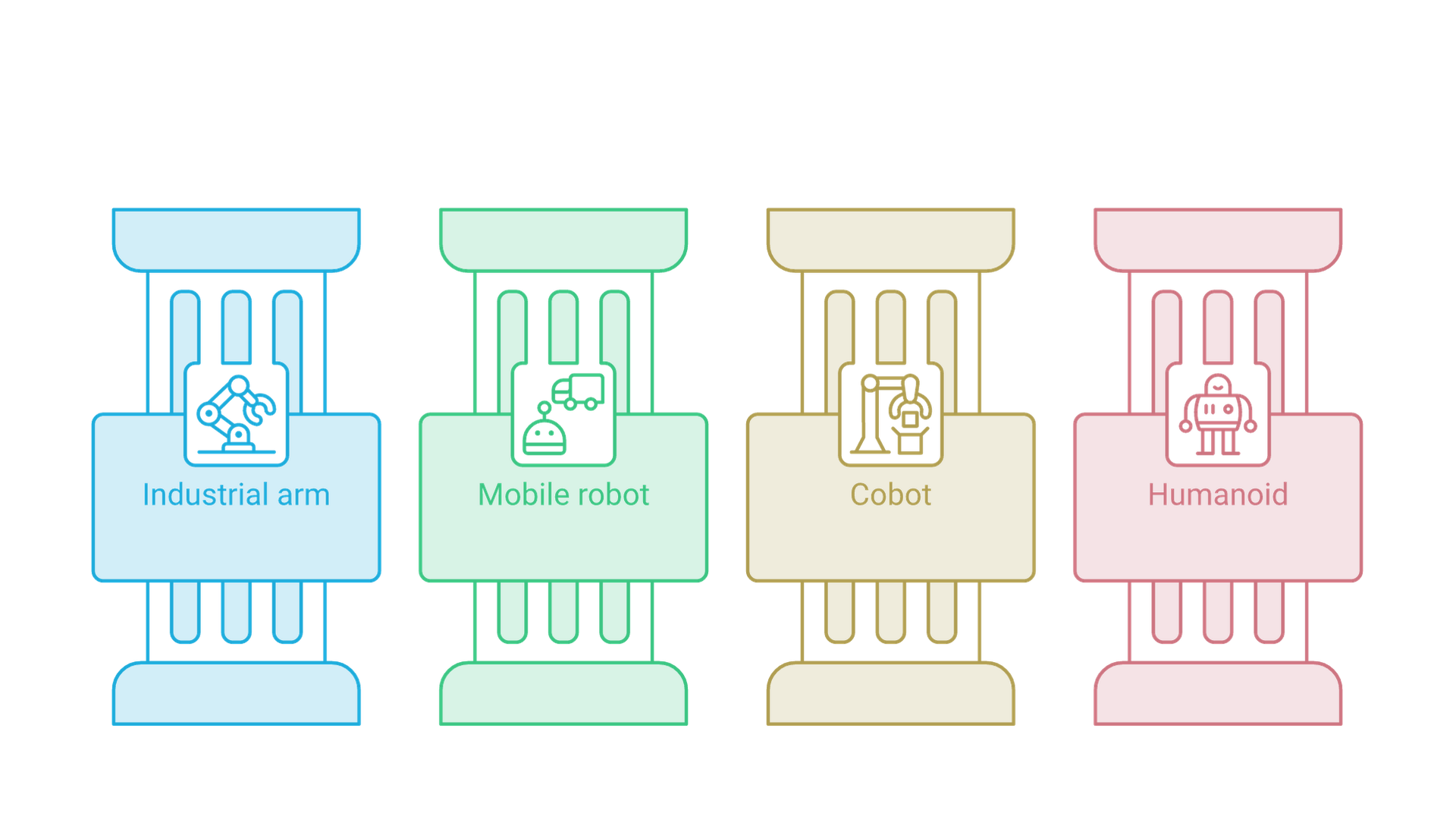
Humanoids enter a market specialized machines already serve well. Industrial arms dominate welding and assembly because they are fast, precise and fixed in place. Autonomous mobile robots carry goods through warehouses on wheels. Collaborative robots, or cobots, work beside people with force limits that make contact safer.
The humanoid is the generalist. It trades a specialized machine's speed for the flexibility to move between tasks without new infrastructure, which pays off only when the job is varied or the site hard to re-engineer.
Where the Leading Humanoid Robot Companies Stand in 2026
These milestones come from company announcements and established news coverage; few performance claims have been independently audited.
| Date | Company | Verified milestone |
|---|---|---|
| Sept 16, 2025 | Figure AI | Series C of more than $1 billion at a $39 billion post-money valuation |
| Jan 5, 2026 | Boston Dynamics | Product version of Atlas unveiled at CES; all 2026 deployments committed |
| June 25, 2026 | BMW and Figure | Figure 03 starts sequencing work in logistics at Plant Spartanburg |
| Aug 19, 2026 | Unitree | Debut on Shanghai's STAR Market after raising about 6.1 billion yuan |
| Oct 21, 2026 | Tesla | Early Optimus production begins at Fremont |
| Oct 26, 2026 | Agility Robotics | GXO agrees to deploy Digit at two more U.S. sites from early 2027 |
Figure AI
Figure announced in September 2025 that its Series C exceeded $1 billion at a $39 billion post-money valuation. Its most concrete proof point is BMW. According to BMW's June 25, 2026 announcement, Figure 02 inserted sheet-metal parts for welding and supported the production of more than 30,000 BMW X3 vehicles. Figure 03, which adds tactile sensors, palm cameras and wireless charging, now sorts parts into sequencing trolleys. BMW did not disclose robot numbers or terms.
Tesla Optimus
Tesla said in its Q3 2026 update that the bots coming off its new Fremont line are the first production-quality units it has built. As TechCrunch reported, Elon Musk called it early production with a slow, bumpy ramp, repeated a target of 20,000 units per week by the end of 2027, and acknowledged the design still needs work on safety, reliability and durability. Tesla has not published a unit count, price or external customer date.
Agility Robotics
The Robot Report covered the October 26, 2026 GXO agreement to add sites in Statesville, North Carolina, and Lebanon, Tennessee, starting in early 2027 with Digit 4 and moving to Digit 5 when it becomes available. Agility says its fleet has logged more than 65,000 hours of customer operation; that figure is the company's own. It is also preparing to go public through a merger with Churchill Capital Corp XI.
Boston Dynamics Atlas
At CES 2026, Boston Dynamics unveiled the product version of Atlas, with 56 degrees of freedom, a lift capacity of up to 50 kg and the ability to swap its own batteries. All 2026 units are committed to Hyundai and Google DeepMind, with more customers planned for early 2027. Hyundai, the majority shareholder, plans a robotics factory able to produce 30,000 robots per year.
Unitree
Unitree represents the low-cost, high-volume Chinese approach. Its shares closed more than 460% higher in their Shanghai debut, according to CNBC, after an IPO that raised about 6.1 billion yuan. The same CNBC report cited a Morgan Stanley forecast that China's humanoid shipments will reach 50,000 units in 2026.
The Potential: Where Humanoid Robots Add Value First
The early deployments share a pattern: material handling inside existing facilities, such as moving totes, loading parts and sequencing components. These jobs are repetitive and hard to staff, yet sit where new fixed automation would be disruptive.
The deeper potential lies in software. Models such as Figure's Helix 02, which the company describes as a vision-language-action model controlling hands, arms, torso and feet together, aim to let one robot learn several tasks through data rather than custom programming. If that works, the same hardware could handle a sequencing job one quarter and a kitting job the next.
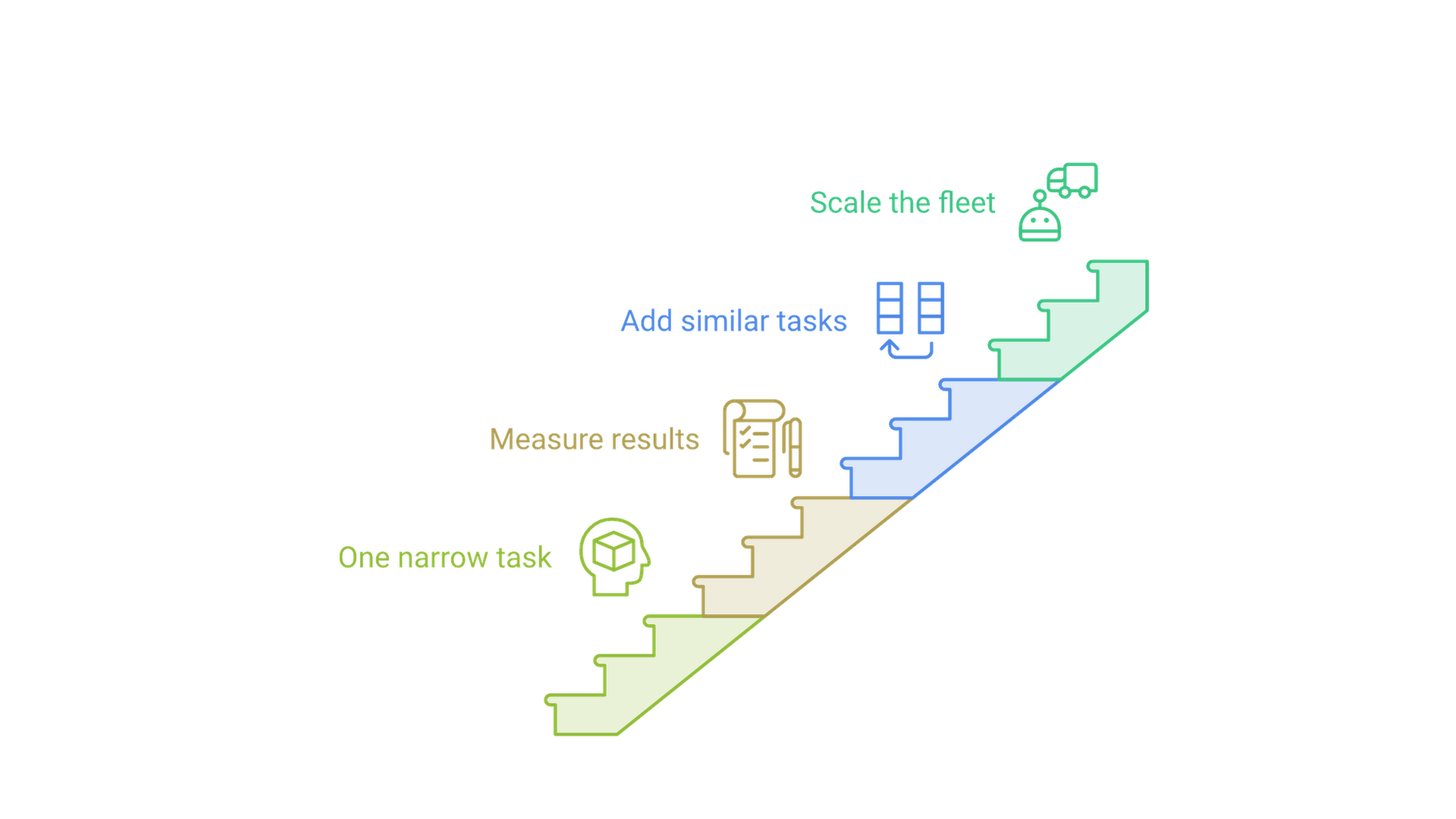
The sustainable path is progressive specialization: prove value on one narrow, measurable job, then expand, as BMW, GXO and Hyundai appear to be doing.
The Challenges Holding Humanoid Robots Back
Five interacting problems keep humanoids from scaling, and none is purely a software issue.
Dexterity and Fine Motor Control
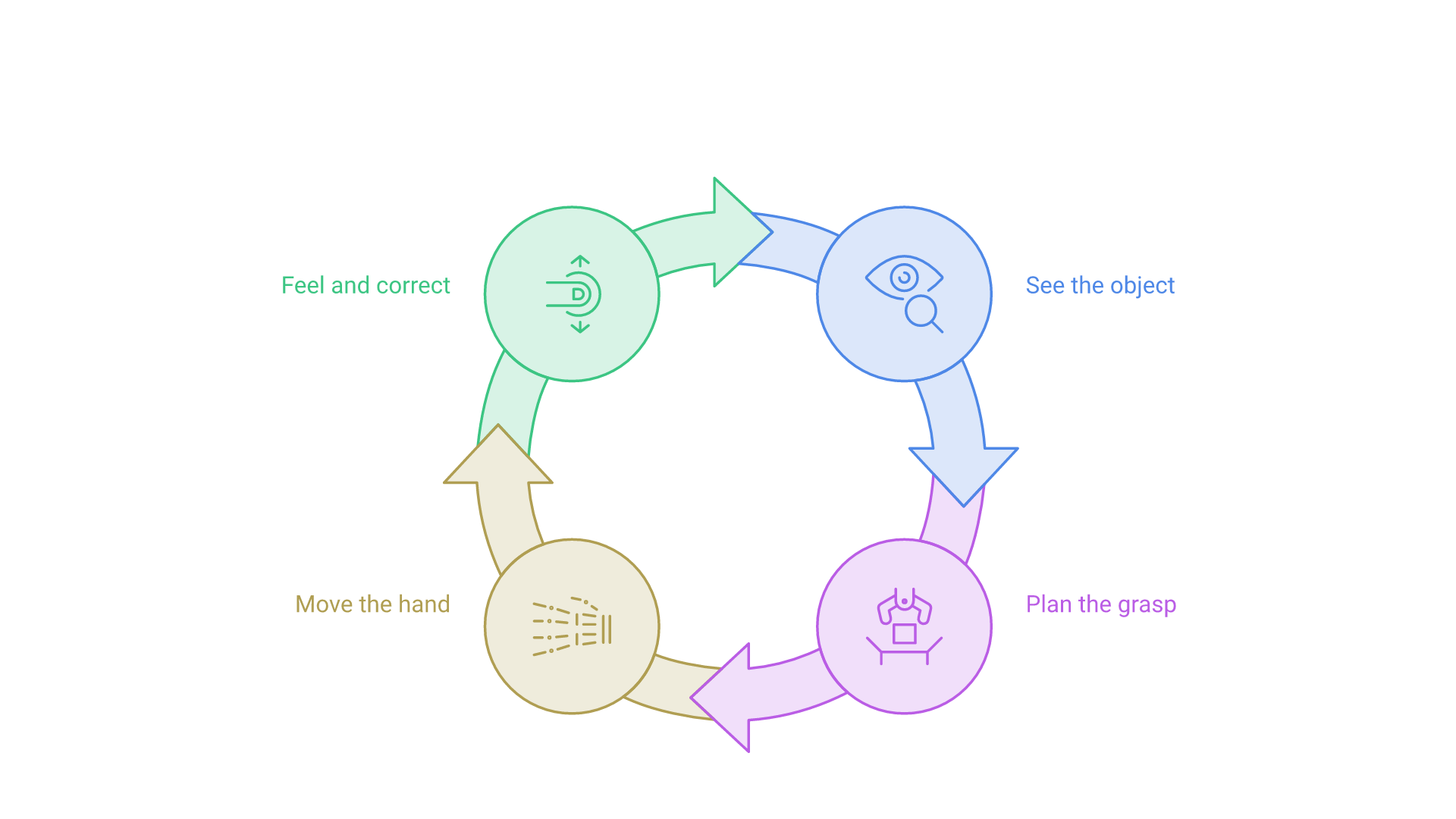
The human hand combines many joints with dense touch sensing and fast feedback. Robot hands are improving, but reliable manipulation of soft, slippery or irregular objects remains unsolved. Roboticist Rodney Brooks argued in a September 2025 essay that today's humanoids will not learn dexterity from video data alone, because they lack the touch sensing that human skill depends on. Musk's acknowledgment that Optimus still needs work on reliability and durability suggests the hardware side is far from settled too.
Energy, Uptime and Stability
Walking and balancing consume power continuously, and batteries add weight that makes balance harder. Vendors are engineering around the limit rather than solving it: Atlas swaps its own batteries and Figure 03 charges wirelessly.
Reliability on Edge Cases
Demos hide variability; real sites bring damaged boxes, misplaced parts, poor lighting and passing people. The same long-tail problem that limits AI systems elsewhere applies here, as we explain in our guide to why AI models struggle with edge cases. Uptime and intervention rates matter more than any demo.
Cost and ROI
Industrial humanoid pricing is rarely disclosed, and buyers must weigh hardware, integration, maintenance, supervision and safety engineering against a specialized robot or a human shift. Until vendors publish verifiable throughput and uptime data, ROI cases rest on pilots.
Safety Standards and Regulation
Existing standards cover fixed industrial arms and wheeled mobile robots, not legged machines that stay upright through active control. ISO's technical committee for robotics is drafting ISO 25785-1 for industrial mobile robots with actively controlled stability, which includes humanoids, but ISO still listed it as a committee draft in October 2026. Liability, worker privacy and labor displacement remain open questions.
Funding, Valuations and the Timeline Gap
Capital is moving faster than deployment. Figure's $39 billion valuation, Unitree's surging debut and Agility's planned listing all price in a future where humanoids work at scale. Meanwhile, the largest disclosed deployments still involve small fleets on single tasks, and Tesla has pushed its own Optimus targets back several times, as Electrek has tracked.
The gap is familiar. Self-driving cars attracted billions on promises of near-term autonomy and took far longer to reach paying customers. Humanoids may follow the same curve: overestimated in the short term, possibly underestimated in the long term. The companies best placed to survive a correction have paying customers, measurable task data and manufacturing capacity.
What Humanoid Robots Mean for Enterprise Operations Leaders
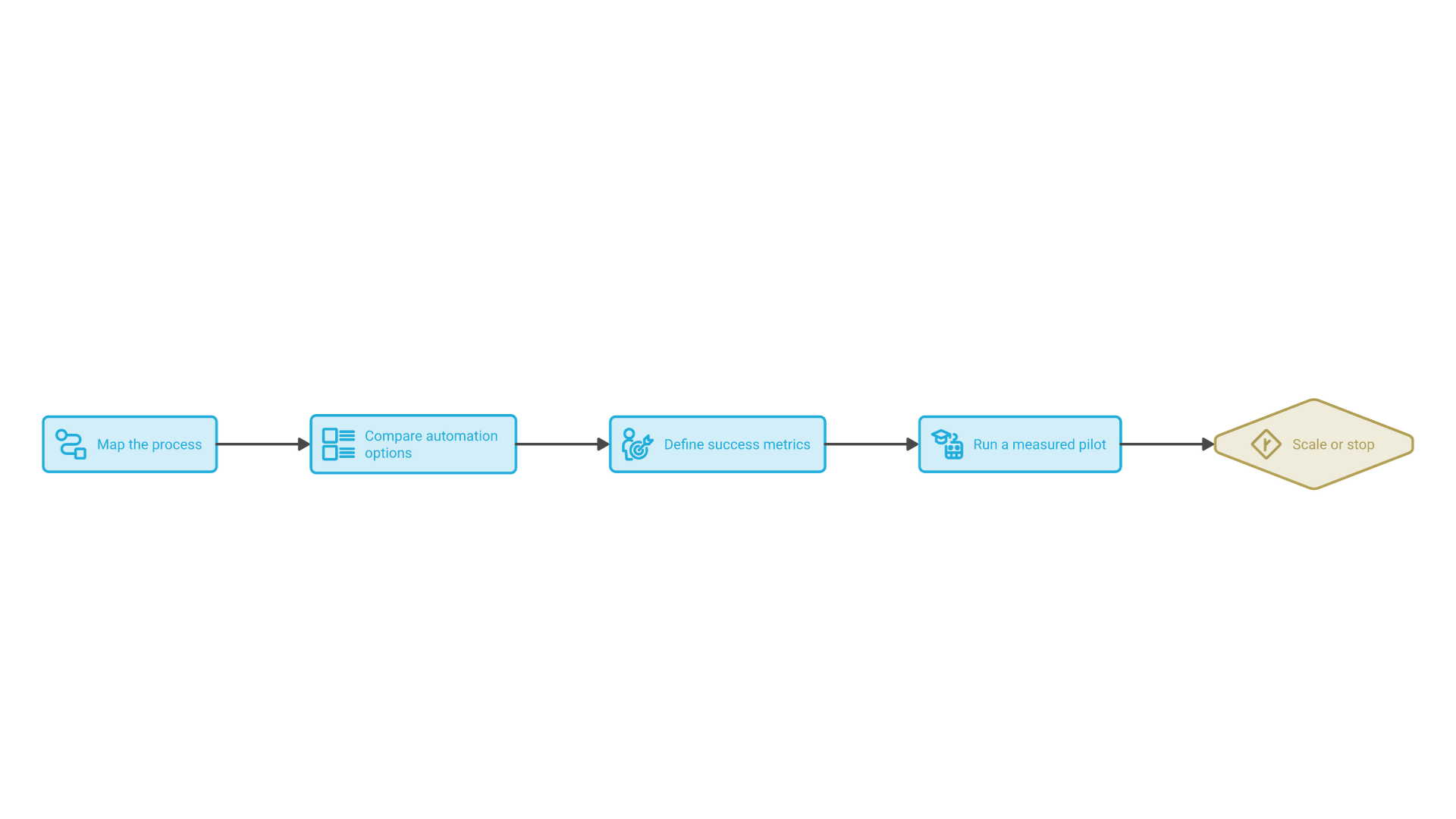
For most enterprises, the right 2026 move is not buying a fleet but learning where a humanoid could fit. Start with the process, not the robot. Map the task, its variability and its current cost, then compare a humanoid against wheeled mobile robots, fixed automation and software-led process automation; the cheapest option is often not the one with legs.
If a humanoid still fits, define success before the pilot starts: tasks per hour, intervention rate, uptime, recovery from errors and safety incidents. Plan compute too: robots running AI models need low-latency inference near the work, which raises the same design questions covered in our guide to edge computing for AI workloads.
Treat the robot as one part of a larger system. Integration with warehouse and manufacturing systems, change management for the people working alongside it, and governance of the data it collects are where many projects stall, mirroring the broader enterprise AI implementation challenges that slow software-only AI projects. A clear technology strategy decides which automation bets to fund now and which to monitor.
Frequently Asked Questions
What are the main challenges of humanoid robots?
The biggest are dexterity, energy and uptime, reliability in unpredictable environments, unclear cost and ROI, and safety standards for robots that balance actively around people.
Are humanoid robots being used in factories today?
Yes, on a small scale. BMW uses Figure robots at Plant Spartanburg, GXO uses Agility's Digit in warehouses, and Hyundai and Google DeepMind are slated to receive the first product Atlas units.
Which company makes the most advanced humanoid robot?
There is no single leader. Boston Dynamics is known for mobility, Figure for its BMW work and AI models, Agility for paid warehouse operations, Tesla for manufacturing ambition and Unitree for low-cost volume.
When will Tesla Optimus be available to buy?
Tesla began early Optimus production at Fremont in October 2026 but has not announced a price or a date for selling to outside customers.
Will humanoid robots replace human workers?
Not broadly in the near term. Current robots handle narrow, repetitive tasks and need supervision. They are more likely to fill hard-to-staff roles than replace workforces.
What is the potential of humanoid robots?
Their potential is to work in spaces built for people without re-engineering the site, and to learn several tasks through AI models. Material handling, logistics and manufacturing support are the first markets.
Conclusion: Humanoid Robots Between Promise and Practice
In 2026 humanoid robots crossed an important line: product versions are being built and companies are paying for real work. They have not yet become general-purpose labor. Dexterity, energy, reliability, cost and safety certification are systemic hurdles, and solving them will take years of incremental deployment rather than one breakthrough.
The practical path is to separate the vision from current capability, test humanoids against simpler automation on measurable tasks, and build the data, integration and governance foundations that any physical AI system will need. If you are weighing where robotics or AI automation fits in your operations, talk to Cognativ about your automation roadmap.