


Artificial Intelligence in Payments: How AI Improves Efficiency, Fraud Detection and Risk
From Visa and Mastercard fraud models to automated reconciliation and EU payee checks, see where artificial intelligence makes payments faster and safer.
Artificial intelligence in payments has moved from pilot projects to core infrastructure. Card networks score transactions with machine learning before they are approved, payment providers train models on billions of payments, and finance teams use AI to match remittances and close books faster. The efficiency gains are real, but so are the new obligations that come with them.
This guide, refreshed on October 31, 2026, explains where AI fits in the payment lifecycle, how AI fraud detection and real-time risk scoring work, what payment automation and reconciliation look like in practice, and which compliance rules enterprises should plan around. Figures come from card networks, payment providers and regulators, with dates attached.
Key takeaways
- AI improves payment efficiency in three places: fewer fraud losses, fewer false declines and less manual reconciliation work.
- Instant payments leave no time for manual review, so real-time risk scoring has become a baseline control.
- Regulators in the EU, UK and US now expect explainable models, fraud reimbursement readiness and strong identity checks.
What Is AI in Payments?
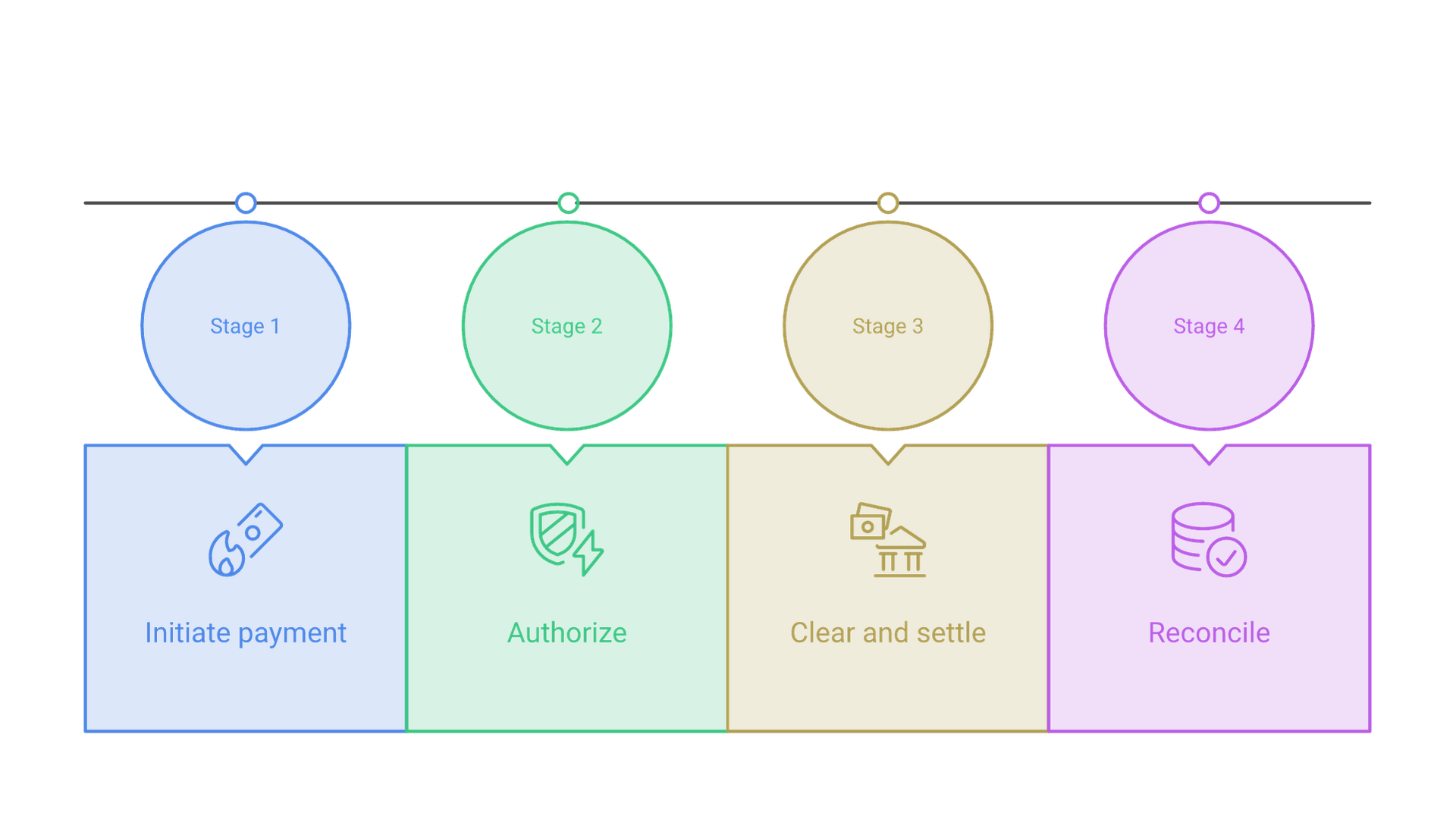
AI in payments is the use of machine learning, deep learning and language models to make decisions or automate work across the life of a payment. That life has four broad stages: a customer or business initiates a payment, the issuer or bank authorizes it, the networks clear and settle it, and the merchant or finance team reconciles it against invoices and ledgers.
Each stage generates data that a model can use. At initiation, device and behavioral signals help confirm the payer is genuine. At authorization, a risk score decides whether to approve, challenge or decline. During clearing and settlement, structured messages carry richer information about who is paying whom and why. At reconciliation, models match incoming funds to open items and flag exceptions for people to review.
Why efficiency is the main business case
Every fraudulent transaction that slips through costs money, but so does every good customer who is wrongly declined, and every analyst hour spent matching remittances by hand. The best systems reduce all three at once. The same data foundations also support broader AI business analytics, such as cash flow forecasting and churn analysis on payment behavior.
AI Fraud Detection in Payments
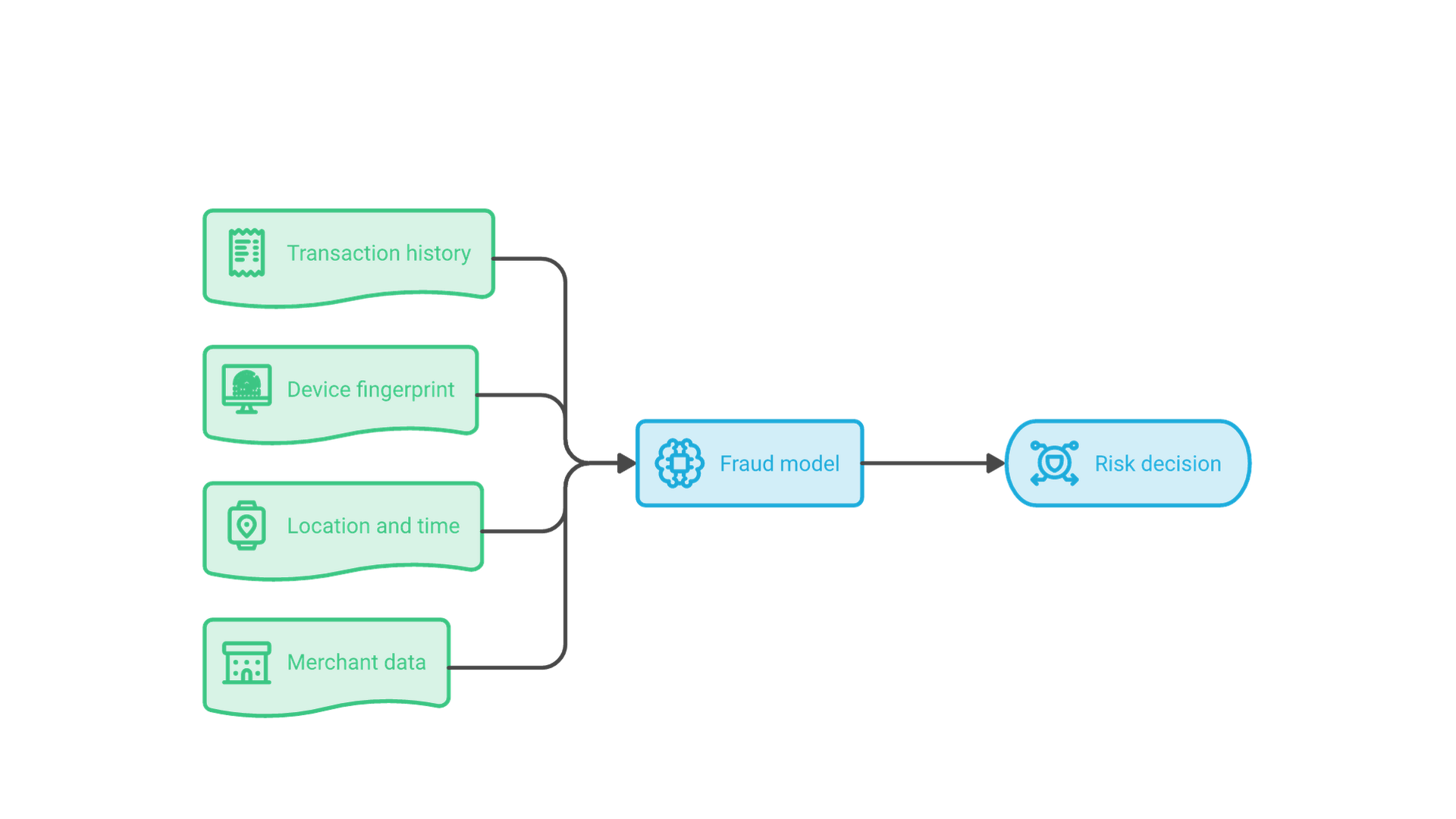
Fraud detection is the most mature use of AI in payments. Rules engines still exist, but they now sit alongside models that learn patterns across far more variables than a human could write rules for: transaction amount and velocity, merchant category, device fingerprint, location, time of day and the history of the card or account.
What card networks report
On March 27, 2024, Visa said it helped block $40 billion in fraudulent activity between October 2022 and September 2023, nearly double the prior year. In the same announcement it added AI-powered tools to its Visa Protect suite, including Visa Deep Authorization, a deep learning model for card-not-present risk scoring, and extended Visa Advanced Authorization to non-Visa card payments.
Mastercard took a generative approach. On February 1, 2024, it announced Decision Intelligence Pro, which analyzes relationships between the entities around a transaction rather than the transaction alone. Mastercard said its initial modeling showed fraud detection rates improving by 20% on average and by as much as 300% in some cases. Those are vendor projections from early modeling, not independently audited results.
What payment providers report
Payment providers are building their own foundation models. At its Sessions event on May 7, 2025, Stripe introduced a payments foundation model trained on tens of billions of transactions. Stripe said applying it increased the detection rate for card-testing attacks on large businesses by 64% practically overnight.
Generative AI is also a fraud tool
Attackers use the same technology. On November 13, 2024, FinCEN issued an alert on fraud schemes using deepfake media, noting a rise in suspicious activity reports that describe forged identity documents created with generative AI to defeat verification and authentication checks. Payment fraud defense therefore has to cover onboarding and account takeover, not only the transaction itself.
Real-Time Risk Scoring for Instant Payments
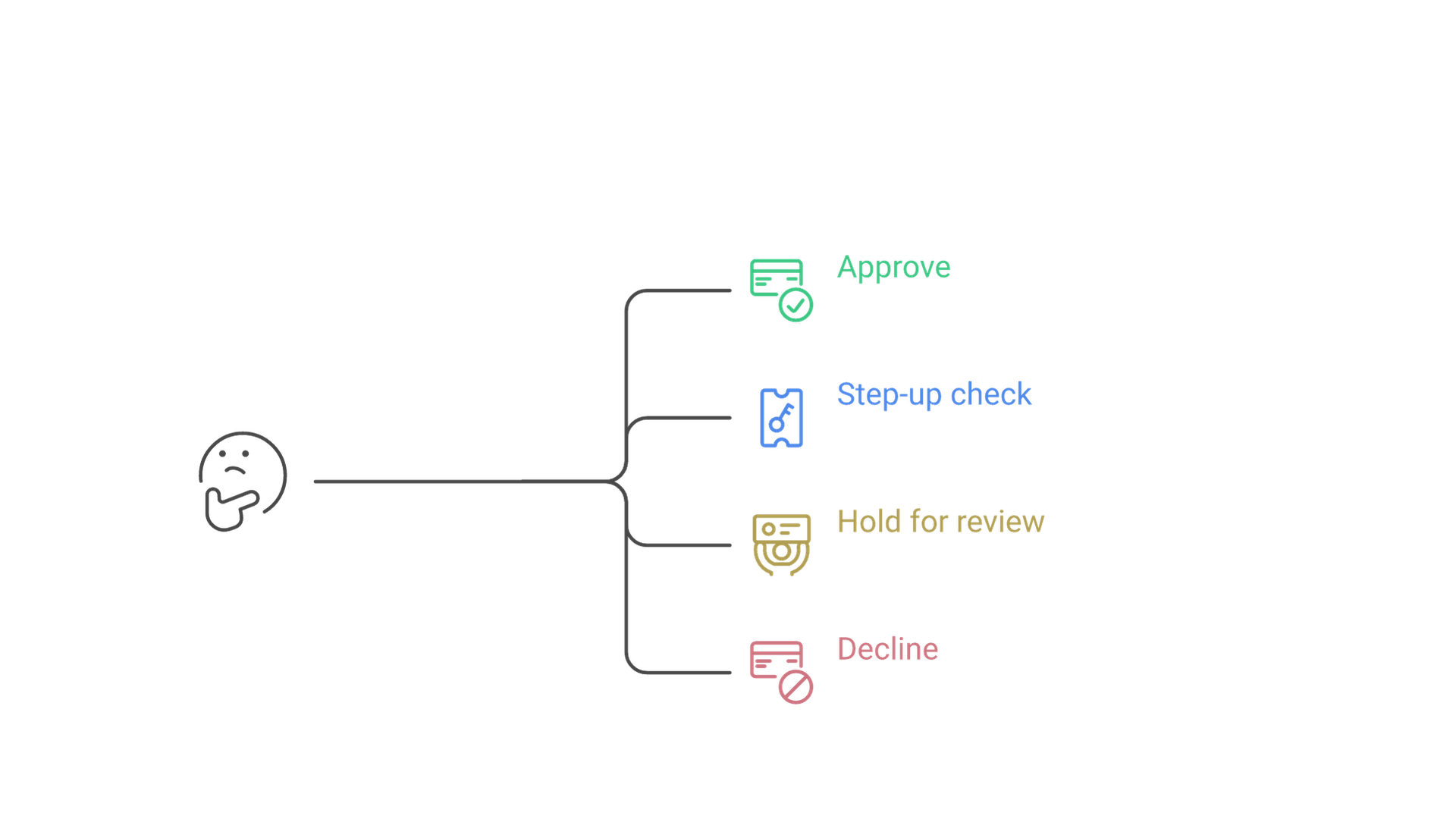
Real-time risk scoring means a model evaluates a payment and returns a score within the time budget of the payment itself, often a fraction of a second. The score then drives an action: approve, request step-up authentication, hold for review or decline.
Instant payments make this essential. Once an account-to-account transfer settles in seconds, there is no window to recall it. Visa's March 2024 release described its real-time account-to-account protection as its first fraud product built for immediate payments, returning a risk score that banks can use to block suspicious transfers.
Payee checks and reimbursement rules raise the stakes
Regulation is pushing banks toward better scoring. In the euro area, the Instant Payments Regulation required payment service providers to offer verification of payee by October 9, 2025, telling the payer whether the name matches the account before a credit transfer is sent. In the UK, the Payment Systems Regulator's mandatory reimbursement for authorized push payment scams came into force on October 7, 2024, which gives sending and receiving banks a direct financial reason to detect scams before money moves.
Risk scores are only as good as the features behind them. Teams that build reliable data pipelines for transaction, device and customer data can retrain faster, monitor drift and explain decisions when a customer or auditor asks why a payment was stopped.
Payment Automation and Reconciliation
Fraud gets the headlines, but much of the efficiency in AI payments comes from back-office work. Accounts payable and receivable teams still spend hours reading invoices, keying data, chasing approvals and matching bank lines to open items. AI shortens each of those steps.
From invoice to cash
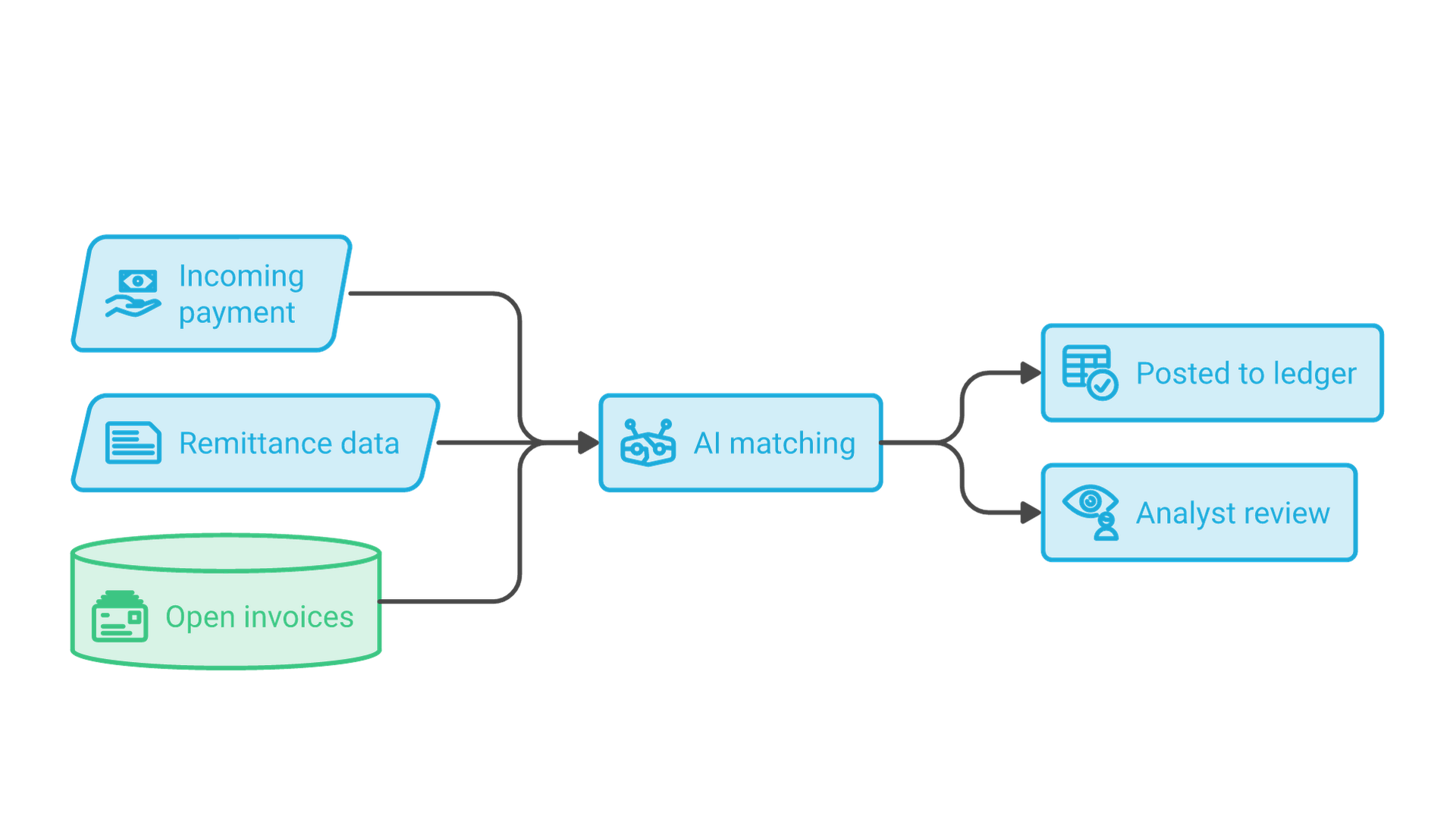
On the payables side, document models extract supplier, amount, due date and line items from invoices, and approval workflows route exceptions to the right person. On the receivables side, matching models compare incoming payments with open invoices using amounts, references, payer names and history, then propose matches for partial payments, short pays and bundled remittances. Teams looking at this work usually start with a structured AI process automation assessment to find where manual effort and error rates are highest.
Richer payment data helps
Matching improves when payments carry structured information. Swift ended the coexistence period between legacy MT messages and ISO 20022 for cross-border payments and reporting on November 22, 2025, so core cross-border instructions now travel in a format that can hold structured remittance, party and purpose data.
Agentic Payments at a High Level
Agentic payments describe AI agents that can search, decide and pay on a user's behalf within limits the user sets. Card networks and payment providers are building ways to identify trusted agents, tokenize credentials and record user intent, so that merchants and issuers can tell an authorized agent from a bot attack. For most enterprises in 2026 this is an emerging channel to monitor and design for, not yet a replacement for existing checkout and payables flows. The same controls apply: spending limits, strong authentication and an audit trail.
Compliance Considerations for AI in Payments
AI does not change who is accountable for a payment decision. Regulators expect firms to understand their models, govern them and keep humans responsible for outcomes. The UK's Bank of England and FCA survey, published November 21, 2024, found that 75% of responding firms already used AI, that fraud and anti-money laundering were among the most cited benefits, and that only 2% of use cases involved fully autonomous decisions.
The rules most relevant to payment teams are summarized below. Check current application dates with counsel, because several are still being phased in.
| Rule or guidance | Jurisdiction | What it means for payment AI |
|---|---|---|
| EU AI Act, Annex III point 5(b) | European Union | Credit scoring of individuals is high-risk; systems used to detect financial fraud are excluded from that category |
| Instant Payments Regulation | European Union | Verification of payee for euro credit transfers, alongside instant payment availability |
| PSD3 and Payment Services Regulation | European Union | Stronger fraud prevention duties and platform liability, with final texts and dates still being implemented |
| APP scam reimbursement | United Kingdom | Banks reimburse eligible scam victims, so detection quality has a direct cost |
| FinCEN deepfake alert | United States | Red flags and reporting expectations for AI-generated identity fraud |
Two points deserve attention. First, the EU AI Act fraud exclusion is narrow: a model that mixes fraud signals into a creditworthiness decision may still be high-risk. Second, the EU payments package reached a provisional political agreement on November 27, 2025, according to Hogan Lovells, including liability for online platforms that fail to remove fraudulent content after being notified. A documented enterprise AI governance framework makes it easier to show model owners, validation, monitoring and override procedures to supervisors.
How to Implement AI in Payments Responsibly
Successful programs follow a similar sequence, whether the goal is fraud reduction or faster reconciliation.
- Start with a measurable problem: fraud loss rate, false decline rate, days sales outstanding or manual match rate.
- Audit data quality and lineage before choosing a model. Missing device or remittance data limits any approach.
- Decide build, buy or blend. Network and provider tools bring scale; in-house models add your own context.
- Keep humans in the loop for declines, holds and exceptions, with clear escalation paths.
- Monitor drift, bias and attack patterns continuously, and retrain on a set schedule.
- Document decisions so that customers, auditors and regulators can get an explanation.
Integration is usually the hardest part, and it is where AI integration services earn their keep. Models must connect to payment gateways, core banking or ERP systems, case management tools and reporting, without adding latency to authorization or breaking existing controls.
Frequently Asked Questions
How is AI used in payments?
AI is used to detect fraud, score transaction risk in real time, reduce false declines, automate invoice processing, match payments to invoices during reconciliation and forecast cash flow. Newer uses include AI agents that make purchases within user-set limits.
Can AI detect payment fraud?
Yes. Machine learning models compare each transaction with historical patterns across many signals, such as amount, device, location and velocity, and flag anomalies. Card networks and payment providers report large reductions in fraud from these models, though most figures are self-reported.
What is real-time risk scoring in payments?
It is a model that assigns a risk score to a payment during authorization, usually in milliseconds. The score drives an action such as approve, request extra authentication, hold for review or decline.
How does AI help with payment reconciliation?
AI reads remittance details, matches incoming payments to open invoices, handles partial or combined payments and routes only unmatched items to analysts. Structured ISO 20022 data makes these matches more accurate.
What are agentic payments?
Agentic payments are transactions initiated by AI agents on a person's or company's behalf. They rely on agent identification, tokenized credentials and clear spending limits so merchants and banks can trust them.
Is AI in payments regulated?
Yes, indirectly and increasingly directly. Payment, anti-money laundering and consumer protection rules still apply, and laws such as the EU AI Act add obligations for certain uses, such as credit scoring of individuals.
Conclusion
Artificial intelligence in payments delivers efficiency where it matters most: fewer fraud losses, fewer good customers turned away and far less manual reconciliation. The technology is proven at network scale, but results depend on data quality, integration and governance more than on any single model.
In 2026, the winning approach combines network and provider tools with your own data, real-time scoring for instant payments, automated matching in the back office and documented human oversight that satisfies regulators. Agentic payments are worth preparing for, using the same controls.
If you are planning fraud detection, payment automation or reconciliation projects and need help with data, models or integration, talk to Cognativ about your payments AI project.