


OpenAI and Microsoft Cap Revenue Sharing at $38 Billion: What the Deal Means
From a reported 20% share to a $38 billion ceiling: how OpenAI's payments to Microsoft changed, and why Azure exclusivity and the AGI clause faded by 2026.
OpenAI and Microsoft have agreed to cap the revenue-sharing payments OpenAI makes to Microsoft at a total of $38 billion, according to a report by The Information on May 11, 2026. The figure has not been confirmed by either company, but the existence of a cap has: Microsoft said in April 2026 that OpenAI's payments would continue through 2030 "subject to a total cap."
The cap is the latest change to one of the most closely watched contracts in AI. Below we separate the confirmed terms from the reported numbers, explain how the revenue share works, trace how the partnership evolved from Azure exclusivity to a non-exclusive license, and look at what it means for companies that build on OpenAI models.
Key takeaways
- Confirmed by Microsoft: OpenAI's revenue-share payments run through 2030 at the same percentage, subject to a total cap, and Microsoft no longer pays a revenue share to OpenAI.
- Reported, not confirmed: the cap is $38 billion, replacing a 20% share that could have reached $135 billion.
- As of September 30, 2026, Microsoft held about 24% of OpenAI and booked $10.0 billion of quarterly revenue from OpenAI arrangements.
The $38 Billion Revenue-Sharing Cap: What Was Reported
On May 11, 2026, The Information reported, citing a person with knowledge of the arrangement, that OpenAI had agreed to cap the total revenue it shares with Microsoft at $38 billion. Reuters relayed the report the same day, noted that it could not immediately verify it, and said neither company had responded to requests for comment.
Reported or Confirmed?
The structure is confirmed, the number is not. Microsoft's April 27, 2026 announcement states that revenue-share payments from OpenAI to Microsoft "continue through 2030, independent of OpenAI's technology progress," at the same percentage but subject to a total cap. It did not disclose the percentage or the size of the cap. The $38 billion figure, and every derived number below, rests on The Information's single-source report.
The Numbers Behind the Headline
According to MT Newswires, summarizing The Information, OpenAI was previously expected to pay Microsoft 20% of its revenue, potentially up to $135 billion if certain long-term targets were met. With the cap, OpenAI is projected to save about $97 billion through 2030, and it would likely hit the $38 billion ceiling around 2028 if it meets its revenue targets. Those are projections built on OpenAI's own growth plans, not contract terms.
How the OpenAI-Microsoft Revenue Share Works
The revenue share is the part of the partnership that turns OpenAI's commercial growth into income for Microsoft, separate from Microsoft's equity stake and from OpenAI's spending on Azure.
The Terms Before the Cap
Neither company has published the percentage, but press reports have consistently described it as 20% of OpenAI's revenue. Until April 2026 the flow ran both ways: Microsoft also paid OpenAI a share of certain revenue. Under the October 2025 agreement, the revenue share remained in place until an independent expert panel verified that OpenAI had reached artificial general intelligence (AGI), with payments spread over a longer period.
A February 2026 joint statement added that the revenue share has always included revenue from OpenAI's partnerships with other cloud providers, which matters now that OpenAI also works with Amazon.
What the Cap Changes
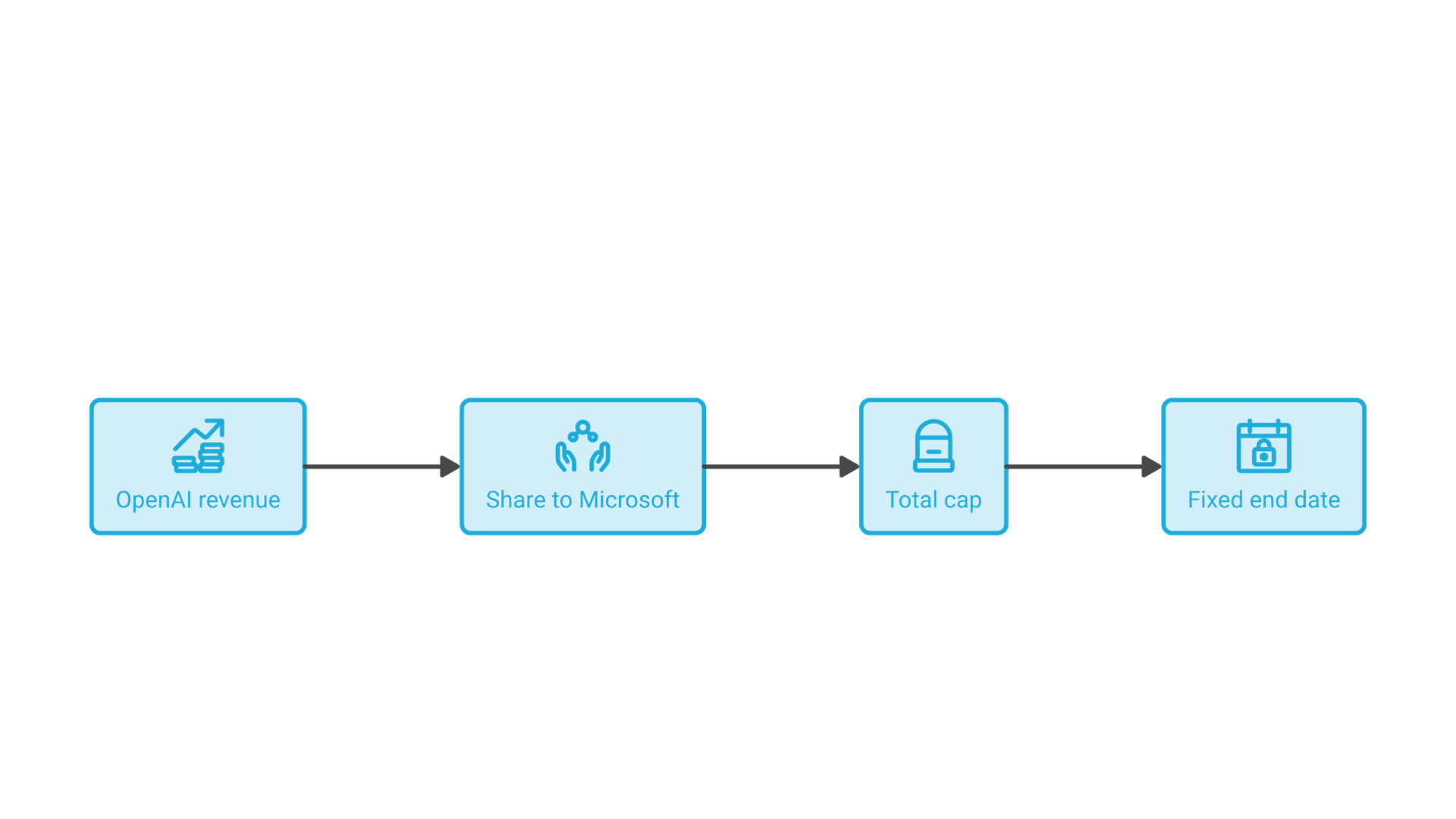
The April 2026 amendment made three changes to the economics. Microsoft stopped paying any revenue share to OpenAI. OpenAI's payments to Microsoft gained a fixed end date, 2030, instead of an AGI trigger. And total payments became capped. For OpenAI, that converts an open-ended liability into a bounded one. For Microsoft, it trades upside for certainty: payments no longer depend on how anyone defines AGI.
Why OpenAI Wanted a Cap: IPO Readiness and Multi-Cloud Growth
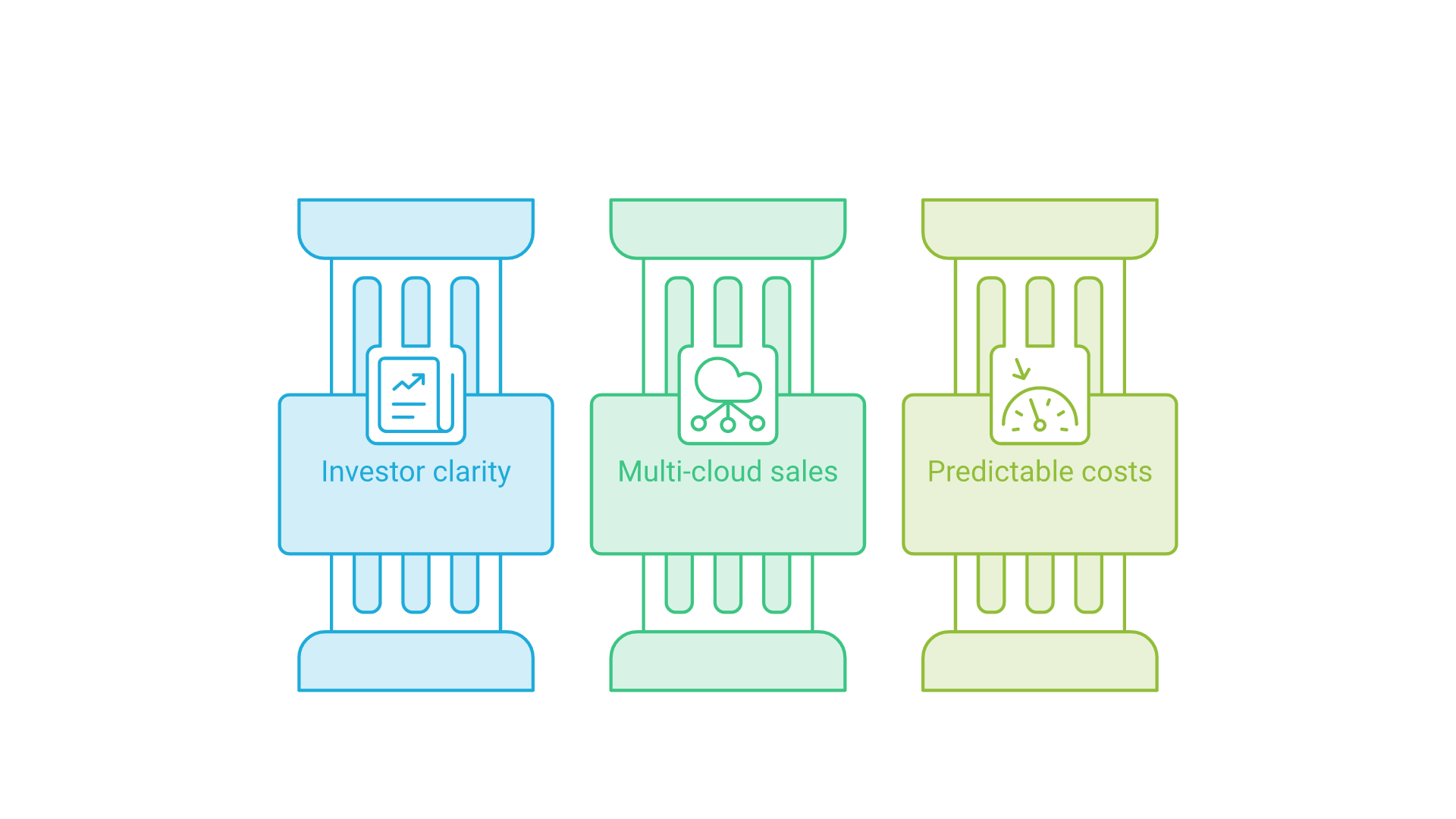
Reuters, citing The Information, said the cap could help OpenAI make a stronger long-term case to investors as it works toward a public offering. A capped obligation is easier to model in a prospectus than a percentage of revenue with no ceiling and an uncertain end date.
The cap also arrived alongside a broader loosening of the deal. Since April 2026, OpenAI can serve all its products to customers on any cloud provider, while Microsoft remains its primary cloud partner and new OpenAI products ship first on Azure unless Microsoft cannot or chooses not to support them. Investors weighing the size of AI valuations, a theme we covered in our look at AI boom risks in US markets, will scrutinize obligations like this one closely.
Reuters reported that OpenAI reached an $852 billion valuation earlier in 2026. On June 8, 2026, OpenAI said it had confidentially submitted a draft S-1 to the SEC and had not decided on timing.
How the OpenAI-Microsoft Partnership Terms Evolved
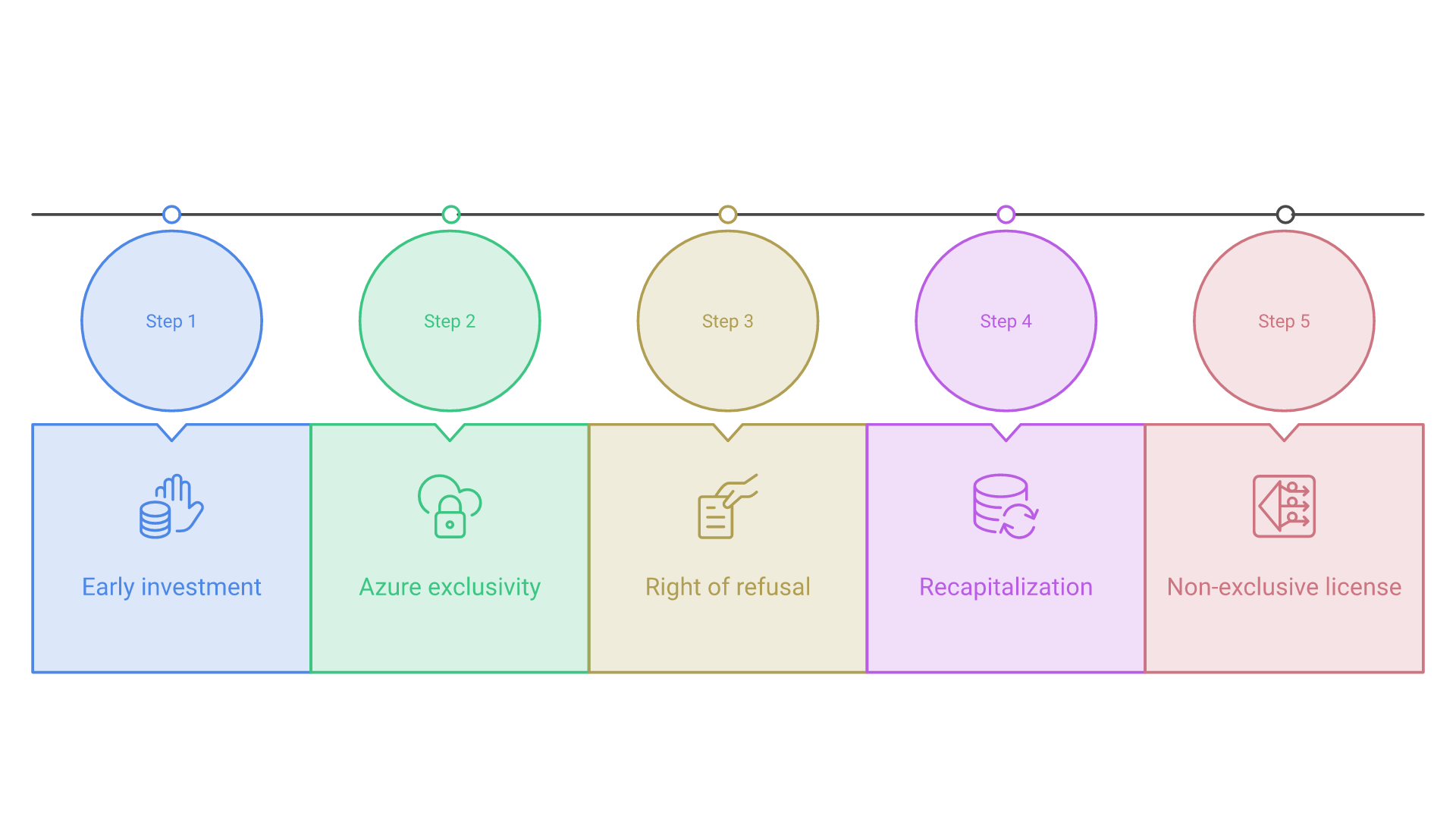
The revenue-share cap only makes sense against the history of the contract. Each revision shifted control away from exclusivity and toward a defined commercial relationship.
| Date | Change |
|---|---|
| 2019 and 2021 | Microsoft makes its first investments in OpenAI |
| January 2023 | Multiyear, multibillion-dollar extension; Azure becomes OpenAI's exclusive cloud provider |
| January 2025 | Exclusivity on new capacity becomes a right of first refusal; the OpenAI API stays on Azure |
| October 2025 | Recapitalization; Microsoft holds about 27%; AGI must be verified by an expert panel; $250 billion Azure commitment |
| February 2026 | Joint statement confirms the October 2025 terms after OpenAI's Amazon deal |
| April 2026 | Non-exclusive license through 2032; OpenAI can sell on any cloud; revenue share capped through 2030 |
Azure Exclusivity
In January 2023, Microsoft announced a multiyear, multibillion-dollar investment and became the exclusive cloud provider for OpenAI's research, products and API services. In January 2025 that became a right of first refusal on new capacity, and in October 2025 Microsoft gave up the right of first refusal entirely. By April 2026 only a ship-first-on-Azure preference remained.
The AGI Clause
The AGI clause was the most unusual term: certain Microsoft rights and the revenue share were tied to OpenAI declaring AGI. In October 2025 the companies added independent expert verification of any such declaration. The April 2026 wording, that payments continue "independent of OpenAI's technology progress," was widely read, including by developer and commentator Simon Willison, as ending the clause's role in the economics. Microsoft's announcement does not use the term AGI.
Microsoft's Equity Stake
After the October 2025 recapitalization, Microsoft said it held roughly 27% of OpenAI on an as-converted diluted basis, valued at about $135 billion. Its quarterly report filed October 28, 2026 puts the interest at approximately 24% on an as-converted basis, with $12.0 billion of its $13.0 billion funding commitment paid. The regulatory side of these ties, including the FTC's 2025 staff report on cloud-AI partnerships, is covered in our analysis of FTC scrutiny of the Microsoft and OpenAI deal.
What Has Happened Since (Through October 31, 2026)
May 2026: Musk Lawsuit Dismissed
On May 18, 2026, a federal jury in Oakland found that Elon Musk had brought his claims too late, and the judge dismissed them, Al Jazeera reported. Musk had sought damages from OpenAI and Microsoft, according to Reuters, and he said he would appeal.
June 2026: Confidential IPO Filing
OpenAI's June 8 disclosure of a confidential draft S-1 means the revenue-share terms will eventually be described in a public prospectus. As of October 31, 2026, we found no public S-1 on EDGAR, so the $38 billion figure remains unconfirmed by a filing.
October 2026: Microsoft Discloses OpenAI Revenue
Microsoft's October 28 quarterly report says it recorded $10.0 billion of revenue from commercial arrangements with OpenAI, "inclusive of revenue-sharing payments," in the three months ended September 30, 2026. Accounts receivable from OpenAI were $7.2 billion. The filing does not separate revenue-share payments from Azure and other sales, and it repeats that Microsoft "will continue to receive revenue-sharing payments."
What the Revenue Share Cap Means for Enterprise AI Buyers
The cap does not change prices or terms for OpenAI or Azure OpenAI customers directly. Its effect is indirect: the two companies are now partners and competitors on looser terms, and OpenAI products can reach customers through more than one cloud.
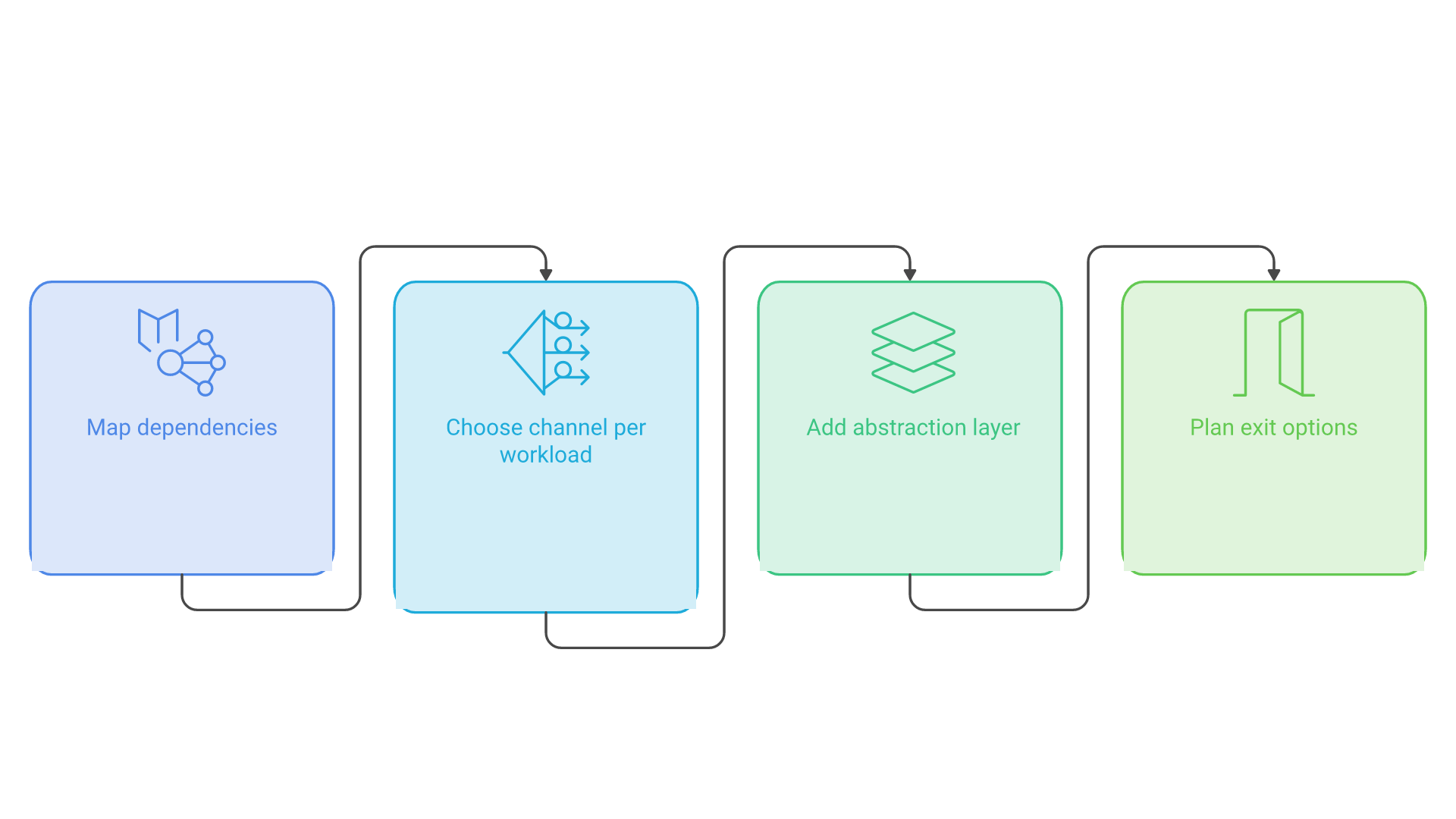
For enterprise teams, that creates choice and some complexity. The same model may be available through OpenAI directly, through Azure or through another cloud, with different data residency, security controls and commercial terms. A deliberate technology strategy should decide which channel fits each workload rather than defaulting to whichever account already exists.
Vendor concentration is the other lesson. A contract that looked settled in 2023 was rewritten three times between January 2025 and April 2026. Teams that wrap model calls behind a stable interface, keep prompts and evaluations portable, and assess where a private LLM makes business sense are better placed to absorb the next change. Clean AI integration with abstraction layers and monitoring keeps a provider switch from becoming a rebuild.
Frequently Asked Questions
Is the $38 billion revenue share cap confirmed?
Only partly. Microsoft confirmed in April 2026 that OpenAI's payments are subject to a total cap. The $38 billion amount comes from a May 2026 report by The Information citing one unnamed person, and neither company has confirmed it.
What percentage of revenue does OpenAI share with Microsoft?
Press reports put it at 20%. Microsoft says the percentage is unchanged under the April 2026 amendment but has not published the rate.
When do OpenAI's revenue-share payments to Microsoft end?
Microsoft says they continue through 2030. If the reported cap is reached earlier, payments would stop once the ceiling is hit.
How much of OpenAI does Microsoft own?
About 24% on an as-converted basis as of September 30, 2026, according to Microsoft's quarterly filing, down from roughly 27% after the October 2025 recapitalization.
Is the AGI clause still part of the Microsoft-OpenAI deal?
The April 2026 terms make revenue-share payments independent of OpenAI's technology progress, which commentators read as ending the AGI clause's economic role. Microsoft's announcement does not mention AGI directly.
Does Microsoft still have exclusive rights to OpenAI models?
No. Microsoft keeps a license to OpenAI models and products through 2032, but since April 2026 it is non-exclusive.
Conclusion: A Capped Deal for a More Independent OpenAI
The reported $38 billion cap completes a shift that began in 2025: Microsoft keeps a large stake, a long license and a bounded stream of payments, while OpenAI gains the freedom to sell across clouds and a cleaner story for public investors. Until a public S-1 appears, treat the exact figure as reported rather than confirmed.
For organizations building on these models, the practical move is to plan for a multi-vendor AI market. If you want to map your model dependencies and keep your options open, talk to Cognativ about your AI project.