

Perplexity AI Business Model: How It Makes Money and Whether It Is Sustainable
Perplexity dropped ads, bet on agents and faces a stack of publisher lawsuits. We explain its revenue, its $20B-plus valuation and what it teaches AI buyers.
The Perplexity AI business model has changed more in the past year than most search companies change in a decade. When we first evaluated it in November 2025, Perplexity was an answer engine selling Pro subscriptions, testing sponsored follow-up questions and promising publishers a share of revenue, while a growing list of news organizations took it to court. As of October 31, 2026, ads are gone, an agent product called Computer is driving revenue, and the lawsuits have multiplied.
This updated analysis explains how Perplexity makes money today, what its reported revenue and valuation mean, how its publisher programs work, which lawsuits could change its costs, and what it signals for enterprises building AI search. Where a figure rests on a single press report, we say so.
What Is Perplexity AI?
Perplexity is an AI answer engine founded in 2022 by Aravind Srinivas, Denis Yarats, Johnny Ho and Andy Konwinski. Instead of returning ten blue links, it runs a live web search, retrieves pages, and has a large language model write a short answer with numbered citations. In technical terms it is retrieval-augmented generation (RAG) delivered as a consumer product.
That design is the root of both its appeal and its problems. Users get a direct answer with sources they can check; publishers see their reporting summarized in a way that may replace the click that used to pay for it.
The product line has widened well beyond the search box. Perplexity now offers the Comet browser (launched for top-tier subscribers in July 2025 and made free in October 2025), the Computer agent (launched February 2026), enterprise workspaces, and a developer API. Paying users can choose among frontier models from several labs.
How Does Perplexity Make Money?
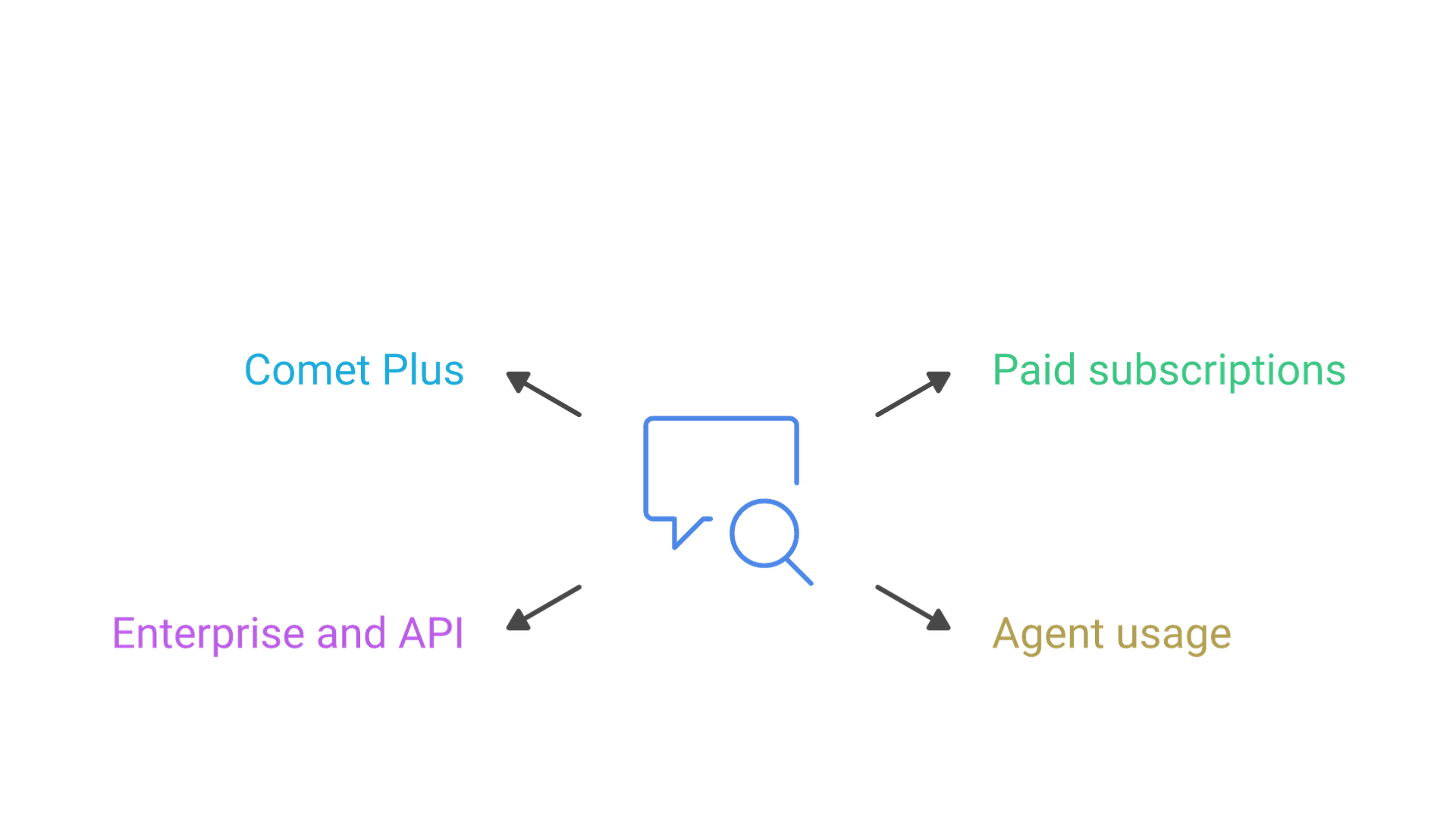
Perplexity makes money from four sources: consumer subscriptions, usage-based agent work, enterprise seats and API access, and, more modestly, publisher-linked subscriptions. Advertising, once pitched as a core revenue line, has been withdrawn.
Consumer subscriptions
The free tier remains the funnel. Paid plans range from Pro at about $20 a month to Max at about $200 a month, according to reporting on the company's February 2026 strategy shift. Paid tiers unlock deeper searches, model choice and file analysis.
Computer and usage-based pricing
The largest change since our original article is the agent business. Perplexity Computer, a cloud-based agent that carries out multi-step tasks for professionals, launched in February 2026 alongside a usage-based pricing layer on top of subscriptions. The Information, as relayed by Reuters, attributes part of Perplexity's recent revenue growth to Computer. Usage pricing lets revenue scale with the heavy compute that agent work consumes.
Enterprise and API
Enterprise plans add administration, internal file search and security controls, and the API lets developers embed Perplexity's search-grounded answers in their own products. They are the stickiest revenue because they sit inside company workflows. Buyers evaluating them should ask the same questions they would ask of any vendor that processes internal data, a topic we cover in our guide to using LLMs with private data.
Why ads were dropped
Perplexity tested sponsored follow-up questions in 2024 and began withdrawing them in late 2025. In February 2026 executives told the Financial Times that the company would not pursue advertising further, describing Perplexity as an accuracy business and arguing that ads made users question every answer, as summarized by The Decoder. That reverses earlier comments from leadership that ads could become the main revenue stream. It also sets Perplexity apart from OpenAI, which now shows ads in ChatGPT, and Google's ad-supported AI Mode.
Perplexity Revenue and Valuation Explained
Perplexity is private and does not publish audited financials, so every revenue figure is a run rate reported by the press. With that caveat, the trend is steep. The Financial Times reported annualized revenue above $450 million in March 2026. In August 2026, The Information reported it had passed $750 million, up from less than $250 million at the start of the year, according to a Reuters report on the same story.
The same report said Nvidia was in talks to invest in a round valuing Perplexity at more than $30 billion, up more than 50% from the $20 billion valuation finalized in September 2025. Neither company confirmed the talks, and we found no announcement that the round closed by October 31, 2026. Chief executive Aravind Srinivas told CNBC in June 2026 that the company plans to go public in 2028.
Two cautions apply. Annualized revenue is a run rate, not profit, and Perplexity has not disclosed profitability. Costs are also large and partly committed. In January 2026 Perplexity signed a three-year, $750 million agreement to use Microsoft Azure and the Foundry model catalog, while keeping AWS as its preferred cloud, according to PYMNTS, citing Bloomberg.
| Date | Milestone | Why it matters |
|---|---|---|
| Jul 2024 | Publishers' Program launches with ad revenue sharing | First attempt to pay sources |
| Oct 2024 | Dow Jones and New York Post sue | Start of the copyright fight |
| Aug 2025 | Comet Plus announced with a $42.5 million publisher pool | Subscription-based payments to publishers |
| Sep 2025 | Valuation reported at $20 billion | Investor confidence despite litigation |
| Nov 2025 | Amazon sues over Comet shopping agent | Agentic commerce enters court |
| Dec 2025 | New York Times and Chicago Tribune sue | Major US newspapers join |
| Feb 2026 | Ads dropped; Computer agent launches | Subscription and usage model |
| Aug 2026 | Annualized revenue reported above $750 million | Agent revenue scales |
Perplexity's Publisher Program and Comet Plus
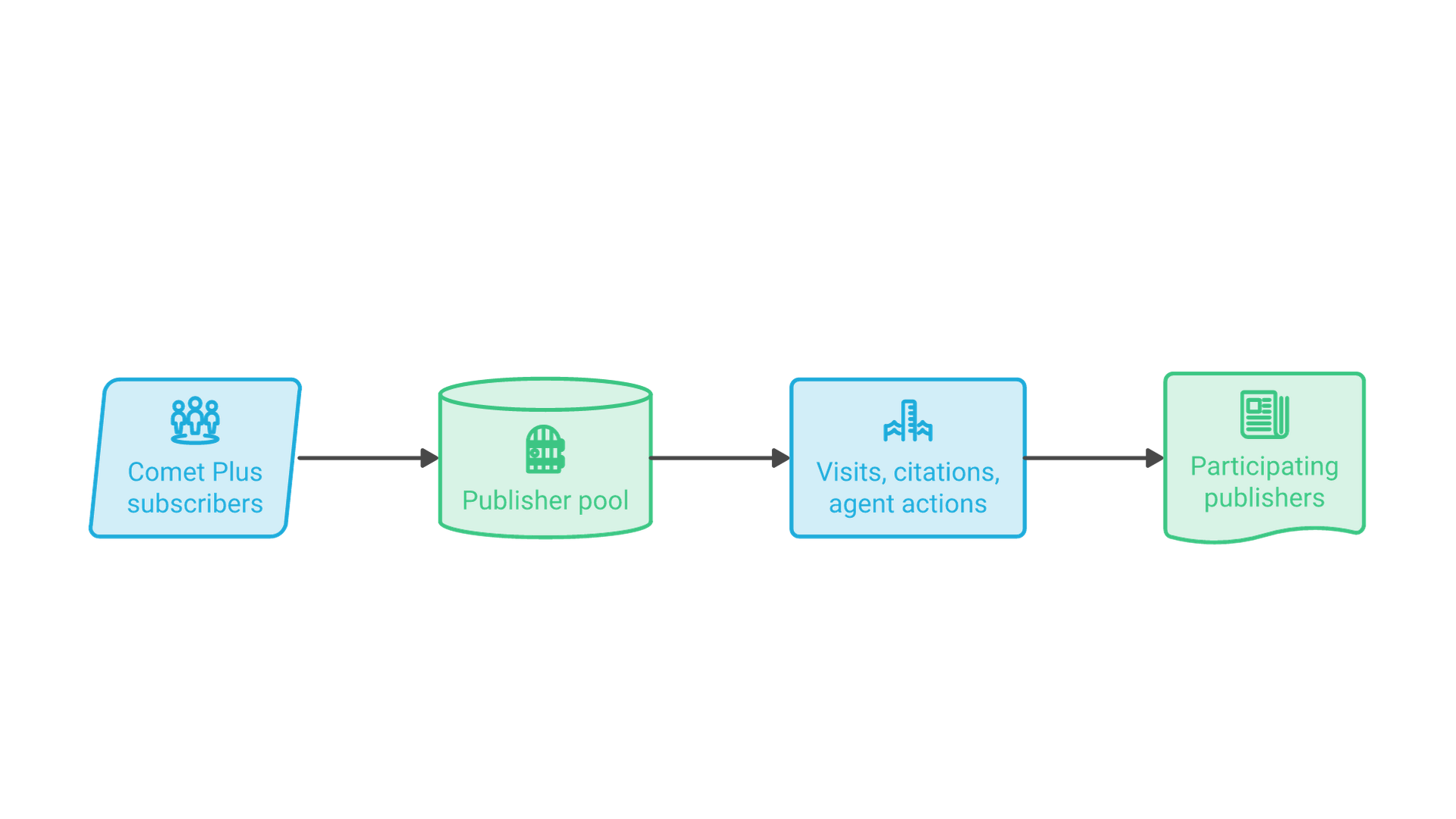
The original Publishers' Program, launched in July 2024, shared advertising revenue with partners, a model that lost its engine once ads were withdrawn. In August 2025 the company announced Comet Plus, a $5-a-month subscription included in Pro and Max, with a $42.5 million initial pool and 80% of Comet Plus revenue going to participating publishers, according to Bloomberg and Axios reporting.
Payouts are based on how content is actually used: human visits through Comet, citations in answers, and actions taken by the agent. Perplexity's October 1, 2025 announcement named Condé Nast, Fortune, Le Figaro, Le Monde, the Los Angeles Times and The Washington Post as launch partners.
The model is a real attempt to price AI-era content, but its scale is unproven. No payout totals or Comet Plus subscriber counts had been published by October 31, 2026, and several of the largest US news organizations are litigants rather than partners.
Perplexity Lawsuits: What Is at Stake
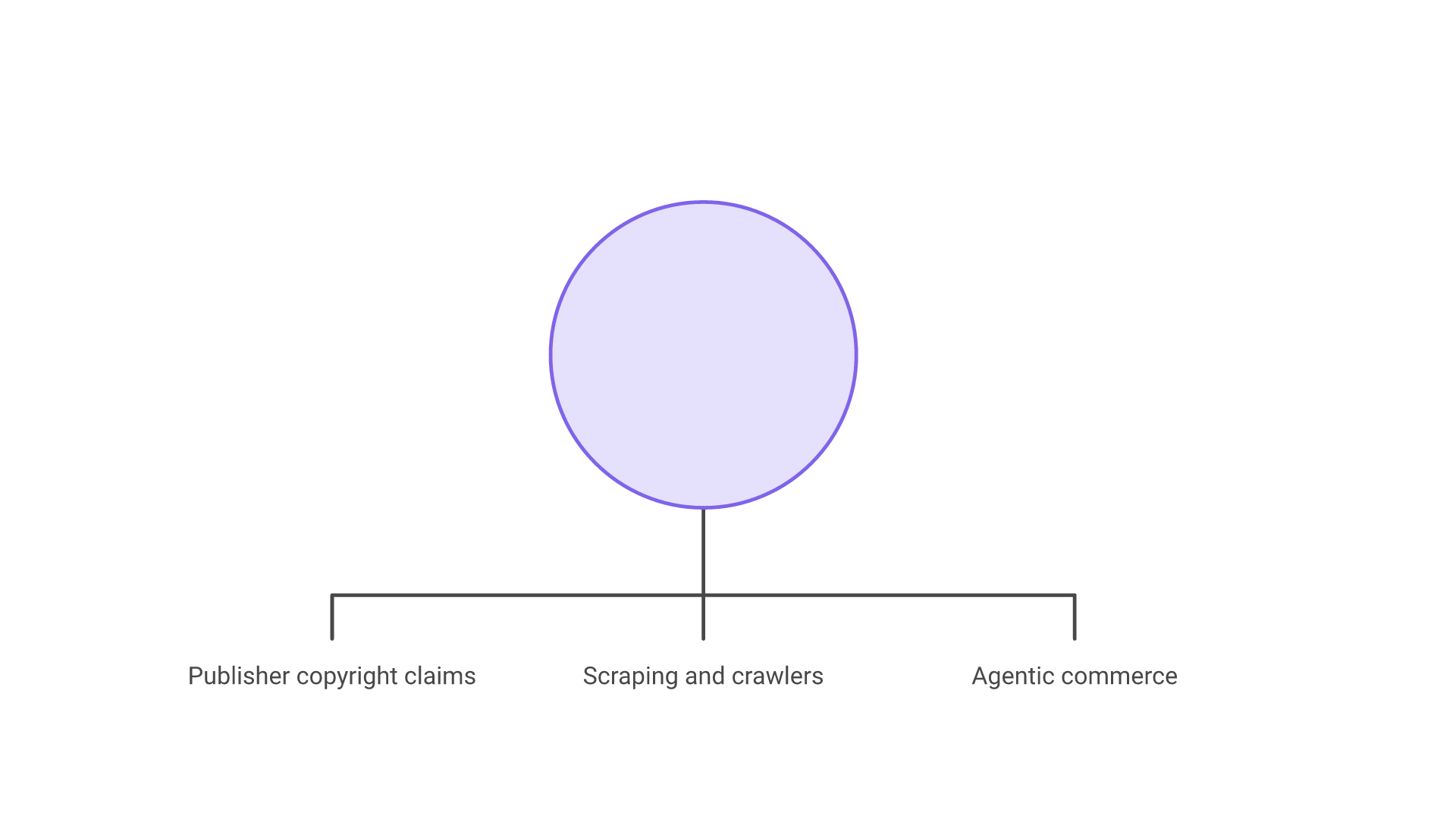
Legal exposure is the biggest variable in Perplexity's cost structure. The cases fall into three groups.
Copyright and trademark claims from publishers
Dow Jones and the New York Post sued in October 2024, alleging that Perplexity copies their journalism and attributes invented text to them. In August 2025, Judge Katherine Polk Failla in the Southern District of New York refused to dismiss or transfer the case. The New York Times and the Chicago Tribune followed in December 2025; the Times alleges near-verbatim reproduction through Perplexity's RAG tools and Comet assistant, and false attributions that harm its brand, as TechCrunch reported. Encyclopaedia Britannica and Merriam-Webster, Japan's Yomiuri, Nikkei and Asahi, and in May 2026 CNN, according to NPR, have also sued. Perplexity disputes the claims; none had reached a final judgment on the merits as of October 31, 2026.
Scraping and crawler conduct
Reddit sued in October 2025 over alleged data scraping. Separately, Cloudflare reported in August 2025 that Perplexity used undeclared crawlers to evade no-crawl directives and removed it from its verified bot list, according to Cloudflare's own analysis. Perplexity rejected the report.
Agentic commerce
Amazon sued in November 2025, arguing that Comet's shopping agent accessed customer accounts without Amazon's authorization. A federal judge in San Francisco granted a preliminary injunction in March 2026, but on August 4, 2026 the Ninth Circuit vacated it, reasoning that the user directing Comet, not Perplexity, was the one accessing Amazon. The panel called its holding narrow, and the case returned to district court. It is an early test for agents on third-party sites, a theme we also explored in our look at Mastercard Agent Connect.
Is Perplexity's Business Model Sustainable?
Our November 2025 assessment said sustainability depended on converting free users, controlling compute costs and keeping trust. A year later, both sides of that ledger are clearer.
The strengths are clearer. Revenue is reportedly growing fast, and the shift to usage-based agent pricing ties income to the costliest workloads. Dropping ads removed a conflict of interest, and multi-model, multi-cloud contracts reduce supplier dependence.
The risks are also clearer. Perplexity owns neither a frontier model nor a dominant browser, so Google, OpenAI and Microsoft can match its features. Content costs are rising, through licensing or through damages if courts side with publishers. And a valuation reportedly near 40 times run-rate revenue leaves little room for a growth slowdown.
Perplexity has moved from an ad-dependent search challenger to a subscription and agent company, a more defensible model, but its margins will be shaped in court as much as in the market.
What Perplexity's Model Means for Enterprise AI
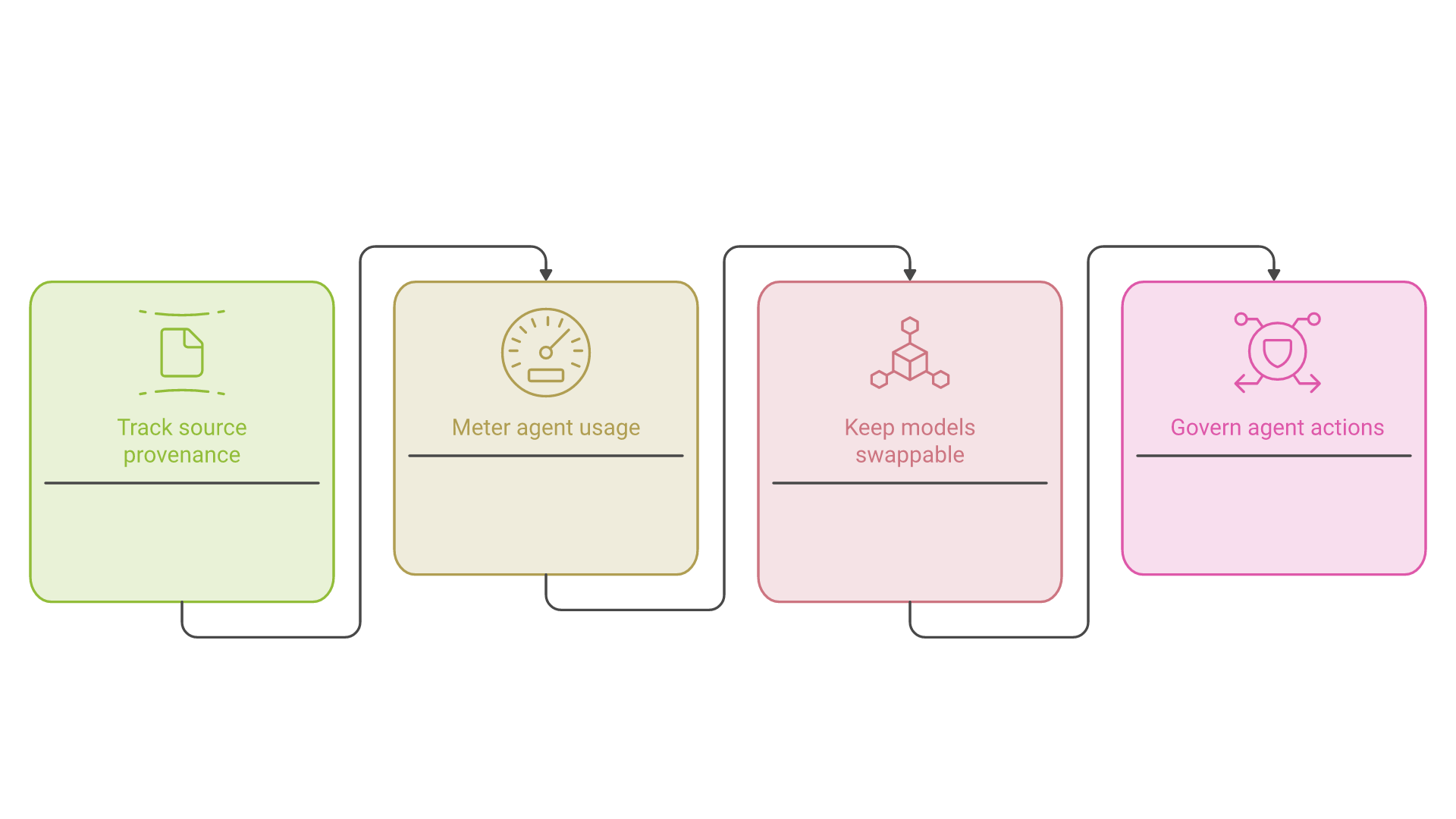
Many enterprises are building internal answer engines. Perplexity's experience offers four lessons.
First, provenance is a product feature. Citations earned Perplexity its audience; unclear content rights produced its lawsuits. Internal assistants should record which sources are indexed, who owns them and on what terms. A documented enterprise AI governance framework is the place to set those rules.
Second, price to usage. Agent workloads consume far more compute than a single answer, so meter by task or department.
Third, keep model choice open. Perplexity's multi-model approach protects it from one supplier's pricing or outages, and the same design keeps enterprise teams able to switch. Our LLM solutions work typically starts from that kind of model-agnostic retrieval layer.
Fourth, treat agents acting on third-party sites as a legal question, not only a technical one. The Amazon case shows that authorization, terms of service and user consent all matter. Teams formalizing those controls can lean on dedicated AI governance services to map policies to systems.
Frequently Asked Questions
How does Perplexity AI make money?
Mainly from paid subscriptions (Pro and Max), usage-based pricing for its Computer agent, enterprise plans and API access. It also bundles Comet Plus, whose revenue is largely shared with publishers. It stopped pursuing advertising in February 2026.
Is Perplexity AI profitable?
Perplexity is private and has not disclosed profitability. Reported figures describe annualized revenue, not profit, and the company carries large compute, cloud and content costs.
What is Perplexity's valuation?
Perplexity finalized a $20 billion valuation in September 2025. In August 2026 The Information reported talks with Nvidia on a round above $30 billion; neither company had confirmed a closed round as of October 31, 2026.
Does Perplexity show ads?
No longer. It tested sponsored follow-up questions in 2024, began phasing them out in late 2025 and told the Financial Times in February 2026 that it would not pursue advertising, citing user trust.
Who is suing Perplexity?
Publishers including Dow Jones and the New York Post, The New York Times, the Chicago Tribune, Britannica and Merriam-Webster, several Japanese newspapers and CNN, plus Reddit over scraping and Amazon over Comet's shopping agent.
How does Perplexity pay publishers?
Through Comet Plus, a $5 monthly subscription included in Pro and Max. Perplexity said 80% of Comet Plus revenue goes to publishers, distributed by visits, citations and agent actions involving their content.
Conclusion: The Perplexity AI Business Model in 2026
The Perplexity AI business model now rests on subscriptions and agent usage rather than ads, with publisher payments and litigation shaping its cost base. Revenue growth suggests the model can work; unresolved copyright cases and well-funded rivals leave its margins an open question.
For enterprise teams, the lasting lessons are about provenance, usage-based cost control, model choice and agent governance. If you are designing an AI search or agent capability and want those foundations right from the start, talk to Cognativ about your AI project.