

Master Program Development: Steps, Benefits and Strategy
Program development turns an initiative into lasting results. Compare it with project management and see how each evaluation feeds the next planning cycle.
Effective program development transforms ideas into actionable plans. It follows a small number of key steps: identifying needs, designing the program structure, implementing the program and evaluating outcomes. Whether the initiative is a workforce training program, a technology modernization effort or an educational initiative, the same discipline separates programs that deliver lasting results from those that fade after launch.
This guide explains what program development means, how it differs from project management and software engineering, which frameworks practitioners rely on in 2026, and which strategies help a program stay relevant once it is running.
Key Takeaways
Program development is a structured process that includes identifying needs, designing, implementing and evaluating initiatives to meet organizational goals. It is iterative: evaluation findings feed back into the next round of design rather than arriving only at the end.
Effective program development supports employee engagement and retention, aligns related initiatives with strategy and gives leaders evidence for decisions about funding, scaling or retiring a program.
Engaging stakeholders and drawing on diverse perspectives throughout the program development process fosters innovation and keeps programs relevant. Current frameworks, including the CDC Program Evaluation Framework, 2024 and PMI's Standard for Program Management, Fifth Edition, place collaboration at the center of the work.
Understanding Program Development
Program development is a systematic process involving the design, implementation and evaluation of initiatives aimed at addressing specific needs or achieving desired outcomes. The CDC Program Evaluation Framework, 2024 uses a deliberately broad definition of a program: any set of related activities undertaken to achieve an intended outcome. That breadth is useful. It covers a leadership academy, a customer onboarding initiative, a community health intervention and a multi-year digital transformation equally well.
Setting clear objectives and goals in program development produces well-defined, achievable plans that guide the whole process. Well-designed programs:
- Enhance the chances of success.
- Promote accountability.
- Provide a structured approach that ensures every step is taken with a clear purpose in mind.
- Integrate varied viewpoints during the program development process, promoting innovation and creativity and leading to more effective solutions.
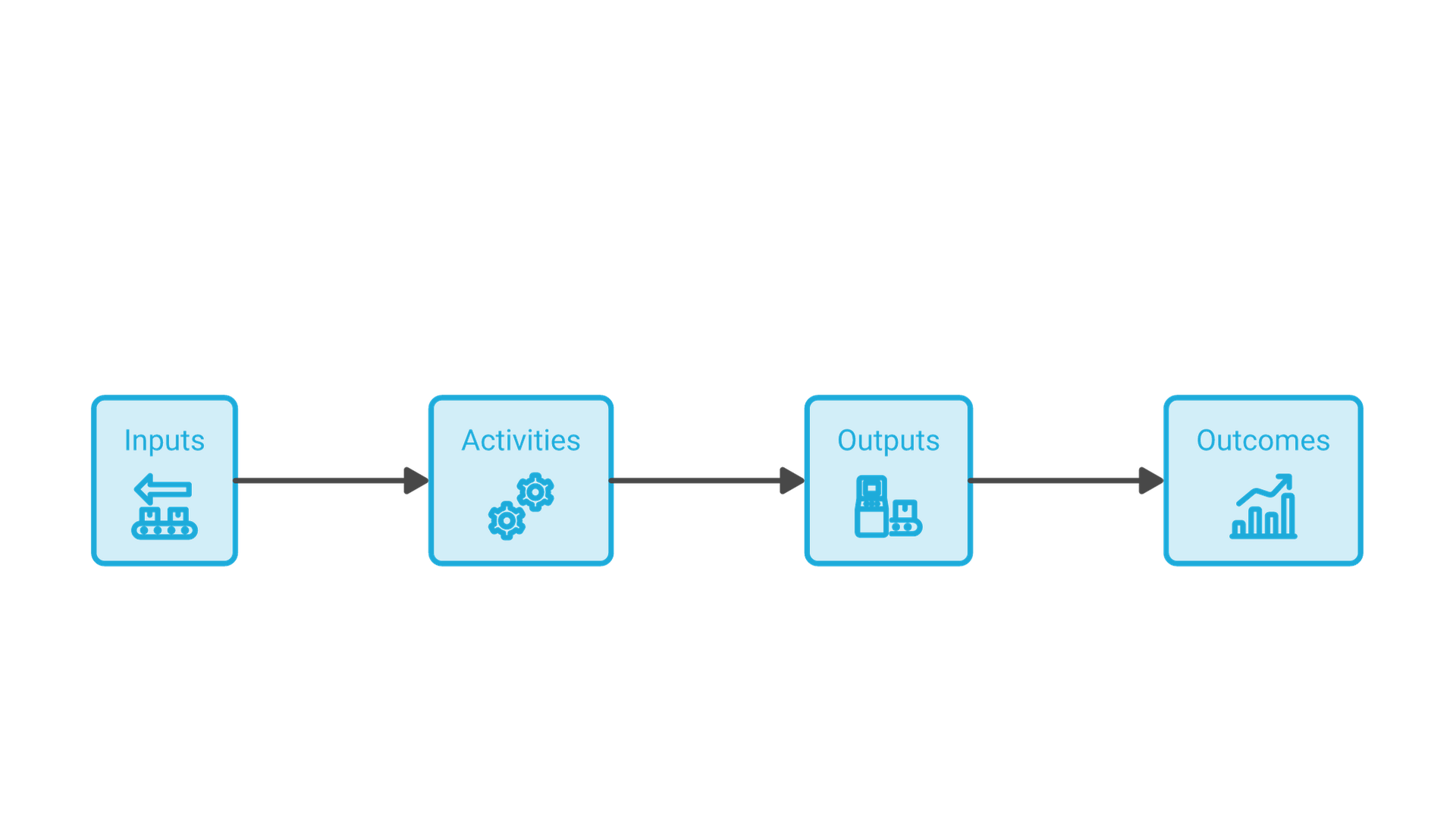
Utilizing logic models as a framework can further enhance the planning, implementation and evaluation of programs. These models help in visualizing the connections between resources, activities, outputs and outcomes, making it easier to identify areas for improvement and measure the success of the program. The CDC framework describes a logic model as a graphic depiction of the relation between a program's activities and its intended outcomes, and treats it as a living document that should change as the program changes.
Why the Term Causes Confusion
Search for "program development" and you will find two very different meanings. In computer science courses, a program development cycle describes how a single computer program moves from problem analysis to coding, testing and maintenance. In management, public health, education and human resources, program development describes how an organization plans and runs an initiative to achieve a goal. This guide uses the organizational meaning, and treats software development programs as one important type of program rather than as the whole subject.
Program Development vs. Project Management
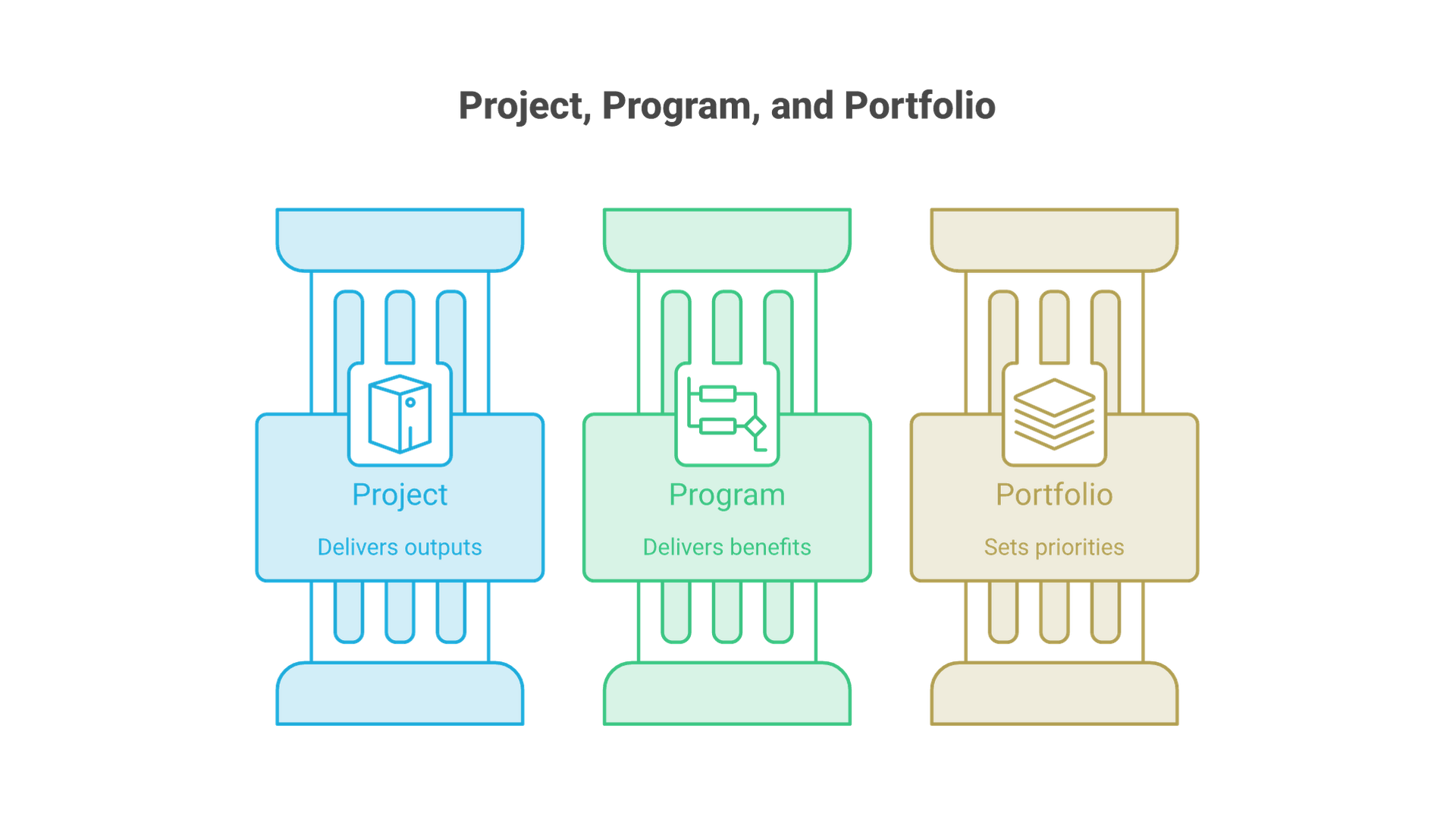
A project is a temporary effort that produces a defined deliverable, such as a new course, a mobile app release or a facility upgrade. A program groups related projects and ongoing activities so that, together, they produce benefits that no single project could deliver on its own. A portfolio sits above both and decides which programs and projects deserve investment at all.
The difference matters because programs are judged on outcomes, not only on output. A training project succeeds when the course ships on time; a workforce development program succeeds when people apply new skills and the organization sees the intended change. PMI's Standard for Program Management, Fifth Edition, published in 2024, frames program management around principles and performance domains that include strategic alignment, benefits management, governance and life cycle management, and it adds collaboration as a new performance domain.
In practice, a program needs an owner, or a small steering group, who keeps it connected to strategy and tracks whether the promised benefits actually appear. Organizations that run several technology and change initiatives at once often formalize this through a technology strategy and roadmap so that each program has a clear place in the larger plan.
Key Steps in the Program Development Process
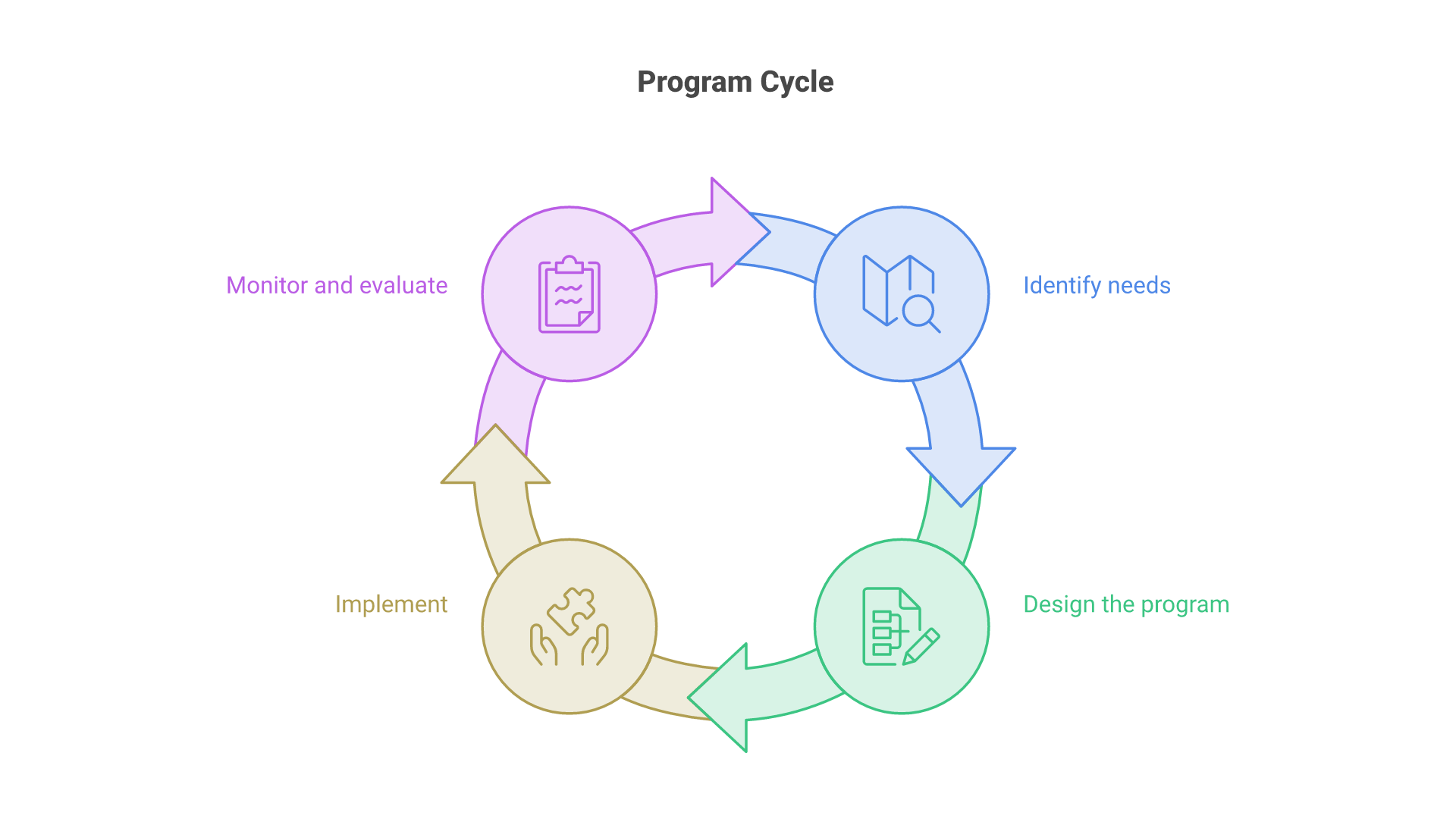
The journey of program development can be broken down into four key steps:
- Identifying needs and objectives
- Designing the program structure
- Implementing the program
- Monitoring and evaluating progress
Each of these steps plays a vital role in ensuring that the program is well planned, effectively executed and continuously improved based on feedback and performance metrics. The steps form a cycle rather than a straight line: what you learn while monitoring a program becomes the needs assessment for its next version.
Identifying Needs and Objectives
Identifying and analyzing needs, challenges and opportunities within a target population, community or organization is the first essential step in the program development process. Conducting a needs assessment helps pinpoint the gaps between the current situation and desired outcomes. This step lays the foundation for the entire program by defining what needs to be addressed and why. Useful inputs include surveys and interviews, performance data, support tickets, skills inventories, regulatory requirements and the strategic plan itself.
Setting goals and objectives that are SMART (specific, measurable, achievable, relevant, time-bound) is crucial in this phase. These characteristics keep objectives clear and attainable, providing a roadmap for the program's success. Involving key stakeholders in this process is equally important, because it promotes ownership, collaboration and sustainability of the program. The 2024 CDC framework names its first step "Assess context" for a similar reason: understanding the people, history, resources and constraints around a program comes before deciding what it should do.
Understanding identified needs and setting appropriate objectives allows organizations to develop tailored programs, increasing the likelihood of achieving desired outcomes.
Designing the Program Structure
The program design phase involves:
- Comprehensive planning of the structure, activities, resources and timeline.
- Setting the foundation for how the program will operate.
- Identifying the main components first, which lays the groundwork for the entire structure.
Key components of the program specification include the data used, the processing or delivery methods, the outputs and the user or participant experience. Determining the delivery methods and program materials is crucial for the overall structure. Resource requirements, such as the skills to be developed and the logistics of learning or rollout, are also shaped by how specific the plan is.
A well-defined program scope is essential to prevent misunderstandings and ensure that all stakeholders have aligned expectations. This clarity helps in managing resources efficiently and achieving the program's objectives. Most teams capture the design in a short program charter (purpose, sponsor, scope, governance, benefits and success measures) and a logic model that shows how activities are expected to produce outcomes.
Implementing the Program
Implementing a program involves mobilizing the necessary human, financial and material resources required for its execution. Effective resource mobilization ensures that the program has the capacity to carry out its planned activities successfully. Involving stakeholders throughout the implementation phase enhances collaboration, leading to better outcomes and greater sustainability.
Adhering to the program model is crucial for ensuring that implementation aligns with the original objectives and enhances program effectiveness. Fidelity does not mean rigidity: when early results show that an activity is not working, the change should be deliberate, documented and reflected in the logic model rather than improvised. Many organizations pilot with a small group first, then scale once the delivery model, materials and support processes hold up.
Following a structured implementation process ensures programs are executed efficiently and effectively, leading to successful outcomes.
Monitoring and Evaluating Progress
Monitoring and evaluation are essential components of the program development process. They involve tracking progress, identifying areas for improvement and measuring outcomes. Evaluation focuses on assessing the effectiveness, efficiency and sustainability of the program at different stages during implementation and after completion.
The CDC Program Evaluation Framework, 2024 organizes evaluation into six steps: assess context, describe the program, focus the evaluation questions and design, gather credible evidence, generate and support conclusions, and act on findings. It pairs them with standards aligned to federal evaluation standards (relevance and utility, rigor, independence and objectivity, transparency, and ethics) and three cross-cutting actions: engage collaboratively, advance equity, and learn from and use insights. Although written for public health, it transfers well to corporate and technology programs.
Grading the quality of a course or program is vital for evaluating its effectiveness and refining professional expertise. Regularly reviewing and updating program components in response to participant feedback keeps the program effective. Continuous monitoring and evaluation enable data-driven decision making, so organizations can improve programs and achieve objectives instead of repeating the same plan year after year.
Program Development Models and Frameworks
A few frameworks recur because they answer the questions sponsors ask: what are we doing, why should it work, and how will we know? The sections below cover logic models and theory of change, program life cycle management, and the levels used to evaluate training.
Logic Models and Theory of Change
A logic model maps the chain from inputs to activities, outputs and outcomes. The CDC framework defines inputs as the resources needed for program activities, such as personnel, funding, equipment and data; activities as what the program implements to effect change; and outcomes as who or what is expected to change as a result. Outputs are the direct products of those activities, such as sessions delivered, tools released or people trained. A theory of change adds the assumptions behind each arrow, which is where most program risk hides.
Program Life Cycle Management
PMI's program management standard treats a program as moving through definition, delivery and closure, with benefits management and governance running across all three.
Training Evaluation Levels
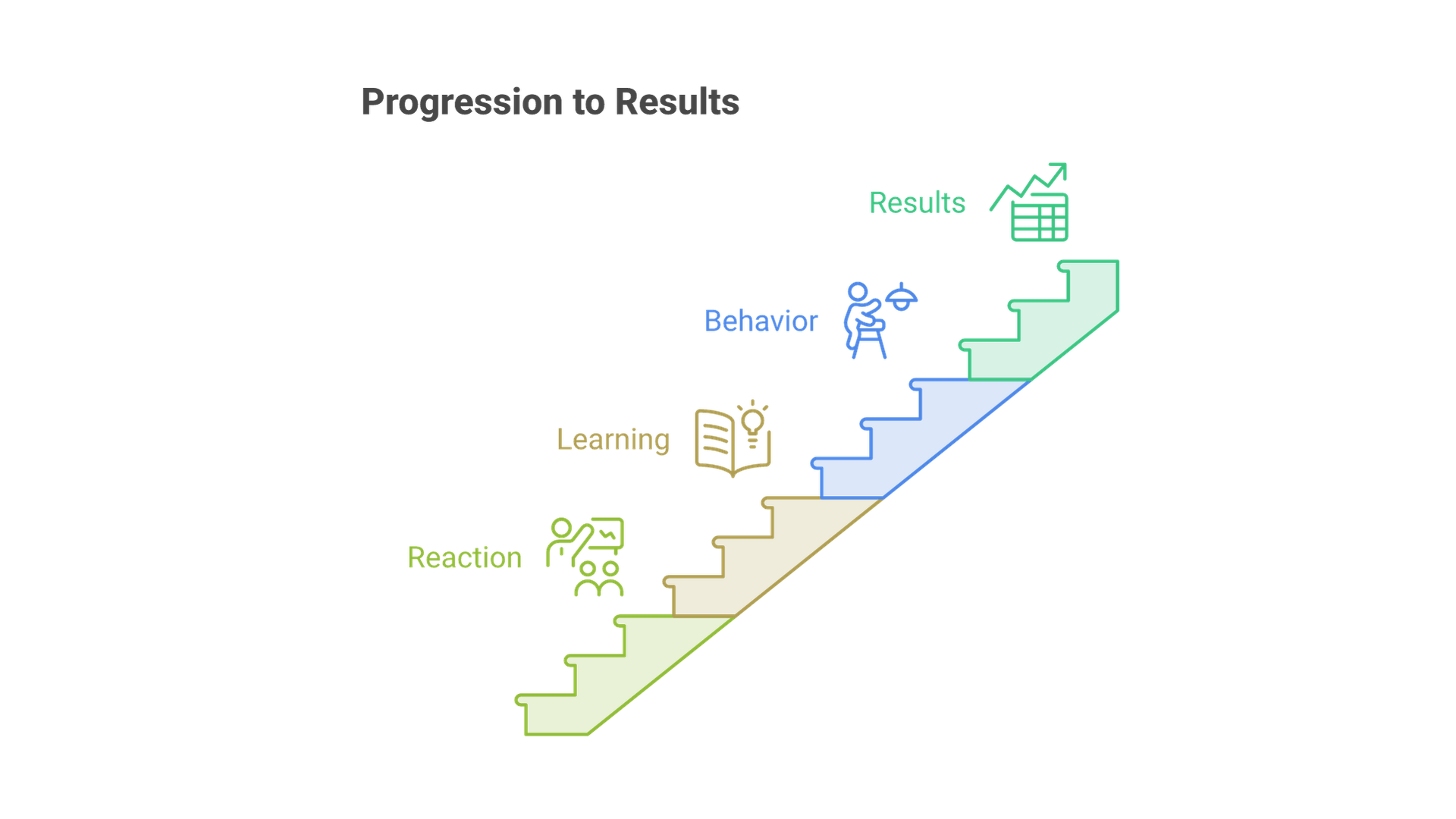
For employee and educational programs, the Kirkpatrick Model remains a common way to structure measurement. Its four levels are Reaction, Learning, Behavior and Results. The levels build on each other: participants who react well and learn are more likely to change behavior, and behavior change is what drives organizational results.
Types of Development Programs
Development programs come in various forms, each tailored to specific goals that vary with the needs of the organization. Many organizations build development plans that align with their unique needs, strengthening business performance and creating development opportunities for their people.
The primary types of development programs include employee development programs, software development programs and educational development programs. They share the same four-step backbone but differ in who participates, what changes and how success is measured.
Employee Development Programs
Employee development programs are structured initiatives aimed at building new skills and competencies to bridge gaps between current capabilities and future professional requirements. These programs typically support operational goals by strengthening workforce skills. Skill set and performance development training aims to improve:
- Interpersonal abilities
- Time management
- Organization
- Creativity
- Critical thinking skills
Professional development programs can cover many areas, focusing on growing professional skills and productivity. Types of employee development programs include executive coaching, mentoring, leadership training, internal mobility and continuing education, all of which help advance careers. Organizations often financially support employees pursuing professional education, such as reimbursing courses or certifications.
Participants in continuing education programs typically earn degrees, certifications and credentials that broaden their professional opportunities. Coaching programs such as executive coaching help mid-level managers prepare for senior leadership. In 2026, many organizations also include structured AI literacy and AI tooling training in their employee development programs, because the skills required for many roles are changing quickly.
Software Development Programs
A software development program coordinates the people, projects and practices an organization uses to build and run software. At the smallest scale, this starts with translating an algorithm into a specific programming language, which is the core of coding. Structured programming improves the clarity of code by using well-defined control structures, and common errors such as syntax errors and logical errors are identified and eliminated through testing and debugging.
At the program level, the work is less about individual code and more about how several teams plan, build, secure, release and maintain software toward a shared outcome. Each component project still follows a delivery life cycle; rather than repeat those phases here, see our guide to the seven phases of the software development life cycle. Program development adds the layer above it: choosing which applications to build or modernize, sequencing releases, aligning architecture and measuring whether the software delivers the expected business benefits. The types of software development a program includes, from web and mobile to embedded and data engineering, shape the skills and governance it needs.
Two shifts define software development programs in 2026. First, AI-assisted development is now mainstream. Google's 2025 DORA report, based on a survey of nearly 5,000 technology professionals, found that AI adoption among software development professionals reached 90 percent, and described AI as a "mirror and a multiplier" that amplifies the strengths or weaknesses an organization already has. For program leaders, that is an argument for investing in platforms, testing and clear workflows before expecting AI tools to raise delivery performance.
Second, secure development is now a program-level expectation rather than a team-level preference. NIST's Secure Software Development Framework (SP 800-218, version 1.1) groups practices into four areas: prepare the organization, protect the software, produce well-secured software and respond to vulnerabilities. NIST also published SP 800-218A, a community profile for generative AI and dual-use foundation models, and released a draft SSDF version 1.2 for public comment in December 2025. As of October 2026, version 1.1 remains the final published version on NIST's project page, so programs should track the draft without treating it as final.
Documentation remains part of the program, too. Architecture decision records, runbooks, API references, user guides and the structure charts, pseudocode and flowcharts used in teaching all reduce the cost of handoffs. The final phase of deployment involves releasing the software and monitoring it until users accept it, and maintenance continues with fixes and regular updates. Decisions about frameworks, languages and infrastructure also belong at the program level, because they constrain every team; our overview of tech stack components and selection strategy covers how to make those choices deliberately.
Educational Development Programs
Educational development programs are designed to improve learning outcomes through curriculum design, targeted training and support for educators. In schools and universities, program development often covers a new degree or certificate, an updated curriculum or a faculty development initiative. In companies, the same discipline applies to academies, onboarding curricula and certification paths.
These programs help educators and trainers gain specialized skills through coaching, mentoring and custom training. Investing in educational development programs ensures that educators are well equipped to provide high-quality learning experiences, which leads to better educational outcomes.
Benefits of Effective Program Development
Organizations that run effective development programs tend to see better employee retention and attraction, because the programs demonstrate a visible commitment to professional growth. LinkedIn's 2025 Workplace Learning Report, which surveyed 937 learning and development and HR professionals plus 679 learners, found that 88 percent of organizations are concerned about retention and that providing learning opportunities is respondents' top retention strategy. The same report found that only 36 percent of organizations qualify as "career development champions" with robust programs, which suggests that most organizations still have room to improve.
Well-implemented development programs build a workforce with stronger skills, which supports engagement and productivity. These initiatives foster a culture of continuous learning, leading to better collaboration and a more positive workplace. For technology programs, the benefits show up as clearer priorities, fewer duplicated efforts, more predictable releases and systems that are easier to maintain.
Structured program development also produces a benefit that is easy to overlook: evidence. When a program has a logic model, baseline data and agreed measures, leaders can decide whether to scale it, fix it or stop it on the basis of results rather than enthusiasm.
Strategies for Successful Program Development
Establishing a clear vision and mission for the program is crucial for guiding development efforts. Creating specific goals, choosing the right experts and measuring results are essential steps in effective program development. Integrating diverse learning and delivery methods, including digital platforms, cohorts and mentorship, helps engage participants and builds strong communities of practice.
Engaging Stakeholders
Involving stakeholders throughout the development process leads to better collaboration and sustainability, more relevant programs through incorporated feedback, and clear channels of communication that keep development teams informed and engaged throughout the program life cycle.
Engaging stakeholders throughout the program improves the quality of the end result by bringing in diverse insights. This involvement creates a sense of ownership and commitment, leading to better outcomes. Both the 2024 CDC framework, through its "engage collaboratively" action, and PMI's fifth-edition standard, through its collaboration performance domain, make this explicit.
Utilizing Diverse Perspectives
Diverse perspectives enhance creativity and innovation, allowing teams to address complex challenges more effectively. Incorporating diverse perspectives into program development is essential to meet the varied needs and expectations of stakeholders, and it helps reveal assumptions in the logic model that a homogeneous team might miss.
Utilizing diverse perspectives helps organizations adapt to change and develop comprehensive solutions to multifaceted problems. Actively seeking and integrating different viewpoints, including participants, frontline staff, technical teams and end users, enables organizations to create more robust and adaptable programs that are better equipped to handle future challenges and generate new ideas.
Continuous Learning and Adaptation
Continuous adaptation allows programs to stay relevant and responsive to changing needs. Leaders should set goals and identify improvement opportunities to support their teams' growth. Continuous feedback is vital for leadership development, enabling growth and addressing employee needs.
Technology facilitates ongoing feedback, improving communication and adaptability. Short pulse surveys, learning platform analytics, delivery metrics and regular retrospectives give program owners early signals. The CDC framework's "learn from and use insights" action captures the point: evaluation is only valuable when its findings change what the program does next.
Measuring Program Success
Measurement should be designed during program development, not bolted on afterward. Decide which questions the evaluation must answer, collect a baseline before launch and choose a mix of leading and lagging indicators. Leading indicators, such as enrollment, completion, adoption or release frequency, show whether the program is running as planned. Lagging indicators, such as retention, promotion rates, customer satisfaction or defect trends, show whether it is producing the intended change.
For learning programs, the four Kirkpatrick levels offer a natural ladder: start with reaction and learning, then look for behavior change on the job and finally for organizational results. For technology programs, delivery measures such as throughput and stability belong next to business measures such as cost to serve, time to market or user adoption. Pair the numbers with qualitative evidence, because numbers alone rarely explain why a result happened.
Overcoming Common Challenges in Program Development
Challenges in program development grow considerably as more people, teams and locations are involved. Finding a quality mentor or subject expert with a track record in the specific development area can be a significant challenge. General development programs often provide generalist mentors instead of specialists, which can limit the program's effectiveness for advanced participants.
Other common obstacles include unclear ownership, scope creep, competing priorities, weak baseline data and measuring activity instead of outcomes. In software and AI programs, a frequent failure mode is adopting new tools before the underlying workflow, testing and architecture are ready to absorb them, which is consistent with the DORA finding that AI tends to amplify existing conditions.
Key practices during the development process include:
- Prioritizing quality assurance to identify and resolve defects or design flaws early.
- Keeping project and program management tools current so they track progress and adapt to changing requirements.
- Maintaining a test or pilot environment that replicates real-world conditions to accurately gauge how users interact with the program or application.
- Assigning a single accountable program owner and a clear decision forum.
- Reviewing the logic model at each major milestone and retiring activities that do not contribute to outcomes.
By addressing these common challenges and potential risks, organizations can ensure a smoother program development process and achieve more successful outcomes.
Program Development Examples
The following scenarios are illustrative rather than case studies, but they show how the four steps apply to different kinds of programs. Each scenario moves through a needs assessment, program design, implementation and evaluation.
A leadership development program. A needs assessment shows that newly promoted managers struggle with feedback conversations and planning. The program design combines a short cohort curriculum, peer coaching and a mentor from a different department. Implementation starts with a pilot cohort, and evaluation follows the Kirkpatrick levels, from participant reaction to changes in team engagement survey results over the following quarters.
A digital product modernization program. An organization needs to replace aging internal tools that slow down customer service. The program groups several projects, including a data migration, a new web application and staff training, under one owner and one set of benefits measures. Component teams follow their own delivery life cycles, while the program tracks adoption, support ticket volume and time to resolve requests. Teams that lack in-house capacity for this kind of initiative often bring in a product development partner for specific components while keeping program ownership internal.
Frequently Asked Questions
What are the key steps in the program development process?
The key steps are identifying needs and objectives, designing the program structure, implementing the program, and monitoring and evaluating progress. The steps form a cycle, so evaluation findings inform the next version of the program.
Why is stakeholder engagement important in program development?
Stakeholder engagement fosters collaboration, keeps the program relevant and improves overall effectiveness. Programs designed with the people they serve are more likely to be adopted, sustained and aligned with real needs.
How do diverse perspectives benefit program development?
Diverse perspectives encourage creativity and innovation, expose hidden assumptions and help teams tackle complex challenges. The result is a program that works for a wider range of participants and situations.
What are some common challenges in program development?
Common challenges include scaling to larger groups, finding qualified mentors or experts, unclear ownership, scope creep, maintaining quality assurance, keeping management tools current and replicating real-world conditions for testing or pilots.
What are the benefits of effective program development?
Effective program development can improve retention and attraction, strengthen skills and productivity, foster continuous learning and give leaders evidence to scale, fix or stop initiatives based on results.
Is program development the same as software development?
No. Program development is the broader discipline of planning, running and evaluating an initiative. Software development programs are one type, where the initiative coordinates teams and projects that build and maintain software.
Summary: Mastering Program Development
Mastering program development is a multifaceted process that requires careful planning, implementation and continuous evaluation. By understanding and applying the key steps, models and strategies in this guide, organizations can create programs that meet their specific needs and objectives, and can show the evidence that they do.
Effective program development not only improves organizational performance but also fosters a culture of continuous learning and innovation. By engaging stakeholders, drawing on diverse perspectives, measuring outcomes from the start and adapting as results arrive, organizations can overcome common challenges and achieve lasting success.
If you are planning a software, AI or digital transformation program and want help structuring it from needs assessment to measurable outcomes, talk to Cognativ about your program.