Support for Software Your Business Depends On
An application does not stand still after launch. Dependencies change, integrations need attention, users report issues, and business priorities evolve. For a small or midsize business, even a narrow software problem can interrupt an important customer or operational workflow. Our software maintenance and support services keep business applications secure, stable and improving after release.
Cognativ provides ongoing software support and maintenance for organizations that need a clear approach to issues, updates, and improvements. An engagement starts with the application and the people responsible for it, then defines the work, access, priorities, and support arrangements appropriate to the business.
Whether you need help with a custom application, an existing integration, or a platform that has grown harder to maintain, the goal is to make operating responsibilities visible and give your team a practical way to decide what happens next.
Business impact
The workflows and users affected when an application has a problem.
System evidence
Current architecture, dependencies, incidents, and available operating information.
Service ownership
The people, access, decisions, and providers needed to keep work moving.
Where Ongoing Maintenance Helps
A support plan should reflect how the software is used, not just a list of technical tasks. Start with the operational effects that matter to your business and the information available to investigate them.
Recurring Issues and Unclear Ownership
A problem that appears in several applications may move between vendors, internal staff, and support queues without a clear owner.
Aging Dependencies and Integrations
Applications rely on operating environments, libraries, APIs, and external services that change.
Limited Visibility Into System Health
Teams may know that users are having trouble without knowing which component failed or whether the problem is recurring.
Improvements Competing With Urgent Work
New requests, security updates, and unresolved defects all compete for the same time and budget.
Explore application modernization services
Software Support and Maintenance Services
An engagement can combine routine maintenance, issue handling, and targeted improvement. The exact activities depend on your applications, existing providers, access, and agreed responsibilities.
Application Maintenance and Defect Resolution
- Applications
- Defects
- Version Updates
- Configuration Review
Investigate reported defects, reproduce the issue where practical, and define the change needed to address it. Maintenance may also include version updates, configuration review, and attention to recurring application problems.
A change should be tested against the affected workflow and documented for the people who operate it. Prioritization and timing depend on impact, dependencies, and the agreed support scope.
Security Updates and Dependency Review
- Updates
- Security
- Dependency Review
- Access Controls
Review the software components and dependencies included in the engagement, then coordinate appropriate updates or remediation. Access controls, patch history, and the handling of sensitive data are part of the planning conversation.
Security work should align with the organization’s policies and the actual environment. The client and its advisors determine applicable obligations; maintenance activities alone do not establish compliance or eliminate security risk.
Monitoring, Alerts, and Reporting
- System Health
- Escalation
- Alerts
- Reporting
Where monitoring is included, define the applications and signals to observe, the tools available, and who receives an alert. Useful signals might include an integration failure, an application error, or an operational condition relevant to a business workflow.
Agree how issues are recorded, escalated, and reviewed with the responsible teams. Reports can help identify patterns and outstanding decisions, but their usefulness depends on the data and coverage available.
Database and Integration Maintenance
- Data
- Interfaces
- Database Maintenance
- Reconciliation
A workflow may depend on data moving between an application, a database, and third-party platforms. Maintenance can include reviewing a failed exchange, planning an interface change, or addressing a data issue within the agreed scope.
Identify the authoritative record and the teams responsible for each boundary. Test error handling and reconciliation with the systems involved, including access and vendor constraints.
Explore data integration services
Modernization When Upkeep Stops Paying Off
- Legacy Systems
- Modernization
- Technical Debt
- Incremental Upgrades
When fixes and patches cost more each quarter, modernize the parts that hold the application back in stages, while the rest keeps running.
Explore application modernization services
How Our Software Maintenance Services Work
The retained Cognativ approach connects an initial assessment with implementation, maintenance cycles, monitoring, and improvement. The sequence and deliverables are agreed for the specific engagement.
-
Assess the Current Environment
Begin with the applications, business workflows, users, and dependencies that need support.
-
Agree on Scope and Responsibilities
Define the systems and activities included, the contacts for business and technical decisions, and how requests enter the support process.
-
Plan and Make Controlled Changes
Prioritize defects, updates, and improvements with the people who understand their business impact.
-
Review Signals and Improve
Review incidents, completed work, outstanding risks, and user feedback at a cadence suited to the engagement.
Application Support Services That Fit Your Business
A small business with one critical application may need a different arrangement from an organization coordinating several systems and providers. The important decision is who owns each part of the work and how that ownership will operate in practice.
Application-Focused Support
An application-focused engagement can concentrate on an identified product or workflow.
Coordinated Support Across Systems
A broader scope may include interfaces and operational handoffs across more than one application.
Maintenance and Planned Improvement
Some businesses need both issue handling and a way to plan improvements.
Transition From a Previous Provider
When an existing team or vendor is handing over support, identify the documentation, environments, deployment process, and access required for the transition.
Software Operations in Practice
These Cognativ case studies illustrate work on operational visibility and connected applications. Their details belong to the individual engagements and do not establish the scope or outcomes of a new support agreement. Two further cases, fintech platform stabilization and a subscription platform rebuild, show related work in other settings.
In each example, the useful question is how teams identified failures, made information available, and coordinated the work around an existing platform. Review the underlying case when considering a similar operating problem.
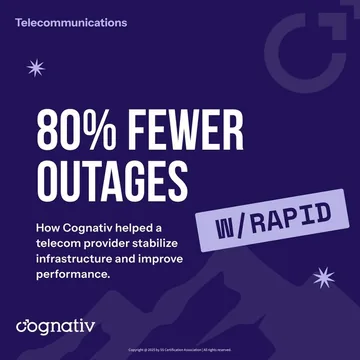
Telecom Platform Stabilization and Observability
Software Reliability
Platform Modernization
Release Management
Virtual CTO
Telecom Platform Stabilization and Observability
Cognativ worked with a telecom infrastructure provider on platform stabilization, observability, and incident ownership under a Virtual CTO model.
The retained case describes architecture assessment, dashboards, alerts, and shared incident workflows, followed by continuing advisory on scalability and release discipline. The case reports that outages dropped by more than 80% within months.
Explore the Telecom Case Study
Ecommerce Order Visibility and Integration
Systems Integration
Workflow Automation
Order Management
Observability
Ecommerce Order Visibility and Integration
Cognativ worked with an omnichannel retailer on order integration and observability across fulfillment, customer experience, and technical operations.
The retained case describes a shared view of order status and exceptions and continuing support for performance tuning, monitoring, and roadmap planning.
Explore the Ecommerce Case Study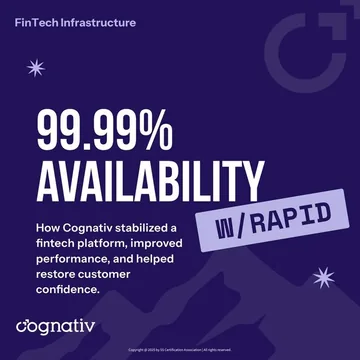
Fintech: Prioritize Stability Before Expanding the Roadmap
Platform Modernization
Elastic Scaling
Observability
Virtual CTO
Fintech: Prioritize Stability Before Expanding the Roadmap
A growing fintech platform faced outages, transaction failures and technical debt that pulled engineers away from product work. Cognativ's Virtual CTO engagement investigated those failure points, mapped dependencies and prioritized changes to the core platform.
The case reports 99.99% availability for core services over a trailing 12-month period. The decision was not simply whether to rewrite the application. It was which components needed attention, which behavior had to be preserved and how leadership would evaluate the next release.
Read the fintech platform stability case study.
Subscription Businesses: Connect Signup, Billing and Service
Subscription Software
Billing Systems
Platform Modernization
Billing Integration
Subscription Businesses: Connect Signup, Billing and Service
A digital subscription business had demand but an unstable MVP. Customers could not reliably sign up, pay and activate their service. Cognativ rebuilt the subscription platform around onboarding, billing and operational reporting.
A subscription journey continues after the first payment. Plan changes, trials, cancellations and support access need clear behavior and ownership. Reviewing those transitions together exposes problems that a successful checkout test alone can miss.
Explore the subscription platform rebuild.Prepare for a Support Conversation
Bring the application or workflow you want to support, the people who use it, and the issues that matter most. Existing documentation, recent incidents, and a list of connected systems help establish a useful starting point.
We can discuss the current environment, the boundaries of the work, and what needs to be confirmed before proposing an arrangement. If another provider or internal team retains responsibility for part of the system, include that handoff in the discussion.
Explore software development services

Discuss Your Software Support Needs
Tell us which applications and workflows your business depends on, and where you need support. Your first consultation is free, and our U.S.-based team will review what you share and suggest the right support scope.
Software Support and Maintenance Questions
Explore common questions about coverage, scope, and operating responsibilities. The answers cover what maintenance includes, software built by another provider, support hours and response times, security updates and monitoring.
What does software maintenance include?
Depending on the agreement, maintenance can include defect investigation, updates, dependency review, monitoring, integration maintenance, and targeted enhancements. Define the applications and activities in scope before work begins.
Can Cognativ support software built by another provider?
An engagement can begin with an assessment of the existing application and the information available. Access, documentation, ownership, dependencies, and the previous provider’s handoff affect what can be supported and how the work is scoped.
How are support hours and response expectations determined?
Discuss the business impact of incidents, desired coverage, escalation contacts, and the services required. Any service levels, response targets, and exclusions are agreed for the specific engagement; they should not be assumed from a general service description.
Does maintenance include security updates?
Security updates and dependency review can be included when agreed. Identify the components in scope, who approves and applies changes, and how updates are tested and recorded. Your organization remains responsible for determining applicable security and compliance obligations.
Can you monitor our application and integrations?
Monitoring can be part of the support scope when the relevant systems, tools, and access are available. Agree which signals matter, who receives alerts, and how an issue is escalated across providers.
How do you prioritize defects and enhancements?
Review requests against business impact, risk, dependencies, and available capacity. A shared backlog and named decision owners help distinguish routine maintenance from a larger change that needs a separate scope.
How much does ongoing software support cost?
Cost depends on the applications, service coverage, complexity, dependencies, and activities included. A useful proposal begins with an understanding of the environment and the responsibilities your team wants to retain or delegate.
What should we prepare before a support assessment?
Share the application’s purpose, key users, current providers, known issues, and available architecture or operating documentation. Examples of recent incidents, deployment practices, and integration dependencies can help identify the work and access needed.
Related Software Development Insights
Recent Cognativ articles on building, modernizing, and maintaining business software. Each one explains a practical decision for business and technology leaders, with steps you can apply in your own organization.

Functional Testing: Types, Tools, Strategies and Best Practices
Unit, integration, regression and acceptance tests plus Selenium, Playwright and Appium: how to design a functional testing suite you can trust on each release.
Best Programming Languages to Learn in 2026: Top Picks by Use Case
Python, TypeScript, SQL, Rust and more: see which languages lead the 2026 rankings, what each is best for and how AI coding agents shift what to learn next.
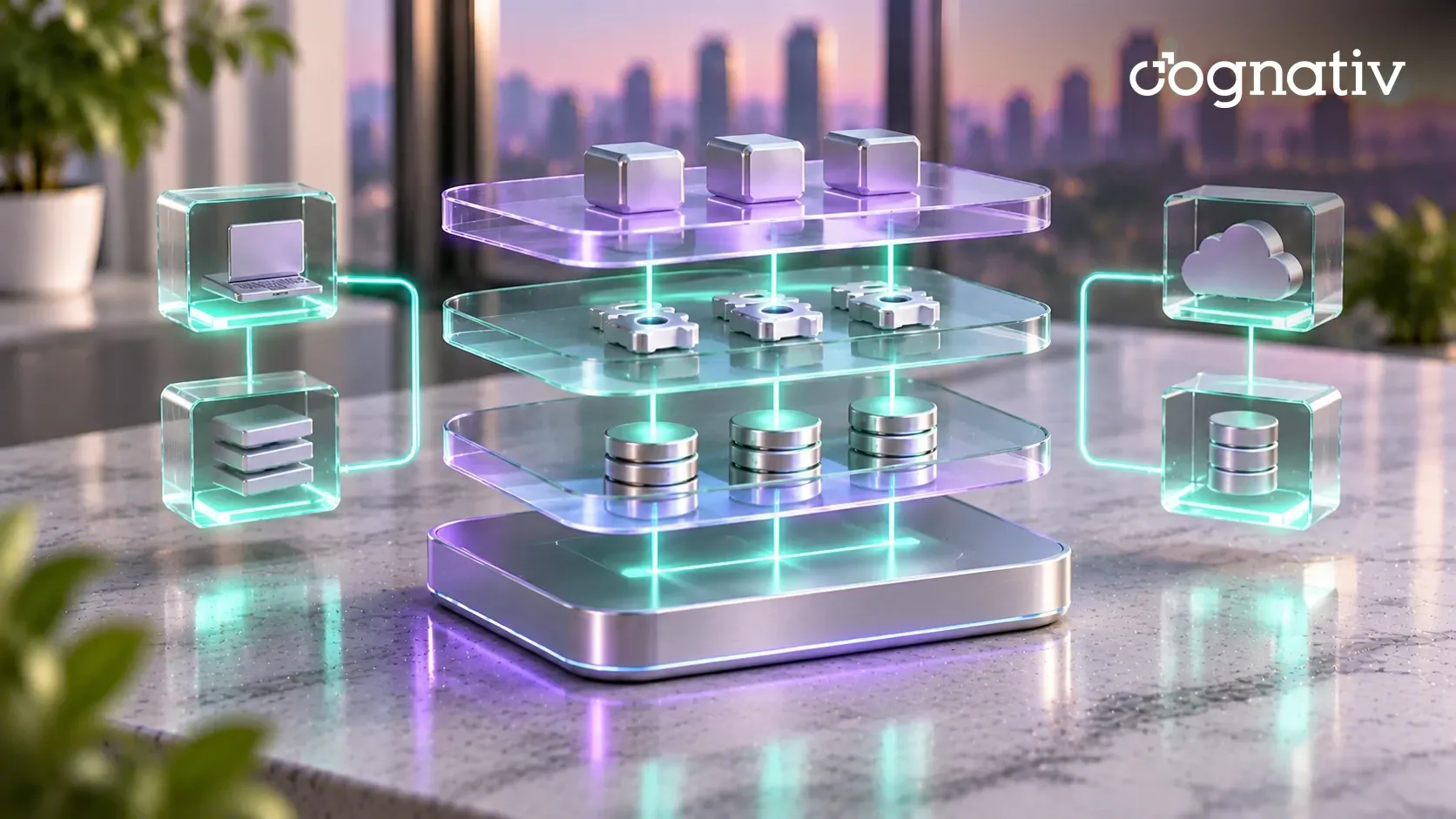
Application Architecture: Key Concepts, Types and Patterns
From monoliths and N-tier layers to microservices, events and serverless: how each architecture pattern works, its trade-offs and a framework for choosing.