
Anduril Raises $5B as Defense Tech Funding Accelerates
Inside Anduril's $5B Series H: how its valuation rose from $14B to $61B in two years, what Lattice and Fury do, and what has changed by late October 2026.
Anduril raises $5B in a Series H round that values the defense technology company at $61 billion. The company announced the round on May 13, 2026. It was co-led by returning investors Thrive Capital and Andreessen Horowitz, and it more than doubled the $30.5 billion valuation Anduril set less than a year earlier.
The round is the largest single raise in a year when venture money moved into defense faster than ever. Below is the news itself, then the evergreen context people search for: Anduril's valuation and funding history, its product portfolio built around the Lattice software platform, what has happened since the round through October 31, 2026, and what enterprise AI teams can learn from it.
Key takeaways
- The Series H brought in $5 billion at a $61 billion post-money valuation, led by Thrive Capital and Andreessen Horowitz.
- Anduril says the money goes to manufacturing capacity, research and development, and the infrastructure to field systems at scale.
- Its products, from autonomous aircraft to undersea vehicles, share one software layer: Lattice.
- In October 2026, Bloomberg and CNBC reported an employee tender offer that would value Anduril at roughly $90 billion.
Anduril Raises $5B: The Series H at a Glance
Anduril announced the round in a post by CEO Brian Schimpf on its website. The post included a letter he had first shared with investors in January 2026 about the changing character of conflict and the future of defense manufacturing. The company's counsel, Gunderson Dettmer, confirmed the $61 billion post-round valuation and the stated use of funds: manufacturing capacity, R&D and the infrastructure needed to build and field advanced defense systems at scale.
Schimpf framed the raise against the company's starting point. In his words, when Anduril was founded in 2017, "defense was not a category that attracted significant venture investment." According to TechCrunch's coverage of the round, Schimpf wrote that revenue roughly doubled to about $2.2 billion in 2025. That followed about $1 billion in 2024, which the company disclosed when it raised its previous round.
Why the Valuation Doubled So Quickly
Three things support a higher price in under a year. Revenue kept doubling. Anduril moved from prototypes to programs of record, including Army and Air Force work. And it began operating its own factories rather than relying only on contract manufacturing. Investors are paying for a company that sells production volume, not just demonstrations.
Anduril Valuation and Funding History
Anduril's valuation and funding path is one of the steepest in venture-backed defense. Crunchbase puts total funding at $11.4 billion after the Series H. The table below lists the rounds confirmed by the company, its counsel or top-tier reporting.
| Date | Event | Amount | Valuation | Lead investors |
|---|---|---|---|---|
| August 2024 | Series F | $1.5 billion | $14 billion | Founders Fund, Sands Capital |
| June 2025 | Series G | $2.5 billion | $30.5 billion | Founders Fund |
| May 2026 | Series H | $5 billion | $61 billion | Thrive Capital, Andreessen Horowitz |
| October 2026 | Employee tender offer (reported) | Up to $1.3 billion | About $90 billion | Secondary sale, not new capital |
The August 2024 Series F, reported by CNBC at a $14 billion valuation, was tied to Anduril's Arsenal manufacturing plan, and CNBC noted the prior $8.5 billion mark from 2022. The June 2025 Series G, reported by TechCrunch, included a $1 billion check from Founders Fund, the largest the firm had written. A spokesperson said that round was more than eight times oversubscribed.
Primary and Secondary Valuations
The roughly $90 billion figure is not a new funding round. It comes from an employee tender offer, in which staff sell existing shares to investors. That price signals demand, but it is not the same as a priced primary round with new capital going to the company.
Anduril Industries Products Portfolio
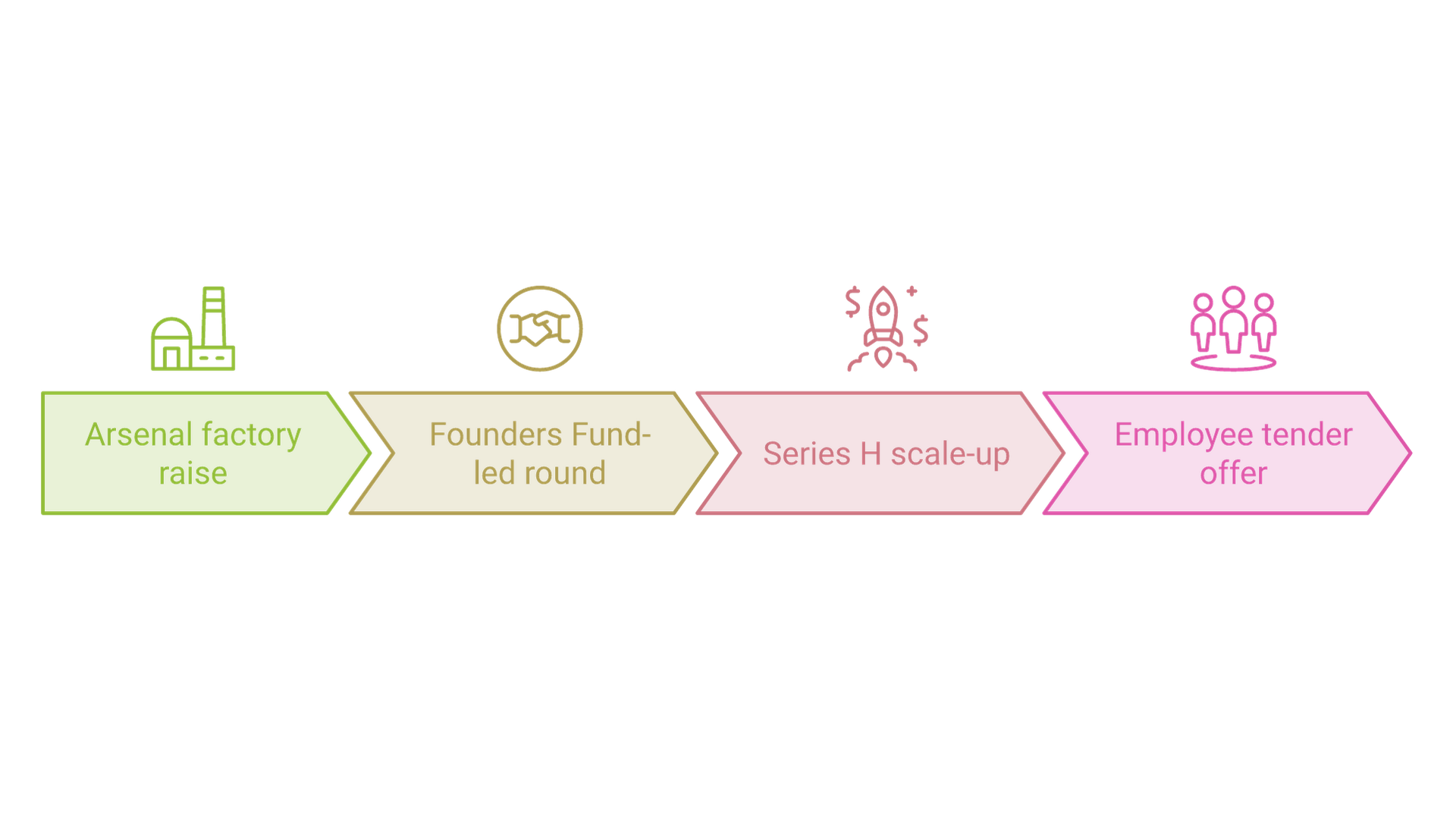
Anduril's portfolio spans air, land, sea and space, but the products are designed to share one software layer. That design choice explains much of the valuation: each new vehicle or sensor adds to a common platform rather than starting a separate product line.
Lattice: The Software Core
Lattice is Anduril's AI-enabled operating system for sensors and autonomous systems. It fuses feeds from cameras, radar and drones into one shared operating picture, then helps operators task assets. In 2023 Anduril introduced Lattice for Mission Autonomy, a hardware-agnostic layer that lets one human supervise teams of robotic systems. In December 2024, Breaking Defense reported that the Pentagon's Chief Digital and AI Office had bought Lattice Mesh, a data network for frontline units, and that an SDK opened it to third-party developers.
Autonomous Aircraft and Effectors
Fury is Anduril's collaborative combat aircraft, designated YFQ-44A by the U.S. Air Force. It first flew on October 31, 2025, in what Anduril described as a semi-autonomous flight. The air portfolio also includes Altius tube-launched drones, the Ghost and Bolt small drones, Roadrunner reusable interceptors and the Barracuda family of low-cost cruise missiles.
Undersea, Sensors and Soldier Systems
Under the sea, Anduril builds the Dive-LD autonomous underwater vehicle and Ghost Shark, an extra-large autonomous submarine developed with Australia. On land, Sentry towers provide persistent surveillance for border and base security. For soldiers, the Army approved Anduril's takeover of Microsoft's IVAS headset program in April 2025, as Breaking Defense reported, and Anduril is developing its EagleEye headset for the follow-on program.
Where the Money Goes: Arsenal Manufacturing
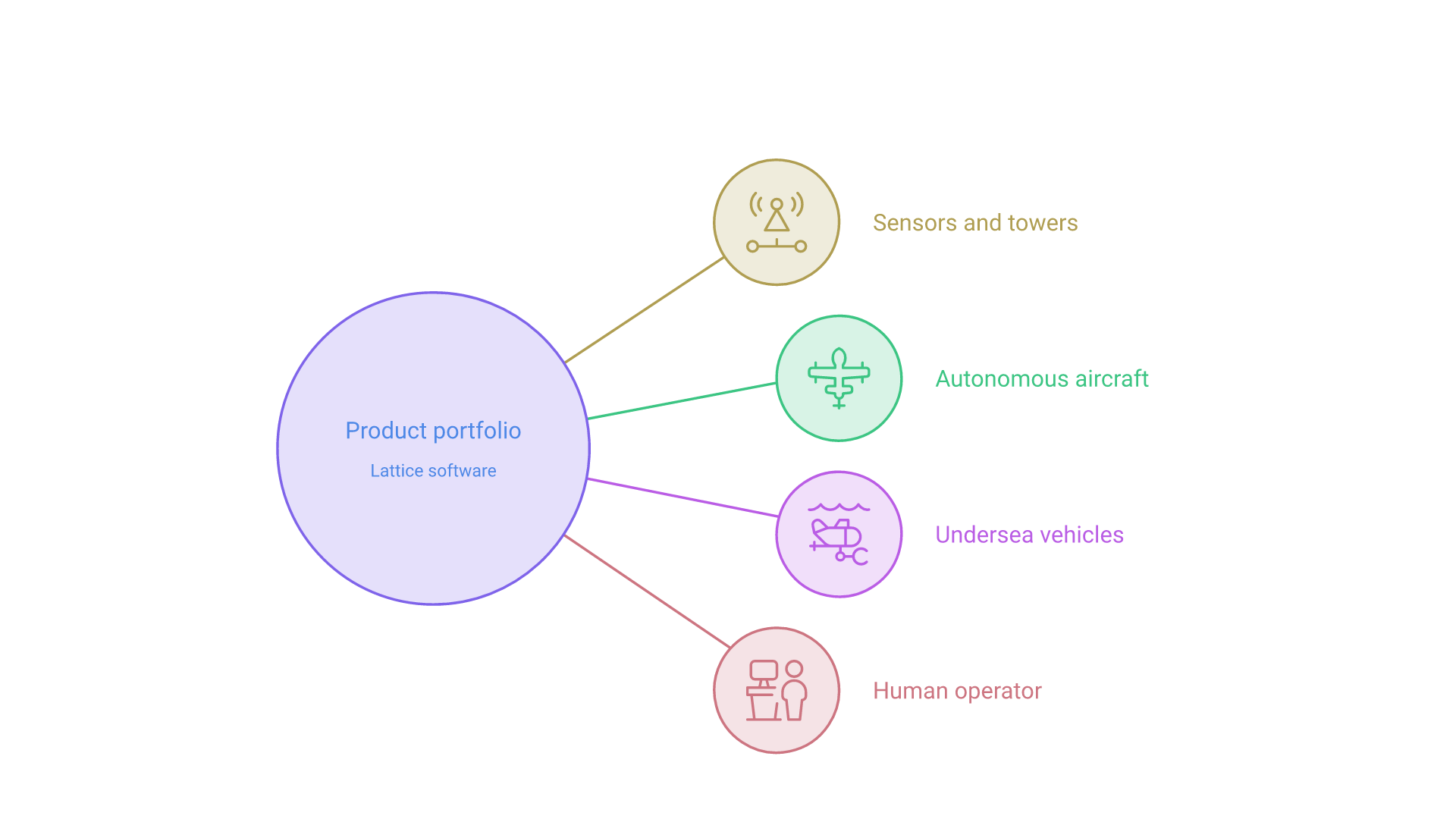
Anduril's bet is that software-defined weapons only matter if they can be built in volume. Its answer is Arsenal, a manufacturing platform meant to produce autonomous systems at a scale traditional defense lines struggle to match. The first site, Arsenal-1, was announced in January 2025 with the State of Ohio near Columbus, a roughly $1 billion investment that Anduril expects to create more than 4,000 jobs.
The Series H post stressed putting capital into production capacity rather than share buybacks, an implicit contrast with legacy defense primes. For buyers of any complex technology, the pattern is familiar: the hard part is not the prototype but repeatable production, integration and support.
From Capital to Fielded Systems
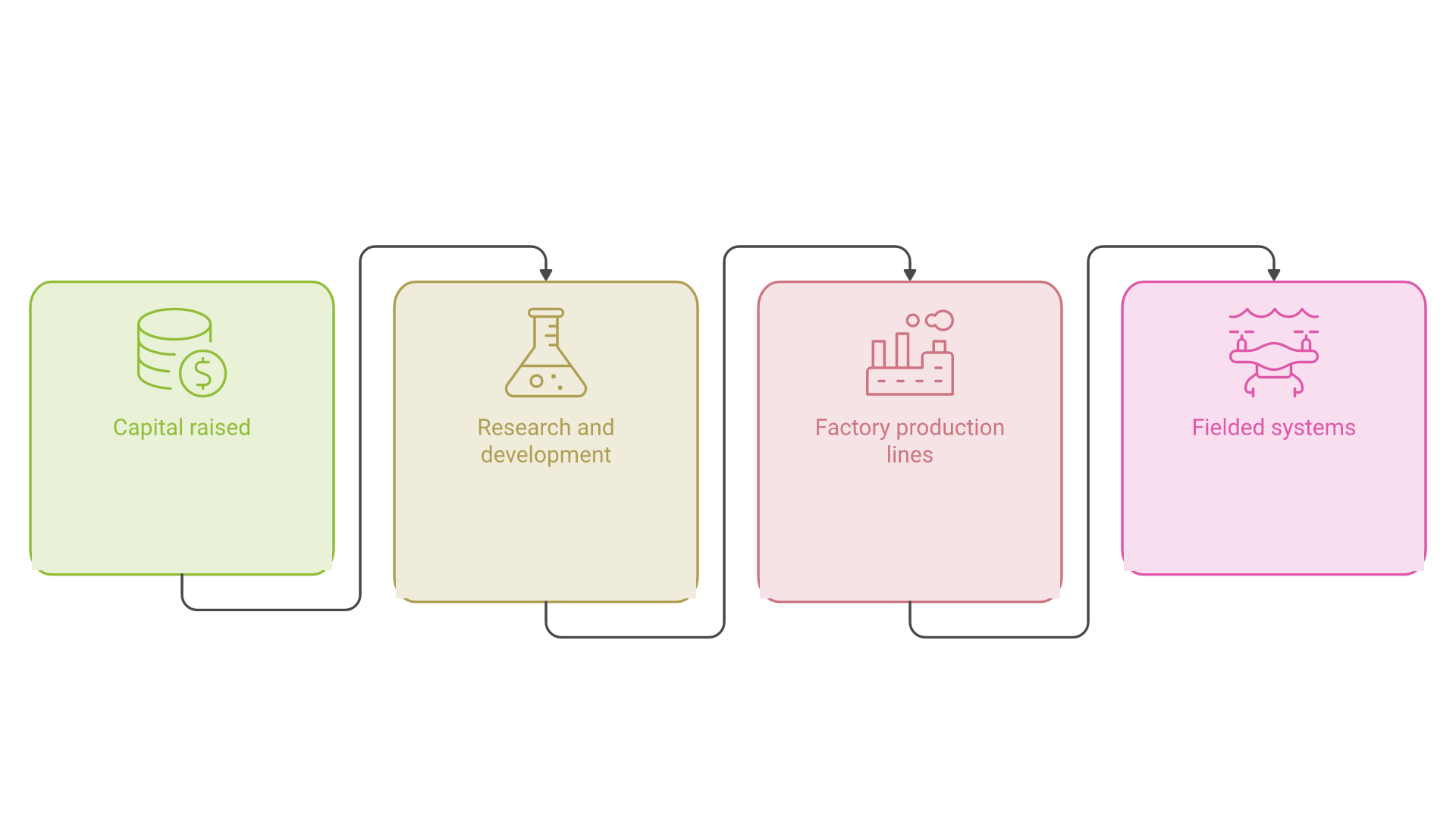
The chain runs from capital to R&D, to standardized factory lines, to systems delivered under contract. Each step depends on the one before it, which is why Anduril raises large rounds ahead of demand rather than after it.
Why Defense Tech Funding Is Accelerating
Anduril is the headline, but the whole sector is moving. According to Crunchbase, defense-related startups raised a record $8.8 billion in 2025, and nearly $13.6 billion by mid-May 2026. That put 2026 on track to more than double the prior year. Other large 2026 rounds included Saronic's $1.75 billion Series D, led by Kleiner Perkins, which fits the broader pattern of venture firms building dedicated vehicles for AI-heavy companies covered in our piece on Kleiner Perkins' AI platform funds.
Several drivers stack up. Recent conflicts have highlighted the value of cheap, numerous drones. Governments are shifting budgets toward autonomy and munitions production. And investors who funded the AI model wave now see defense as a market where software, hardware and long contracts compound. The risk side is real too: valuations this high assume continued contract wins, and our analysis of AI boom financial risks applies to private defense marks as much as to public tech stocks.
What Has Happened Since May 2026
Several dated developments followed the Series H:
- October 6, 2026: CNBC reported a U.S. Navy contract worth up to $2.9 billion tied to submarine production.
- October 6, 2026: USNI News reported that Anduril plans to invest $3.7 billion in Arsenal-2, a Baltimore County shipyard for Virginia-class submarine components.
- October 13 to November 9, 2026: an employee tender offer at $94.80 per share, capped at $1.3 billion and valuing Anduril at roughly $90 billion, first reported by Bloomberg and confirmed to CNBC by the company.
CNBC also reported that co-founder Palmer Luckey had taken an advisory role on a Pentagon initiative shortly before the Navy award, a link critics have raised as a governance question. Anduril has not announced an IPO.
What It Means for Enterprise AI Buyers and Builders
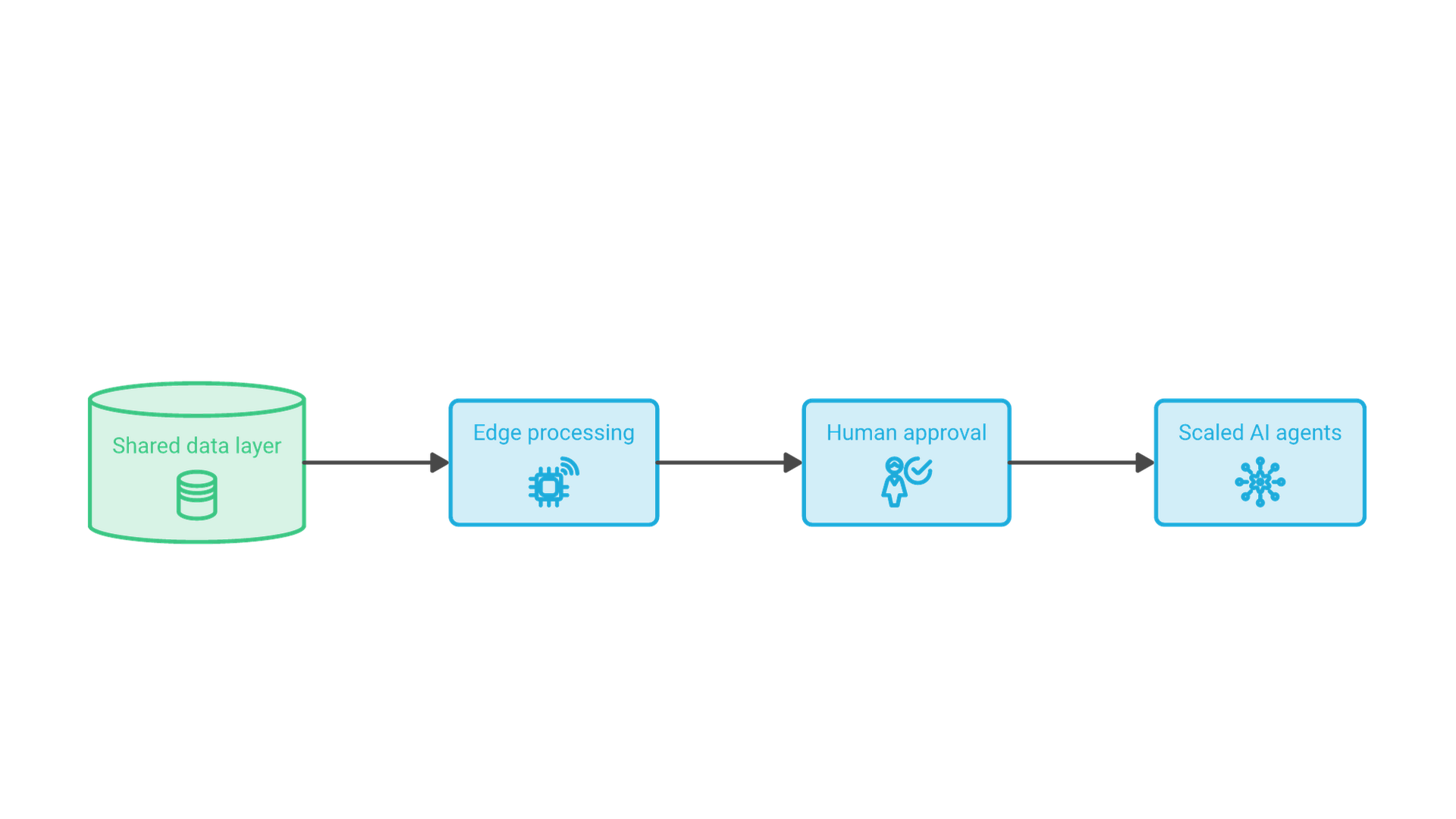
Most companies will never buy a cruise missile, but Anduril's architecture holds lessons for anyone deploying AI in operations. The first is platform over point solutions. Lattice lets new hardware join an existing data fabric instead of adding another silo. Enterprises that build agents one use case at a time often end up with many disconnected tools; a shared data and orchestration layer is what makes the next agent cheaper. That is the approach we take in AI agent development.
The second is processing at the edge. Military systems must keep working when links are jammed, so Lattice Mesh pushes data sharing to frontline nodes. Factories, fleets and retail sites face milder versions of the same problem, which is why edge computing for AI workloads keeps gaining ground.
The third is human oversight by design. Anduril says Fury requires a person to approve lethal actions. Enterprise systems need the same kind of explicit approval points, audit trails and kill switches for high-impact actions, and those belong in an AI governance program from day one, not as a later patch.
Frequently Asked Questions
How much did Anduril raise in its latest funding round?
Anduril raised $5 billion in a Series H announced on May 13, 2026, at a $61 billion valuation. Thrive Capital and Andreessen Horowitz co-led the round.
What is Anduril's valuation?
The last priced round set it at $61 billion. In October 2026, an employee tender offer reported by Bloomberg and CNBC implied roughly $90 billion, but that was a secondary share sale, not new funding.
How much funding has Anduril raised in total?
Crunchbase puts Anduril's total funding at about $11.4 billion after the Series H. Its largest rounds came in 2024, 2025 and 2026.
What products does Anduril make?
Anduril makes the Lattice software platform, the Fury collaborative combat aircraft, Altius, Ghost and Bolt drones, Roadrunner interceptors, Barracuda cruise missiles, Sentry towers, and the Dive-LD and Ghost Shark undersea vehicles.
What is Anduril Lattice?
Lattice is Anduril's AI-enabled software platform. It fuses sensor data into a shared operating picture and lets a small number of people supervise many autonomous systems.
Is Anduril a public company?
No. As of October 31, 2026, Anduril is privately held and has not announced an IPO. Its shares trade only through private rounds and tender offers.
Conclusion: Anduril's $5B Round and the Defense Tech Boom
Anduril's $5 billion Series H was more than a big check. It priced the company at $61 billion on the strength of doubling revenue, a product portfolio unified by Lattice and a plan to manufacture at scale. Since then, a Navy shipyard contract and a reported $90 billion tender offer suggest investor demand has kept rising through October 2026.
For enterprise leaders, the lesson is architectural: a shared data layer, edge resilience and built-in human oversight make AI systems easier to scale and safer to trust. If you are planning AI agents or an operational AI platform with those principles, talk to Cognativ about your AI project.