

US Banks Fix Vulnerabilities Flagged by Anthropic's Mythos: What Happened and What Comes Next
JPMorgan, Goldman and other big US lenders raced to patch flaws flagged by Anthropic's Mythos. See how AI bug hunting works and what changed for banks in 2026.
In May 2026, US banks began rushing to fix vulnerabilities flagged by Anthropic's Mythos, the restricted AI model the company built for finding and exploiting software flaws. On May 12, Reuters reported that a handful of the largest US lenders were working through scores of IT weaknesses the model had surfaced, some of which had to be patched in days rather than the weeks banks were used to.
The story raised a broader question: what happens when AI vulnerability discovery outpaces the people who fix the flaws? This article explains the event, how models like Claude Mythos Preview find vulnerabilities, how regulators responded, what has happened through October 31, 2026, and what banks should do now.
Short answer: Mythos did not breach any bank. It gave a small group of banks a defensive head start by finding weaknesses in their own and their vendors' software. The hard part turned out to be the remediation work that followed.
What Happened: US Banks and Anthropic's Mythos
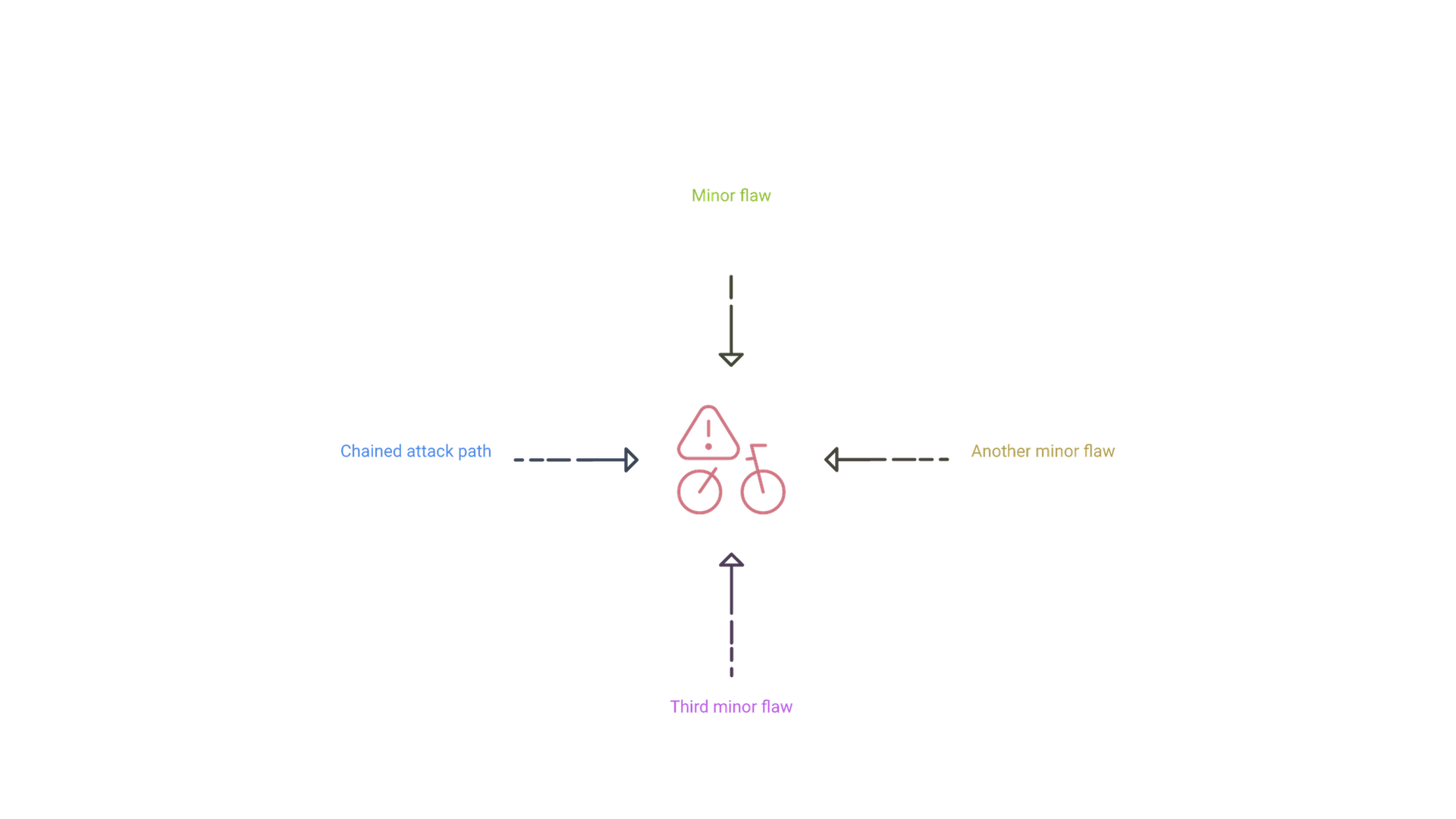
According to Reuters reporting published on May 12, 2026, US banks with access to Mythos were finding several hundred to thousands of low- to moderate-risk vulnerabilities each. The concern was that Mythos is good at chaining lower-risk weaknesses into a high-risk path, which triggered a rush to check and upgrade software.
JPMorgan Chase was a publicly named launch partner of the program. Reuters, citing sources and executives, reported that Goldman Sachs, Citigroup, Bank of America and Morgan Stanley also had access. The large banks were sharing what they learned with smaller lenders that lacked direct access, so those banks could prepare their own systems.
Reuters described the consequences: more repairs and upgrades, pressure on legacy systems nearing end of support, and possibly more frequent downtime to apply fixes. Anthropic declined to comment on the banks' findings.
What Is Claude Mythos Preview and Project Glasswing?
Anthropic announced Project Glasswing on April 7, 2026, as a restricted program to secure critical software with Claude Mythos Preview, a frontier model it said could find and exploit vulnerabilities at a level surpassing all but the most skilled humans. Anthropic chose not to make the model generally available.
The launch partners were Amazon Web Services, Anthropic, Apple, Broadcom, Cisco, CrowdStrike, Google, JPMorganChase, the Linux Foundation, Microsoft, NVIDIA and Palo Alto Networks, with access extended to more than 40 additional organizations that build or maintain critical software. Anthropic committed up to $100 million in usage credits and $4 million in donations to open-source security groups. After the credits, partners pay $25 per million input tokens and $125 per million output tokens, which Reuters noted was five times the price of Claude Opus 4.7.
The announcement cited findings such as a 27-year-old OpenBSD flaw that allowed a remote crash and a 16-year-old FFmpeg bug that automated testing had exercised millions of times without catching. It also fed the policy debate covered in our article on US pre-release AI model reviews.
How AI Models Find Security Vulnerabilities
Anthropic's Frontier Red Team described the method in its April 7 technical write-up, and it explains why results arrived in such volume.
An agent that reads, hypothesizes and tests
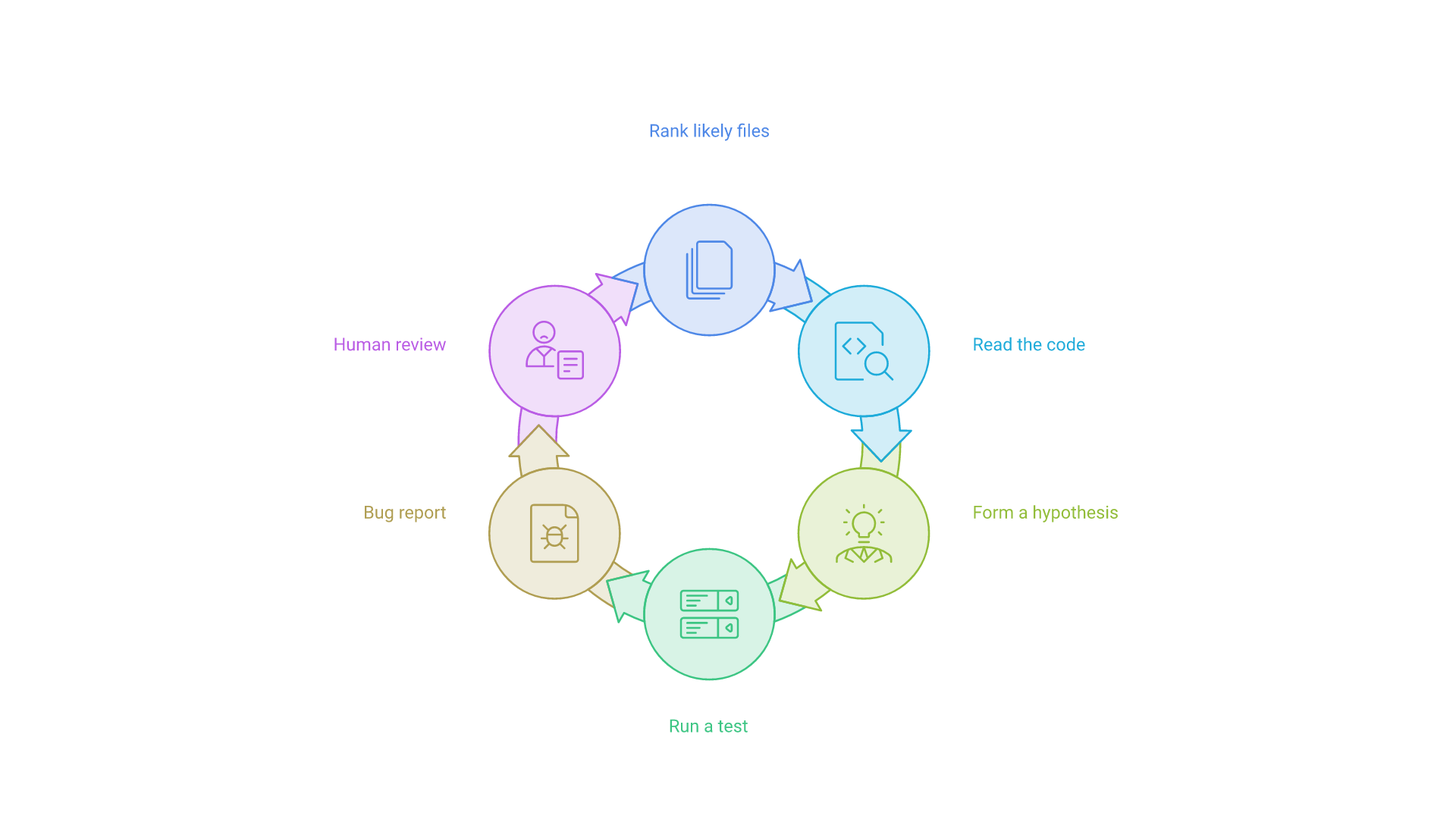
Each target runs in an isolated container. Given a short instruction to find a vulnerability, the model works as an agent: it ranks files by how likely they are to contain bugs, reads the code, forms a hypothesis, runs the program to confirm or reject it, adds debugging where needed, and produces either "no bug" or a report with a proof of concept. A separate review step filters out weak or insignificant reports, and the most severe findings go to human triagers before disclosure.
Because many agents run in parallel on different files, the approach scales with compute rather than headcount. Anthropic reported costs under $20,000 for about a thousand OpenBSD runs.
Why chaining matters
The model can also write exploits, which helps confirm whether a bug is actually usable by an attacker. That same capability lets it combine several minor weaknesses, each acceptable on its own, into an escalation path. For a bank, a list of moderate findings can therefore hide a serious risk that only appears when the issues are read together.
Why Banks Felt AI Vulnerability Discovery First
Banks were among the first to see Mythos results, and their technology estates made the findings demanding. Many institutions run decades of proprietary code alongside open-source components and vendor platforms. Reuters reported that Mythos was particularly effective on both proprietary and open-source code, which raised the pressure to modernize systems approaching the end of support.
Three factors made the workload heavy:
- Volume. Hundreds or thousands of findings per institution, each needing validation and testing.
- Speed. Fixes that once fit a multi-week cycle now had to ship in days, inside change-control processes built for slower discovery.
- Uneven access. Cost and limited processing power kept smaller banks from using the model directly, so they depended on information shared by larger peers.
This is as much a maintenance problem as a security one. Steady software support and maintenance practices, such as current dependency inventories, tested upgrade paths and fast release pipelines, determine how quickly a finding becomes a deployed fix.
How Regulators Responded
Bloomberg reported that Treasury Secretary Scott Bessent and Federal Reserve Chair Jerome Powell called bank CEOs to a short-notice meeting in Washington to make sure they understood the risks posed by Mythos and similar models. Reporting dates the meeting to April 7, 2026, and a Treasury spokesperson later confirmed it.
On May 19, Bloomberg reported that the Fed and the Office of the Comptroller of the Currency had paused some cyber examinations of the largest banks, according to people familiar with the matter, so institutions could focus on patching. The same reporting said the OCC was running its own trial of the model, and that officials framed the pause as a scheduling change rather than reduced oversight. Neither agency commented on the record.
Timeline: Mythos and US Banks, April to October 2026
The key dated events, with the source for each:
| Date | Event | Source |
|---|---|---|
| April 7, 2026 | Anthropic announces Project Glasswing and Claude Mythos Preview | Anthropic |
| April 7, 2026 | Bessent and Powell meet bank CEOs on Mythos risks | Bloomberg, Treasury confirmation |
| May 12, 2026 | US banks reported rushing to patch Mythos findings | Reuters |
| May 19, 2026 | Fed and OCC reported to pause some bank cyber exams | Bloomberg |
| May 22, 2026 | Anthropic publishes initial Glasswing update | Anthropic |
| June 2, 2026 | Glasswing reported to expand to roughly 200 organizations | Quartz |
| October 6, 2026 | Anthropic merges Glasswing into a tiered Cyber Verification Program | Anthropic |
| October 14, 2026 | Bank of America CEO describes contractor-led remediation | CNBC via The Register |
What Has Happened Since the Bank Patching Rush
Anthropic's initial Glasswing update on May 22, 2026 said the company and about 50 partners had found more than 10,000 high- or critical-severity vulnerabilities. Its central point was that finding bugs was no longer the constraint; verifying, disclosing and patching them was. Of 530 high- or critical-severity open-source bugs disclosed to maintainers at that point, 75 had been patched. The update also said Mythos Preview helped one partner bank detect and stop a fraudulent $1.5 million wire transfer.
On June 2, Quartz reported an expansion to roughly 200 partner organizations across more than 15 countries, covering sectors such as energy, water and healthcare, with partners allowed to share findings with regulators under responsible-disclosure rules. On October 6, Anthropic folded Glasswing into its Cyber Verification Program, with Defense, Red Team and Specialized access tiers covering Claude Opus 5.5, Claude Sonnet 5.5 and Claude Mythos 5.1.
The clearest view of the cost came from Bank of America. As The Register reported, CEO Brian Moynihan told CNBC on October 14 that the bank had added about 1,000 contractors in the second quarter to patch flaws found by AI models including Mythos. He put remediation costs at "a couple of hundred million plus," a figure that also covered anti-money laundering work and was not broken out. For a broader view of how AI is changing threat activity, see our summary of the Anthropic threat intelligence report from September 2026.
What Banks Should Do About AI-Discovered Vulnerabilities
Attackers will eventually have comparable tools, so the practical response is to shorten the path from finding to fix. Anthropic's own guidance for network defenders stresses shorter patch testing and deployment timelines and baseline controls that do not depend on any single patch.
Build a remediation pipeline, not a queue
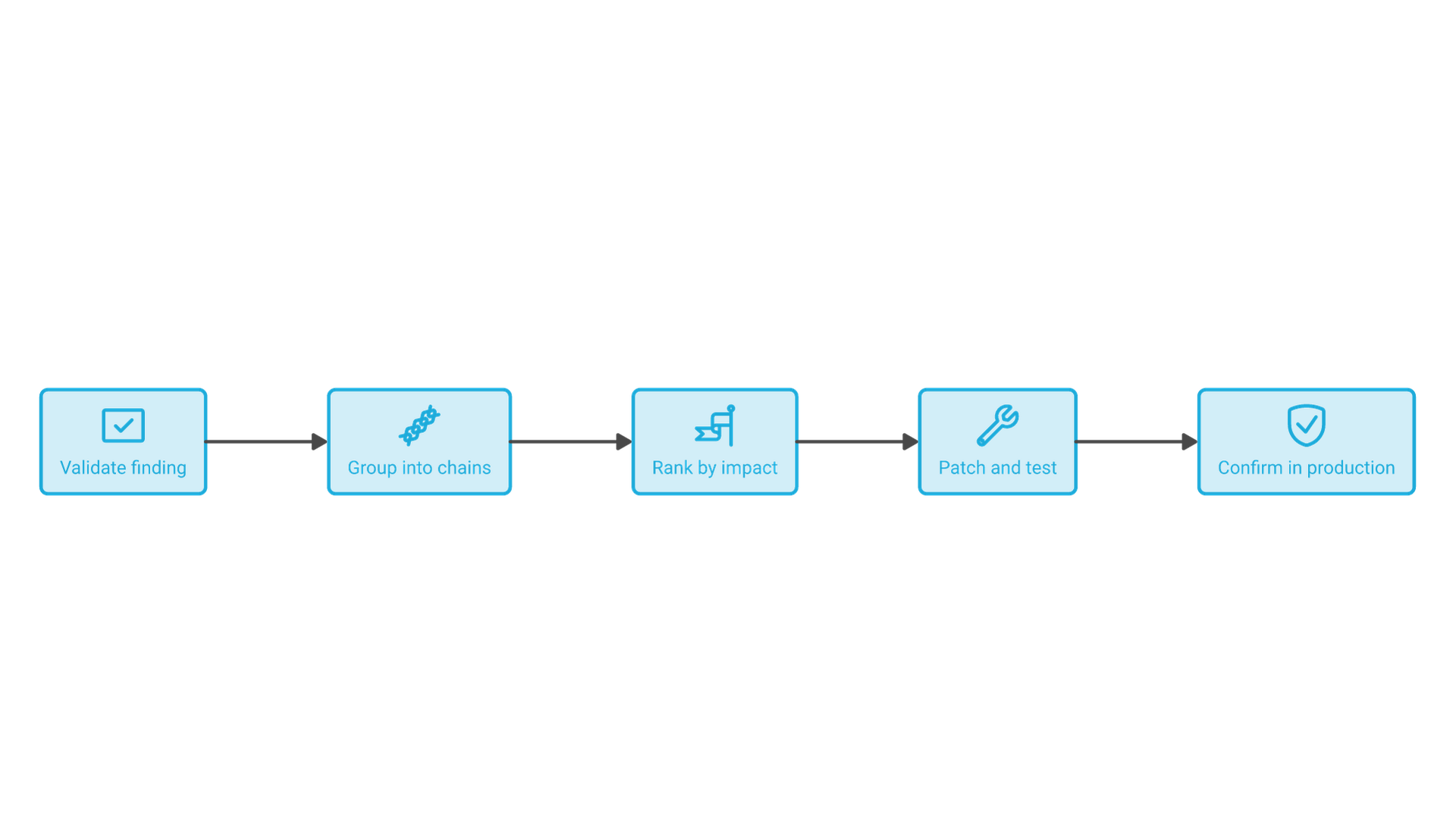
Treat AI findings as a flow: validate each one, group related issues to expose chains, rank by business impact, patch with automated testing, then confirm the fix in production. Give each stage a named owner, because validation and patching, not discovery, set the pace.
Harden what cannot be patched quickly
Legacy platforms will not all be fixed in days. Hardened defaults, multi-factor authentication, segmentation and comprehensive logging reduce exposure meanwhile.
Extend the program to vendors
Much bank code comes from third parties. Vendor contracts should cover patch timelines for AI-discovered flaws, and smaller banks should use information sharing with larger peers.
Govern AI security tools like any privileged system
A model that writes exploits needs access controls, logging and clear testing authorization. A documented enterprise AI governance framework gives security teams a place to record those decisions.
What It Means for Enterprise AI Buyers and Builders
The bank episode is a preview for every industry that runs critical software. AI vulnerability discovery lowers the cost of finding flaws for defenders and, over time, for attackers. The winners will absorb a surge of findings without breaking change control.
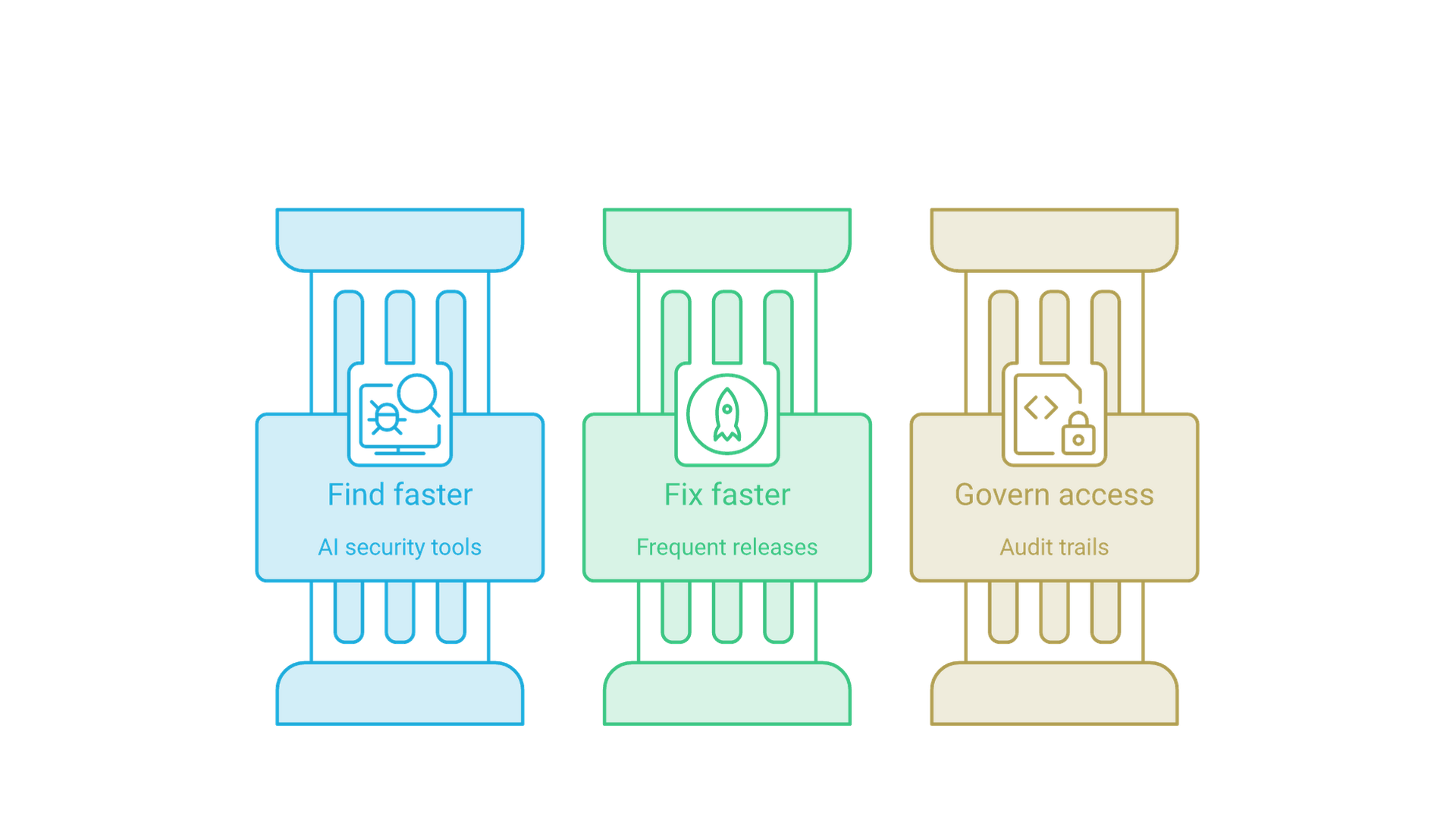
Buyers should ask how an AI security tool's output enters existing workflows and who validates it. For builders, it means shipping smaller, more frequent releases and keeping dependencies current, so a critical fix is routine rather than an emergency. Both depend on clear AI governance: deciding which models may scan which systems, under what approvals and with what audit trail.
Frequently Asked Questions
What is Anthropic's Mythos?
Claude Mythos Preview is an Anthropic frontier model announced on April 7, 2026, that the company says can find and exploit software vulnerabilities at a near-expert level. It was released only to vetted partners through Project Glasswing.
Which banks have access to Mythos?
JPMorgan Chase was a named launch partner. Reuters reported that Goldman Sachs, Citigroup, Bank of America and Morgan Stanley also had access.
Why are banks worried about Mythos?
It can find large numbers of flaws quickly and chain minor weaknesses into serious ones. Banks must patch faster, and comparable tools could eventually reach attackers.
Can AI find security vulnerabilities on its own?
Yes, within limits. Agentic models can read code, test hypotheses and write proofs of concept with little guidance, but validation and severe findings still involve human review.
Is Claude Mythos available to the public?
No. As of October 31, 2026, access runs through Anthropic's Cyber Verification Program for qualifying organizations and security professionals.
Did regulators pause bank cyber exams because of Mythos?
Bloomberg reported in May 2026 that the Fed and OCC paused some cyber exams of the largest banks so they could focus on patching. The agencies did not comment on the record.
Conclusion: Lessons From the Mythos Bank Patching Rush
The US banks that fixed vulnerabilities flagged by Anthropic's Mythos showed both sides of AI-driven security. The model found real weaknesses at a scale few human teams could match, and banks paid for that head start in contractors and accelerated upgrades. By late October 2026, the lesson is that discovery has become cheap while remediation remains the bottleneck.
Organizations that want to prepare should invest in faster patch pipelines, stronger baseline controls and clear governance for AI security tools before the next surge of findings arrives. If you are planning how AI fits into your security and software operations, talk to Cognativ about your AI project.