


US Government Pushes Pre-Release AI Model Reviews: CAISI Testing Deals and Executive Order 14409
Google DeepMind, Microsoft and xAI joined OpenAI and Anthropic in CAISI's voluntary model testing in May 2026. See how the reviews work and what changed next.
The US government pushed for pre-release AI model reviews in May 2026. On May 5, the Center for AI Standards and Innovation (CAISI) at the National Institute of Standards and Technology (NIST) announced agreements to test frontier models from Google DeepMind, Microsoft and xAI before deployment. The day before, The New York Times reported that the White House was weighing an executive order to create a formal review process for new AI models.
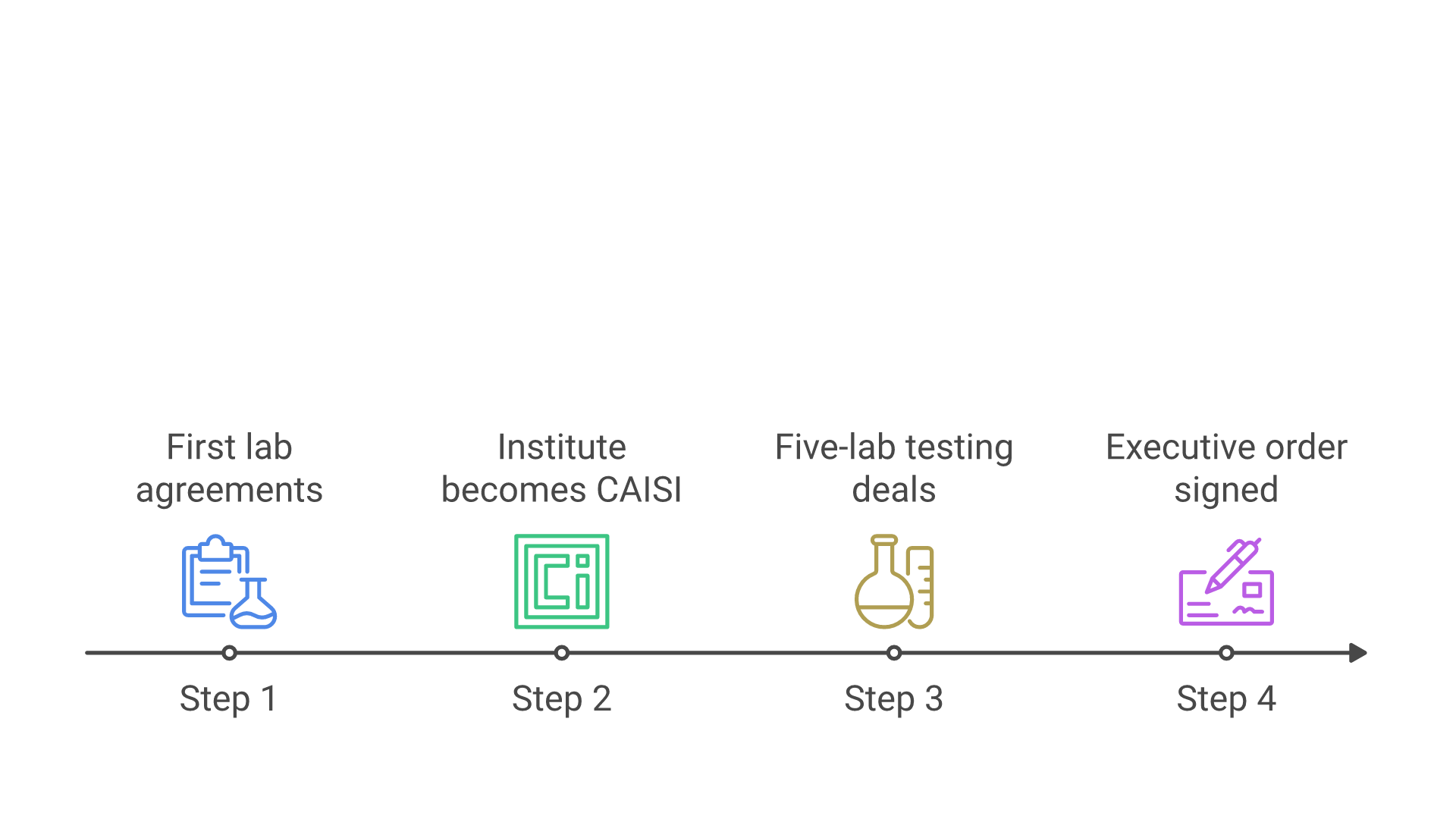
Four weeks later, on June 2, 2026, President Trump signed Executive Order 14409, which set up a voluntary window of up to 30 days for government review of the most capable models before wider release. Below is what happened, how pre-deployment AI model testing actually works, who runs it, what has changed through October 31, 2026, and what it means for companies that build on frontier models.
Key takeaways
- All five major US frontier labs (OpenAI, Anthropic, Google DeepMind, Microsoft and xAI) now have voluntary testing agreements with CAISI.
- Executive Order 14409 adds a voluntary 30-day pre-release access window focused on cyber capabilities, and explicitly rules out mandatory licensing.
- Pre-release review is not a product certification. Enterprises still need their own evaluation and governance.
What Happened: The US Push for Pre-Release AI Model Reviews
According to NIST's May 5, 2026 announcement, republished by HPCwire, the new agreements let CAISI evaluate models before they are publicly available and conduct post-deployment assessment and targeted research. The agreements build on earlier partnerships with OpenAI and Anthropic first signed in August 2024, which NIST said had been renegotiated to reflect the Commerce Secretary's directives and America's AI Action Plan.
What the CAISI Agreements Cover
NIST said CAISI had completed more than 40 evaluations to date, including some of unreleased state-of-the-art models. Developers may hand over versions with reduced or removed safeguards so evaluators can probe national security risks, testing can take place in classified environments, and evaluators from across government can contribute through the CAISI-convened TRAINS Taskforce. CAISI Director Chris Fall said that "independent, rigorous measurement science is essential" to understanding frontier AI.
The White House Weighs Vetting Models
On May 4, The New York Times reported that the White House was discussing an executive order that would create a working group of tech executives and officials to study review procedures for new models. As AFP summarized that reporting, senior officials had briefed executives from Anthropic, Google and OpenAI, while a White House official called the reports "speculation." Nextgov/FCW said it confirmed that an order was under consideration.
Why the Government Moved Now
The push marked a shift in tone. On January 20, 2025, Executive Order 14148 rescinded the Biden administration's 2023 order (EO 14110), which had required developers of the largest models to share safety test results with the government. In June 2025, Commerce Secretary Howard Lutnick re-established the US AI Safety Institute as CAISI, dropping "safety" from the name.
Anthropic's Mythos as a Catalyst
Press reports tied the change to cyber risk. On April 7, 2026, Anthropic announced Project Glasswing, limiting access to Claude Mythos Preview, a model it said could surpass all but the most skilled humans at finding and exploiting software vulnerabilities. Anthropic said it did not plan to make the model generally available and had been in ongoing discussions with US officials. Offensive cyber capability had become a practical concern, a theme also visible in Anthropic's September 2026 threat intelligence report.
How Pre-Deployment AI Model Testing Works
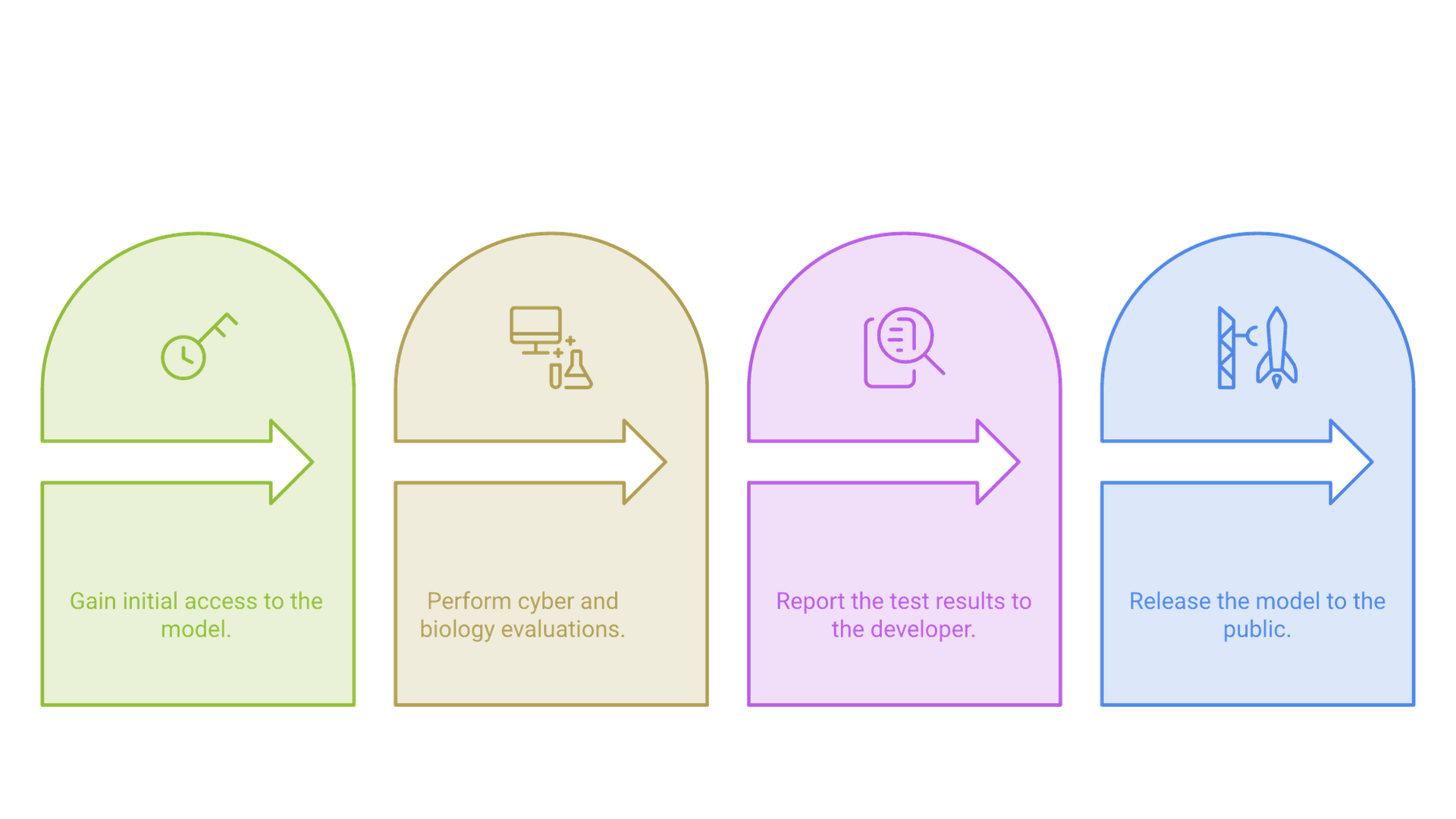
Pre-deployment testing means government evaluators get access to a model before the public does, run structured tests on high-risk capabilities and share findings with the developer. It is voluntary in the US: no agency has authority to block a release based on the results.
A Worked Example: OpenAI o1
The clearest public example is the joint US and UK evaluation of OpenAI's o1, published by NIST in December 2024. Evaluators tested cyber capabilities, biological capabilities and software and AI development. They used automatically graded question sets checked by humans, agent tasks in a sandboxed environment with tools, and expert probing, then compared o1 against reference models. US evaluators were assisted by the NSA and CISA on cyber tasks. NIST called the findings preliminary, noting limited time and test scaffolding that may not reflect other versions.
What Testing Can and Cannot Tell You
These evaluations focus on demonstrable national security risks such as cybersecurity, biosecurity and chemical weapons. They do not certify accuracy, bias, privacy or fitness for a specific business workflow, and detailed results for unreleased models are usually not published.
Who Runs Frontier AI Model Testing
Several bodies now share the work. In the US, CAISI remains the main technical point of contact for industry, while Executive Order 14409 gives security agencies a central role in cyber-focused reviews.
| Body | Role in model review |
|---|---|
| CAISI (NIST, Commerce) | Voluntary agreements with five US labs; pre- and post-deployment evaluations; assessments of foreign models |
| NSA | Co-leads the classified cyber benchmarking that designates covered frontier models under EO 14409 |
| CISA (DHS) | Cyber defense directives, clearinghouse support, access to tools for critical infrastructure |
| Treasury | Leads the AI cybersecurity clearinghouse and disclosure framework under EO 14409 |
| UK AI Security Institute | Joint testing partner with CAISI on several evaluations |
| EU AI Office | Oversees general-purpose AI model obligations under the EU AI Act |
CAISI also evaluates models from outside the US, including Chinese open-weight releases. That matters for teams weighing open-source models for local deployment, since the government's published assessments are one input when choosing a model family. In Europe, the EU AI Act's general-purpose AI obligations took effect on August 2, 2025, with Commission enforcement powers starting August 2, 2026; providers of the most advanced models must notify the AI Office.
Executive Order 14409 Explained
The order that followed the May reports, "Promoting Advanced Artificial Intelligence Innovation and Security," was signed on June 2, 2026. It frames security and innovation as complementary and relies on partnership with industry rather than new rules.
Covered Frontier Models and the 30-Day Window
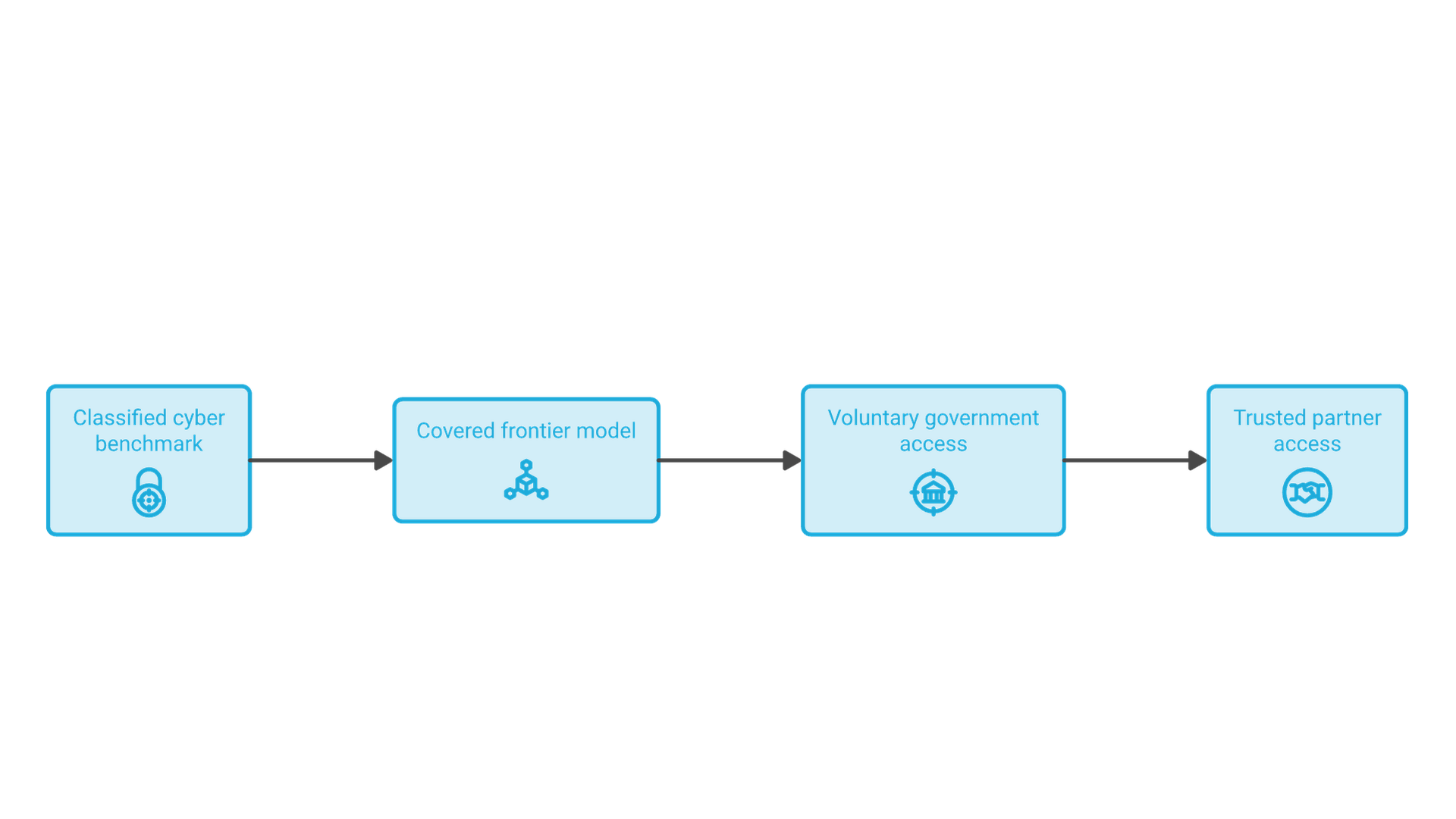
Section 3 calls for a classified benchmarking process to set the threshold at which a model becomes a "covered frontier model," with the NSA Director making that determination. Developers of such models may voluntarily give the federal government access for up to 30 days before releasing them to other trusted partners, with confidentiality, cybersecurity and intellectual property protections. The government is also to work with developers to select trusted partners who receive early access to strengthen critical infrastructure cybersecurity.
What the Order Does Not Do
Section 3(c) states that nothing in it authorizes any "mandatory governmental licensing, preclearance, or permitting requirement" for developing or releasing AI models. A Congressional Research Service report from July 9, 2026 notes the order does not define a covered frontier model itself, relies on existing appropriations, and leaves open whether Congress should require federal testing before release. The CRS also describes a shift in emphasis from AI safety under EO 14110 to AI security.
What Has Happened Since (Through October 31, 2026)
The following milestones come from NIST, the White House and the CRS unless noted otherwise.
| Date | Development |
|---|---|
| August 29, 2024 | US AI Safety Institute signs first pre-release access agreements with OpenAI and Anthropic |
| June 2025 | Institute re-established as CAISI |
| April 7, 2026 | Anthropic limits Claude Mythos Preview to Project Glasswing partners |
| May 5, 2026 | CAISI announces agreements with Google DeepMind, Microsoft and xAI |
| June 2, 2026 | Executive Order 14409 signed |
| July to September 2026 | CAISI publishes assessments of Z.ai GLM models and, with UK AISI, Kimi K3 |
| August 1, 2026 | Deadline for the benchmarking process and voluntary access framework |
| October 16, 2026 | NIST publishes key practices for incident readiness in advanced model training and evaluation |
Two points remain unsettled. On May 12, Gizmodo reported, in a story reposted by Bioethics.com, that the May 5 announcement had disappeared from the CAISI website; no explanation was given, and the NIST address we found for the release returned an error when we checked. And because the order makes the benchmarking classified, we found no public version of the covered-model threshold or the voluntary access framework as of October 31, 2026. As of October 31, 2026, the NIST center page also uses a new name, the Center for Advancing Innovation and Standards for Super Intelligence (CAISSI); we found no official announcement explaining the change.
What Pre-Release Reviews Mean for Enterprises Adopting Frontier Models
For most companies, the government's reviews are a useful signal, not a substitute for their own diligence. A model can clear a national security evaluation and still fail on your data, your edge cases or your compliance rules.
Practical Steps for AI Buyers and Builders
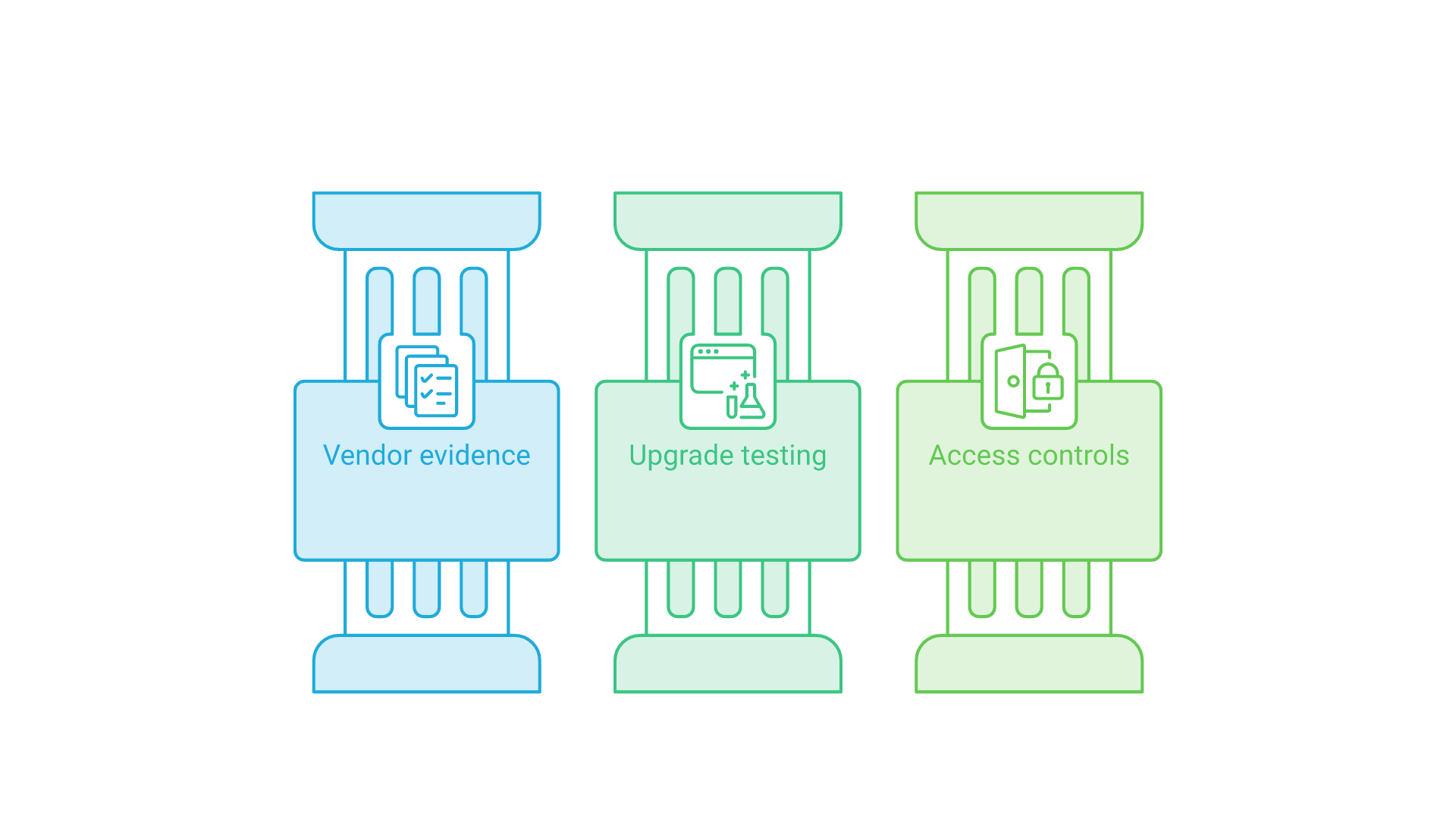
First, ask vendors which external evaluations a model has undergone and what system cards disclose. Second, run your own task-specific tests before and after every model upgrade, because release cadence is fast and behavior changes between versions. Third, treat cyber-capable models as privileged tools, with access controls, logging and human review for security-sensitive actions. A documented enterprise AI governance framework gives these steps an owner and an audit trail.
Plan for Staggered Access
The trusted-partner model means some capabilities may reach critical infrastructure operators and vetted organizations before the general market, as Mythos did. Architectures that can swap models without rewriting applications make that easier to absorb; LLM solution design that separates prompts, evaluation and model routing keeps those options open.
Frequently Asked Questions
Does the US government require AI models to be reviewed before release?
No. CAISI's agreements and the 30-day window in Executive Order 14409 are voluntary, and the order states it creates no mandatory licensing, preclearance or permitting requirement.
What is CAISI?
The Center for AI Standards and Innovation is part of NIST at the Department of Commerce. It replaced the US AI Safety Institute in June 2025 and serves as industry's main government contact for frontier model testing.
Which AI companies let the government test their models?
OpenAI, Anthropic, Google DeepMind, Microsoft and xAI have voluntary testing agreements with CAISI as of May 2026.
What is a covered frontier model?
Under Executive Order 14409, it is a model that crosses a threshold set through a classified cyber capability benchmarking process, as determined by the NSA Director. The threshold has not been made public.
What does pre-deployment testing check?
Government evaluations focus on national security risks such as cyber attacks and biological and chemical weapons, and can include software and AI development tasks. They do not certify accuracy or business fitness.
Can the government block an AI model release?
Not under these programs. Evaluators share findings with developers, but neither the CAISI agreements nor the executive order gives agencies authority to stop a release.
Conclusion: Pre-Release AI Reviews Are Here, but Voluntary
In 2026 the US government moved from a hands-off posture to a structured, voluntary system of pre-release AI model reviews: CAISI testing agreements with all five major US labs, followed by Executive Order 14409 and its cyber-focused 30-day window. Key details, including the covered-model threshold, remain classified or unpublished.
For enterprises, the lesson is to pair external signals with internal evaluation, access controls and clear ownership. Mature AI governance practices turn model releases into managed change instead of surprises. If you want help assessing frontier models for your own use cases, talk to Cognativ about your AI project.