

Apple CEO John Ternus on AI: Why Apple Won't Ship AI for AI's Sake
Apple's new CEO puts useful products ahead of AI hype. See the Siri and Gemini backstory, what to watch on November 2, and five questions to vet any AI project.
Apple CEO John Ternus says the company does not want to ship AI for AI's sake. In a WIRED interview published October 30, 2026, less than two months after he took over from Tim Cook, Ternus defended an AI strategy that critics have long described as behind its rivals.
The comment reads like a soundbite but works better as a product rule. Below: what Ternus said, how Apple's AI plan got here, what to watch at the November 2 earnings call, and a framework for deciding where AI belongs in your own products and operations.
Key takeaways
- Ternus said Apple will use AI in its products but will not ship it as a feature for its own sake.
- Apple's 2026 AI stack pairs its own Apple Foundation Models with Google's Gemini technology.
- For most companies, the lesson is to start from a customer or operating outcome, not from a model.
What Apple CEO John Ternus Said About AI
Ternus spoke with WIRED's Steven Levy at Apple's Los Angeles launch event for its touchscreen MacBook Pro, according to The Next Web's summary of the interview. The WIRED piece ran on October 30, 2026, and TechCrunch amplified it on October 31.
The central line was direct: "We don't want to ship AI for AI's sake." Ternus also said Apple is absolutely going to use AI to build better products, and that he really likes where Apple stands, as reported by TechCrunch.
Asked whether AI agents could make apps unnecessary, Ternus acknowledged the convenience but said creating products is a deeply human and personal thing, according to the same coverage. He also framed AI risk around security and protecting user information rather than taking a position on regulation.
One point of clarity matters for accuracy. These remarks came from a press interview, not an earnings call. Apple's fiscal fourth-quarter 2026 call is scheduled for Monday, November 2, 2026, so no official quarterly commentary on AI under Ternus exists yet.
How Apple Got Here: Apple Intelligence, Siri and Gemini
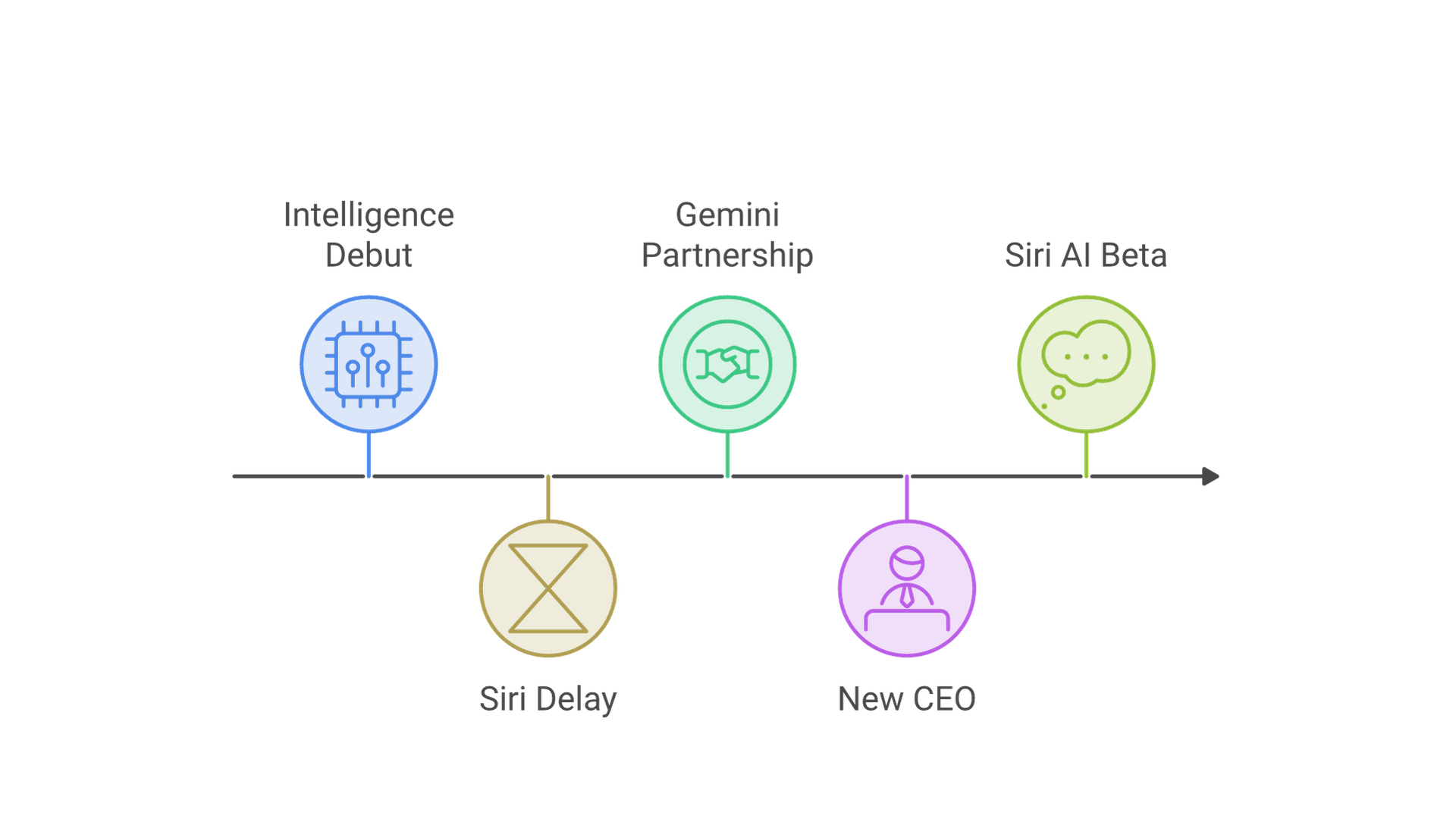
Ternus inherited an AI program with a visible gap between promise and delivery. Apple introduced Apple Intelligence in 2024, then delayed a more personal version of Siri. The upgraded assistant arrived only in 2026, after Apple brought in outside model technology.
On January 12, 2026, Apple and Google announced a multi-year collaboration: the next generation of Apple Foundation Models would be based on Gemini models and Google cloud technology. The joint statement said Apple Intelligence would continue to run on Apple devices and Private Cloud Compute, according to Engadget's report on the statement.
On April 20, 2026, Apple announced that Ternus, then senior vice president of Hardware Engineering, would become CEO on September 1, with Cook moving to executive chairman. The Apple Newsroom announcement notes Ternus joined Apple's product design team in 2001.
| Date | Event |
|---|---|
| 2024 | Apple introduces Apple Intelligence |
| 2025 | Apple delays a more personalized Siri |
| January 12, 2026 | Apple and Google announce Gemini-based Apple Foundation Models |
| April 20, 2026 | Apple names John Ternus as next CEO |
| June to July 2026 | Siri AI shown at WWDC, then offered in the iOS 27 public beta |
| July 30, 2026 | Apple reports $109.4 billion June-quarter revenue, up 16% |
| September 1, 2026 | Ternus becomes CEO; Cook becomes executive chairman |
| September 14, 2026 | iOS 27 ships with Siri AI in beta, English first |
| October 30, 2026 | WIRED interview: no AI for AI's sake |
| November 2, 2026 | Fiscal Q4 2026 earnings call (scheduled) |
The Siri AI rollout shows the measured pace. TechCrunch called the new Siri in the iOS 27 beta capable but anticlimactic, since rivals already offered similar assistants. When iOS 27 shipped on September 14, Siri AI was still in beta, English first and not initially available in the European Union, iPhone in Canada reported.
The business has not suffered so far. Apple's fiscal third-quarter 2026 results showed revenue of $109.4 billion, up 16% year over year, and diluted earnings per share of $2.02. That cushion is part of why Apple can afford patience.
The AI story also has a hardware side. We covered Apple's plan for AI chip production and Houston servers, which supports the Private Cloud Compute model behind Apple Intelligence.
What "Not AI for AI's Sake" Actually Means
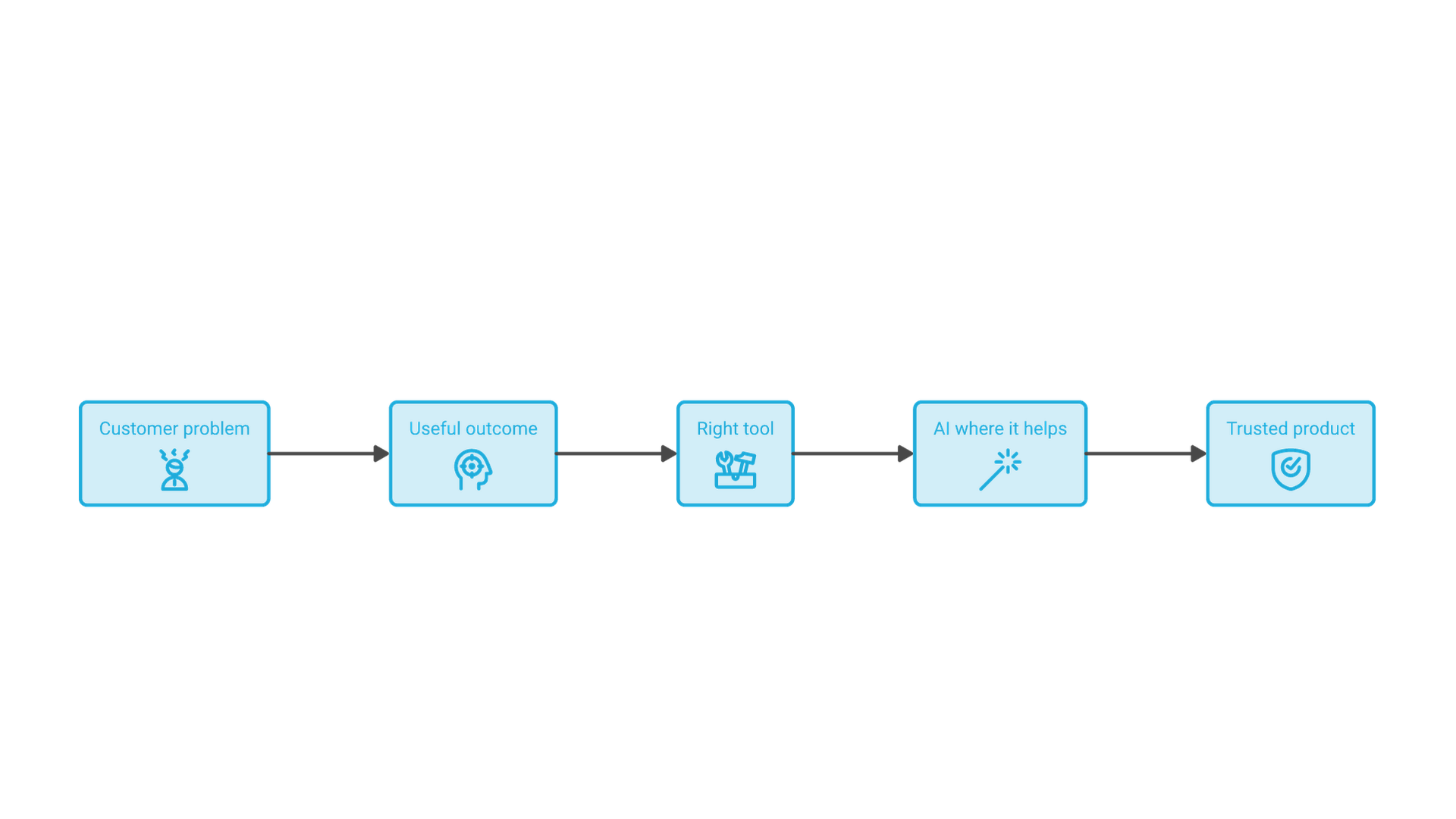
Stripped of context, the phrase sounds defensive. In practice, it describes a sequencing rule: define the experience first, then choose the technology. Ternus reinforced this when he said that, done right, people should not have to think about whether AI made something happen, as The Next Web quoted him.
That rule has three implications. First, AI is a component, not a product category. Second, the bar for shipping is reliability in daily use, not demo quality. Third, privacy and security sit inside the product definition, not in a compliance review afterward.
It also explains the Gemini decision. A company focused on outcomes can source the model and keep control of the experience, the data boundary and the device. Apple's statement framed Google's technology as a foundation, while Apple kept its own model brand and its on-device and Private Cloud Compute architecture.
There is a fair counterargument. Measured pacing can become a story told after a delay. Apple did miss its own Siri timeline, and the first Siri AI release still carried a beta label. Leaders should take the principle seriously while recognizing that it does not excuse slow execution.
What to Watch at Apple's November 2 Earnings Call
The fiscal Q4 2026 call on November 2 will be Ternus's first as CEO, with CFO Kevan Parekh, according to MacTrast's preview of the investor relations schedule. It is the first chance to see whether the interview message carries into official guidance.
Three signals are worth watching. Whether Apple gives any usage or adoption detail for Siri AI. Whether it explains the cost of running AI features through Private Cloud Compute. And whether it ties AI to device demand, services revenue or neither. We will not guess at the answers before Apple reports.
An Outcome-First AI Framework for Business Leaders
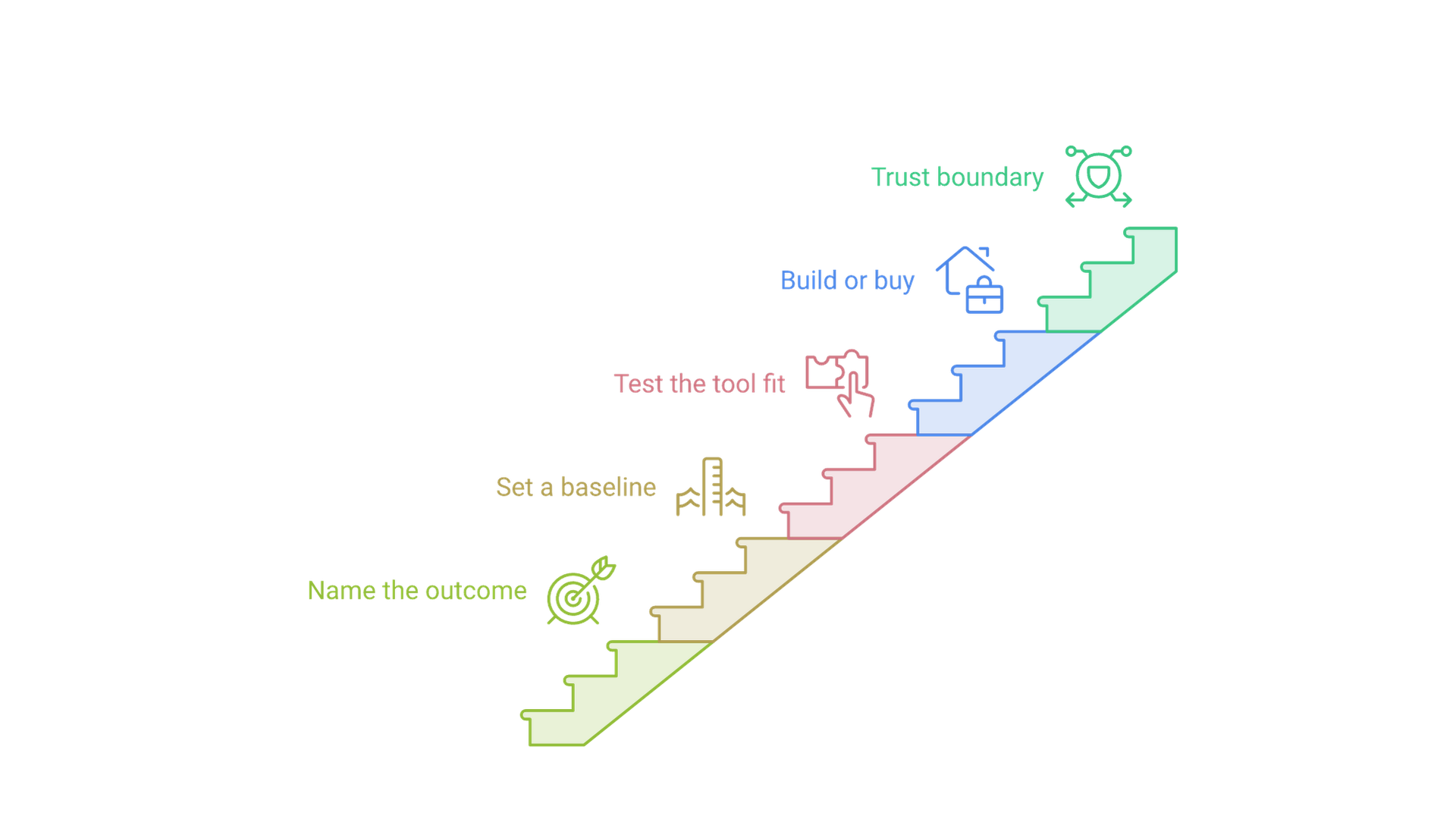
Most US SMB and mid-market companies are not choosing a foundation model partner. They are deciding whether to add AI to a product, a support desk, a sales process or a back-office workflow. Apple's rule translates cleanly into five questions any leadership team can answer in a single working session.
1. Name the outcome and the owner
Write the result in business terms: faster quote turnaround, fewer support escalations, cleaner product data. Assign one owner who answers for it. If nobody can name the outcome, the project is AI for its own sake, whatever the slide deck says.
2. Set the baseline and the success measure
Measure the current process before you change it: cycle time, error rate, cost per transaction or customer satisfaction. Pick the one number that would prove the change worked. Our guide to measurable outcomes covers how to write targets that teams can actually track.
3. Test whether AI is the right tool
Many problems are solved by a rule, a form, a cleaner integration or a better report. AI earns its place when the task involves unstructured language, judgment across many variables or high volume that rules cannot cover. Run a technology strategy review before you commit budget to a model.
4. Decide what to build, buy or partner on
Apple partnered for model capability and kept the experience and data boundary in-house. Smaller firms can make the same split: use proven models and platforms, and invest your own effort in workflow fit, data quality and the customer touchpoint. That is where AI integration work usually pays back.
5. Define the trust boundary
Decide what data the system may see, where it is processed, who reviews outputs and what happens when it is wrong. Ternus framed AI risk around security and user information. For a business, that means access controls, logging and a human checkpoint on consequential decisions.
Quick checklist before you ship an AI feature
- The outcome is written down and has one owner.
- A baseline exists and one success measure is agreed.
- A simpler non-AI option was considered and rejected for a reason.
- Data access, retention and review rules are documented.
- Users can tell what to do when the output is wrong.
- There is a date to review results and a rule to stop or scale.
How to Pace AI Adoption Without Falling Behind
Apple's approach carries two risks, and so does every company's. Move too fast and you ship features that erode trust, add cost and create support load. Move too slowly and competitors set customer expectations while your team is still debating.
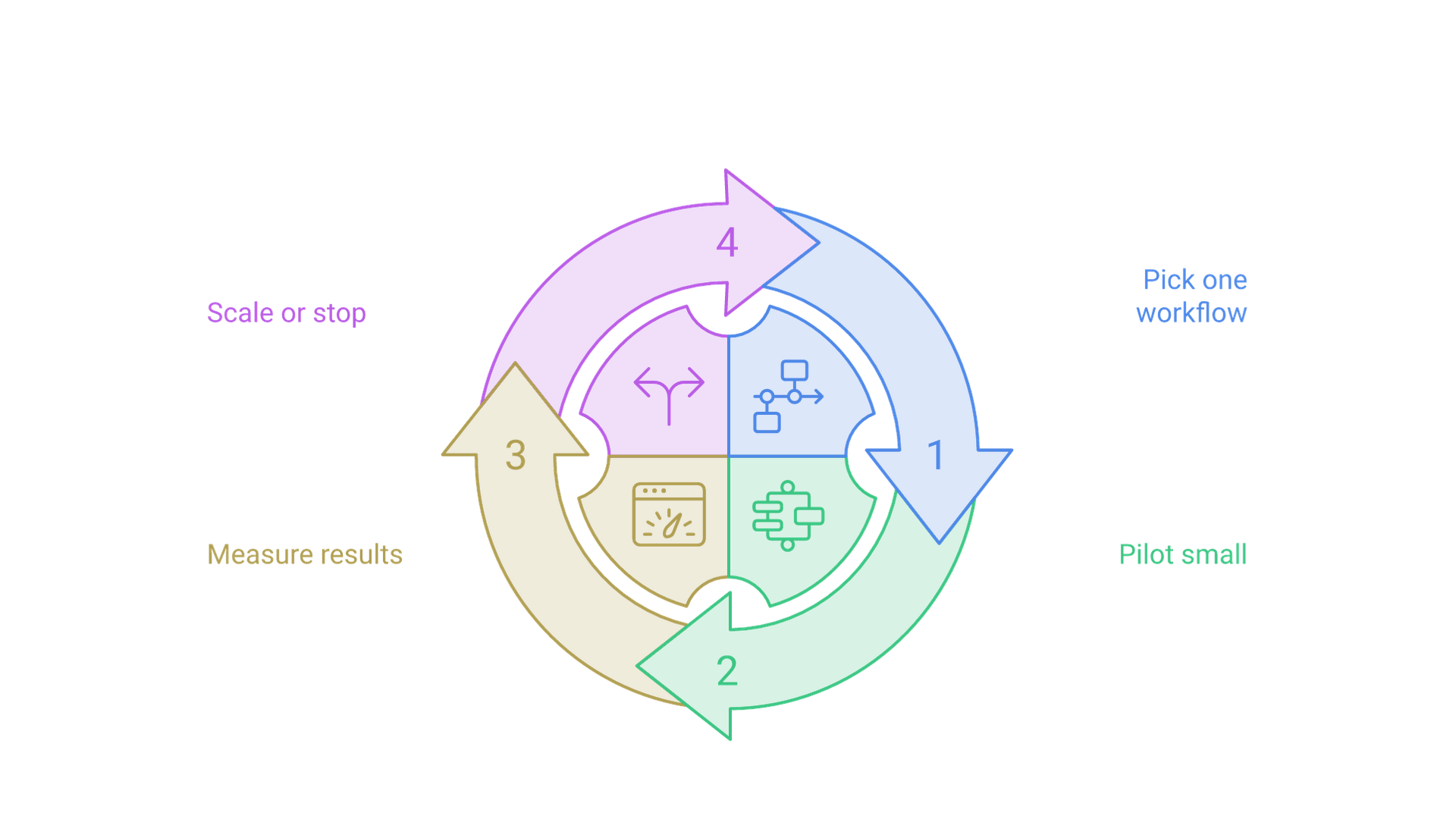
The practical answer is a short, repeated loop rather than one big bet. Pick one workflow, pilot it with a small group, measure against the baseline, then scale or stop. Each cycle should take weeks, not quarters, and each should leave behind better data and clearer rules.
Expect friction in the usual places: messy data, unclear ownership, integration with legacy systems and change management. Our breakdown of enterprise AI implementation challenges covers how teams work through each of them without stalling.
Finally, keep the customer view ahead of the technical one. Apple's bet is that people judge the product, not the model inside it. Users of a field service app or an approvals tool notice whether the work got easier, not which model did it.
Frequently Asked Questions
What did Apple's CEO say about AI?
In a WIRED interview published October 30, 2026, John Ternus said Apple does not want to ship AI for AI's sake. He said Apple will use AI to build better products and that he likes where the company stands.
Who is the CEO of Apple now?
John Ternus became Apple's CEO on September 1, 2026. He previously led hardware engineering. Tim Cook, CEO since 2011, became executive chairman of the board.
Is Apple behind in AI?
Apple is often described as behind because its more personal Siri was delayed and launched in beta in 2026. Ternus disputes that framing, arguing Apple prioritizes useful, private features over being first.
Does Apple use Google Gemini for Siri?
Yes. In January 2026, Apple and Google announced that the next generation of Apple Foundation Models would be based on Gemini models and Google cloud technology, while Apple Intelligence keeps running on Apple devices and Private Cloud Compute.
When is Apple's next earnings call?
Apple's fiscal fourth-quarter 2026 earnings call is scheduled for Monday, November 2, 2026, at 2:00 p.m. Pacific Time. It will be Ternus's first call as CEO.
How should a business decide where to use AI?
Start with a measurable outcome and an owner, set a baseline, confirm AI is the right tool, decide what to build or buy, and define data and review rules before launch. Then pilot, measure and scale.
Conclusion: Apple's AI Strategy as a Product Rule
John Ternus's comment that Apple will not ship AI for AI's sake is less a defense than a statement of order: the outcome first, the technology second. Apple's own record shows the rule is easier to state than to execute, and the November 2 call will show how it holds up under investor questions.
For business leaders, the rule is free to adopt. Name the outcome, measure the baseline, choose the simplest tool that works, and protect the data boundary. That discipline keeps AI spending tied to results instead of headlines.
If you are deciding where AI fits in your products or operations and want an outcome-first plan, talk to Cognativ about your AI roadmap.