Artificial Intelligence Books: 10 Essential Reads for 2026
Building an AI reading list for your team? Start here: foundations, deep learning, language models, reinforcement learning and ethics, matched to each role.
Explore artificial intelligence insights from Cognativ, with practical guides on AI agents, automation and adoption to help your business put AI to work.
Building an AI reading list for your team? Start here: foundations, deep learning, language models, reinforcement learning and ethics, matched to each role.
A beginner-friendly path from raw company documents to a tested model: when retrieval beats fine-tuning, how to format examples and how to judge a first run.
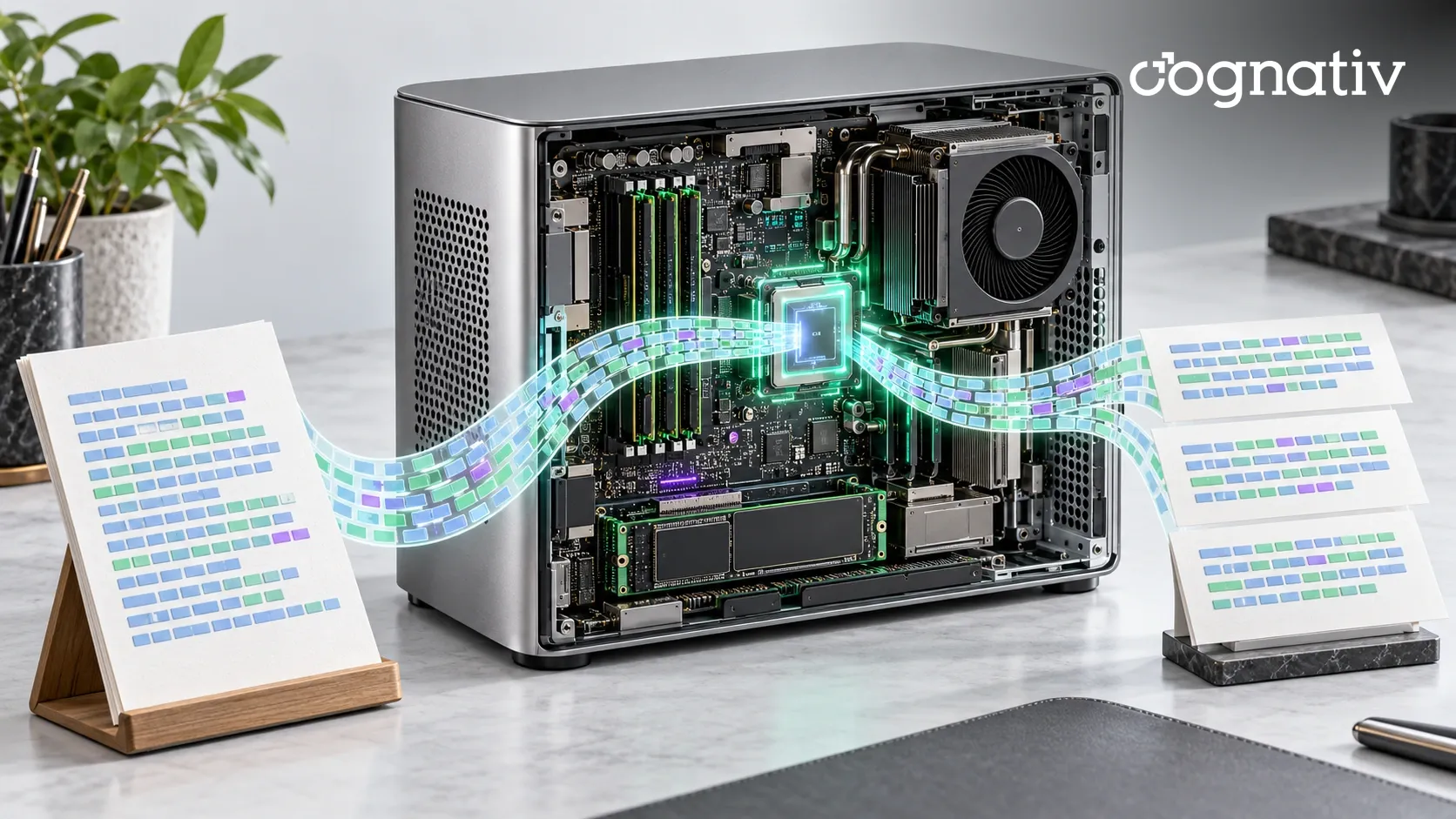
Tokens are the units LLMs read and write. See how BPE and WordPiece split text, why token counts vary by model and language, and how they set context and cost.
Inside LoRA adapters: the small B and A matrices, the PEFT settings that matter in 2026, where QLoRA and DoRA help, and when full fine-tuning still wins.
Not sure which local model your laptop can handle? Estimate memory from size and quantization, then turn a first chat into a daily tool with prompts and an API.
One model on one laptop is easy; a local AI service for a whole team is not. See the roadmap, runtimes and checks that turn a pilot into a dependable rollout.
LLM temperature controls how predictable or varied a model's next-token choices are. This explainer covers the sampling math, vendor limits and tuning by task.
Benchmarking GPT-OSS-120B means separating model card scores, provider tests, MLPerf runs and your own numbers. Here is each layer and a test protocol.
GPT-OSS-20B is OpenAI's smaller open-weight reasoning model. Explore its MoE design, harmony prompt format, function calling and where it fits in a project.
A local AI assistant keeps chats and files on hardware you control. This walkthrough covers the chat interface, document questions, voice and locking down data.
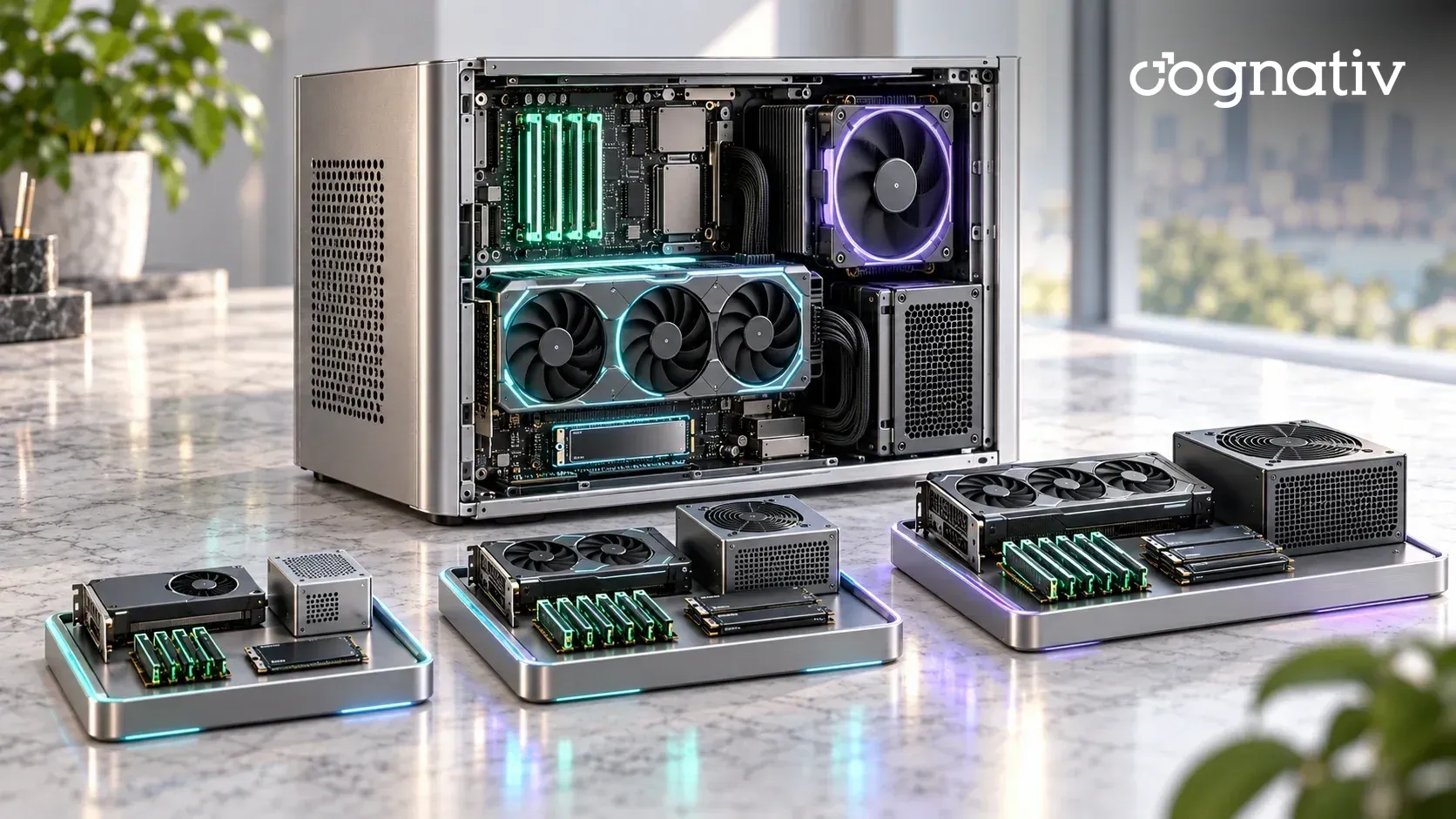
A component-by-component spec sheet for a local AI server, showing the arithmetic behind GPU memory sizing and why the model you plan to run should come first.
LLM embeddings map content to vectors so similar meanings sit close together. A plain guide to how they power search, clustering, retrieval and recommendations.
AI edge cases are rare or unusual inputs that models handle poorly. See typical failure examples, why the long tail matters and how to evaluate robustness.
Local AI agents run a goal, tool, check and repeat loop on machines you control. See how local runtimes handle tool calling and how MCP plugs tools into agents.
Mistral AI offers models for chat, code, documents, speech and embeddings, many with open weights. Learn how to pick one, call it and run it yourself.
Using LLMs with private data starts with knowing where data travels. Covers data paths, permission-aware retrieval, prompt injection and compliance dates.
Training your own LLM usually means fine-tuning, not pre-training from scratch. A beginner walkthrough of both phases, LoRA methods, tooling and deployment.
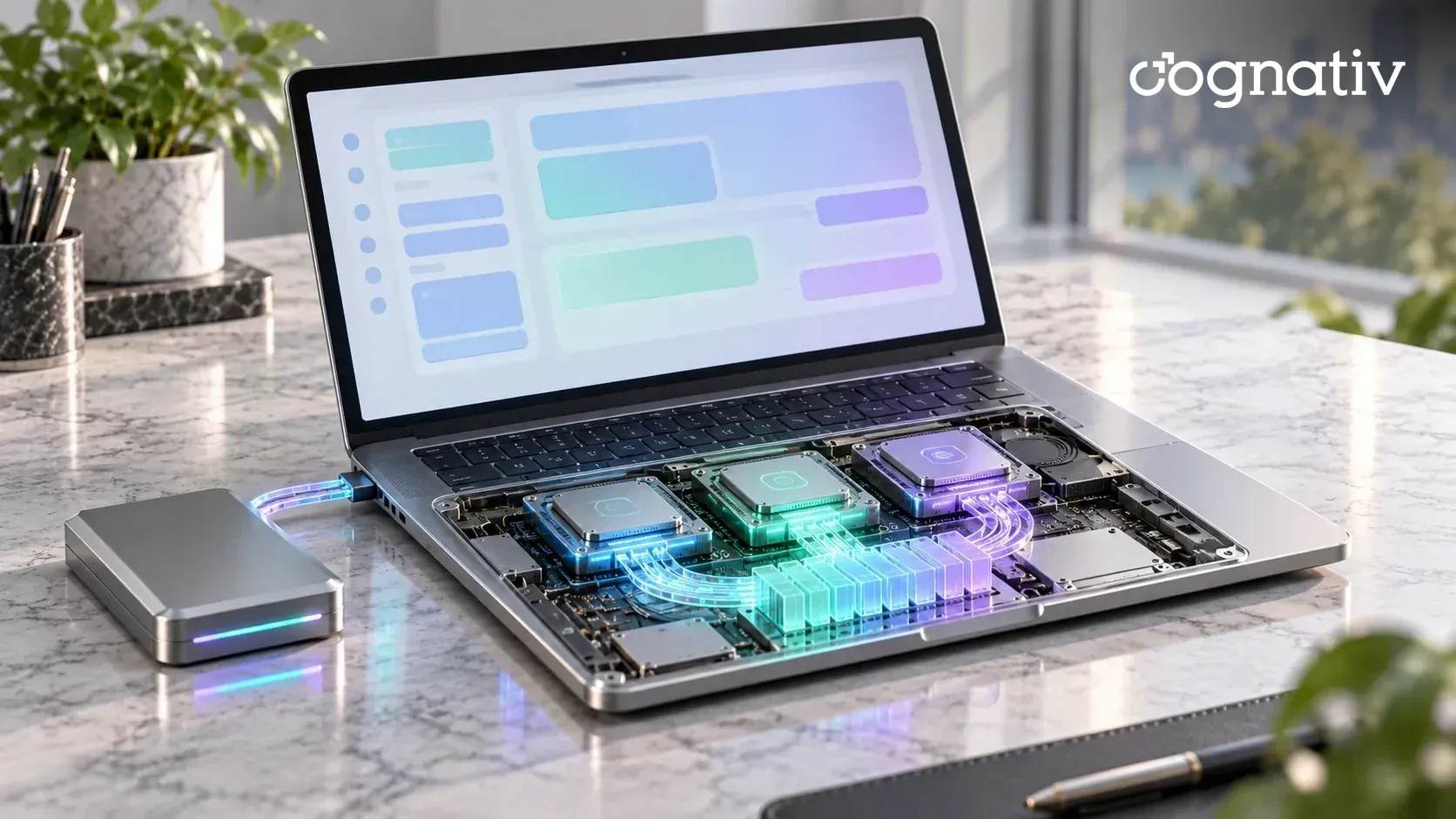
Choosing a laptop for edge AI workloads starts with memory capacity. Compare NPUs, dedicated GPUs and unified memory, and which machines suit each local task.
BERT is a bidirectional encoder, not a GPT-style text generator. How it reads context, why encoders still power search and how to pair them with LLMs.
Running an LLM locally takes an app, a model that fits your memory and a prompt. Step through LM Studio or Ollama, then test a meeting-notes extraction task.
The best local LLM for coding depends on the task, hardware and review rules. Build a shortlist by job, test exact model variants and skip generic leaderboards.
A local LLM runs on hardware you operate. See how weights, runtimes and the KV cache set memory needs, where local models fit, and when a hosted API wins out.
Which local model should write your Python? Compare Qwen3-Coder, Devstral and gpt-oss by job and memory, wire them into VS Code, then score them on your repo.
A beginner setup for a local AI server using Ollama and one downloaded model, from install and API checks to access limits and where data can still leave.
Explore fresh perspectives on AI, software engineering, cybersecurity, and business transformation. Get focused analysis and practical takeaways to help your team evaluate technology and plan its next move.
As featured in